What Genre Is Somber? Understanding the Depths of Somber Music in 2026
Explore the somber music genre, its emotional tones, key styles, and how to create melancholic soundscapes with AI tools.
What Genre Is Somber?
Somber music has long occupied a unique emotional space in human expression — a sonic realm that resonates with introspection, melancholy, and profound emotional depth. In 2026, as the boundaries of music genres blur through AI innovation and digital experimentation, understanding the somber music genre becomes more fascinating than ever. Let’s explore what defines somber music, its stylistic roots, its emotional impact, and how creators are harnessing technology to produce it effortlessly.
What does “Somber” mean in music?
Somber music typically refers to compositions characterized by slow tempos, subdued melodies, and minor tonalities. They evoke feelings of sadness, contemplation, or emotional weight. The term “somber” isn’t officially classified as a genre but describes a mood—or tonal category—within broader musical frameworks.
In musical theory, somber is often linked to melancholic music and dark atmospheric music, where harmony and texture create a heavy emotional pull. Artists use these traits in various styles—ambient, classical, post-rock, and cinematic compositions—to reflect sorrow, reflection, or even tranquility.

What are the musical characteristics of the somber genre?
While there is no strict blueprint for somber music, certain shared features recur across emotional music styles:
- Tempo: Slower rhythms (typically 60–90 BPM) support reflective moods.
- Harmony: Predominantly minor keys, dissonant intervals, and modal tonalities.
- Instrumentation: Piano, strings, ambient pads, and reverb-heavy synths often dominate the arrangement.
- Dynamics: Gradual builds and soft resolutions create intimacy and emotional weight.
- Texture: The layering of ambient tones gives it a spatial and immersive quality.
Overall, somber music functions as emotional storytelling without relying on lyrics—making it a cornerstone of sad song genres used in film scores, meditation soundscapes, and game atmospheres.

Which genres commonly express a somber mood?
Somber tones are not confined to one specific style. Instead, they permeate multiple emotional music styles. The most common include:
- Ambient Music: Ambient compositions emphasize texture and atmosphere, often blurring melodic clarity. These tracks may feature drones, airy pads, and slow-moving tonal shifts, crafting dark yet calming soundscapes.
- Classical and Neo-Classical: Many orchestral movements explore emotional mourning or introspection through harmonic progressions in minor keys.
- Post-Rock: Using reverb, delay, and slow guitar progressions, post-rock conveys isolation and grandeur. Bands in this style often use instrumentals to express internal tension.
- Acoustic Folk: Sparse arrangements and introspective lyrics often evoke pensive moods linked to personal storytelling.
- Cinematic and Soundtrack Music: Film composers use somber motifs to enhance emotional storytelling. The use of low strings, slow piano chords, and minimal rhythm captures scenes of reflection or loss.
- Lo-Fi and Chill: Modern lo-fi genres combine soft beats with wobbly effects, providing gentle melancholy perfect for study or meditation playlists.
These categories often overlap, evolving into hybrid emotional subgenres as AI-driven music creation enables finer mood tuning.
Why has somber music gained more attention in 2026?
The rise of digital media and immersive storytelling has amplified demand for emotional sound design. Platforms like YouTube, TikTok, and film streaming services now require background tracks tailored for mood-specific atmospheres. In 2026, somber music stands out for several reasons:
- Emotional Authenticity: Creators seek genuine, heartfelt tones in an age dominated by AI and synthetic production.
- Therapeutic Applications: Somber and ambient tones are increasingly used in mindfulness and mental wellness contexts.
- Gaming and Interactive Stories: Developers use melancholic soundscapes for narrative depth.
- AI Democratization: Tools such as AI Music Generators make it easy for anyone to design emotional backgrounds without needing composing expertise.
As a result, somber compositions now define a significant portion of modern content creation and relaxation culture.
How does somber music evoke emotional responses?
The emotional impact stems from psychological associations between sound and human mood regulation. Minor chords and slow tempos stimulate the brain’s limbic system, eliciting empathy and reflection rather than sadness alone. In essence, somber music provides a safe emotional space—allowing listeners to process feelings of melancholy, nostalgia, or peace in abstract ways.
Studies such as The pleasures of sad music: a systematic review and Sad Music - Deeply Human - iHeart explain how minor-mode compositions engage emotion-regulating pathways, creating both comfort and catharsis.
Music researchers in 2026 emphasize that such tonal experiences aren’t purely depressive; they can feel beautiful or meditative, depending on the listener’s context and intention.
The role of somber music in digital storytelling and content
Sound designers and filmmakers widely use somber soundscapes for storytelling. Whether a slow fade in a visual montage or an introspective voiceover, the underlying tone helps guide audience emotions. From social media reels to AAA game titles, ambient music tones representing sadness or reflection continue to dominate soundtracks.
Several AI-driven trends in 2026 have accelerated this adoption. Read about these music tech evolutions in Music Industry Trends. Somber sound design particularly thrives where human emotional nuance intersects artificial intelligence capabilities.
For creators looking to master emotional textures, check Soundverse’s guide on how to make music on YouTube.
How do creators integrate AI to produce somber music?
AI composition tools, such as Soundverse’s AI Music Generator, allow creators to convert written text descriptions like “dark ambient with slow piano and emotional undertones” into fully realized instrumental pieces. This automation provides immense freedom to amateurs and professionals alike.
Earlier manual composition required MIDI programming and advanced mixing knowledge. In 2026, however, platforms effortlessly generate melancholic backdrops for:
- YouTube storytelling channels
- Meditation podcasts
- Game soundtracks
- Commercial advertisements
Similar capabilities are also discussed in How AI Generated Music Is Transforming the Music Industry and Generate AI Music with Soundverse Text-to-Music.
For a quick tutorial, watch Soundverse Tutorial Series - Explore Tab.
How to make somber music with Soundverse AI Music Generator
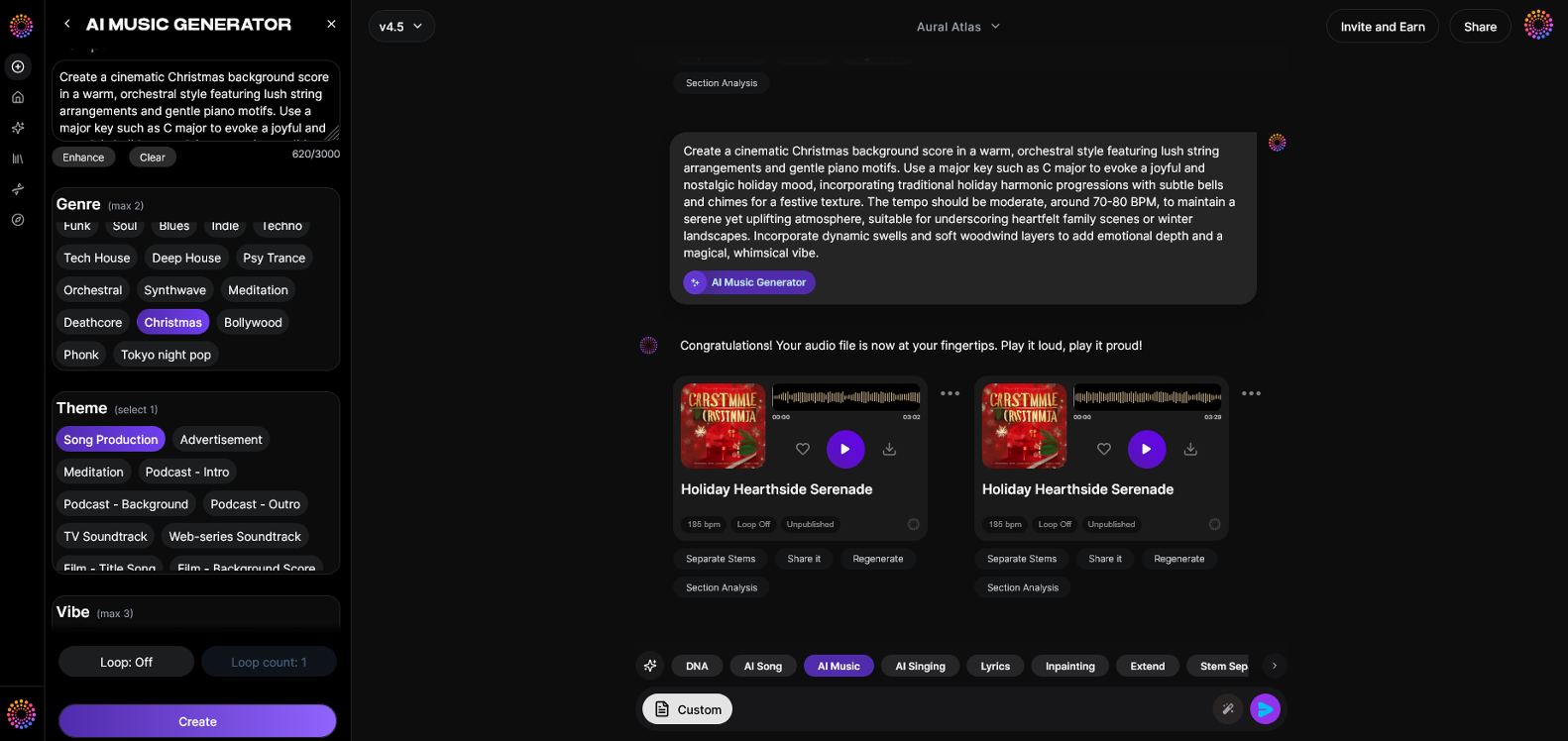
Now that you understand the essence of the somber music genre, here’s how it can be crafted instantly using Soundverse.
Soundverse’s AI Music Generator is designed to create fully produced instrumental music from text-based prompts. It specializes in background tracks, beats, and soundscapes without vocals, seamlessly looping for extended play. Through precise genre and mood control, it allows perfect customization across melancholic, dark, or ambient tones.
Key Features:
- Text-to-Music Creation: Turn any written emotional description into a complete instrumental track.
- Loop Mode: Generate seamless repeating music suitable for meditative or cinematic environments.
- Genre and Mood Control: Specify styles like ambient, cinematic, or melancholic to fine-tune your outcome.
- V4 and V5 Model Options: Choose versions optimized for refined synthesis and sound quality.
Core Use Cases:
- Video Backgrounds: Enhance emotional depth in visual storytelling.
- Game Soundtracks: Create immersive atmospheric loops.
- Meditation Tracks: Generate calming, introspective soundscapes.
- Commercial Scoring: Add subtle emotional elements to advertisements.
For users who want vocalized songs, Soundverse also offers the AI Song Generator, while the Similar Music Generator creates original instrumentals inspired by any reference track—ensuring flexible creativity across all emotional contexts. Learn more about cross-tool integration in Soundverse AI Revolutionizing Music Creation for New Age Content Creators.
Create Your Own Somber Music with AI
Bring melancholic tones and emotional depth to life in minutes using Soundverse AI. Generate beautifully crafted somber tracks that match your mood and artistic vision.
Start Creating Now
Related Articles
- Most Popular Music Genres: Discover the most loved music genres around the world and how they shape listener emotions and trends.
- How to Create Healing Meditation Music with Soundverse AI: Learn to craft calming and therapeutic soundscapes using AI tools designed for peace and focus.
- Generate AI Music with Soundverse Text-to-Music: Explore how you can turn words and emotions into fully composed music tracks using Soundverse’s text-to-music technology.
- How AI-Generated Music Is Transforming the Music Industry: Understand how artificial intelligence is revolutionizing music creation and expanding the boundaries of creativity.
Here's how to make AI Music with Soundverse
Video Guide

Here’s another long walkthrough of how to use Soundverse AI.
Text Guide
- To know more about AI Magic Tools, check here.
- To know more about Soundverse Assistant, check here.
- To know more about Arrangement Studio, check here.
Soundverse is an AI Assistant that allows content creators and music makers to create original content in a flash using Generative AI.
With the help of Soundverse Assistant and AI Magic Tools, our users get an unfair advantage over other creators to create audio and music content quickly, easily and cheaply.
Soundverse Assistant is your ultimate music companion. You simply speak to the assistant to get your stuff done. The more you speak to it, the more it starts understanding you and your goals.
AI Magic Tools help convert your creative dreams into tangible music and audio. Use AI Magic Tools such as text to music, stem separation, or lyrics generation to realise your content dreams faster.
Soundverse is here to take music production to the next level. We're not just a digital audio workstation (DAW) competing with Ableton or Logic, we're building a completely new paradigm of easy and conversational content creation.
TikTok: https://www.tiktok.com/@soundverse.ai
Twitter: https://twitter.com/soundverse_ai
Instagram: https://www.instagram.com/soundverse.ai
LinkedIn: https://www.linkedin.com/company/soundverseai
Youtube: https://www.youtube.com/@SoundverseAI
Facebook: https://www.facebook.com/profile.php?id=100095674445607
Join Soundverse for Free and make Viral AI Music

We are constantly building more product experiences. Keep checking our Blog to stay updated about them!