What Genre Is Sad Music? Understanding Emotional and Melancholic Styles in 2026
Explore the sad music genre—its traits, emotional depth, and modern creation using Soundverse AI Music Generator.
What Genre Is Sad Music?
Sad music has long been one of the most profound ways people connect with emotion through sound. It evokes empathy, nostalgia, and vulnerability, forming a deep human bond between listener and melody. In 2026, the sad music genre continues to evolve across various musical styles—from minimalist piano compositions to cinematic ambient soundscapes. Whether you’re a playlist curator searching for emotional music, a student studying melancholic songs, or simply a listener drawn to music that makes you sad, the landscape of depressing music styles is richer than ever.
What genre is considered sad music?
When we ask what genre is considered sad music, it’s important to understand that “sad” is not a genre itself—it’s a mood or emotional tone that spans multiple genres. Sad music genre compositions often appear in categories like classical adagio movements, acoustic folk ballads, indie pop, and lo-fi tracks. The fundamental features shared by all forms of emotional music include:
- Slow tempo and minimal instrumentation: Slow tempo music induces relaxation and reflection, allowing emotional weight to shine through every note.
- Minor key progressions: The use of minor scales creates feelings of melancholy and introspection.
- Sparse textures: Simple arrangements encourage focus on melody and harmony rather than overwhelming rhythm.
- Expressive dynamics: Volume swells and fading tones mimic emotional fluctuation, resembling sadness and vulnerability.

Artists and composers across decades have explored the psychology of sound, proving that rhythm and harmony can directly affect one’s emotional state. In 2026, AI-generated compositions and algorithmic arrangement techniques blend technical precision with emotional resonance, giving rise to new age depressing music styles tuned specifically for storytelling, therapy, and film soundtracks.
What makes music sound sad?
The sad music genre thrives on specific musical characteristics:
- Tempo: Sad pieces typically use a bpm range between 60–80, signifying slower pacing and reflection.
- Harmony: Minor chords, descending progressions, and unresolved dissonance contribute to the feeling of yearning or loss.
- Instrumentation: Piano, strings, and acoustic guitars dominate melancholic songs. Electronic producers often pair analog synths with ambient reverbs to achieve the same effect.
- Melodic contour: Downward motion in melodies conveys emotional gravity. The fewer leaps and higher note tensions, the deeper the melancholy.
- Production style: Depressing music styles frequently use natural room acoustics, soft compression, and subtle echoing delays to create intimacy.

While tempo and harmony define the musical structure, the timbre—how instruments sound—is equally vital. A simple cello phrase, fragile and low, can trigger a profound emotional reaction.
How modern technology shapes the sad music genre in 2026
Technological advancements have changed how composers approach emotional music. Modern AI tools can analyze sentiment across millions of tracks to determine what musical features evoke sadness or nostalgia.
Soundverse, for instance, is part of this transformation. But before we explore its AI capabilities, let’s examine cultural and psychological aspects shaping melancholic songs today.
1. Influence of visual media
Streaming shows and films in 2026 often rely on emotional music to accentuate storytelling. Scenes of loss or remembrance use slow tempo music underscored by ambient textures. This has led to cinematic “sad soundtracks” becoming their own distinctive style.
2. Therapeutic and mindfulness use
Sad music, though melancholic, is not purely negative. Studies from the early 2020s showed listening to music that makes you sad can encourage emotional release and self-understanding. Meditation and therapy practitioners in 2026 continue using melancholic soundscapes in mindfulness playlists.
3. The rise of lo-fi and ambient sadness
Lo-fi genres and ambient electronic compositions now represent major subsets of the sad music genre. With producers using tape saturation and degrading textures, these tracks emulate emotional imperfection—offering authenticity in digital sound. Articles like how AI-generated music is transforming the music industry demonstrate how these trends integrate with machine learning sound generation. For more creative insights, watch our Soundverse Tutorial Series - How to Make Music.
What types of genres include sad or emotional music?
Sad music crosses traditional boundaries. Below are popular genres that frequently express sadness through tone and lyricism:
- Classical & Orchestral: Adagios and requiems use intricate harmonic progressions and slow tempo to symbolize mourning.
- Folk & Acoustic: Fingerpicked guitars and intimate vocals tell stories of heartbreak and longing.
- Indie Pop / Indie Rock: Combines mellow melodies with reflective lyrics; a favorite for playlist curators.
- Lo-fi & Chillhop: Generates emotional atmosphere through layered textures and imperfect recordings.
- Soul & R&B: Deep grooves coupled with expressive vocals highlight vulnerability.
- Ambient & Cinematic: Focuses purely on tone and dynamic space without lyric content.
- Electronic Melancholia: Uses synthetic tones and evolving soundscapes to replicate human emotions.
Each style reveals a distinct approach toward sadness—from acoustic minimalism to lush electronic immersion.
For creators or curators, understanding the sad music genre is essential when crafting playlists reflecting mood—see related reading at music industry trends and mubert alternatives.
The psychology behind music that makes you sad
Music influences emotional states by stimulating memory and empathy within the brain. Minor key progressions remind listeners of unresolved tension, connecting directly to experiences of loss or nostalgia. Emotional music thus functions as a safe vessel for catharsis.
Neuroscience research through 2025 and beyond found that sad songs trigger oxytocin and prolactin—comfort hormones associated with human bonding and empathy. Listeners often feel “pleasant sadness,” experiencing beauty rather than despair.
Sad music also engages mirror neuron systems, allowing a listener to “feel” the composer’s intent. That emotional synchronization explains why melancholic songs can comfort those undergoing personal grief.
How the sad music genre connects to creative innovation
Music producers in 2026 now use advanced AI methods to replicate emotional nuance. AI compositions—especially those from platforms like Soundverse—combine machine-generated harmonies with user-defined emotional intent. The result is music that feels authentic yet customizable.
Other tools such as Soundraw alternative comparisons emphasize the expanding role of AI-assisted composition. These platforms empower creators to express sadness and intimacy without traditional instrumentation or studio constraints.
How to make sad music genre tracks with Soundverse AI Music Generator
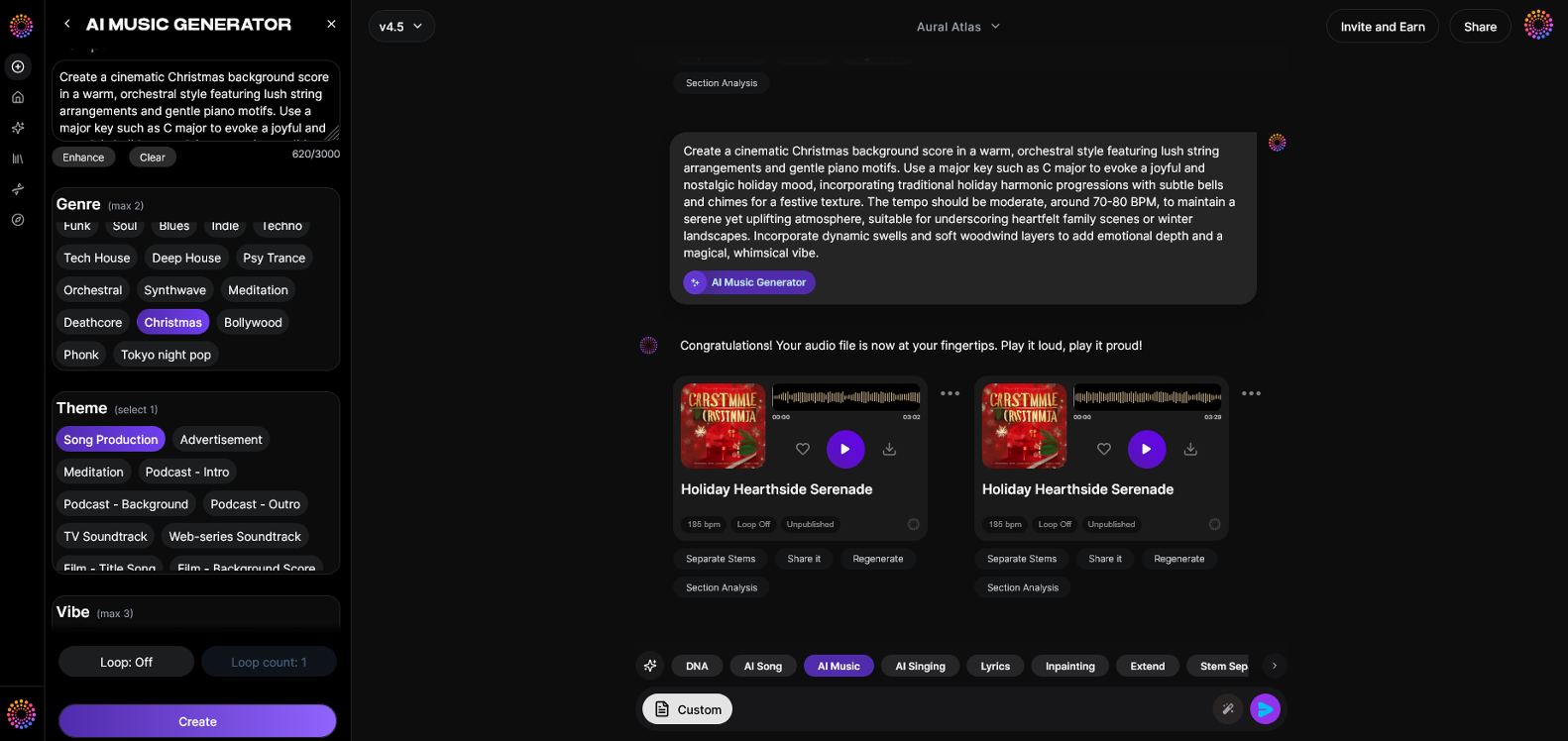
Now that you understand the sad music genre and its emotional essence, here’s how to create instrumental tracks instantly using Soundverse’s AI Music Generator.
Accessing Soundverse and its core capabilities
Soundverse’s AI Music Generator creates fully produced instrumental music from text prompts. It specializes in generating background tracks, beats, and soundscapes—perfect for melancholic or emotional moods. Users can also enable Loop Mode for seamless repetition, ideal for film scoring or meditation sessions.
How Soundverse helps in emotional composition
- Text-to-Music Control: Describe your desired sadness level, tempo, and instrumentation (e.g., “slow piano with minimal cello background”).
- Detailed genre and mood settings: Choose from presets like melancholic ambient, acoustic sorrow, or cinematic sadness.
- Instrument Customization: Adjust each instrument’s emotional weight—boost the violin for warmth or reduce percussion for intimacy.
- V4 and V5 Models: These enhanced architectures provide finer resolution on timbre and atmospheric layering, resulting in more realistic emotional soundscapes.
Whether creating music for film, wellness apps, or reflective playlists, the Soundverse AI Music Generator enables instant access to deeply emotional compositions. It’s especially impactful for users who want background scores for narrative content or meditation-based projects.
You can also explore letting Soundverse Assistant auto-select the right AI Magic Tool for you to streamline creative workflow.
Create Your Own Sad Music with AI
Transform emotions into sound effortlessly. Use Soundverse’s AI-powered tools to craft rich, emotional tracks that capture the essence of the sad music genre.
Related Articles
- Most Popular Music Genres — Explore the world’s most beloved music genres and understand what makes each one resonate with different audiences.
- How to Create Healing Meditation Music with Soundverse AI — Learn how to generate soothing and emotionally restorative tracks using AI-driven composition tools.
- Generate AI Music with Soundverse Text-to-Music — Discover how text prompts can turn ideas into expressive sound compositions instantly.
- The Role of AI Music in Film and Television — Find out how AI-generated music is shaping emotional scenes and storytelling across visual media.
Here's how to make AI Music with Soundverse
Video Guide

Here’s another long walkthrough of how to use Soundverse AI.
Text Guide
- To know more about AI Magic Tools, check here.
- To know more about Soundverse Assistant, check here.
- To know more about Arrangement Studio, check here.
Soundverse is an AI Assistant that allows content creators and music makers to create original content in a flash using Generative AI.
With the help of Soundverse Assistant and AI Magic Tools, our users get an unfair advantage over other creators to create audio and music content quickly, easily and cheaply.
Soundverse Assistant is your ultimate music companion. You simply speak to the assistant to get your stuff done. The more you speak to it, the more it starts understanding you and your goals.
AI Magic Tools help convert your creative dreams into tangible music and audio. Use AI Magic Tools such as text to music, stem separation, or lyrics generation to realise your content dreams faster.
Soundverse is here to take music production to the next level. We're not just a digital audio workstation (DAW) competing with Ableton or Logic, we're building a completely new paradigm of easy and conversational content creation.
TikTok: https://www.tiktok.com/@soundverse.ai
Twitter: https://twitter.com/soundverse_ai
Instagram: https://www.instagram.com/soundverse.ai
LinkedIn: https://www.linkedin.com/company/soundverseai
Youtube: https://www.youtube.com/@SoundverseAI
Facebook: https://www.facebook.com/profile.php?id=100095674445607
Join Soundverse for Free and make Viral AI Music

We are constantly building more product experiences. Keep checking our Blog to stay updated about them!