What Genre Are Sad Songs? Understanding the Emotional Depth of Melancholic Music
Explore the sad song genre and emotional music styles. Learn how these sounds evoke deep feelings and how to make your own with Soundverse AI.
What Genre Are Sad Songs?
Sad songs are among the most powerful and universal forms of musical expression. They have existed since the earliest forms of human storytelling through melody. They speak to heartbreak, loss, nostalgia, and the quiet beauty of melancholy. But what genre do sad songs actually belong to? In 2026, the conversation around melancholic music and emotional songs continues to evolve, blending tradition with modern experimentation driven by tools like artificial intelligence and dynamic composition software.
What genre are sad songs in modern music?
Sad songs are not limited to a single genre. Instead, they span across multiple musical styles depending on instrumentation, lyrical content, and emotional tone. A sad song can appear in pop, rock, R&B, folk, or even electronic music. In contemporary production, the sad song genre tends to be defined by mood rather than technical classification.

Common genres for sad songs include:
- Sad Pop: Pop music that focuses on emotional storytelling and soft production. Artists who write sad pop often pair introspective lyrics with mellow beats or piano-driven arrangements.
- Emotional Indie/Folk: Acoustic-driven melodies with minimal instrumentation that highlight personal feelings or reflective narratives.
- Melancholic R&B: Characterized by smooth vocals and haunting rhythms, often exploring romance and personal reflection.
- Alternative Rock Ballads: Many rock bands have their emotionally charged ballads rooted in heartbreak or existential themes.
- Depressing Music Genres (Ambient/Lo-fi): Ambient and lo-fi music often carry a subtle sadness through soft tones, slow tempos, and atmospheric textures.
Each of these styles operates as a branch of the sad song genre, with their unique approach to emotional storytelling. The subject matter is often universal—loss, longing, pain, or hope. What’s evolved by 2026 is how producers merge traditional instrumentation with digital innovation to convey these emotions more authentically.
Why do people connect deeply with melancholic music?
Melancholic music speaks directly to the human emotional core. Scientific studies over the past few years have confirmed that sad songs trigger empathy, comfort, and even healing. When listeners hear sentimental tunes, their brains release hormones that induce calm and connection. Examples like At My Worst - Sad Songs Playlist That Will Make You Cry 2026 or Depressing Songs 2026 That Will Make You Cry show how listeners actively explore songs that offer emotional release.
In 2026, music enthusiasts continue to view melancholy not as gloom, but as catharsis. Emotional songs help process personal experiences, reflecting the shared sadness in the world around us—whether inspired by romance, loss, or existential reflection.
Songwriters understand this connection profoundly. Many use melancholic music to craft relatable messages, allowing listeners to experience emotions that words alone can’t describe. The convergence of technology and creativity has made expressing these feelings easier. AI-based platforms now help creators transform lyrical concepts into realistic soundscapes that embody sadness and depth.
How do different genres express sadness differently?
The feeling of sadness manifests uniquely across musical genres:
- Pop: Often direct and relatable, with clear emotional hooks and catchy choruses. Sad pop remains dominant in streaming culture and social media trends.
- Rock: Uses heavy guitar tones and dynamic progression to express heartbreak and frustration.
- Jazz: Sadness portrayed through minor chords, languid tempos, and expressive vocal phrasing.
- Electronic: Emotional dance tracks or ambient compositions convey introspection through electronic textures.
- Classical: Built around minor keys, somber instrumentation, and gradual crescendos that evoke loss or longing.
These variations show that the sad song genre adapts fluidly. It’s not confined—it evolves, taking cues from listeners’ emotional landscapes and technological innovation. For instance, as described in Soundverse Introduces Stem Separation AI Magic Tool, producers now manipulate individual song stems to isolate and enrich specific emotions. You can also explore how to make emotional compositions through Soundverse’s tutorials on their YouTube channel—watch How to Make Music and Explore Tab.
How have sad songs evolved from 2024 to 2026?
The 2024–2025 period marked an explosion of AI-powered music tools, leading to new cultures of self-expression. By 2026, creators no longer require full studios to produce emotional songs. Musicians use AI engines to model different emotional intensities, from mild melancholy to profound sorrow.
Platforms like Soundverse bridge creativity and accessibility. Instead of manually arranging melodies or recording multiple vocal takes, Soundverse automates those processes while preserving emotional detail. Creators can now merge hybrid genres—such as sad pop blended with cinematic ambience—within seconds.
Listeners are also more genre-fluid today. Playlists in 2026 reflect feelings rather than strict categories. “Emotion-based discovery” has overtaken “genre-based browsing.” Whether a user seeks “depressing music genres” or “sentimental tunes,” algorithms now prioritize mood-matching accuracy. You can find examples in playlists like the Sad Songs 2026 Playlist - Spotify and SAD playlist 2026 by Indiemono - Apple Music.
For instance, the Music Industry Trends article discusses how audiences have shifted toward emotional authenticity rather than polished perfection.
What makes a song sound sad?
Several musical elements define sadness in songwriting:
- Minor Keys: Most sad songs employ minor scales, creating tension and discomfort.
- Slow Tempo: Lower BPMs evoke deeper reflection and draw listeners inward.
- Sparse Arrangement: Minimal background sounds emphasize vulnerability.
- Lyrical Themes: Words revolving around loss, isolation, or nostalgia deepen emotional connection.
- Vocal Delivery: Breathier tones and gentle vibrato express fragility and honesty.
Modern producers combine these factors strategically. Using digital composition platforms, artists fine-tune emotional dynamics until the desired level of melancholy is achieved. As outlined in Generate AI Music with Soundverse: Text-to-Music, creators now use descriptive prompts—like “soft piano ballad about heartbreak”—to generate instrumentals instantly.
Can AI understand sadness in music?
In 2026, AI has matured enough to interpret context and intent behind human emotions. When given lyrical prompts or descriptive phrases, systems like the Soundverse AI Song Generator analyze tone and choose melodic and harmonic patterns consistent with melancholy.
Through deep-learning models trained on diverse emotional datasets, AI now distinguishes subtle differences between sadness and nostalgia. For example, it knows that a “heartbreak-driven ballad” requires softer drums and acoustic textures, while “existential sadness” might call for atmospheric synth pads. Tools like those discussed in the Ultimate Guide - Best AI Sad Song Generator 2026 showcase how technology continues developing empathy-driven sound intelligence.
How to make emotional and sad songs with Soundverse AI Song Generator
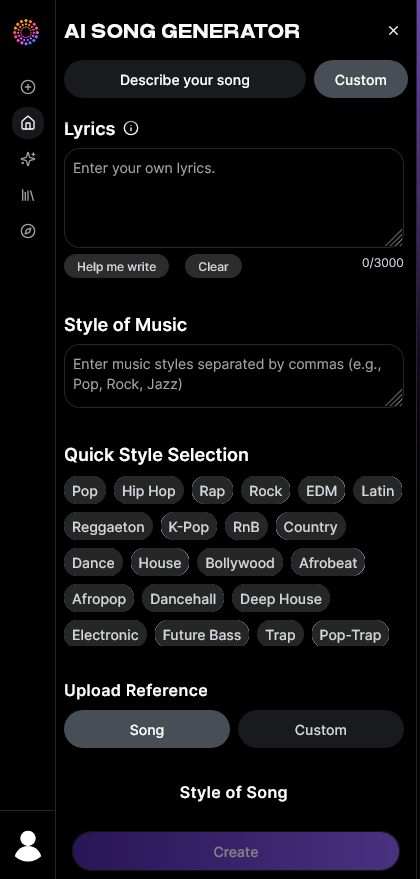
Now that you understand what defines melancholic music and the sad song genre, here’s how to instantly create your own using Soundverse AI Song Generator.
The Soundverse AI Song Generator allows you to turn lyrics or descriptions into complete songs. It builds a full musical experience through its multi-stage pipeline—handling lyrics, melody, arrangement, and mixing automatically.
Overview of Features
- Describe Your Song Mode: Type in emotional prompts (e.g., “sad pop ballad about heartbreak”) to generate matching compositions.
- Custom Mode: Paste original lyrics and adjust settings for tempo, genre, or vocal tone.
- Reference Audio Support: Provide an existing track or vocal clip to guide style and emotion.
- Quick Style Selection: Choose from pop, EDM, rock, jazz, and more to tailor your sound.
Core Use Cases
- Songwriting demos and vocal prototypes for emotional storytelling.
- Content creation for YouTube or social platforms.
- Customized gifts such as sentimental recordings.
- Multilingual compositions in more than ten languages.
By connecting this workflow with other Soundverse tools, you can shape your sad song genre precisely:
- Use AI Lyrics Writer to create poetic verses with emotional tone alignment.
- Use Similar Song Generator to replicate the atmosphere of existing melancholic tracks—without infringing copyright.
Cross-functional support from these tools lets artists refine sadness into beautiful art. The Soundverse platform fosters both technical control and creative empathy. For deeper exploration of its advantages in modern production, see Soundverse AI Revolutionizing Music Creation for New Age Content Creators and What AI Can Generate Songs. You can also follow tutorials like Make Deep House Music to learn composition versatility.
Final Thoughts
Sadness remains one of the most profound emotions conveyed through music. The sad song genre transcends boundaries—melding pop, folk, R&B, and cinematic sound design into one vast domain of feeling. In 2026, musicians and fans embrace this emotional diversity, seeing melancholic music as a healing force rather than a dark experience.
Modern creation platforms like Soundverse empower anyone to capture such vulnerability effortlessly. Whether you want to produce a sad pop anthem, an intimate acoustic ballad, or ambient depressing music, AI-driven tools help translate those emotions into authentic sound. The fusion of technology and sentiment ensures that the art of sadness continues evolving beautifully—proving that even the quietest heartbreak can turn into timeless melody.
Create Emotionally Powerful Music with Soundverse AI
Turn your feelings into sound by generating authentic sad melodies and emotional tracks instantly. Discover how Soundverse’s AI tools can help you express the perfect vibe for every mood.
Start Creating with Soundverse
Related Articles
- Most Popular Music Genres - Explore the top music genres shaping today’s soundscape and discover where emotional tracks fit in.
- Generate AI Music with Soundverse Text-to-Music - Learn how to turn written emotions and ideas into music instantly using AI-driven text-to-music technology.
- The Benefits of Composing with AI Music Generator - Find out how AI music tools simplify composition and enhance creativity for music producers of all levels.
- How an AI Music Generator Inspires Creative Fusion - See how Soundverse’s AI technology blends genres and moods to help artists find innovative emotional sounds.
Here's how to make AI Music with Soundverse
Video Guide

Here’s another long walkthrough of how to use Soundverse AI.
Text Guide
- To know more about AI Magic Tools, check here.
- To know more about Soundverse Assistant, check here.
- To know more about Arrangement Studio, check here.
Soundverse is an AI Assistant that allows content creators and music makers to create original content in a flash using Generative AI.
With the help of Soundverse Assistant and AI Magic Tools, our users get an unfair advantage over other creators to create audio and music content quickly, easily and cheaply.
Soundverse Assistant is your ultimate music companion. You simply speak to the assistant to get your stuff done. The more you speak to it, the more it starts understanding you and your goals.
AI Magic Tools help convert your creative dreams into tangible music and audio. Use AI Magic Tools such as text to music, stem separation, or lyrics generation to realise your content dreams faster.
Soundverse is here to take music production to the next level. We're not just a digital audio workstation (DAW) competing with Ableton or Logic, we're building a completely new paradigm of easy and conversational content creation. TikTok: https://www.tiktok.com/@soundverse.ai Twitter: https://twitter.com/soundverse_ai Instagram: https://www.instagram.com/soundverse.ai LinkedIn: https://www.linkedin.com/company/soundverseai Youtube: https://www.youtube.com/@SoundverseAI Facebook: https://www.facebook.com/profile.php?id=100095674445607
Join Soundverse for Free and make Viral AI Music

We are constantly building more product experiences. Keep checking our Blog to stay updated about them!