What Are the Stems of a Song?
Learn what song stems are, how they're used in music production, and how to separate audio stems easily with Soundverse Stem Separator.
What Are the Stems of a Song?
What Are the Stems of a Song?
In music production, song stems are the foundational building blocks that make up a full track. Each stem represents a grouped section or instrument component within a song—such as vocals, drums, bass, guitars, and other accompaniment parts. Essentially, stems are simplified versions of multitrack sessions, organized so that producers and engineers can remix, rearrange, or master them more effectively.
In 2026, understanding stem-based workflows has become an essential skill for modern producers and sound engineers. As music creation moves increasingly into collaborative and AI-assisted environments, song stems remain the bridge between creativity and technical precision.

Why Do Music Producers Use Song Stems?
Producers use song stems to gain control over individual elements of a mix without needing access to the full multitrack session. Instead of managing hundreds of individual tracks, stems provide consolidated segments of audio streams that can be processed or replaced with ease.
Common reasons include:
- Remixing: To reimagine older tracks or release official remix versions.
- Mastering: To adjust balance and tone across grouped tracks before final delivery.
- Collaborative Workflows: Sending stems allows multiple producers to work on different sections simultaneously.
- Live Performances: DJs and performers use stems to manipulate portions of songs in real-time.
- Educational Analysis: Audio schools and engineers use stems to teach mixing and signal processing.
What Is the Difference Between Stems and Multitrack Audio Files?
While they often sound similar, stems and multitrack audio files serve different purposes. Multitrack files are all the individual recorded tracks—each microphone and instrument recorded separately. Stems, however, are grouped versions, typically combining similar tracks such as all drum microphones mixed into one stereo file.
For example:
- Multitrack: Kick mic, snare mic, overhead mic, hi-hat mic
- Stem: Drums (a mixdown of the four mic recordings)
This structure allows producers to remix and master efficiently while retaining artistic control over song arrangement components.
What Are Typical Types of Song Stems Used in 2026?
Song stems have evolved beyond basic instrument categories. In 2026, more complex separation algorithms have enabled standard creation of up to 6 detailed stem types:
- Vocal Stem – Includes lead and backing vocals.
- Drums Stem – Encompasses all percussion and rhythmic elements.
- Bass Stem – Isolated low-frequency instruments including synth or acoustic bass.
- Guitar Stem – Covers electric and acoustic guitars.
- Accompaniment Stem – All supporting instruments that are not primary leads.
- Other/Effects Stem – Includes special effects, pads, or transitional elements.
This six-stem system has become widely adopted across music producers and educators because it balances clarity with ease of use, ensuring simple interchange between digital audio workstations (DAWs) and mastering software.
How Do Song Stems Improve Mixing and Mastering Workflows?
In mixing and mastering, working with stems provides flexibility that full mixes cannot offer. Engineers can correct frequency clashes, dynamic imbalances, or tone issues across grouped instruments.
Working with mixing and mastering stems simplifies adjustments such as:
- Applying different EQ curves to vocals and drums.
- Controlling compression separately on bass versus harmony sections.
- Enhancing stereo width or depth selectively.
- Removing unwanted background noise or masking frequencies.
In professional studio environments across 2026, stem-based delivery is now standard for record labels, sync licensing, and AI-assisted production systems.
How Are Song Stems Created?
Traditionally, stems were exported manually from DAWs—sound engineers grouped channels (like drums or vocals) and bounced them individually. But in 2026, advanced tools have automated this entire process using AI-assisted algorithms that can analyze an already mixed track and generate high-quality separations without requiring access to the original project files.
AI tools such as stem separators can now extract specific elements—vocals or instruments—directly from mixed song files. This technology is crucial for producers who need access to stem components from legacy or archive material where original multitracks no longer exist.
For example, see how this process works in our Soundverse Tutorial Series - 9. How to Make Music and Soundverse Tutorial Series - 10. Make Deep House Music, which demonstrate stem-based workflows in action.
For beginner producers, learning about stem separation provides deeper insight into how songs are layered and constructed—enhancing understanding of creative arrangement and mixing philosophy.
What Are Audio Stem Tracks and How Do They Interact with Song Arrangement Components?
Each audio stem track corresponds to a specific sonic layer that interacts dynamically with others to form a complete arrangement. For example, drums and bass form the rhythmic foundation, while guitars and accompaniments provide harmonic texture.
Understanding these song arrangement components allows creators to rebuild and reshape songs intuitively:
- Rhythmic foundation: Drums and percussion define tempo and groove.
- Harmonic density: Chords and pads enrich the sonic space.
- Melodic focus: Vocals or lead instruments capture emotional content.
- Dynamic transitions: Section changes controlled by volume and frequency shifts.
Modern producers use these relationships to maintain coherence and clarity, particularly in genres such as EDM, Lo-fi, and Jazz. You can explore deeper production insights in related articles like What AI Can Generate Songs and Music Industry Trends.
The Evolution of Music Production Stems in 2026
In the past, stems were limited by studio availability and software constraints. By 2024 and 2025, machine learning advances began simplifying isolation workflows. In 2026, AI-based stem separation has become mainstream—in both hobbyist and professional contexts.
Producers today use stem-based tools alongside AI-assisted creation systems for genre-specific generation, sampling, and remixing. This workflow aligns perfectly with developments discussed in Soundverse Introduces Stem Separation AI Magic Tool and Soundverse AI Revolutionizing Music Creation for New Age Content Creators.
Common Use Cases for Song Stems in Modern Production
- Remixing and Sampling: Artists reimagine old songs using isolated stems, creating fresh interpretations.
- Educational Training: Audio engineers analyze stems to learn balance, compression, and equalization techniques.
- Karaoke and Backing Tracks: Removing vocals or instruments helps create clean performance versions.
- Video and Game Sync: Stems simplify rearranging songs based on scene transitions.
- Audio Restoration: Engineers clean up noisy recordings by working with isolated drum or vocal stems.
These practices form the backbone of digital creativity, integrating AI-powered stem extraction workflows seamlessly into human-driven sound design.
How to Make Song Stems with Soundverse Stem Separator
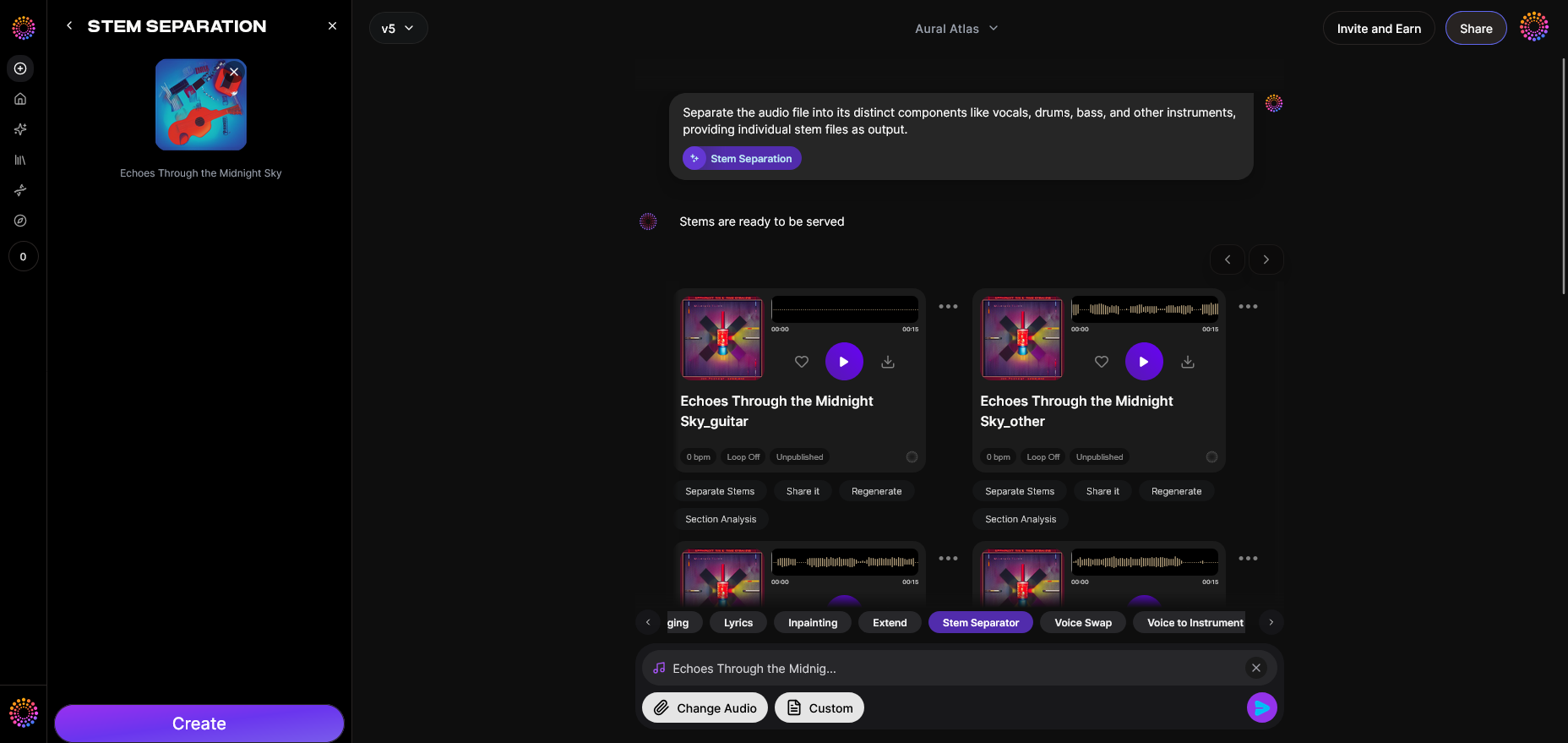
Now that you understand what song stems are and how they impact music production, here’s how Soundverse lets you create and manipulate them instantly.
Soundverse Stem Separator dissects mixed audio into up to six individual editable stems such as Vocals, Drums, Bass, Guitar, and Accompaniment. It supports URL, file, and direct recording inputs with high-quality isolation, ensuring fidelity across all separated tracks.
Key Capabilities:
- 6-Stem Separation: Extract individual instrument and vocal components from any mixed audio.
- Multi-Input Support: Upload from a local file, link, or direct recording.
- High-Quality Isolation: Clean separation suitable for remixing, sampling, or mastering.
Primary Use Cases:
- Generating backing tracks for live performances or karaoke.
- Remixing songs without needing the original multitrack session.
- Studying complex mixes for educational purposes.
- Cleaning and repairing noisy audio environments.
For even deeper remix management, Soundverse includes a Section Analysis tool that automatically detects song structure (Intro, Verse, Chorus, Bridge, Outro) with precise timestamps. This feature complements stem separation perfectly—allowing producers to visualize arrangement and flow before reworking tracks.
Want to explore creative applications further? Check out how producers are combining stem separation within EDM creation workflows or using AI for unique genre arrangements discussed in How AI-Generated Music Is Transforming the Music Industry.
Start Creating with AI Stem Separation Today
Unlock the full potential of your tracks with Soundverse’s AI-powered stem tools. Instantly isolate vocals, drums, and instruments to remix, reimagine, or elevate your music production workflow.
Try Soundverse Free
Related Articles
- What Are Song Stems and Why Do You Need Them — Discover why song stems are essential for remixing, mastering, and collaborative music production.
- Soundverse Introduces Stem Separation AI Magic Tool — Learn how Soundverse’s AI Magic Tool simplifies the process of stem separation for creators and producers.
- How AI-Generated Music Is Transforming the Music Industry — Explore the ways AI is reshaping how music is composed, produced, and experienced.
- Soundverse Assistant: Your AI Music Co-Producer — Find out how Soundverse’s AI Assistant can help streamline your workflow and spark new musical ideas.
Here's how to make AI Music with Soundverse
Video Guide
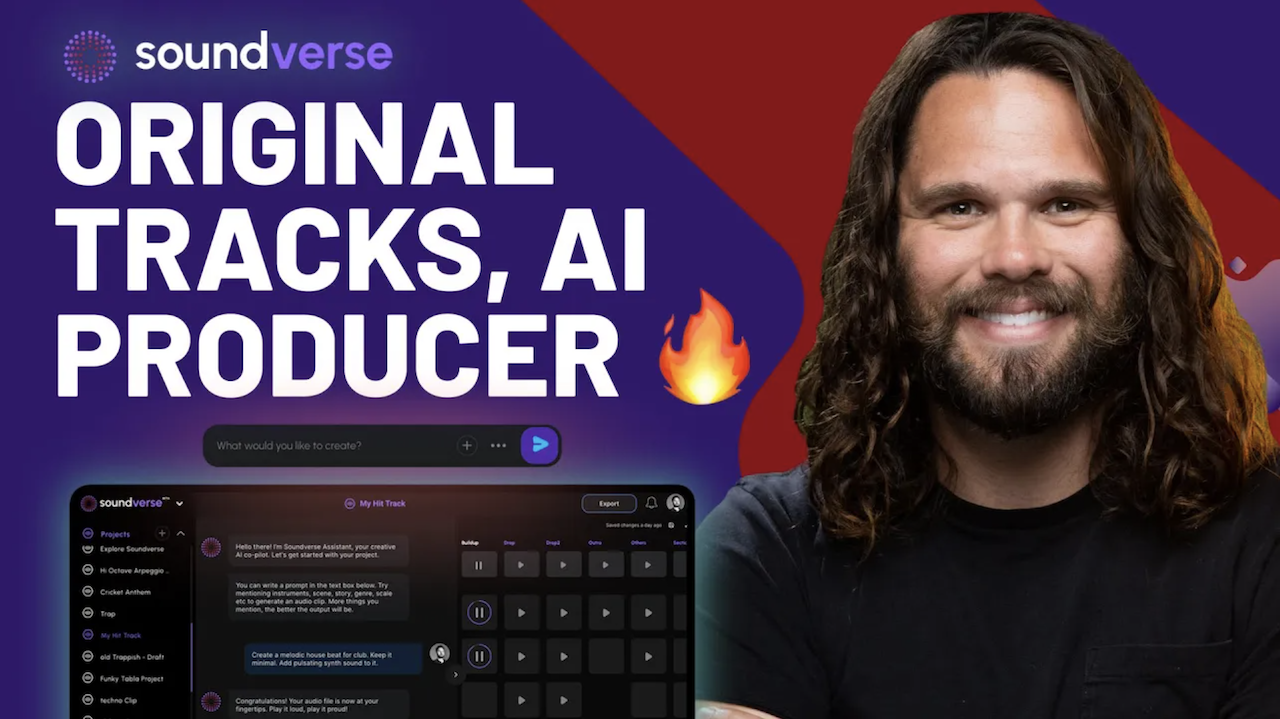
Here’s another long walkthrough of how to use Soundverse AI.
Text Guide
- To know more about AI Magic Tools, check here.
- To know more about Soundverse Assistant, check here.
- To know more about Arrangement Studio, check here.
Soundverse is an AI Assistant that allows content creators and music makers to create original content in a flash using Generative AI. With the help of Soundverse Assistant and AI Magic Tools, our users get an unfair advantage over other creators to create audio and music content quickly, easily and cheaply. Soundverse Assistant is your ultimate music companion. You simply speak to the assistant to get your stuff done. The more you speak to it, the more it starts understanding you and your goals. AI Magic Tools help convert your creative dreams into tangible music and audio. Use AI Magic Tools such as text to music, stem separation, or lyrics generation to realise your content dreams faster. Soundverse is here to take music production to the next level. We're not just a digital audio workstation (DAW) competing with Ableton or Logic, we're building a completely new paradigm of easy and conversational content creation.
TikTok: https://www.tiktok.com/@soundverse.ai
Twitter: https://twitter.com/soundverse_ai
Instagram: https://www.instagram.com/soundverse.ai
LinkedIn: https://www.linkedin.com/company/soundverseai
Youtube: https://www.youtube.com/@SoundverseAI
Facebook: https://www.facebook.com/profile.php?id=100095674445607
Join Soundverse for Free and make Viral AI Music

We are constantly building more product experiences. Keep checking our Blog to stay updated about them!