What Are the 5 Main Genres of Music?
Discover the 5 core music genres in 2026 and how Soundverse AI Song Generator helps you create songs in any style.
What Are the 5 Main Genres of Music?
Music has always been a universal language, bridging cultures, emotions, and identities. In 2026, as digital tools and AI technology reshape how music is produced and shared, understanding music genres has become more important than ever. Whether you're a student, an aspiring musician, or a casual listener, knowing the five main genres of music helps you appreciate the diversity and evolution that music continues to experience globally.
What are the most popular music genres in 2026?
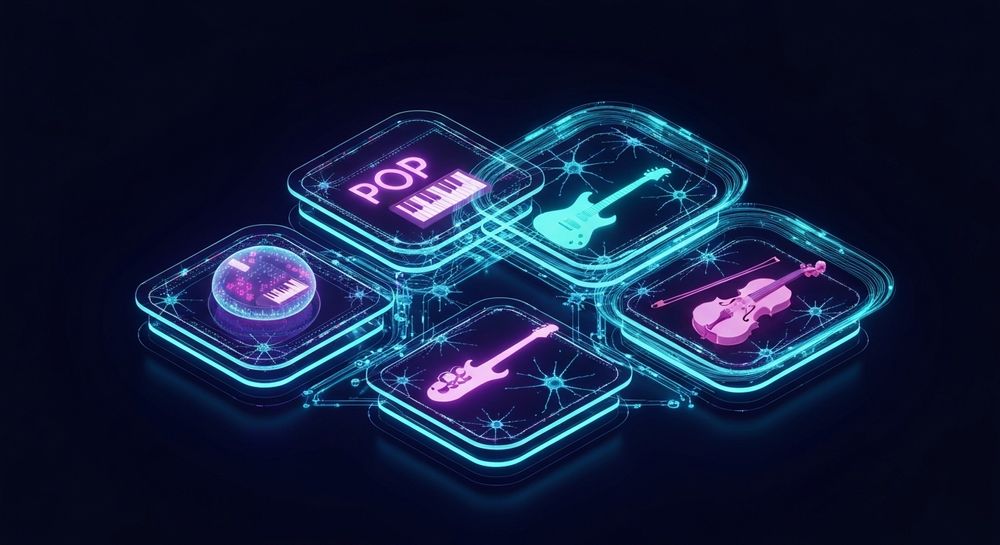
Although countless styles and subcultures have emerged, five primary music genres still define the framework of global music classification: Pop, Rock, Hip-Hop, Jazz, and Classical. Each has influenced the development of hundreds of subgenres and remains a cornerstone of musical creativity. Let's explore how these genres evolved and why they matter today.
1. Pop Music
Pop, short for "popular music," dominates the charts and digital platforms. By 2026, pop continues to merge catchy melodies with electronic textures, AI-generated harmonies, and cross-cultural rhythms. Artists and producers use technology to create seamless blends of styles, turning sound design into a creative playground.
Modern pop relies on memorable hooks, danceable beats, and relatable lyrics. Emotional resonance and accessibility are still key. In academic music studies, pop is categorized under commercial music forms — easily adaptable and widely appealing. This aligns with global research on major music genres.
Pop also remains one of the easiest genres to produce for creators experimenting with AI tools. Tools such as Soundverse's AI Song Generator allow users to generate complete pop compositions simply by describing the vibe or uploading custom lyrics. Pop’s openness lets creators test ideas ranging from upbeat summer tracks to dreamy synth ballads.
For further exploration, see How to Create EDM with Soundverse AI — EDM often overlaps with pop through collaboration and stylistic borrowing.
2. Rock Music
Rock music’s power comes from its energy, emotion, and live performance roots. From its early blues foundations to alternative and metal influences, rock remains one of the most versatile types of music. While the raw electric guitar sound still drives this genre, 2026 has seen an increase in hybridization — AI-assisted rock compositions now mix analog instruments with virtual amplifiers and digital drumming.
Key subgenres of rock include classic rock, indie, punk, metal, and alternative. Each reflects unique cultural identities and artistic philosophies. Students studying music classification will find rock particularly interesting because of its fusion potential; it continues to evolve by borrowing elements from electronic and pop trends.
If you’re curious about experimental sound design, check out Create Metal Music with AI, which demonstrates how advanced AI systems can simulate complex guitar tones and percussion layers typical of rock’s heavier branches.
3. Hip-Hop and Rap
Hip-hop stands as a global cultural movement, emphasizing rhythm, poetry, and storytelling. Since the mid-20th century, it has evolved into numerous subgenres, including trap, conscious rap, and drill. In 2026, AI-assisted beat production and vocal generation are enabling more creators to produce rap music without access to traditional studios. Based on popular music genre reports like Music Trends 2026, hip-hop remains one of the top global styles.
What makes hip-hop unique among different genres of music is its lyrical focus — often reflecting social narratives, personal experiences, and community identity. Its classification involves rhythm patterns like syncopation and accentuation, along with the prominence of sampling.
AI developments now make hip-hop creation much more accessible. Platforms like Soundverse allow lyricists to test vocal deliveries and prototype rap tracks with generated vocals. This innovation empowers young creators to blend artistic storytelling with technology.
For deeper insight, explore How to Create Rap Music with AI, which dives into how Soundverse simplifies the process from lyrics to full production. For a broader production walkthrough, watch our Soundverse Tutorial: How to Make Music.
4. Jazz
Jazz represents improvisation, musical dialogue, and emotional sophistication. Its roots trace back to African American communities, developing through swing, bebop, and fusion phases. By 2026, jazz continues to expand digitally — contemporary creators mix traditional jazz instrumentation with electronic soundscapes for cinematic and ambient effects.
In terms of music classification, jazz is defined by syncopated rhythms, strong instrumental interplay, and harmonic complexity. Unlike pop or rock, jazz emphasizes artistic freedom rather than formulaic structure.
Soundverse AI facilitates jazz creation through reference audio support and style selection filters. This lets users describe a mellow lounge atmosphere or intense bebop energy, generating realistic compositions suitable for podcasts, films, or study projects. Students can experiment using jazz as a foundation for ambient or lo-fi projects.
For an in-depth creative workflow example, visit How to Create Jazz Music with Soundverse AI.
5. Classical Music
Classical music remains the backbone of music theory and composition studies. Though centuries old, it still influences modern sound design, cinematic scoring, and even electronic production. Core characteristics include intricate orchestration, long-form structures, and harmonic depth. For further reading, see Wikipedia’s list of music genres and styles.
In 2026, technology has brought classical compositions closer to everyday creators. AI music generators now analyze text descriptions to produce orchestral arrangements complete with strings, woodwinds, and percussion. This democratization inspires new hybrid genres that combine classical harmony with contemporary beats.
Students learning about types of music classification often start with classical because it introduces core musical elements like tempo, dynamics, and notation. Despite its age, classical remains timeless — bridging the gap between historical artistry and next-generation AI interpretation.
For cinematic or educational applications, Soundverse tools can help create orchestrated compositions ideal for multimedia projects or film backgrounds. See The Role of AI Music in Film and Television to discover how classical influence continues through modern scoring.
Why music genres still matter in 2026
The global music landscape is more complex than ever. With streaming algorithms and AI personalization, classification systems allow listeners to navigate the ocean of available music. Understanding genres helps listeners explore unfamiliar styles and creators find their artistic identity.
Music categories also inform education and digital archiving. Libraries, universities, and streaming platforms rely on genre tags for organization and recommendation systems. In 2026, improved machine learning algorithms help classify music automatically based on tempo, tonal color, and lyric sentiment. This supports discoveries in trend reports like Music trends 2026 | Epidemic Sound.
But genre boundaries are now fluid. Hybrid forms like electro-jazz, trap-pop, and orchestral rock dominate playlists — proving that genre understanding isn’t just academic but creatively essential.
How to make music in different genres with Soundverse AI Song Generator
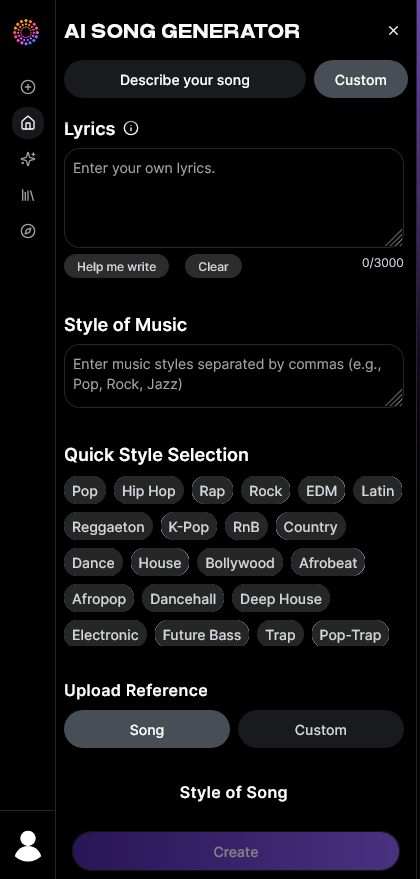
Soundverse’s AI Song Generator empowers creators to make songs across genres — from pop and rock to jazz or classical — without needing a professional studio. This tool transforms text descriptions or lyrics into complete songs with AI-generated vocals and instrumental backing.
Feature Overview: The AI Song Generator operates through a multi-stage pipeline handling lyrics, melody, arrangement, and mixing. It includes two main creation modes — Describe Your Song and Custom Mode — letting you either write a descriptive prompt or input actual lyrics. Users can also upload reference audio (music, singing, or both) to guide genre adaptation.
Genre Selection & Flexibility: Quick Style Selection allows instant choice between major categories like Pop, EDM, Rock, Jazz, or experimental sounds. This flexibility supports everything from songwriting demos to multilingual artistic projects.
Use Cases: It is ideal for songwriting prototyping, YouTube content, custom gifts, or global collaborations. In classrooms, students can use it to study arrangement patterns between music genres. For additional inspiration, watch the Soundverse Explore Tab video guide or Deep House tutorial.
For those exploring alternative creative tools, Soundverse’s broader ecosystem includes the AI Music Generator (for instrumentals only) and the AI Singing Generator (for producing acapella vocals).
Start Creating Music Across All Genres with AI
Discover how Soundverse empowers you to compose in any of the 5 main music genres—pop, jazz, rock, classical, and hip-hop—with intuitive AI tools that adapt to your creative vision.
Related Articles
- Most Popular Music Genres: Explore the world’s favorite music genres and what makes each one unique in today’s diverse soundscape.
- How to Create Jazz Music with Soundverse AI: Learn how to generate smooth, expressive jazz tracks effortlessly using Soundverse’s AI-powered tools.
- How to Create Country Music with Soundverse AI: Get step-by-step guidance on crafting soulful country music with the help of Soundverse’s innovative AI features.
- Create Metal Music with AI: Unleash heavy riffs and fierce energy with Soundverse’s AI tools designed to generate powerful metal compositions.
Here's how to make AI Music with Soundverse
Video Guide
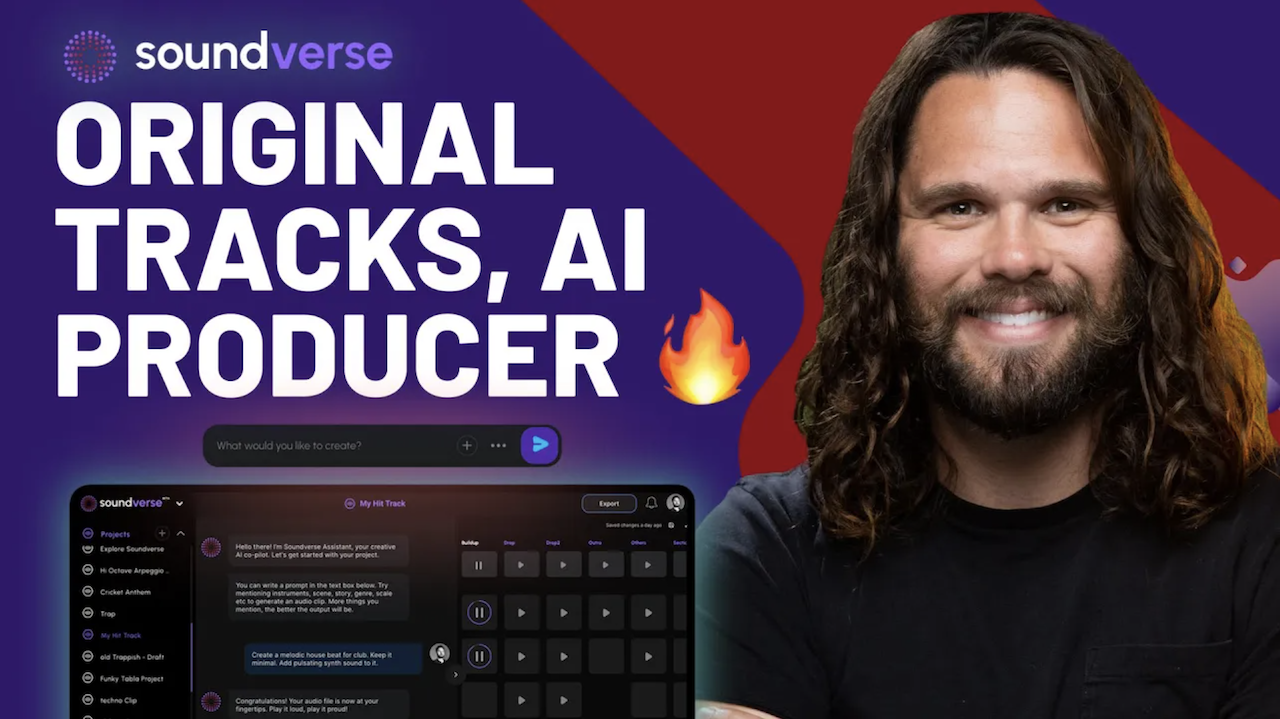
Here’s another long walkthrough of how to use Soundverse AI.
Text Guide
- To know more about AI Magic Tools, check here.
- To know more about Soundverse Assistant, check here.
- To know more about Arrangement Studio, check here.
Soundverse is an AI Assistant that allows content creators and music makers to create original content in a flash using Generative AI. With the help of Soundverse Assistant and AI Magic Tools, our users get an unfair advantage over other creators to create audio and music content quickly, easily and cheaply. Soundverse Assistant is your ultimate music companion. You simply speak to the assistant to get your stuff done. The more you speak to it, the more it starts understanding you and your goals. AI Magic Tools help convert your creative dreams into tangible music and audio. Use AI Magic Tools such as text to music, stem separation, or lyrics generation to realise your content dreams faster. Soundverse is here to take music production to the next level. We're not just a digital audio workstation (DAW) competing with Ableton or Logic, we're building a completely new paradigm of easy and conversational content creation.
TikTok: https://www.tiktok.com/@soundverse.ai
Twitter: https://twitter.com/soundverse_ai
Instagram: https://www.instagram.com/soundverse.ai
LinkedIn: https://www.linkedin.com/company/soundverseai
Youtube: https://www.youtube.com/@SoundverseAI
Facebook: https://www.facebook.com/profile.php?id=100095674445607
Join Soundverse for Free and make Viral AI Music

We are constantly building more product experiences. Keep checking our Blog to stay updated about them!