What Are Stems in Music Production?
Learn what stems are in music production, how they're used, and how Soundverse helps you separate audio accurately.
What Are Stems in Music Production?
In 2026, music technology has evolved faster than ever. From AI-assisted composition to stem separation tools, professionals and beginners alike have access to intelligent platforms that simplify tasks which used to require hours of manual work. One concept that remains central to modern production workflows is stems in music production—an essential framework for mixing, mastering, and remixing songs. Understanding stems gives music producers control, flexibility, and clarity over every sound that makes up a track.
What are stems in music production?
In simple terms, stems are grouped audio files that make up the individual elements of a full mix. Imagine a complete song divided into parts—vocals, drums, bass, guitar, synths, and other instruments. Each part can be represented by a stem. Rather than having each single microphone or instrument recorded separately (known as multitracks), stems combine similar elements into manageable groups.

For example, the “drum stem” might contain the mix of kick, snare, hi-hats, and percussion processed together. The “vocal stem” could include lead and backing vocals treated with reverb and EQ. These high-level groupings allow producers, audio engineers, and collaborators to modify sections without unpacking dozens of track layers. You can read more detailed insights in What are stems in music production? - Native Instruments Blog or What Are Music Stems? Complete Guide for 2026.
Why are music stems important for producers and engineers?
Mastering engineers, DJs, and remix artists rely on stems because they balance simplicity with creative freedom. Using stems instead of a single stereo file gives far more flexibility:
- Precise control over levels and EQ: You can reduce vocal volume or boost drums independently.
- Remixing and re-arranging: DJs and remixers can isolate vocals or instrumentals for unique interpretations.
- Learning and analysis: New producers can study how different elements of a production fit together.
- Performance & karaoke usage: Musicians can use instrumental stems live while muting vocals or other parts.

In other words, audio stems bridge the gap between raw multitracks and the final mix. They are easy to handle but powerful in terms of editing potential—making them integral to modern music production basics. As iZotope explains, stems are grouped mixes that help balance flexibility and efficiency in every stage of production.
How are stems created?
Traditionally, stems are exported from a Digital Audio Workstation (DAW) after mixing individual channels. The producer decides which groups should be combined and “bounces” them as stereo audio files. However, with recent AI advancements, you no longer need access to the original project files to obtain stems. Tools can now separate audio from a finished mix automatically, which is useful if you lost project files or want to remix existing songs. You can explore this process further in What Is Stem Mastering? Complete Guide - Boris FX.
This development creates endless possibilities for music education, cover creation, sample extraction, and sound restoration.
What are the differences between stems and tracks?
A common confusion among beginners is the difference between “stems” and “tracks.” In audio terminology:
- Tracks refer to each individual recording or channel: each vocal take, each drum mic, each guitar.
- Stems are groups of these tracks mixed down together—for example, all guitar tracks combined into a single stereo stem.
Thus, stems are “mixed” assets, while tracks are “raw” recordings. Most stem mastering services and workflows operate on stems, not raw files, because they enable precise adjustments without breaking the overall balance. For deeper analysis, see Stems and multitracks: What's the difference?.
How do stems contribute to mixing and mastering?
Stem mixing is the process of balancing different stem groups, giving the engineer freedom to tweak tone, compression, or effects without altering the original artistic intent. Similarly, stem mastering uses stems to refine the sound of specific mix elements—like tightening low-end frequencies or enhancing vocal clarity—before finalizing the master. In 2026, these workflows continue to define best practices in professional audio engineering.
Stem sessions are powerful because they combine flexibility with efficiency. Instead of asking for full multitrack projects, mastering engineers often request four to six stems to make precise sonic improvements. This helps reduce complexity while maintaining creative control.
What tools can separate audio into stems automatically?
AI-based tools such as Soundverse’s Stem Separator are at the forefront of automated stem creation. These tools analyze mixed audio using powerful algorithms that identify the spectral patterns of different instruments, voices, and frequency ranges. Within minutes, users receive separate files they can mix, remix, or study—for example, as described in Unlocking Creativity: The Power of Stems in Music Production.
How to make stems in music production with Soundverse Stem Separator
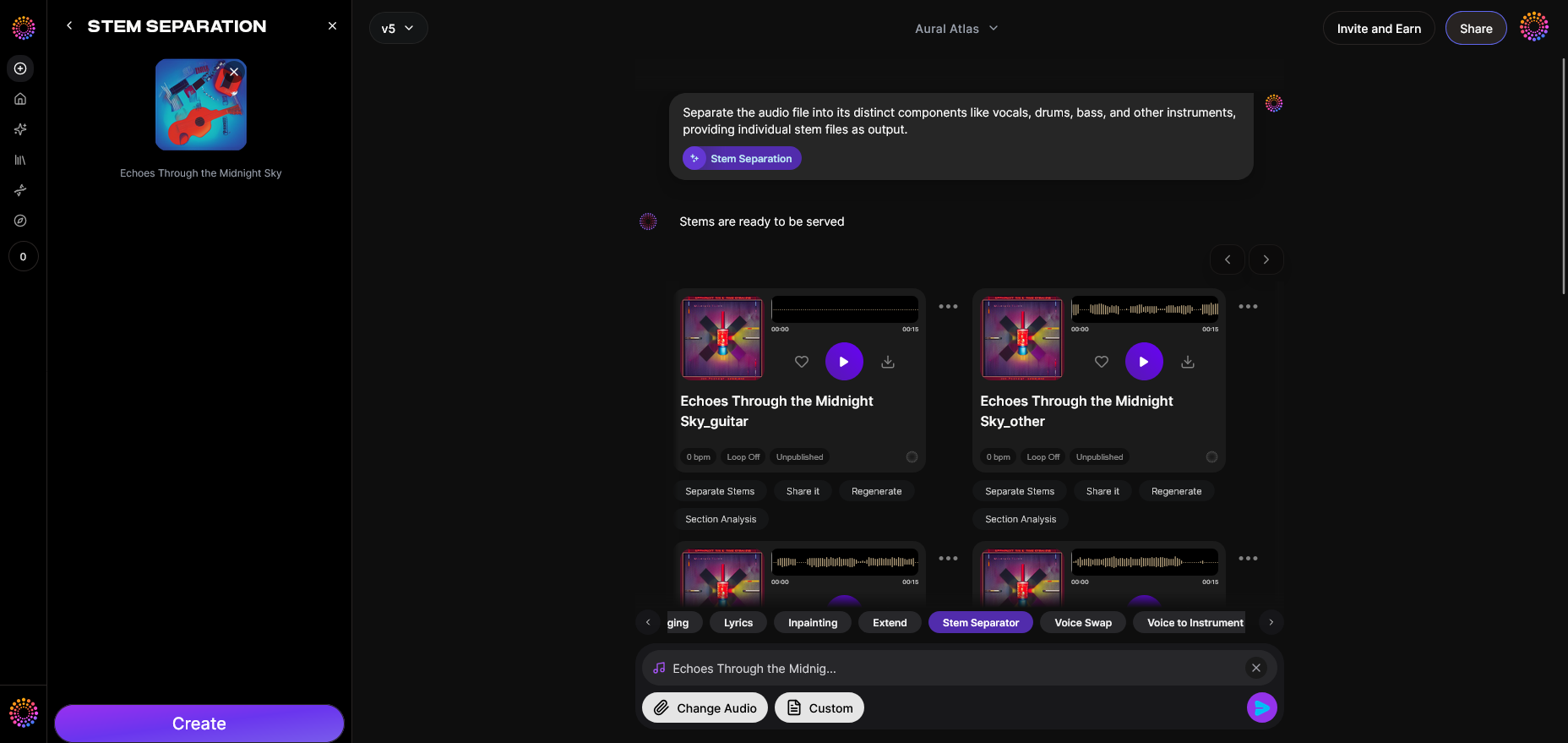
The Soundverse Stem Separator is designed precisely for producers who want to dissect, remix, or analyze songs. Here’s how Soundverse makes the process seamless and efficient:
Feature overview: The Stem Separator dissects mixed audio into up to six fully editable stems—Vocals, Drums, Bass, Guitar, Accompaniment, and other instruments. It offers high-quality isolation and supports input from files, URLs, or recorded sources. This makes it ideal for remixing, karaoke arrangement, educational analysis, or cleaning up existing audio.
Core capabilities include:
- 6-stem separation with accurate frequency isolation
- File, URL, and Recording input support
- High-quality, noise-minimized extraction results
Primary use cases:
- Creating backing tracks for performances
- Building remix projects
- Studying mix structure for educational purposes
- Restoring or cleaning up old recordings
Soundverse’s innovative AI technology makes the stem separation process fast and intuitive. You upload your song, the system analyzes and separates it into six core stems, and you can then edit them directly within Arrangement Studio or follow up with detailed refinements through Section Analysis, which identifies parts like verses and choruses. You can learn more about this powerful innovation here.
For a deeper dive, watch our guide on how to make music or explore creating Deep House music through the Soundverse Tutorial Series.
How do producers use stem separation creatively?
Stem separation empowers artists to take existing songs and reimagine them. For example:
- A DJ might isolate vocals from a hit track to create acapella mashups.
- A musician could extract the bass stem to study groove synchronization.
- A producer could remix classics for a modern sound.
Since 2026’s trends emphasize hybrid creativity—combining AI tools, organic performance, and sampling—the ability to separate and analyze music stems has become a competitive advantage. You can also explore how AI-generated music complements these approaches in articles like How AI-Generated Music Is Transforming the Music Industry and The Role of AI Music in Film and Television.
How Soundverse helps beginners understand music production basics
For beginners, understanding stems bridges conceptual learning with hands-on experimentation. You can use the Stem Separator to see how each part of your favorite song interacts with others, reinforcing fundamentals like EQ balancing, stereo imaging, and arrangement flow. With tools such as Soundverse’s Arrangement Studio, users can rearrange sections, edit transitions, and refine composition directly across isolated stems, supporting every stage of their growth from student to creator.
If you’re new to music production, exploring concepts like stem mixing, stem mastering, and audio stems explained gives you a foundation to progress toward professional-level results. You can also expand your learning through related resources such as Music Industry Trends or beginner guides like How to Make AI-Generated Music.
Start Creating with AI-Powered Stem Tools Today
Unlock the full potential of your tracks by separating and remixing audio stems effortlessly with Soundverse’s AI Magic Tools. Discover how easy it is to enhance your music workflow and sound design.
Related Articles:
- Soundverse Introduces Stem Separation AI Magic Tool — Explore how Soundverse’s cutting-edge AI technology makes isolating and editing stems effortless for producers of any skill level.
- What Are Song Stems and Why Do You Need Them — Learn why song stems are essential for mixing, remixing, and creating professional-quality tracks.
- Soundverse AI Revolutionizing Music Creation for New Age Content Creators — Discover how AI innovation is transforming the way creators produce, remix, and share music globally.
- The Role of AI Music in Film and Television — Understand how AI-generated music and stems are changing the landscape of media scoring and production.
Here's how to make AI Music with Soundverse
Video Guide
Here’s another long walkthrough of how to use Soundverse AI.
Text Guide
- To know more about AI Magic Tools, check here.
- To know more about Soundverse Assistant, check here.
- To know more about Arrangement Studio, check here.
Soundverse is an AI Assistant that allows content creators and music makers to create original content in a flash using Generative AI.
With the help of Soundverse Assistant and AI Magic Tools, our users get an unfair advantage over other creators to create audio and music content quickly, easily and cheaply.
Soundverse Assistant is your ultimate music companion. You simply speak to the assistant to get your stuff done. The more you speak to it, the more it starts understanding you and your goals.
AI Magic Tools help convert your creative dreams into tangible music and audio. Use AI Magic Tools such as text to music, stem separation, or lyrics generation to realise your content dreams faster.
Soundverse is here to take music production to the next level. We're not just a digital audio workstation (DAW) competing with Ableton or Logic, we're building a completely new paradigm of easy and conversational content creation.
TikTok: https://www.tiktok.com/@soundverse.ai Twitter: https://twitter.com/soundverse_ai Instagram: https://www.instagram.com/soundverse.ai LinkedIn: https://www.linkedin.com/company/soundverseai Youtube: https://www.youtube.com/@SoundverseAI Facebook: https://www.facebook.com/profile.php?id=100095674445607
Join Soundverse for Free and make Viral AI Music

We are constantly building more product experiences. Keep checking our Blog to stay updated about them!