What Are Sad Movies Called? Exploring Emotional Film Genres in 2026
Discover what sad movies are called, explore tearjerker and emotional film genres, and learn how to create story-inspired lyrics with Soundverse.
What Are Sad Movies Called?
What Are Sad Movies Called?
Sad movies are often categorized under various emotional and dramatic film genres that evoke empathy, sorrow, and introspection. These films are crafted to connect deeply with audiences, exploring the fragile aspects of human emotion. In 2026, as streaming platforms expand globally and artificial intelligence plays an increasing role in content creation, emotional cinema continues to flourish. Whether you’re a filmmaker, viewer, or content writer, understanding sad movie genres helps you express emotion and structure powerful narratives that resonate across time.

What Are the Main Sad Movie Genres?
When people talk about sad movies, they usually refer to several overlapping genres and subgenres. Each captures emotion in a unique way:
1. Drama
Drama is the most encompassing emotional film genre. It focuses on realistic characters and life challenges, often highlighting internal conflicts, love, loss, and redemption. Films in this category depend heavily on storytelling and character development rather than spectacle.
2. Tragedy
Tragic films depict downfall—sometimes personal, sometimes societal. They follow characters who face fatal flaws or irreversible consequences. Classic tragedies still influence modern cinema, especially when portraying shattered dreams and moral struggles, as explained in the Guide to Movie Subgenres.
3. Romantic Drama
One of the most common tearjerker movie categories, romantic dramas revolve around love impacted by separation, illness, or fate. These films evoke deep emotional involvement and craft sentimental experiences that leave lingering impressions.
4. War and Historical Films
War dramas and historical epics often carry emotional weight by examining human suffering, sacrifice, and loss. Viewers experience empathy through real-world portrayals of devastation and bravery, as listed in Ultimate Guide to Movie Genres — 90+ Genre Examples for Film & TV.
5. Psychological Drama
These movies dissect mental health and the complexity of human thoughts. Often, they deal with grief, loneliness, or trauma. They are intensely emotional and intellectually stirring.
6. Family and Coming-of-Age Stories
Family-based and coming-of-age films connect audiences with childhood memories, generational change, and emotional milestones. They tend to balance moments of joy and sadness, illustrating universal human growth.
7. Melodrama
Melodrama amplifies emotion—often seen as sentimental or overly expressive. Though exaggerated, these films immerse viewers in cathartic experiences, making them prime examples of tearjerker movie traditions cited in 100 Saddest Movies: Best Sad Movies For a Good Cry.
8. Social Realism
Social realist films reflect genuine everyday struggles—poverty, discrimination, or injustice. Their emotional impact stems from truth rather than fiction.
As of 2026, hybrid storytelling is becoming more common, mixing drama and psychological depth with cinematic innovation. AI-driven analysis also helps producers anticipate audience reactions more accurately than ever before.
Why Are Emotional Films So Powerful?
Sad movie genres—often referred to as emotional or sentimental films—capture humanity’s universal feelings. The reason they are timeless lies in psychological resonance. Watching emotional films allows viewers to empathize, process emotions, and sometimes find closure. In 2026, film enthusiasts continue to seek authentic emotion amid digital overload, making such genres essential to the global entertainment landscape.
What Defines a Tearjerker Movie?
Tearjerker movies are specifically designed to provoke tears. They depend on storytelling elements that maximize empathy:
- Relatable Pain – Viewers see reflections of their real-world heartaches.
- Music and Tone – Emotional soundtracks reinforce scenes of sorrow.
- Character Bonds – Well-developed characters heighten audience investment.
- Slow Reveals – Gradual buildup keeps tension authentic.
- Loss and Hope – Sad films often end ambiguously, allowing audiences to interpret emotional recovery.
These techniques make tearjerkers an enduring part of cinematic culture. Examples in recent years include stories centered around humanity’s challenges—health, family dynamics, or moral paradoxes, as seen in reviews like Albert Nobbs.
How Have Dramatic Movie Genres Evolved by 2026?
Looking back at 2024 and 2025, film trends focused on realism and intimate stories, moving away from exaggerated spectacle. In 2026, directors use artificial intelligence not to replace storytelling but to assist with emotional depth through tone mapping and automated scoring. AI tools, including platforms like Soundverse, now help creators develop soundtracks and lyrical content tailored to specific moods.
Streaming services encourage creators to explore diverse emotional landscapes. Tearjerker movies, sentimental short films, and even AI-generated narratives have grown in popularity, connecting audiences through empathy-driven storytelling. For deeper cinematic insights, check The Most-Anticipated Films of 2026 | Criterion Collection.
For further reading on cinematic innovation, explore how AI music in film and television impacts cinematic mood creation and emotional resonance.
What Are Sentimental Films and Why Do They Matter?
Sentimental films emphasize emotion over logic, building intimacy and nostalgia. They are central to the human storytelling tradition because they help viewers recall shared experiences—love, loss, and self-reflection. In 2026, content creators use sentimentality within multiple formats: from short streaming episodes to immersive hybrid dramas with AI-assisted music.
For content writers, sentimental films serve as valuable subjects. Writing about them requires sensitivity and insight into emotional tone, pacing, and theme consistency.
Emotional Films and Sound Design
The interplay between visuals and sound plays a major role in shaping how audiences feel. Emotional films rely on music cues that accentuate melancholy or hope. Many modern creators now use AI-powered platforms to compose custom scores and lyrics. Soundverse provides accessible tools for generating mood-specific lyrics, allowing producers and writers to bridge cinematic emotion with musical language. For a deeper dive, watch our guide on creating Deep House music and continue learning through the Soundverse Tutorial Series and Explore Tab walkthrough.
If you’re researching film composition trends, our comprehensive post on music industry trends discusses how emotion-driven scoring dominates in 2026.
How Soundverse Connects Emotional Storytelling and Music Collaboration
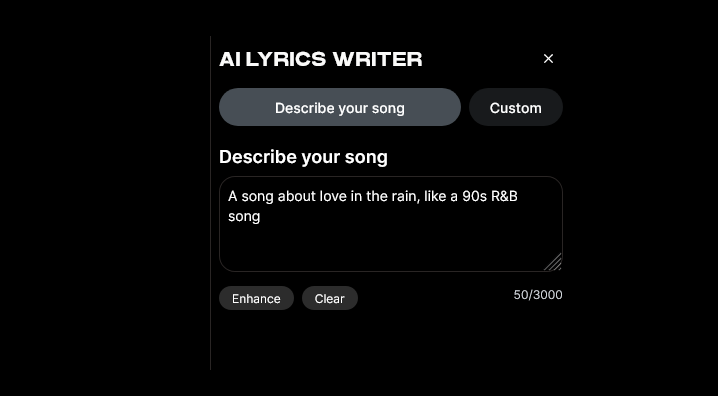
Now that you understand sad movie genres—from tragic dramas to tearjerker stories—here’s how Soundverse turns thematic emotion into creative lyrical content.
How to make emotional film-inspired lyrics with Soundverse AI Lyrics Writer
Soundverse AI Lyrics Writer enables users to instantly generate song lyrics integrating emotional tone, cinematic themes, and musical structure.
Primary Capabilities:
- Structure Generation: Automatically forms verse, chorus, and bridge sections that align with dramatic story arcs.
- Mood and Genre Customization: Select tone settings that represent sorrow, longing, or catharsis—perfect for emotional film soundtracks.
- Partial Lyric Completion: Begin drafting manually then let Soundverse finish the composition based on theme.
- Integrated 'Help Me Write' Workflow: Use intelligent writing assistance built into Soundverse for overcoming creative blocks.
Practical Use Cases:
- For Filmmakers: Create music-driven emotional depth for movie scenes.
- For Writers: Draft lyrical elements that complement sad storylines.
- For Educators: Teach cinematic emotion and song structure interactively.
Explore related tutorials like How to Create Country Music with Soundverse AI or How to Create Jazz Music with Soundverse AI to discover how the same workflow adapts for different emotional contexts.
In essence, Soundverse bridges emotion and structure—allowing artists to translate cinematic sadness into powerful musical narratives.
Create Emotionally Powerful Music with Soundverse AI
Bring the depth of sadness, love, or nostalgia to life in your compositions. Soundverse helps you create emotionally rich soundtracks and cinematic experiences instantly.
Start Creating with Soundverse
Related Articles
- The Role of AI Music in Film and Television — Discover how AI-generated music is transforming emotional storytelling in the world of movies and TV.
- Most Popular Music Genres — Explore the music genres that resonate globally and understand how emotion defines their appeal.
- How an AI Music Generator Inspires Creative Fusion — Learn how AI tools spark creativity and merge different emotional styles to craft unique music compositions.
- The Benefits of Composing with AI Music Generator — Find out how AI-powered tools simplify the creative process and help artists produce music that connects deeply with audiences.
Here's how to make AI Music with Soundverse
Video Guide

Here’s another long walkthrough of how to use Soundverse AI.
Text Guide
- To know more about AI Magic Tools, check here.
- To know more about Soundverse Assistant, check here.
- To know more about Arrangement Studio, check here.
Soundverse is an AI Assistant that allows content creators and music makers to create original content in a flash using Generative AI.
With the help of Soundverse Assistant and AI Magic Tools, our users get an unfair advantage over other creators to create audio and music content quickly, easily and cheaply.
Soundverse Assistant is your ultimate music companion. You simply speak to the assistant to get your stuff done. The more you speak to it, the more it starts understanding you and your goals.
AI Magic Tools help convert your creative dreams into tangible music and audio. Use AI Magic Tools such as text to music, stem separation, or lyrics generation to realise your content dreams faster.
Soundverse is here to take music production to the next level. We're not just a digital audio workstation (DAW) competing with Ableton or Logic, we're building a completely new paradigm of easy and conversational content creation.
TikTok: https://www.tiktok.com/@soundverse.ai
Twitter: https://twitter.com/soundverse_ai
Instagram: https://www.instagram.com/soundverse.ai
LinkedIn: https://www.linkedin.com/company/soundverseai
Youtube: https://www.youtube.com/@SoundverseAI
Facebook: https://www.facebook.com/profile.php?id=100095674445607
Join Soundverse for Free and make Viral AI Music

We are constantly building more product experiences. Keep checking our Blog to stay updated about them!