What Are Music Loops? Understanding Loop Samples and Audio Looping in 2026
Learn what music loops are and how they shape modern audio production in 2026.
What Are Music Loops?
Music loops are one of the foundational elements in modern music production, particularly within digital environments and DAWs (Digital Audio Workstations). In 2026, the concept of looping has evolved well beyond simple repetition—it's now a dynamic tool used by producers, composers, and sound designers to build captivating arrangements, rhythmic patterns, and evolving textures. Whether you're creating an ambient track or a punchy beat, understanding music loops gives you a powerful edge in production.
What Are Music Loops?
Music loops are short sections of audio designed to be repeated seamlessly. These could include drum beats, melodic phrases, bass lines, or ambient textures that align perfectly with your project’s tempo. The key characteristic of a loop is its ability to play continuously without noticeable gaps or clicks between repetitions. You can learn more about the definition through this guide on what music loops are.
Loop samples are essential in a variety of genres—from electronic music and hip-hop to cinematic scoring and video game soundtracks. They allow producers to maintain a steady rhythm or mood while adding layers and complexity over time. In 2026, with advancements in audio looping and AI-driven tools, loops can now be intelligently generated, stretched, or rearranged without losing sound quality.
How Did Music Loops Become So Important?
Music loops have grown in popularity since the early days of digital sampling in the 1990s. Originally, loops were created by cutting and repeating small sections of tape or digital recordings. Today, DAWs make this process effortless, and tools like AI music generators automate it entirely.
Over the past two years—2024 and 2025—music loops became a standard resource in every producer’s toolkit. By 2026, most loop sample libraries are now AI-enhanced, offering clean synchronization and genre-specific sound variations. This evolution enables faster production, especially for content creators and musicians working under tight deadlines.
How Music Loops Fit into Music Production Basics
In music production basics, loops are used for several roles:
- Rhythm Construction: Drum loops form the backbone of a track. They keep timing consistent and provide a framework for additional instruments.
- Mood Creation: Ambient loop samples generate atmosphere in genres like chillout, lofi, or cinematic scoring.
- Structure Building: Loops help producers draft song sections quickly. For instance, four-bar loops define the verse or chorus structure before transitions or breakdowns.
- Sound Design: Using loop manipulation—pitch shifting, time-stretching, and filtering—sound designers can create hybrid textures and soundscapes.
This makes looping one of the most versatile techniques for beginners learning audio production fundamentals. The RouteNote Blog’s introduction to loops also details how these patterns form genre foundations.
What Is Audio Looping and Why It Matters in DAWs
Audio looping within DAWs refers to repeating a selected region of audio or MIDI data indefinitely. Modern DAWs like Ableton Live, FL Studio, and Logic Pro have advanced looping functions, allowing producers to trigger loops in real-time or arrange them on a timeline.
Looping in DAWs contributes to workflow speed and creative flexibility. Producers can experiment with multiple loop samples simultaneously, layering percussion, melodic themes, and vocal effects to explore different sonic outcomes. In 2026, AI-assisted DAWs increasingly include loop generation algorithms that suggest complementary loops based on a track’s key and tempo. Check out Pro Audio Files’ introduction to loop-based software for more context on these features.
For a deeper dive, watch our tutorial on making music from the Soundverse YouTube channel.
The Role of Loop Samples in Sound Design
Sound design thrives on creative repetition. Loops can be transformed through filters, modulation, effects, and spatial adjustments to produce entirely new results. For example, a single rhythmic loop might be processed into dozens of texture variations using reverb, delay, and granular synthesis.
Advanced sound designers also rely on stem separation tools, such as the Soundverse Stem Separator, to break full tracks into editable loops or individual layers like drums, bass, and guitars. This gives producers fine control over each musical component.
What Are the Main Types of Music Loops Used Today?
By 2026, loop libraries and AI tools have expanded the kinds of loops producers use daily:
- Drum Loops: Defined rhythmic sequences ready for layering.
- Instrumental Loops: Melodic lines from piano, guitar, synth, or strings.
- Vocal Loops: Non-lyrical vocal textures or chopped voice snippets.
- Ambient Loops: Background soundscapes or nature-inspired tones.
- Hybrid Loops: AI-generated experimental combinations that merge genres.
These varieties make loop samples essential not only in traditional music but also in commercial content creation, film scoring, and game design. You can learn about the creative usage through BassGorilla’s loop-making guide.
How to Make Music Loops With Soundverse AI Music Generator
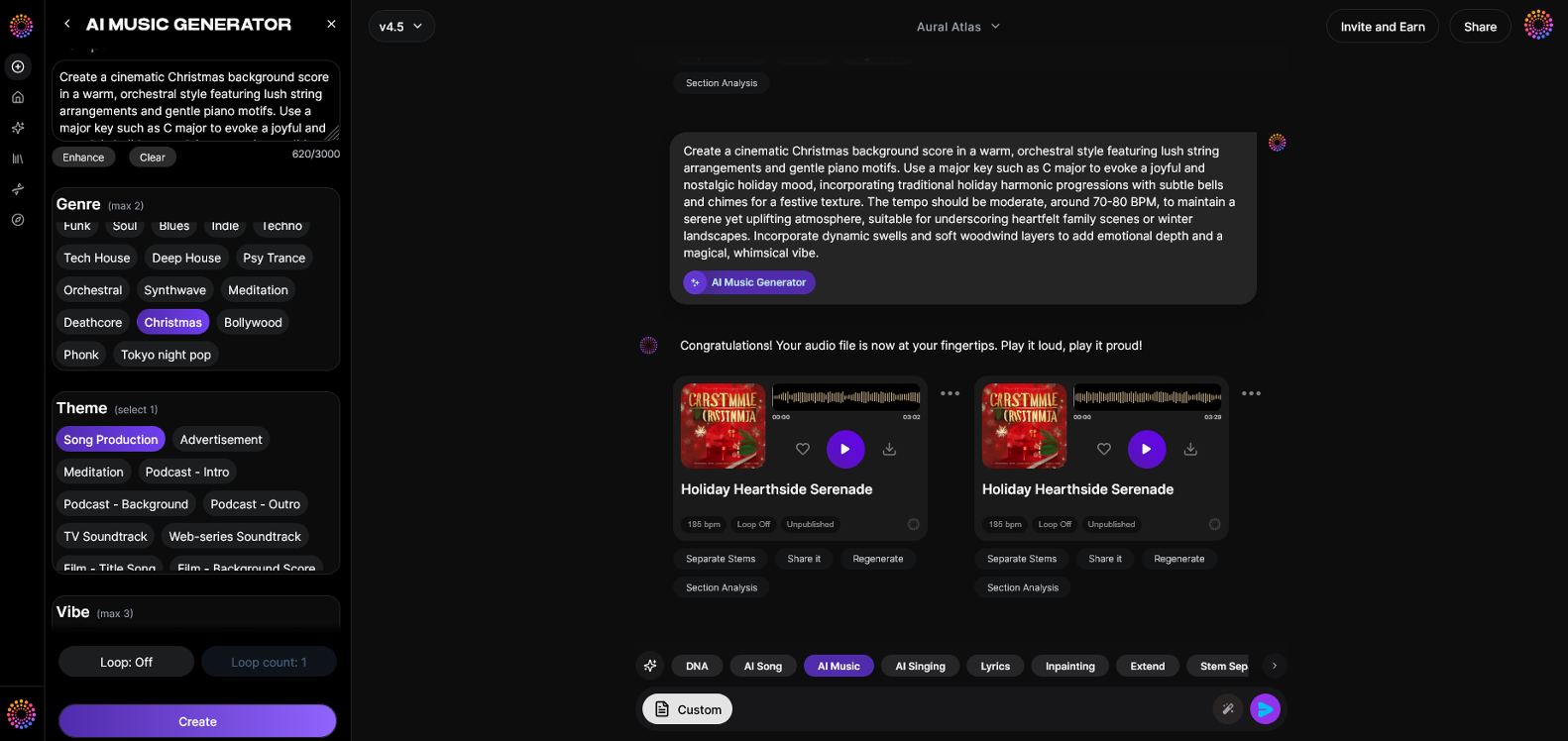
Soundverse’s AI Music Generator is an advanced platform that transforms text descriptions into fully produced instrumental music with optional looping. Perfect for video backgrounds, game soundtracks, meditation tracks, and advertisements, it handles the technical aspects of loop creation while you focus on creativity.
For hands-on examples, watch our Soundverse Deep House tutorial.
Soundverse employs state-of-the-art AI models (V4 and V5) that interpret your text prompts to design music according to genre, mood, and instrument preferences. Its Loop Mode ensures seamless continuity so that your output can repeat indefinitely without any noticeable transitions.
Key Capabilities
- Text-to-Music Creation: Input descriptive prompts like “ambient cinematic pulse” or “lofi chill beat.”
- Loop Mode: Enable perfectly matched loops for background or interactive use.
- Genre/Mood Control: Customize emotional tone and production style.
- Export Flexibility: Download generated music for editing in any DAW.
Soundverse's technology aligns perfectly with producers seeking royalty-free, AI-generated loops. If you’re interested in learning about its broader music generation features, check out how AI-generated music is transforming the music industry.
How Soundverse Complements Modern Looping Workflows
Soundverse integrates seamlessly into existing production environments. After generating music using text prompts, you can import your AI-produced track into any DAW and manipulate loop regions freely. Its AI ensures phrases are loop-ready—meaning the end and beginning connect naturally.
Beyond the AI Music Generator, Soundverse also offers complementary tools:
- Extend Music: Automatically lengthens an existing track with matching musical material.
- Inpainting: Allows section-specific regeneration without affecting surrounding regions.
- Stem Separator: Extracts individual instrument stems for detailed loop adjustments.
Together, these features help producers and sound designers refine audio looping techniques and enhance creative storytelling. For workflow insights, watch our “Explore” Tab walkthrough.
Why Music Loops Are More Relevant Than Ever in 2026
In 2026, short-form video platforms, interactive apps, and immersive gaming continue to demand high volumes of loopable audio content. Loops provide creators with flexibility, consistency, and speed. AI technologies have made producing professional-quality loops accessible to all skill levels—from amateur musicians to experienced engineers.
Artists can now produce entire albums using AI-generated loops, bridging artistic intent with computational precision. As seen across Soundverse’s growing user community, looping is no longer a repetitive technique—it’s a creative cornerstone.
Start Creating With Music Loops Instantly
Power your next track with AI-driven loops that match your mood, genre, or creative vision. Soundverse lets you generate seamless loops in seconds—no studio or experience required.
Related Articles
- How to Make AI-Generated Music: Discover the step-by-step process of creating original AI-generated tracks that sound professional and unique.
- What Are Song Stems and Why Do You Need Them: Understand the importance of song stems and how they empower flexibility in mixing and remixing your music.
- Generate AI Music With Soundverse Text-to-Music: Learn how to turn text prompts into complete songs using Soundverse’s intelligent text-to-music technology.
- 50 Hand-Picked Background Music AI Music Generation Prompts for All Occasions: Explore curated prompts to help you generate background music that perfectly fits any project or vibe.
Here's how to make AI Music with Soundverse
Video Guide
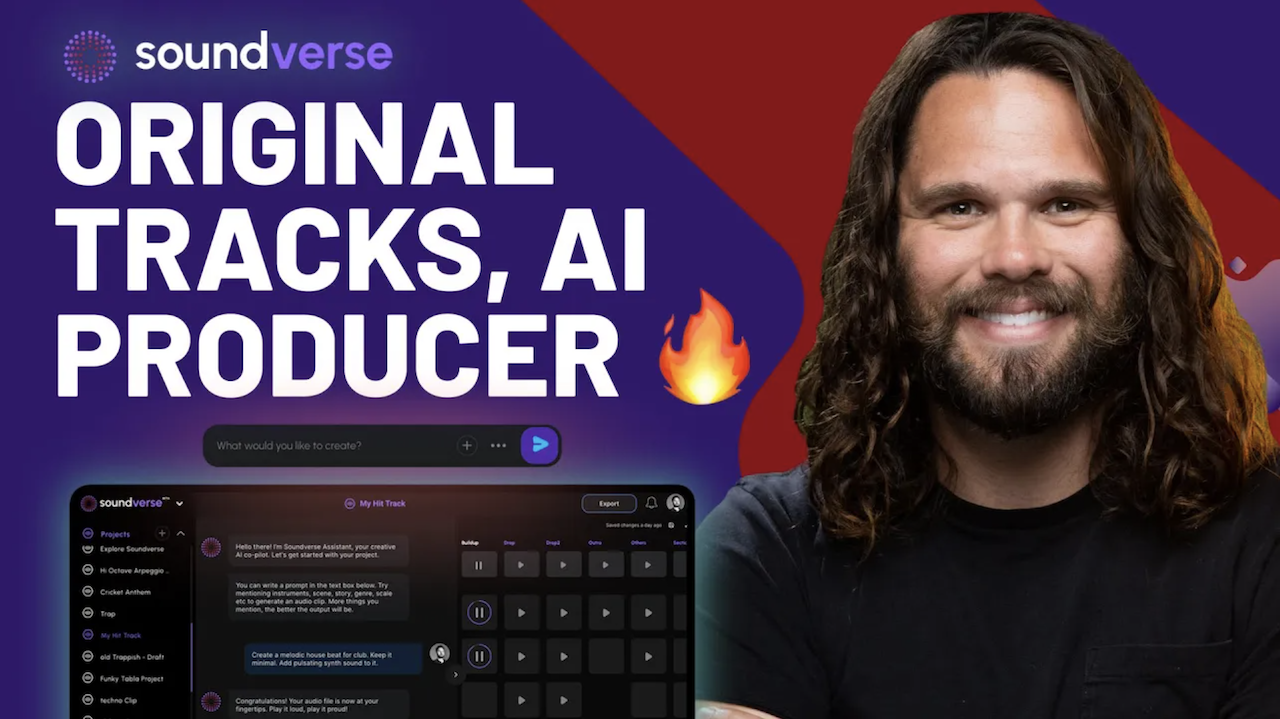
Here’s another long walkthrough of how to use Soundverse AI.
Text Guide
- To know more about AI Magic Tools, check here.
- To know more about Soundverse Assistant, check here.
- To know more about Arrangement Studio, check here.
Soundverse is an AI Assistant that allows content creators and music makers to create original content in a flash using Generative AI.
With the help of Soundverse Assistant and AI Magic Tools, our users get an unfair advantage over other creators to create audio and music content quickly, easily and cheaply.
Soundverse Assistant is your ultimate music companion. You simply speak to the assistant to get your stuff done. The more you speak to it, the more it starts understanding you and your goals.
AI Magic Tools help convert your creative dreams into tangible music and audio. Use AI Magic Tools such as text to music, stem separation, or lyrics generation to realise your content dreams faster.
Soundverse is here to take music production to the next level. We're not just a digital audio workstation (DAW) competing with Ableton or Logic, we're building a completely new paradigm of easy and conversational content creation.
TikTok: https://www.tiktok.com/@soundverse.ai
Twitter: https://twitter.com/soundverse_ai
Instagram: https://www.instagram.com/soundverse.ai
LinkedIn: https://www.linkedin.com/company/soundverseai
Youtube: https://www.youtube.com/@SoundverseAI
Facebook: https://www.facebook.com/profile.php?id=100095674445607
Join Soundverse for Free and make Viral AI Music
We are constantly building more product experiences. Keep checking our Blog to stay updated about them!