What Are Music Genres? A Complete Guide for 2026
Explore types of music, genre characteristics, and how Soundverse helps you create tracks by genre.
What Are Music Genres?
Music is one of humanity’s most universal languages, and its diversity is captured through what we call music genres. By 2026, the boundaries between genres have become more fluid than ever—thanks to digital streaming, AI composition tools, and global cross-cultural collaborations. Understanding how genres are classified and what they represent is key for students, creators, and enthusiasts exploring the vast landscape of sound.
What are music genres?
Music genres are categories used to organize and describe pieces of music based on shared stylistic, cultural, and technical characteristics. These categories help listeners, producers, and researchers identify patterns in rhythm, harmony, instrumentation, and lyrical themes. Essentially, genres serve as a system of music classification, grouping sounds that evoke similar emotional experiences or aesthetic traditions.

Historically, genres emerged from geography and community—the blues from African American traditions, country from rural folk storytelling, and classical from Western orchestral composition. In 2026, they’ve evolved through streaming analytics and AI-driven classification systems that analyze millions of tracks, identifying unique sonic fingerprints beyond simple labels.
How are music genres classified?
Music classification depends on several dimensions:
- Instrumentation: The tools used—electric guitars, synthesizers, orchestral strings, or traditional drums—shape the sound palette.
- Rhythm and Tempo: Genres differ in beat patterns. For instance, hip-hop emphasizes syncopation and groove, while techno relies on repetitive 4/4 rhythms.
- Cultural and Social Context: Genres often represent cultural identities or movements, such as reggae’s roots in Jamaican heritage or punk’s rebellion against convention.
- Production Style: Modern genres often differ based on production choices—compression styles, sampling techniques, and mixing preferences.
- Emotional Tone and Mood: Ambient and meditation music aim for calm and relaxation, while rock and metal emphasize energy and aggression.
This classification system is not rigid. Modern tools and platforms—like Soundverse’s AI generators—allow creators to blur genre lines by combining music styles into unique hybrid tracks. For a deeper dive, watch our guide on creating Deep House music.
What are the most popular music genres in 2026?
As of 2026, global streaming data and AI curation have highlighted several dominant genre categories:
- Pop: Continues its reign as the universal genre, defined by catchy melodies, relatable themes, and a polished production style. According to EDM Sauce’s list of music genres, pop sits among the top debated categories.
- Hip-Hop and Rap: Driven by lyrical expression and rhythm, hip-hop remains culturally dominant, now integrating afrobeats and trap fusion elements. To explore more, check our dedicated guide: How to create rap music with AI.
- Electronic Dance Music (EDM): Expanding across sub-genres like deep house, trance, and techno. AI platforms now generate seamless loops ideal for DJs and producers. See how we approach EDM design in How to Create EDM with Soundverse AI.
- Rock and Metal: Electric guitar-driven music continues its global revival, often merged with digital effects and modern drum design, resonating with insights from AAFT’s guide to hottest genres of 2026.
- Jazz: A timeless form still evolving through neo-jazz and fusion trends, blending improvisation with modern production tools. For detail, visit How to Create Jazz Music with Soundverse AI.
- Classical and Orchestral: Found in scores for film, television, and video games. This enduring genre inspires listeners with formal composition frameworks.
- Country: Story-driven in nature, country remains a favorite in both traditional and pop-country crossover formats. Explore genre creation through How to Create Country Music with Soundverse AI.
- Lofi and Chillwave: Perfect for studies, meditation, and creative concentration sessions; this genre thrives through online streaming, validated by LANDR’s music trends report.
- World Music: A fusion of global influences—Latin rhythms, African beats, Asian tonalities—all thriving through streaming globalization.
- Ambient and Meditation: Used for relaxation and wellness applications. AI tools like Soundverse can craft unique meditation soundscapes, covered in How to Create Healing Meditation Music with Soundverse AI.
By 2026, even micro-genres—like hyperpop, experimental drone, and AI fusion sound—are categorized in streaming platforms thanks to algorithmic classification. Check out Soundverse’s YouTube tutorial on creating music for an example of genre blending.
What makes each genre unique?
Every genre possesses defining genre characteristics that influence its structure:
- Pop: Verse-chorus organization, melodic hooks, upbeat tempos.
- Jazz: Improvision, complex chord progressions, free-form rhythm.
- Rock: Prominent electric guitars, strong backbeat, intensity.
- EDM: Synthesized textures, repetitive patterns, and booming drops.
- Hip-Hop: Rhythmic vocals, sampling, and punchy bass patterns.
- Classical: Symphonic arrangement, precision, and dynamic orchestration.
- Country: Storytelling lyrics, acoustic instrumentation.
- World: Cultural instrumentation, multilingual vocals.
Understanding these signatures is crucial for music learners since genre shapes how artists compose, arrange, and perform.
Why understanding music genres matters
For emerging musicians and producers, recognizing genres helps decide the target audience, structure compositions effectively, and personalize the emotional tone of tracks. Music students benefit from genre theory to trace historical roots and see how style evolution shapes modern soundscapes.
From an industry standpoint, genre classification guides marketing algorithms for streaming platforms, playlist generation, and recommendation engines. It also aids AI-based generation tools, enabling accurate recreation of stylistic nuances. You can explore predictive genre influence trends at Epidemic Sound’s music trends 2026 overview.
How to make music by genre with Soundverse AI Music Generator
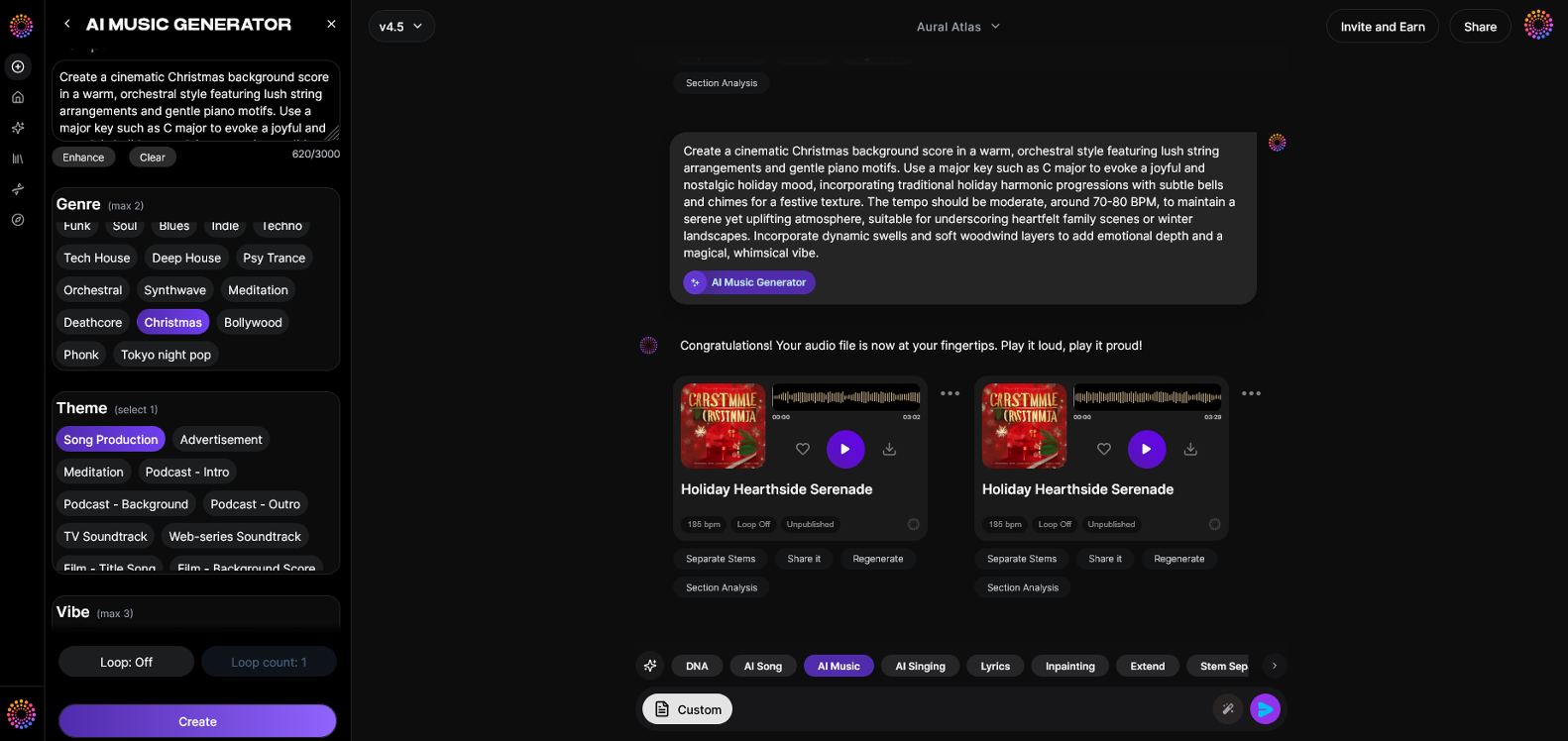
Soundverse’s AI Music Generator allows you to create fully produced instrumental compositions—tailored to any genre or mood—purely from text prompts.
Key Features
- Text-to-Music Creation: Simply describe your desired style (“a chill lo-fi beat” or “an epic cinematic track”), and Soundverse generates an instrumental.
- Loop Mode: Enables seamless playback ideal for video backgrounds or game levels.
- Genre and Instrument Control: Select precise music styles, genre parameters, and specify duration.
- Available Models: Choose between V4 or V5 models for different sound fidelity profiles.
Use Cases
- Video background music and content scoring.
- Game soundtracks, loops, and ambient scenes.
- Wellness, meditation, or focus playlists.
- Advertising and commercial composition where mood-specific sound is essential.
Soundverse’s integrated system makes it ideal for creators focused on authentic genre-based production. Discover more in generate AI music with Soundverse text-to-music and Soundverse AI revolutionizing music creation. For tool insights, watch the “Explore” tab tutorial to see live demo generation.
For cross-tool functionality, Soundverse also offers an AI Song Generator for full compositions—including vocals—and an AI Lyrics Writer to produce genre-correct lyrics for artists. These tools integrate via the ‘Help Me Write’ feature, creating a complete production pipeline.
Explore the World of Music Genres with Soundverse AI
Discover how AI can help you create and experiment across different music genres effortlessly. Unlock endless creative possibilities and bring your musical vision to life with Soundverse’s intuitive tools.
Related Articles
- Most Popular Music Genres: Dive into an overview of today’s most popular music genres and what makes each one stand out.
- How to Create Jazz Music with Soundverse AI: Learn how to generate rich, smooth jazz compositions using Soundverse’s AI-powered tools.
- How to Create Country Music with Soundverse AI: Discover how to craft heartfelt country tracks with AI assistance, from guitars to vocals.
- Now Generate Music with Filters Such as Genre, Theme, Instruments, or Even Vibe: Explore how Soundverse lets you tailor your AI music generation to match any genre or mood.
Here's how to make AI Music with Soundverse
Video Guide
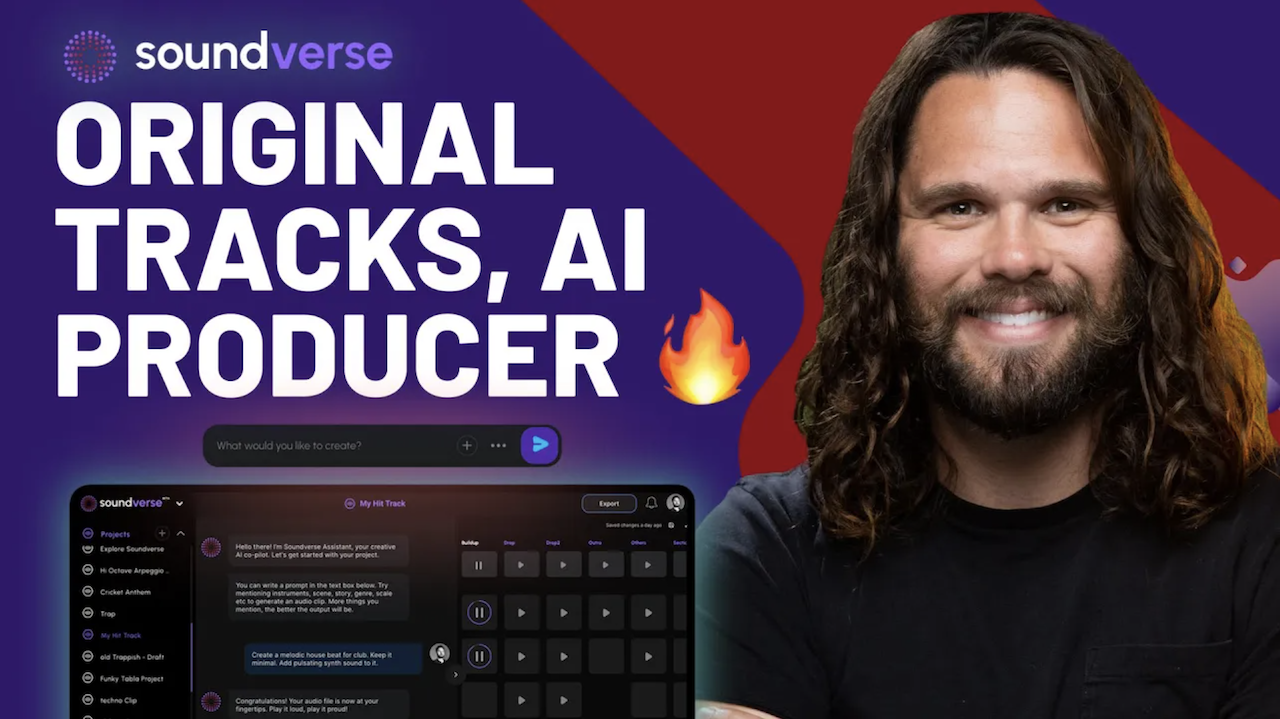
Here’s another long walkthrough of how to use Soundverse AI.
Text Guide
- To know more about AI Magic Tools, check here.
- To know more about Soundverse Assistant, check here.
- To know more about Arrangement Studio, check here.
Soundverse is an AI Assistant that allows content creators and music makers to create original content in a flash using Generative AI. With the help of Soundverse Assistant and AI Magic Tools, our users get an unfair advantage over other creators to create audio and music content quickly, easily and cheaply. Soundverse Assistant is your ultimate music companion. You simply speak to the assistant to get your stuff done. The more you speak to it, the more it starts understanding you and your goals. AI Magic Tools help convert your creative dreams into tangible music and audio. Use AI Magic Tools such as text to music, stem separation, or lyrics generation to realise your content dreams faster. Soundverse is here to take music production to the next level. We're not just a digital audio workstation (DAW) competing with Ableton or Logic, we're building a completely new paradigm of easy and conversational content creation.
TikTok: https://www.tiktok.com/@soundverse.ai
Twitter: https://twitter.com/soundverse_ai
Instagram: https://www.instagram.com/soundverse.ai
LinkedIn: https://www.linkedin.com/company/soundverseai
Youtube: https://www.youtube.com/@SoundverseAI
Facebook: https://www.facebook.com/profile.php?id=100095674445607
Join Soundverse for Free and make Viral AI Music

We are constantly building more product experiences. Keep checking our Blog to stay updated about them!