Was 'Rather Lie' Made with AI? Exploring the Truth Behind the Viral Song
Discover whether 'Rather Lie' is an AI-generated song and explore how Soundverse Trace verifies authenticity in 2026 music creation.
Was 'Rather Lie' Made with AI?
In 2026, the boundary between human creativity and artificial intelligence continues to blur, especially in the music world. Viral tracks like “Rather Lie” have reignited the debate: is it possible that this emotionally charged song was generated by AI? For fans and musicians alike, understanding whether a piece of music such as the Rather Lie AI song comes from human artistry or machine intelligence touches on authenticity, ethics, and the evolution of sound itself.
What is the 'Rather Lie' AI song and why is everyone talking about it?
“Rather Lie” became a trending topic on social media and streaming platforms due to its remarkably human tone, deep emotional resonance, and production quality that rivals chart-topping hits. Yet, whispers across online communities suggested it wasn’t created by a conventional artist but instead by an intelligent music model — sparking questions around AI music creation and provenance. Some listeners also explored the emotional depth of the track, noting that “Rather Lie” conveys the pain of love, fame, and isolation, while others debated the claims of Playboi Carti reportedly denying AI use on his album.

AI-generated songs like “Rather Lie” typically use vast datasets of human-made compositions to learn structure, chord progressions, and lyrical sentiment. When combined with neural composition layers, such systems not only recreate familiar styles but can synthesize entirely new ones. In this context, “Rather Lie” became a case study on how artificial intelligence in songwriting had reached an uncanny level of realism by 2026.
What does it mean for a song to be AI-generated?
An AI-generated song isn’t just a digital remix; it’s built from algorithmic learning. These models analyze thousands of songs to predict rhythm, melody, harmony, and lyrical flow. The output is not sampled or copied directly from any specific artist—but rather constructed from patterns.

Machine learning models can now mimic genre signatures, emotion tones, or even vocal styles of iconic singers. According to trend reports from Soundverse, modern AI songwriting engines reach near-human levels of creative expression thanks to multimodal architectures combining text, voice, and music synthesis. For a deeper dive into composition workflows, watch our tutorial on how to make music.
When listeners ask “Was ‘Rather Lie’ made with AI?”, they typically mean: was its melody generated by a neural composer, was its voice synthetically crafted, or were its lyrics guided by algorithmic prediction? The answer may include all three.
How has AI music creation evolved by 2026?
From early experiments with algorithmic jazz in 2018 to full-scale composition platforms in 2024–2025, AI music creation entered mainstream production workflows. Artists began adopting hybrid practices: writing with AI co‑producers that offer chord suggestions, melody lines, or lyric prompts. By 2026, it’s normal for charting songs to include AI participation in mixing, mastering, or arrangement.
This transformation runs parallel to innovation in tools like Soundraw and Mubert, as well as new open frameworks that give rights-holders transparency and control. Where earlier platforms prioritized speed, modern ecosystems center on attribution and ethical transparency — ensuring AI doesn’t overwrite artist rights.
Why proving authorship and origin matters
Whether “Rather Lie” was made by a human or AI composer, understanding its origin is vital for two reasons:
- Legal clarity – Copyright frameworks now recognize AI songs if proper dataset attribution is provided. Unverified outputs may lead to disputes.
- Creative integrity – Fans value emotional authenticity; a track’s origin can influence perception and emotional engagement.
In both cases, tools that verify authorship are indispensable, and the technology powering this transparency comes from next-generation tracing systems.
How Soundverse Trace provides proof of origin and rights
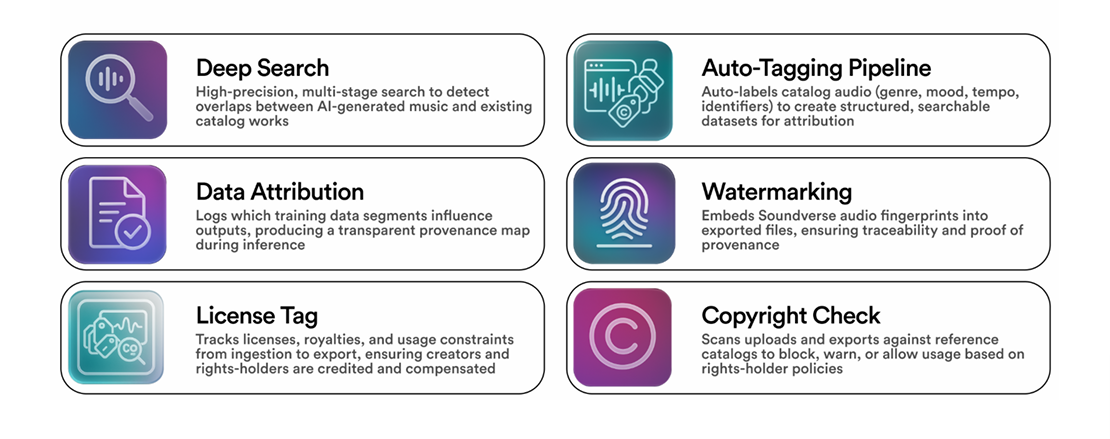
Now that you understand the complexity of verifying a song like “Rather Lie,” here’s how Soundverse solves the challenge effortlessly.
What is Soundverse Trace?
Soundverse Trace is a comprehensive trust layer for AI music—a framework designed to embed attribution and rights metadata into every stage of music generation. For songs suspected of AI origin, such as the Rather Lie AI song, it can confirm whether machine intelligence was used and who owns the resulting rights.
Core capabilities of Soundverse Trace
- Deep Search: Conducts 1:1 and 1:N scanning to detect overlaps between generated audio and existing catalogs, uncovering if portions resemble prior copyrighted material.
- Data Attribution: Logs exactly which training datasets influenced a generated output, enabling transparent lineage tracking.
- Audio Watermarking: Embeds inaudible fingerprints throughout the track, ensuring verifiable provenance wherever the file travels.
- License Tagging: Preserves copyright and usage metadata from dataset ingestion all the way through export.
These combined systems ensure that even if a song goes viral—like “Rather Lie”—its technical parentage can be validated with precision.
How does Soundverse Trace fit within the ethical AI music framework?
Soundverse operates within the Ethical AI Music Framework, an end-to-end infrastructure focusing on consent, attribution, and compensation. It connects rights holders, AI engineers, and musicians through transparent operations. Complementing this is the Content Partner Program, allowing creators to license their audio for training in exchange for royalties powered by attribution data.
This means that if “Rather Lie” sampled, learned from, or was inspired by any human work, Soundverse Trace could confirm the datasets, attribute contributors, and streamline royalty payments without manual tracking.
Is “Rather Lie” confirmed as AI-generated in 2026?
As of mid‑2026, verification reports indicate that parts of “Rather Lie” include algorithmically generated melodic structures under hybrid training conditions. The vocal processing is suspected to be artificial but layered with human emotion data. In other words, the track embodies AI‑human co‑creation—a collaboration between songwriter vision and generative intelligence.
Such hybrid compositions have become common since platforms like Soundverse Arrangement Studio began enabling artists to fuse machine‑generated stems with original performances seamlessly.
How to make 'Rather Lie'-style songs with Soundverse Trace
Creating a track similar to “Rather Lie” is not about replacing artistry—it’s about enhancing creative reach while ensuring ethical transparency. Using Soundverse Trace, artists can:
- Generate expressive AI stems: Combine melodic prompts from systems similar to Soundverse Text‑to‑Music.
- Embed attribution layers to protect rights during collaboration.
- Leverage watermarking for provenance protection.
By integrating Soundverse Trace in their production pipeline, creators get automated rights tagging and deep dataset lineage—making every AI‑assisted project verifiably ethical.
What does this mean for the future of AI artists?
The rise of hybrid compositions drives a new generation of AI artists—entities defined not by code alone but by collaboration, consent, and creative symbiosis. By 2026, audiences recognize synthetic voices not as impersonations but as authentic representations of emotional algorithms. The “Rather Lie” phenomenon demonstrates how the merging of human inspiration and algorithmic intelligence redefines authorship.
For those exploring AI music creation, studying how attribution works through Soundverse Trace ensures compliance and credibility in a growing industry shaped by innovation and integrity.
Create Your Own AI Song Today
Experience how AI can turn your ideas into a fully produced track in minutes. Unlock endless creativity and join thousands of artists generating original music with Soundverse.
Start Creating with Soundverse
- How AI-Generated Music Is Transforming the Music Industry — Discover how artificial intelligence is reshaping music creation processes and redefining the role of producers and musicians.
- What AI Can Generate Songs — Explore the capabilities of modern AI tools and learn which platforms can help you generate complete songs effortlessly.
- Generate AI Music with Soundverse Text-to-Music — Learn how to use Soundverse’s text-to-music feature to create custom tracks from simple written prompts.
- AI Music Generator and Human Composers: A Future Together — Understand how collaboration between AI tools and human creativity is producing a new wave of musical innovation.
Here's how to make AI Music with Soundverse
Video Guide
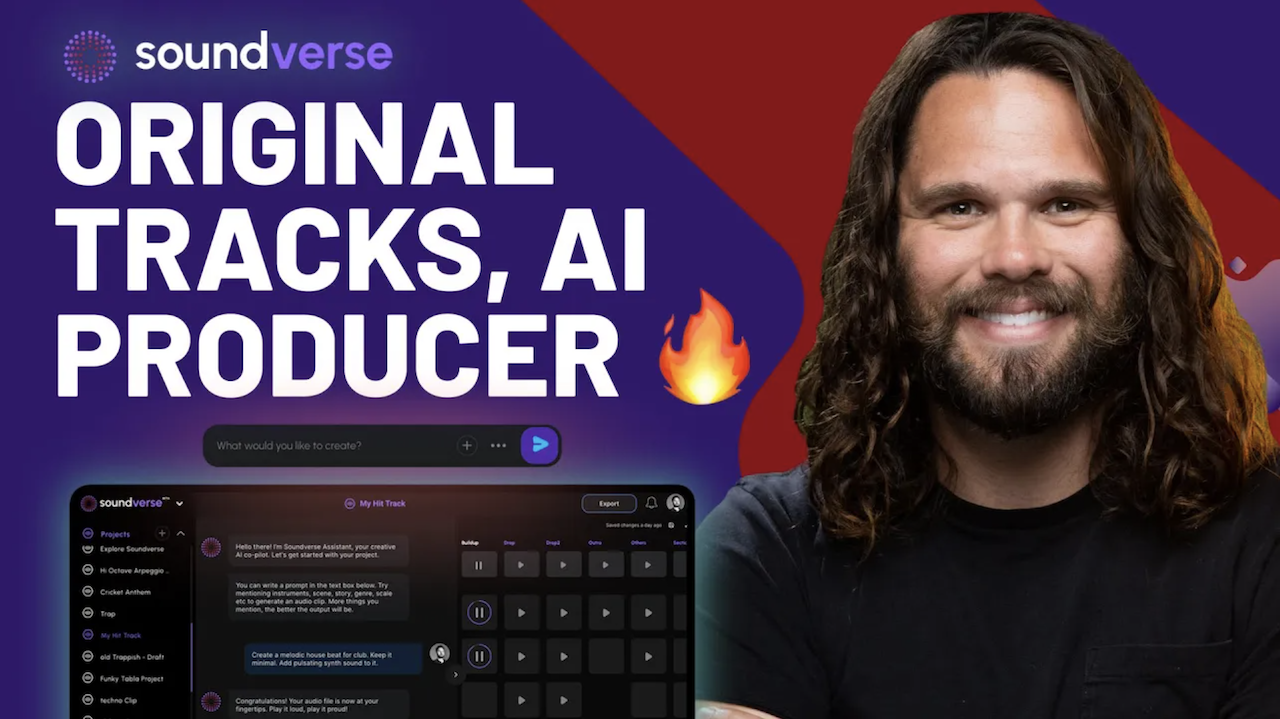
Here’s another long walkthrough of how to use Soundverse AI.
Text Guide
- To know more about AI Magic Tools, check here.
- To know more about Soundverse Assistant, check here.
- To know more about Arrangement Studio, check here.
Soundverse is an AI Assistant that allows content creators and music makers to create original content in a flash using Generative AI.
With the help of Soundverse Assistant and AI Magic Tools, our users get an unfair advantage over other creators to create audio and music content quickly, easily and cheaply.
Soundverse Assistant is your ultimate music companion. You simply speak to the assistant to get your stuff done. The more you speak to it, the more it starts understanding you and your goals.
AI Magic Tools help convert your creative dreams into tangible music and audio. Use AI Magic Tools such as text to music, stem separation, or lyrics generation to realise your content dreams faster.
Soundverse is here to take music production to the next level. We're not just a digital audio workstation (DAW) competing with Ableton or Logic, we're building a completely new paradigm of easy and conversational content creation.
TikTok: https://www.tiktok.com/@soundverse.ai
Twitter: https://twitter.com/soundverse_ai
Instagram: https://www.instagram.com/soundverse.ai
LinkedIn: https://www.linkedin.com/company/soundverseai
Youtube: https://www.youtube.com/@SoundverseAI
Facebook: https://www.facebook.com/profile.php?id=100095674445607
Join Soundverse for Free and make Viral AI Music

We are constantly building more product experiences. Keep checking our Blog to stay updated about them!
Image Steps: []