Voice Rights Management: Protecting Your Vocal Identity in 2026
Learn how Soundverse Trace protects your vocal identity and voice rights in 2026.
Voice Rights Management: Protecting Your Vocal Identity
In the fast-evolving world of audio creation and AI-generated sound, protecting your unique voice has become one of the most urgent conversations artists face in 2026. The arrival of advanced generative voice models has opened doors for creators and musicians, but it has also led to pressing questions around who owns and can use a person’s vocal likeness. This is where voice rights management becomes a defining frontier in the music and entertainment industry.
Why does voice rights management matter in 2026?

In previous years (2024–2025), creators watched AI explode across streaming and content platforms. A new class of voice synthesis tools emerged, offering to clone vocal tones, emotions, and delivery patterns with astonishing accuracy. By 2026, those tools are now everywhere — used in podcasts, advertisements, and fan-generated remixes. Yet, without strong voice rights management, creators risk losing oversight and monetization of their vocal identity.
Voice rights management isn’t just a legal term; it’s a safeguard for personality, likeness, and the biometric soundprint that defines an individual’s creative voice. Musicians, voice actors, and virtual influencers who rely on their voice as a signature element now need infrastructure that ensures consent, attribution, and enforceability throughout the voice’s digital lifecycle.
This movement ties closely to broader issues explored in how AI-generated music is transforming the music industry and AI music generator and human composers: a future together. The tension between innovation and protection is driving change across the creative economy.
What challenges are creators facing today?

1. Unauthorized Voice Cloning
AI can reproduce your voice from just a few seconds of audio. Without voice ownership agreements, creators can find their voice used in projects they never approved — from brand jingles to political messages. Predictions from SentiSight.ai indicate that licensing changes and artist resistance will reshape the landscape for AI voice usage in 2026.
2. Loss of Attribution
When cloned voices are layered into AI-generated tracks, tracing the source becomes nearly impossible. This has led to disputes over royalties and moral rights, particularly among voice actors whose tone has been replicated. As noted by Complete Music Update, these attribution concerns will shape the year’s biggest legal debates.
3. Monetization Gaps
Even if voice duplicates are made legally, creators may struggle to track usage and collect recurring compensation. The lack of integrated licensing tags across generation and distribution means assets are easily detached from their rights metadata.
4. Evolving Legal Frameworks
While biometric rights laws are expanding, they vary by jurisdiction. Legal professionals note that vocal likeness protection lags behind visual likeness governance — creating regulatory gray zones. According to Synchtank, independence and compliance will remain key themes in creative legal structures for 2026.
These challenges underline why vocal identity protection and voice ownership must coexist with technological evolution.
How is the industry responding to vocal identity protection?
The entertainment industry in 2026 is now introducing standards for biometric rights. Record labels and talent agencies draft voice ownership contracts covering:
- Vocal likeness usage rights
- Voiceprint licensing
- AI model training permissions
- Attribution transparency clauses
Platforms that emphasize ethical AI creation, like Soundverse, lead the charge toward fairer voice protection ecosystems.
For instance, Soundverse’s Ethical AI Music Framework establishes consent-based partnerships with vocal talent. It adheres to attribution-first principles across training datasets and final exports — ensuring that the artist’s sonic DNA always remains traceable.
How Soundverse Trace ensures secure voice rights management
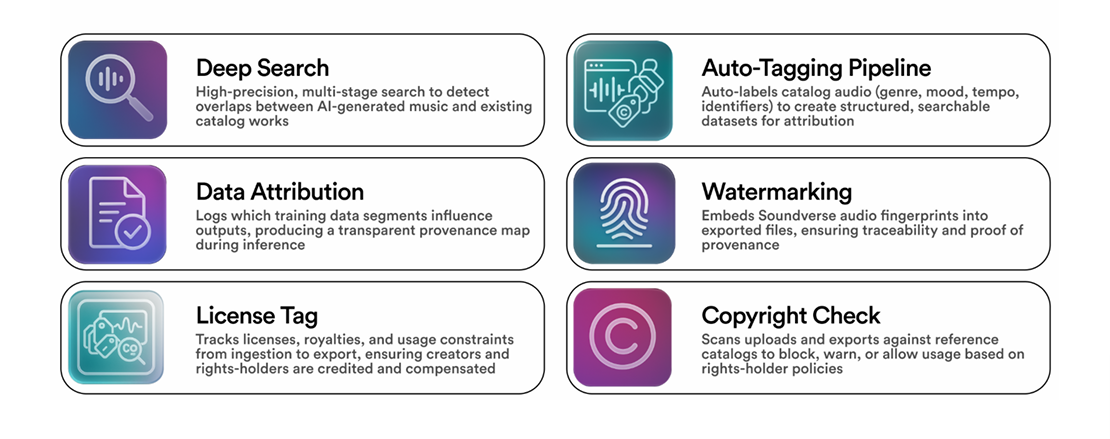
Soundverse Trace is designed as the trust layer that upholds authenticity across AI-generated content. It provides deep oversight over how sound data interacts within AI workflows.
Core Capabilities
- Deep Search: High-precision scanning to detect 1:1 or 1:N matches between generated content and original voice datasets.
- Data Attribution: Every output includes logs detailing which training data influenced the generated result — verifying provenance and ethical compliance.
- Audio Watermarking: Robust, inaudible fingerprints embedded throughout the audio lifecycle prevent unauthorized replication or misuse.
- License Tagging: Rights metadata stored from ingestion through export guarantees creator information never gets stripped away.
Soundverse Trace enables creators and rights holders to track catalog usage for royalties, verify the origin of AI-generated voices, and automate takedowns or payouts when infringements occur. For visual learners, see Soundverse’s tutorial on making music with AI and explore tab guide for deeper demonstration of data attribution management.
Ethical Integration Across Tools
Soundverse Trace works seamlessly within the Soundverse ecosystem:
- Soundverse DNA lets artists define their sonic identity, generating AI music that’s ethically trained on licensed catalogs.
- Voice Swap allows creators to substitute vocal models while preserving timing and expression — processed asynchronously, not live.
- The Ethical AI Music Framework binds these technologies together, ensuring consent and compensation remain transparent.
Together, these make Soundverse the most comprehensive environment for secure vocal identity management.
What are biometric rights and how do they link to voice ownership?
Biometric rights encompass protections for human-identifiable features such as fingerprints, facial geometry, and voiceprints. In 2026, voiceprint data has become a central biometric asset for creative professionals. Voice is no longer just a sound; it’s a data signature.
Voice ownership mirrors image rights laws — granting individuals authority to monetize or restrict the use of their sound identity. For voice actors and musicians, these rights translate into contracts assigning who can store, modify, and commercially deploy their vocal dataset.
As creators generate AI music using tools like Soundverse DNA, they can safely know their biometric rights are preserved under transparent attribution standards — similar to how soundstem separation AI ensures ethical reuse of musical layers.
How should creators approach vocal identity protection today?
- Define your ownership early: Create explicit voice-use agreements for any collaborative or AI-assisted projects.
- Embed metadata: Include attribution tags and license information directly in your vocal recordings before sharing.
- Register your vocal data: Work with trusted platforms utilizing traceable watermarking and attribution tracking.
- Monitor usage: Periodically run detection scans to identify whether your voice appears in new AI outputs.
- Understand local legal standards: Biometric voice protection laws are advancing, but differ by country. Lawyers advise maintaining international vocal IP registrations.
Adopting these practices ensures a sustainable creative economy where innovation and integrity thrive side by side.
The road ahead: where voice rights are heading by 2026 and beyond
Voice ethics has moved from niche discourse to mainstream law. In 2026, contractual models integrating blockchain-backed voice signatures and automated royalty flows are gaining ground. Artists are discovering ways to blend AI creativity with personal authenticity using trusted ecosystems.
Consumers have become more aware of the value behind creator consent — demanding transparent labeling on AI vocals. Regulatory bodies now debate global frameworks that unify standards for biometric voice rights. In short, vocal identity protection is no longer optional; it’s becoming a cultural expectation.
Secure Your Voice Identity Today
Take control of your vocal creations with advanced voice rights management tools from Soundverse. Protect, verify, and monetize your unique sound in the evolving digital music landscape.
Get Started Free
Related Articles
- Soundverse SAAR: AI Voice Assistant — Discover how Soundverse SAAR empowers creators with AI-driven voice tools for production, collaboration, and privacy.
- AI Music Generator and Human Composers: A Future Together — Explore how AI and human creativity can coexist to transform music creation in the age of intelligent sound.
- How AI-Generated Music Is Transforming the Music Industry — Learn how AI tools are reshaping production workflows, creator rights, and the future of musical ownership.
- Copyright-Free vs. Royalty-Free Music: What Creators Should Know — Understand the key differences between copyright-free and royalty-free music to safeguard your work and voice recordings.
Here's how to make AI Music with Soundverse
Video Guide
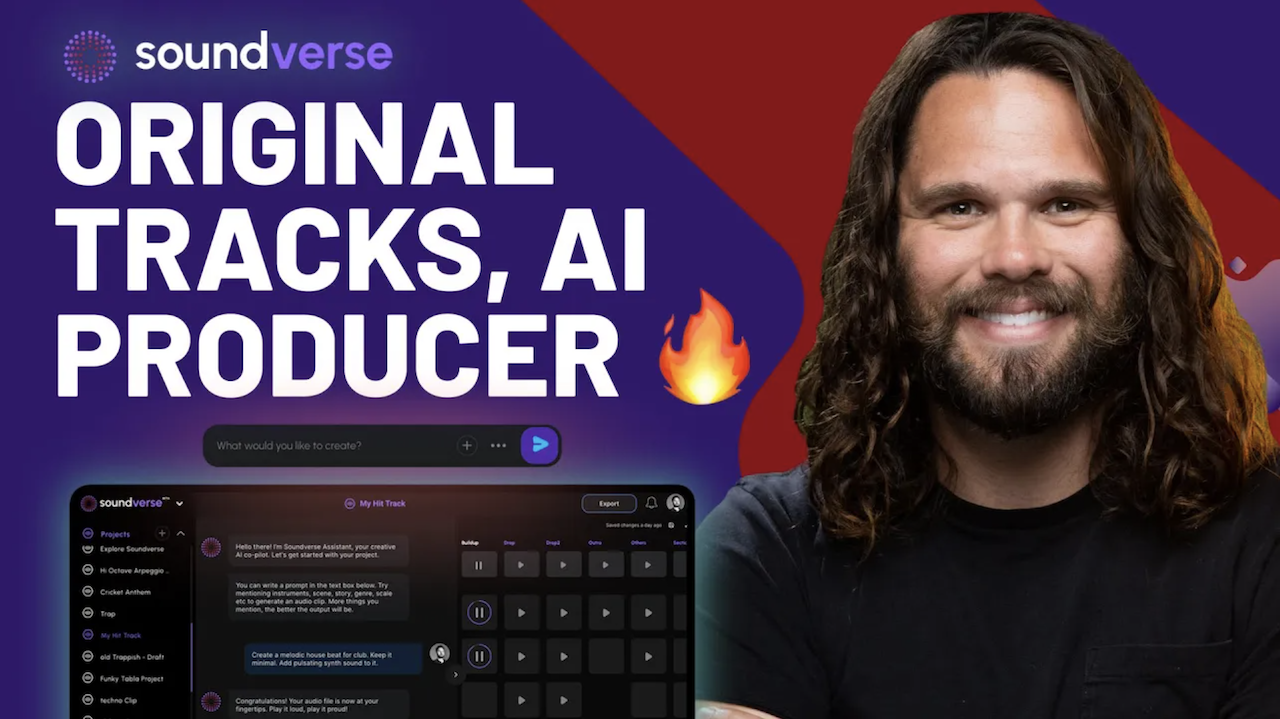
Here’s another long walkthrough of how to use Soundverse AI.
Text Guide
- To know more about AI Magic Tools, check here.
- To know more about Soundverse Assistant, check here.
- To know more about Arrangement Studio, check here.
Soundverse is an AI Assistant that allows content creators and music makers to create original content in a flash using Generative AI. With the help of Soundverse Assistant and AI Magic Tools, our users get an unfair advantage over other creators to create audio and music content quickly, easily and cheaply. Soundverse Assistant is your ultimate music companion. You simply speak to the assistant to get your stuff done. The more you speak to it, the more it starts understanding you and your goals. AI Magic Tools help convert your creative dreams into tangible music and audio. Use AI Magic Tools such as text to music, stem separation, or lyrics generation to realise your content dreams faster. Soundverse is here to take music production to the next level. We're not just a digital audio workstation (DAW) competing with Ableton or Logic, we're building a completely new paradigm of easy and conversational content creation.
TikTok: https://www.tiktok.com/@soundverse.ai
Twitter: https://twitter.com/soundverse_ai
Instagram: https://www.instagram.com/soundverse.ai
LinkedIn: https://www.linkedin.com/company/soundverseai
Youtube: https://www.youtube.com/@SoundverseAI
Facebook: https://www.facebook.com/profile.php?id=100095674445607
Join Soundverse for Free and make Viral AI Music

We are constantly building more product experiences. Keep checking our Blog to stay updated about them!
Image Steps: []