The Unethical Use of Artificial Intelligence to Steal Musical Artists’ Voices and Songs
Explore how AI voice theft in music is reshaping industry ethics and how artists can protect their rights in 2026.
The Unethical Use of Artificial Intelligence to Steal Musical Artists’ Voices and Songs
What is AI Voice Theft in Music and Why is it a Growing Concern in 2026?
AI voice theft in music refers to the unauthorized replication or manipulation of an artist's voice and musical style using artificial intelligence technologies. While AI-generated songs have become mainstream, especially in the wake of massive innovation between 2024 and 2025, the darker side of these advancements has come into focus in 2026. With machine learning models capable of recreating a recognizable voice from mere seconds of audio, musicians face increasing vulnerability to exploitation.

These voice clones, often released as so-called "deepfake tracks," trigger a broad range of ethical, legal, and creative disputes. Fans may hear AI-generated songs mimicking famous artists without consent, and some of these tracks circulate as authentic works. The problem raises difficult questions about authorship, royalties, and moral rights, especially as the line between human and machine artistry blurs. External reports such as “Artificial Intelligence ‘Stealing’ Artists' Voices. The Death Knell of an Industry?” and “Stolen Voices: The Dark Side of AI” highlight the growing concerns in global entertainment sectors.
How Deepfake Music Ethics Challenge Creative Authenticity
Deepfake music ethics deals with the gray zone where technology meets personal identity. Music is one of the most human forms of emotional expression, and a performer's voice is an intimate part of their brand. When artificial intelligence hijacks that identity, the ethical consequences ripple across creative communities.
From an ethical standpoint, AI-generated songs controversy is not just about imitation—it’s about the erasure of consent. If a model learns an artist’s sound from scraped databases or bootleg samples, that artist loses ownership of their most personal instrument: the voice. Just as music industry trends in recent years have emphasized transparency and fair pay, ethical AI systems must protect that authenticity.
Industry voices in 2026 argue that deepfake music ethics require a consent-first framework where artists can choose whether or not their sonic characteristics are used. Without that, models become exploitative engines, capable of mass-producing intellectual property theft at scale. Watch our Soundverse Tutorial on creating music ethically to learn practical steps for AI musicianship.
What Legal and Copyright Issues Exist in AI-Generated Music?
Copyright issues in AI music have intensified throughout 2026. While musicians, labels, and legal organizations strive to define the boundaries of creativity and ownership, jurisdictional approaches vary. In many regions, regulators have begun treating voice datasets as personal biometric property, granting artists new avenues for protection.
However, enforcement remains challenging. Once an AI-generated song circulates online, identifying whether it is an ethical derivative or an unauthorized mimic can be complex. The layers of training, remixing, and distribution obscure metadata and attribution chains. These opacity gaps make auditing AI outputs extremely difficult—unless transparent frameworks are introduced.
Cases have already surfaced where fake AI remixes went viral and generated revenue through streaming, leaving the original artists uncompensated. The debate now focuses on how artificial intelligence in the music industry can evolve responsibly—balancing creative innovation with moral and legal obligations. See coverage from Feds: Man Uses Bots, AI Songs to Steal $10M in Music Royalties for real-world implications of this issue.
Why Musician Rights and AI Must Coexist in 2026
Musician rights and AI are intertwined more than ever. Artists now demand their voices be treated with the same respect as intellectual property. The cultural awareness of voice theft increased sharply after several high-profile cases in 2025, prompting reforms and calls for tech companies to embed artist verification into their models.
By 2026, collaboration and transparency serve as the foundation of responsible AI creativity. Ethical AI initiatives prioritize consent, attribution, and compensation—three pillars indispensable for sustainable innovation. Without these, the creative ecosystem risks devolving into a digital Wild West, where stolen identities fuel commercial gain.
For musicians, engaging with AI no longer means surrendering control. It means entering licensing agreements that provide recurring royalties and verified credit. The challenge lies in ensuring that these agreements are enforced through technology, not just paperwork. For more details, check out our Soundverse Tutorial Series - Explore Tab which focuses on ethical generation workflows.
How Can the Music Industry Prevent AI Voice Theft?
To prevent AI voice theft, the music industry must embrace transparent data practices. That starts with authorized datasets, watermarking, and auditable model architecture. Ethical AI music frameworks demonstrate how this can be achieved systematically:
- Transparency in Training Data: Models should be restricted to licensed or consented content only. Scraping audio without permission leads to direct rights violations.
- Model Accountability: AI developers must disclose the training sources of their models. Hidden datasets foster exploitation.
- Watermarking and Attribution: Embedding traceable digital watermarks ensures every generated output carries information about its origin and rights permissions.
- Recurring Royalty Models: Artists should benefit every time their sonic DNA influences an AI-generated track.
- Public Awareness: Fans should be educated to distinguish authentic works from synthetic imitations, protecting both artistic value and consumer trust. These approaches have already been discussed alongside ethical alternatives, such as Soundverse and similar platforms that emphasize creative safety. For tutoring examples, explore Soundverse Tutorial Series - Make Deep House Music.
How to Make Ethical AI Music with Soundverse The Ethical AI Music Framework
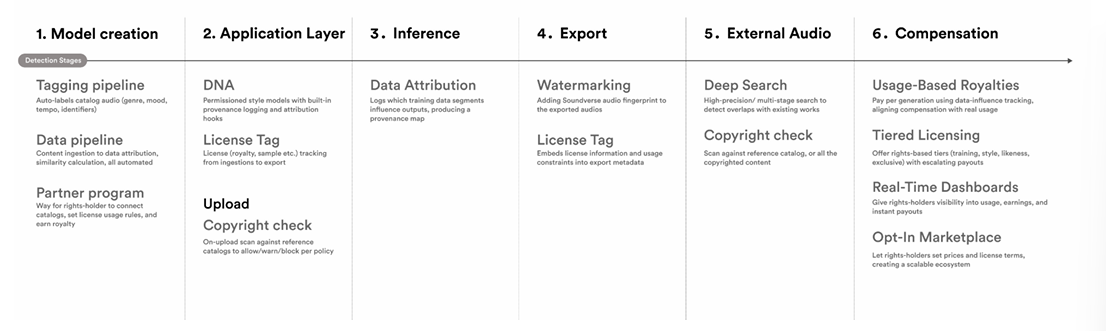
Now that you understand the risks and implications of AI voice theft in music, here is how innovators can tackle these challenges directly through The Ethical AI Music Framework by Soundverse.
The Ethical AI Music Framework is designed to bridge innovation and artist integrity. It replaces opaque black-box models with transparent pipelines that ensure every piece of generated music respects consent, attribution, and compensation.
Key Stages of The Framework:
- Stage 1: Licensed Data Sourcing – The framework only uses authorized audio inputs, removing illegal scraping entirely.
- Stage 2: Permissioned Models (DNA) – Inspired by Soundverse DNA, the model learns from licensed catalogs and artist-approved data. It captures sonic identity ethically for custom generation.
- Stage 3: Explainable Inference (Attribution) – Every AI decision is traceable, creating clear accountability.
- Stage 4: Traceable Export (Watermarking) – Outputs include embedded watermarks that confirm usage origin and rights compliance.
- Stage 5: Deep Search (External Scanning) – Powered by Soundverse Trace, this stage scans externally generated content to detect unauthorized derivatives.
- Stage 6: Recurring Compensation (Partner Program) – Artists earn automatically when their licensed data contributes to music generation, thanks to the opt-in Content Partner Program.
In applying these principles, Soundverse redefines what ethical AI in music looks like. It ensures creators retain control over their voices and compositions, turning potential exploitation into sustainable opportunity.
Safeguard Your Artistic Voice with Ethical AI Tools
Join Soundverse today and access advanced, ethical AI music tools that respect creativity and originality while simplifying your music production journey.
Start Creating Ethically
Related Articles
- How AI-Generated Music Is Transforming the Music Industry — Discover how AI is reshaping everything from production to distribution in the global music market.
- Copyright-Free vs Royalty-Free Music: What Creators Should Know — Understand the difference between copyright-free and royalty-free music to protect your creative work.
- Navigating the World of Royalty-Free and Copyright-Free Music Using Soundverse AI — Learn how to leverage Soundverse AI for creating and sourcing ethical, royalty-free music.
- The Role of AI Music in Film and Television — Explore how AI-generated music enhances storytelling and production quality in entertainment media.
Here's how to make AI Music with Soundverse
Video Guide
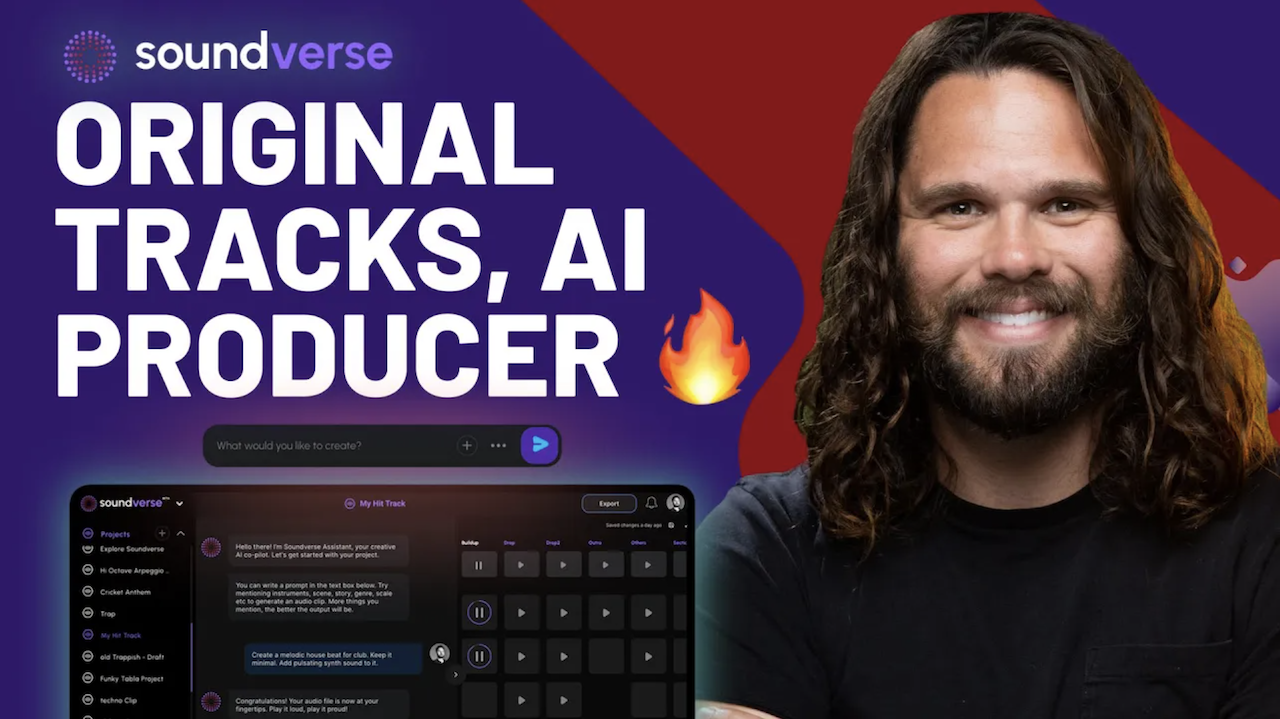
Here’s another long walkthrough of how to use Soundverse AI.
Text Guide
- To know more about AI Magic Tools, check here.
- To know more about Soundverse Assistant, check here.
- To know more about Arrangement Studio, check here.
Soundverse is an AI Assistant that allows content creators and music makers to create original content in a flash using Generative AI. With the help of Soundverse Assistant and AI Magic Tools, our users get an unfair advantage over other creators to create audio and music content quickly, easily and cheaply. Soundverse Assistant is your ultimate music companion. You simply speak to the assistant to get your stuff done. The more you speak to it, the more it starts understanding you and your goals.
AI Magic Tools help convert your creative dreams into tangible music and audio. Use AI Magic Tools such as text to music, stem separation, or lyrics generation to realise your content dreams faster. Soundverse is here to take music production to the next level. We're not just a digital audio workstation (DAW) competing with Ableton or Logic, we're building a completely new paradigm of easy and conversational content creation.
TikTok: https://www.tiktok.com/@soundverse.ai
Twitter: https://twitter.com/soundverse_ai
Instagram: https://www.instagram.com/soundverse.ai
LinkedIn: https://www.linkedin.com/company/soundverseai
Youtube: https://www.youtube.com/@SoundverseAI
Facebook: https://www.facebook.com/profile.php?id=100095674445607
Join Soundverse for Free and make Viral AI Music

We are constantly building more product experiences. Keep checking our Blog to stay updated about them!