The Future of Ethical AI Music: Building a Responsible Soundscape in 2026
Discover how ethical AI music and responsible AI reshape creativity in 2026.
The Future of Ethical AI Music
The Future of Ethical AI Music: Building a Responsible Soundscape in 2026
Artificial intelligence (AI) continues to revolutionize the music industry, reshaping how artists, producers, and audiences interact with creative output. But with great innovation comes a pressing question: how can we ensure the rise of AI-generated music is ethical, transparent, and beneficial to creators? In 2026, ethical AI music isn’t a distant ideal — it’s becoming the defining principle for sustainable innovation across music technology ecosystems.
What Does Ethical AI Music Mean in 2026?
Ethical AI music refers to systems and frameworks that create, distribute, and monetize AI-generated compositions while honoring the rights, consent, and contributions of human artists. Unlike early-generation models from 2024 and 2025, which often relied on unlicensed datasets or opaque neural architectures, the current wave of responsible AI ensures traceability, attribution, and fair compensation.
This concept merges music ethics, transparency in machine learning in music, and creative AI development principles. Ethical AI music in 2026 represents a structural evolution — from experimental novelty to enterprise-ready infrastructure supporting creative integrity, compliance, and data ethics.
Why Is Ethical AI Music Essential for Creators and Developers?
Technology’s rapid growth has led to massive scaling of generative systems capable of producing realistic instrumentals, vocals, and genre-based compositions. But these advancements sparked debates about copyright violation, data exploitation, and artist displacement.
Professionals across the music sector — from producers to AI developers and ethicists — recognize that true technological progress cannot exclude ethical accountability. Ethical AI music not only protects artistic heritage but also ensures a foundation for responsible AI adoption:
- Transparency: Every dataset and model must be auditable and sourced with consent.
- Attribution: Artists should receive recognition whenever their creative DNA informs an algorithmic output.
- Compensation: Ethical frameworks establish recurring royalties based on usage data.
- Compliance: Systems must adhere to lawful sourcing instead of scraping public repositories.
These values create a reciprocal ecosystem where technology strengthens rather than undermines artistic agency.
How Has Machine Learning in Music Evolved Toward Ethical Design?
From 2024 to 2025, machine learning in music largely focused on performance and realism — models could mimic popular sounds, generate emotion-driven melodies, and reconstruct famous genres like hip-hop, jazz, and lo-fi. Yet, these systems were often criticized for lack of transparency. In 2026, the trend has shifted dramatically.
Modern frameworks embed ethics as a fundamental design principle. Developers now integrate explainable inference techniques, external scanning capabilities, and watermarking technologies to confirm rightful ownership. This shift reflects a growing interdisciplinary approach connecting computer science, musicology, and rights management.
Platforms such as Soundverse lead this transformation, positioning ethical design as the foundation for music generation and distribution. Others follow similar routes, implementing bias detection, fairness audits, and rights-verification protocols. For a deeper dive, watch our guide on creating Deep House music and explore the Soundverse Tutorial Series - How to Make Music.
What Are the Key Principles Guiding Music Ethics in AI?
Music ethics in 2026 emphasize fairness, respect, and sustainability within both creative and technical dimensions. According to contemporary practitioners, three guiding pillars define this movement:
- Consent-Based Creativity: Artists must approve model training that involves their recordings, ensuring participation rather than exploitation.
- Transparent Attribution: Each AI output should be traceable back to licensed input sources through watermarking or global registries.
- Monetization Equity: Ethical AI mechanisms ensure ongoing revenue sharing with contributors, moving beyond one-off payments toward recurring models.
This trifecta aligns with the broader cultural demand for digital stewardship — where content creation intersects with moral responsibility.
What Technologies Are Shaping Ethical AI Music Systems?
Several innovations underpin the growth of ethical AI music in 2026:
- Permissioned Model Training: Only authorized datasets are used, preventing unauthorized sampling.
- Explainable AI: Transparency layers expose the reasoning behind generated outputs.
- Watermarking and Traceable Exports: These protect ownership, helping organizations verify licensing during distribution.
- Deep Search and External Scanning: Tools systematically check whether generated content conflicts with external datasets.
Platforms committed to ethics integrate these features to build trust across stakeholders — from record labels to streaming services and autonomous composers.
For instance, the Soundverse Trace system illustrates how deep scanning aligns with rights-call processes, providing practical protection against infringement. Similarly, Soundverse DNA enables artist-approved model development based on identifiable sonic traits, paving the path for style-preserving yet lawful AI music generation.
What Are the Challenges of Implementing Responsible AI in Music?
Despite progress, deploying responsible AI comes with complex challenges:
- Dataset Verification: Ensuring every sample and stem meets licensing standards.
- Stakeholder Awareness: Educating artists and developers about ethical data practices.
- Cross-Border Regulation: Music rights vary globally, requiring nuanced compliance layers.
- Economic Incentivization: Balancing innovation and fair compensation beyond initial licensing.
Ethical frameworks depend on active collaboration between technological, legal, and creative sectors. This cooperative dynamic fosters resilience and standardization as the industry moves toward global adoption.
More insights into responsible AI innovations can be explored in this report on music industry trends, which examines shifting policies and collective governance established post-2025.
How to Make Ethical AI Music with Soundverse The Ethical AI Music Framework
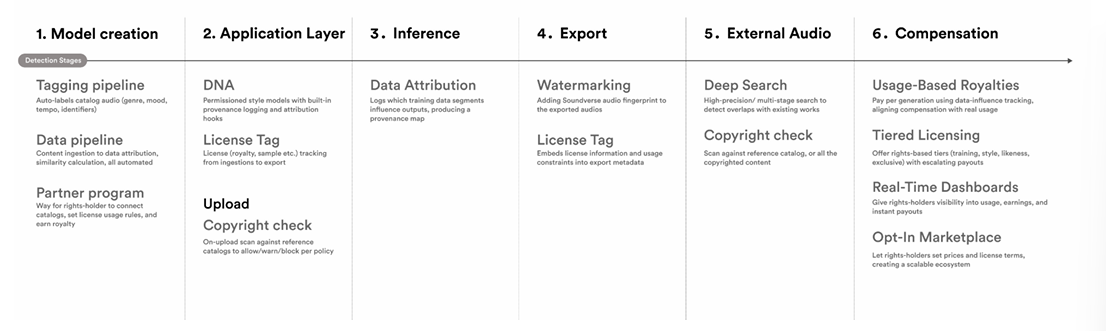
Now that you understand the principles of ethical AI music, here is how organizations can implement them instantly through Soundverse The Ethical AI Music Framework.
The framework represents a comprehensive end-to-end infrastructure bridging innovation and artistic integrity. Instead of relying on opaque mechanisms or scraped audio sources, Soundverse features a transparent six-stage pipeline ensuring consent, attribution, and recurring compensation.
Breakdown of the Six Stages
- Stage 1: Licensed Data Sourcing – Soundverse avoids public scraping by collaborating directly with rights-holders and partners.
- Stage 2: Permissioned Models (DNA) – Artist identities inform unique AI models that generate original compositions respecting creative DNA.
- Stage 3: Explainable Inference (Attribution) – Every output includes data lineage visible to creators and auditors.
- Stage 4: Traceable Export (Watermarking) – Generated tracks receive secure identifiers linking them to their source metadata.
- Stage 5: Deep Search (External Scanning) – Continuous scanning validates originality against external catalogs.
- Stage 6: Recurring Compensation (Partner Program) – Rights-holders earn ongoing royalties through verified usage records.
Primary Use Cases
- Legal Compliance for Enterprise Users: Ideal for labels or creative studios needing audit-ready AI generation.
- Artist Rights Protection During Training: Ensures no content is used without licensing.
- Sustainable Monetization Models: Transforms creativity into long-term revenue flows.
- Transparent Auditing of Outputs: Guarantees ethical traceability across production stages.
Soundverse’s Content Partner Program extends these principles by enabling contributors to upload licensed material for AI training, earning usage-based royalties through attribution-triggered metrics. This reinforces the idea that ethical AI music should empower artists rather than replace them.
For additional context on how AI generation complements artistic collaboration, visit AI music generator and human composers: a future together, which further explains hybrid approaches in contemporary production.
Start Creating Ethical AI Music Today
Join Soundverse and experience how responsible AI technology can transform your artistic vision. Generate original music, maintain ownership, and ensure ethical creative standards from start to finish.
Related Articles
- How AI-Generated Music Is Transforming the Music Industry - Discover the profound ways AI music generation is reshaping production and empowering creators worldwide.
- AI Music Generator and Human Composers: A Future Together - Explore how collaboration between AI systems and human composers is defining a more inclusive creative future.
- Navigating the World of Royalty-Free and Copyright-Free Music Using Soundverse AI - Learn how to produce and use copyright-free music ethically with AI tools built for modern creators.
- The Role of AI Music in Film and Television - Uncover how ethical AI music generation transforms scoring processes for visual media.
Here's how to make AI Music with Soundverse
Video Guide
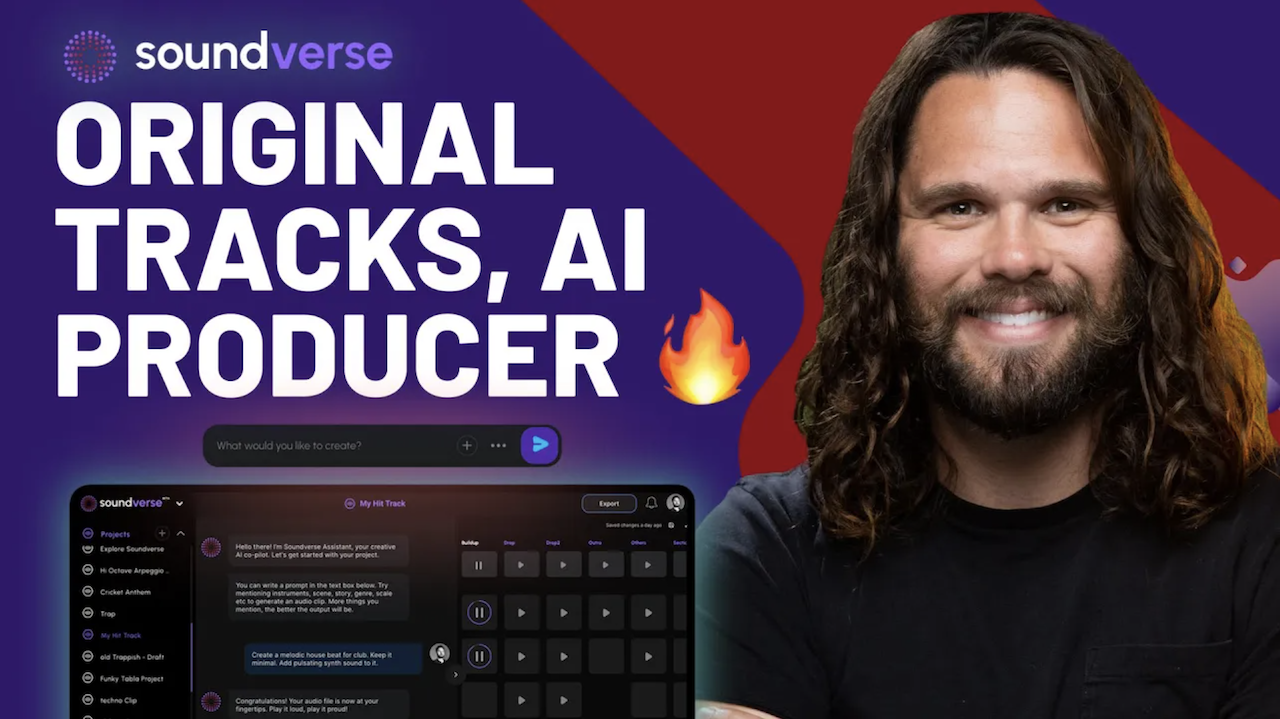
Here’s another long walkthrough of how to use Soundverse AI.
Text Guide
- To know more about AI Magic Tools, check here.
- To know more about Soundverse Assistant, check here.
- To know more about Arrangement Studio, check here.
Soundverse is an AI Assistant that allows content creators and music makers to create original content in a flash using Generative AI. With the help of Soundverse Assistant and AI Magic Tools, our users get an unfair advantage over other creators to create audio and music content quickly, easily and cheaply. Soundverse Assistant is your ultimate music companion. You simply speak to the assistant to get your stuff done. The more you speak to it, the more it starts understanding you and your goals. AI Magic Tools help convert your creative dreams into tangible music and audio. Use AI Magic Tools such as text to music, stem separation, or lyrics generation to realise your content dreams faster. Soundverse is here to take music production to the next level. We're not just a digital audio workstation (DAW) competing with Ableton or Logic, we're building a completely new paradigm of easy and conversational content creation.
TikTok: https://www.tiktok.com/@soundverse.ai
Twitter: https://twitter.com/soundverse_ai
Instagram: https://www.instagram.com/soundverse.ai
LinkedIn: https://www.linkedin.com/company/soundverseai
Youtube: https://www.youtube.com/@SoundverseAI
Facebook: https://www.facebook.com/profile.php?id=100095674445607
Join Soundverse for Free and make Viral AI Music

We are constantly building more product experiences. Keep checking our Blog to stay updated about them!