State Laws Protecting Voice Rights: Complete Guide
Learn 2026 state voice rights laws and protections for creators, performers, and professionals.
State Laws Protecting Voice Rights: Complete Guide
Voice is becoming one of the most legally protected aspects of personal identity in 2026. As AI-generated voices and synthetic speech models reshape media, entertainment, and marketing, state laws protecting voice rights have expanded significantly. This guide will explain the key state voice rights laws, differences between states, and how platforms like Soundverse Trace are enabling responsible, transparent voice use under evolving legal frameworks.
Why Are State Voice Rights Laws So Important in 2026?
Voice is not just sound—it’s part of personal identity, likeness, and brand. With AI enabling voice replication and synthesis, states have introduced more robust laws around voice ownership, usage consent, and privacy and publicity rights. Legal professionals and content creators alike must understand these regulations to avoid violations.
By 2026, several landmark cases from the past two years (2024–2025) have established strong precedents for voice protection. Courts have affirmed that, under state law, a person’s voice can constitute a protected aspect of their identity—similar to name and image. This impacts marketing, AI development, and media licensing.
What Do State Voice Protection Laws Actually Regulate?
- Unauthorized Imitation: States prohibit the use of a recognizable voice, especially for commercial purposes, without explicit consent.
- Digital Voice Cloning: Using AI to simulate someone’s voice now falls under publicity rights in many states.
- Privacy Protection: Voice recordings, particularly biometric or identifying ones, may trigger privacy laws under state regulations.
- Voice Royalties and Monetization: Some states integrate voice into right-of-publicity frameworks, allowing creators or actors to claim ongoing royalties when their voice is reused.
These laws mean AI developers, marketers, and creators need compliance tools that log consent, track attribution, and enforce transparency.

Which States Offer the Strongest Voice Protection Laws?
California
California leads in voice ownership laws tied to its expansive right-of-publicity statutes. The California Civil Code protects against unauthorized commercial voice use, including digital reproductions. The state treats voice similarly to image and likeness, providing solid remedies for infringements.
New York
New York’s updated right-of-publicity statute now explicitly covers synthetic or digitally simulated voices. This change came after rising concerns over AI-generated impersonations in entertainment.
Texas
Texas integrates voice rights into privacy law frameworks, particularly addressing biometric identification. Any AI or data system storing voice prints falls under consent-based authorization requirements.
Illinois
Under the Illinois Biometric Information Privacy Act (BIPA), voice data forms part of protected biometric identifiers. Unauthorized voice collection or replication can trigger significant fines, making Illinois central in privacy-first voice governance. Illinois, Texas, and Colorado are also each set to implement workplace AI regulations in 2026, as discussed in Several State AI Laws Set to Go into Effect in 2026.
Florida
Florida provides personality protection through its commercial misappropriation framework, recognizing voice as a factor of identity misrepresentation.
Beyond these states, many jurisdictions—Washington, Nevada, and Massachusetts—are actively expanding their regional voice laws to account for AI and digital-first content creation.
How Do Legal Rights for Voice Use Differ by Region?
Each state defines voice protection uniquely:
- Publicity-based states focus on preventing unauthorized commercial exploitation.
- Privacy-based states regulate consent and data storage.
- Hybrid jurisdictions incorporate both identity and privacy aspects, balancing creative freedom and protection.
For legal professionals, understanding these nuances is essential when drafting licensing agreements or managing AI-generated voice content.
Creators and brands operating across multiple states must ensure consistent compliance. Cross-state projects involving synthetic speech or automated narration must confirm consent, ownership, and rights management under all applicable regional voice laws.
Learn more about ethical content creation in this article on AI Music Trends and how voice protection aligns with creative standards across industries.
How Have Voice Ownership Laws Evolved Since 2024?
In 2024 and 2025, there was a surge of lawsuits around unauthorized commercial voice imitation. By 2026, nearly half of U.S. states now recognize voice as an element of identity protection. Courts increasingly treat synthetic voice replication as intellectual property misuse unless consent is documented.
As voice synthesis becomes accessible through AI tools, understanding voice ownership laws is now vital for both technologists and artists. The transition between 2025 and 2026 marked a turning point in vocal rights frameworks.
What Are Privacy and Publicity Rights in Voice Use?
Privacy rights focus on protecting individuals from unwanted collection or misuse of voice data. Publicity rights, however, emphasize commercial usage—such as brands using an actor’s voice for advertising.
In 2026, these frameworks often overlap. For instance, storing voice models for AI training requires explicit data attribution under certain jurisdictional requirements. States are amending publicity laws to encompass synthetic reproduction and cloning without consent.
Professionals using voice modeling or AI-based voice recreation should integrate strong provenance and attribution systems to comply with these dual obligations.
For a deeper understanding of voice usage and creative AI, watch our guide on creating music or explore the Soundverse Explore Tab tutorial.
How to Make State Voice Rights Compliance Easier with Soundverse Trace
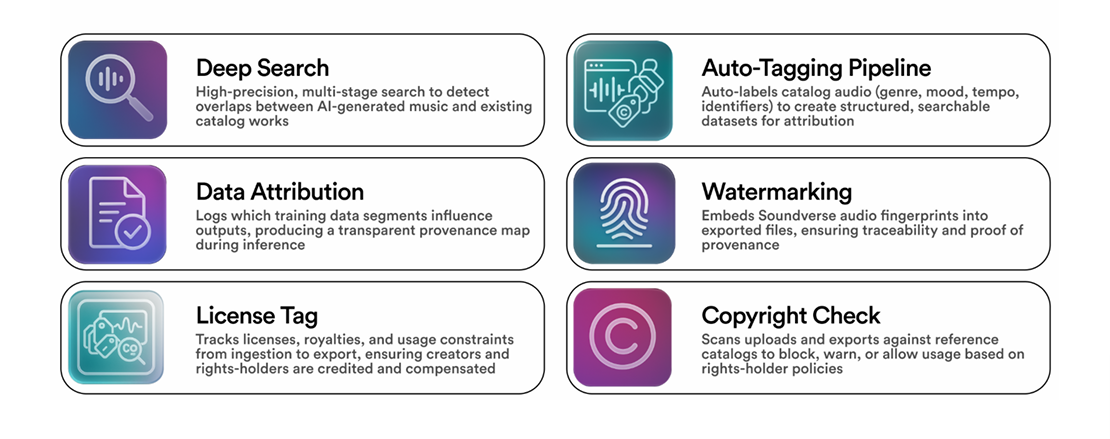
To handle these complexities, Soundverse Trace introduces a trust layer that automates much of the compliance effort. It seamlessly embeds attribution and rights protection across the entire lifecycle—from dataset creation to final export.
Key Capabilities of Soundverse Trace:
- Deep Search: Conduct 1:1 or 1:N scanning to detect voice dataset overlaps, ensuring outputs don’t infringe existing rights.
- Data Attribution: Logs which voice datasets influence generated outputs, providing transparent audit trails.
- Audio Watermarking: Embeds inaudible fingerprints into audio files, confirming provenance and rights-holder identity.
- License Tagging: Preserves rights metadata, ensuring lawful transfer across ingestion to export.
These features equip agencies, voice actors, and production studios with automated tools to prove consent and manage ownership integrity.
For professionals exploring AI music or narration, these ethical AI layers also integrate seamlessly with the Ethical AI Music Framework, offering complete transparency in dataset handling.
Soundverse Trace is asynchronous—users first upload or record audio, and the system then processes attribution and watermarking before delivering verified outputs. This ensures legal accuracy without real-time uncertainty.
Other Ethical and Licensing Tools for Voice Protection
Soundverse’s broader ecosystem complements Trace:
- Ethical AI Music Framework: Upholds consent and compensation standards.
- Content Partner Program: Secure opt-in licensing for voice datasets, enabling recurring royalties via verified use.
Further reading:
- How AI-Generated Music Is Transforming the Industry
- AI Music in the USA
- Copyright-Free vs Royalty-Free Music
Why Soundverse Trace Is the Standard for Voice Rights Integrity in 2026
AI regulation continues to expand. Transparency and documentation are now mandatory for distributors. Soundverse Trace establishes trust through immutable attribution and watermarking—key features that align directly with state and federal requirements.
For creators, this means verified commercial protection; for organizations, it offers compliance proof before deployment. In 2026’s evolving digital law landscape, this ensures that voice rights—once seen as niche—now command full respect under identity and publicity statutes.
Protect Your Voice Rights and Create Freely with AI
Learn how to safeguard your creative voice while producing next-level audio content using Soundverse’s AI-powered tools. Empower your artistry with confidence and legal clarity.
Start Creating Safely
- AI Music in the USA — Discover how AI is transforming the American music industry and what it means for creators’ rights and innovation.
- Copyright-Free vs. Royalty-Free Music: What Creators Should Know — Understand the key differences between copyright-free and royalty-free music to make informed decisions for your projects.
- Navigating the World of Royalty-Free and Copyright-Free Music Using Soundverse AI — Explore how Soundverse simplifies finding and creating legally safe music for all your creative needs.
- The Role of AI Music in Film and Television — Learn how AI-generated music is revolutionizing creative productions across film and TV while respecting voice and content rights.
Here's How to Make AI Music with Soundverse
Video Guide
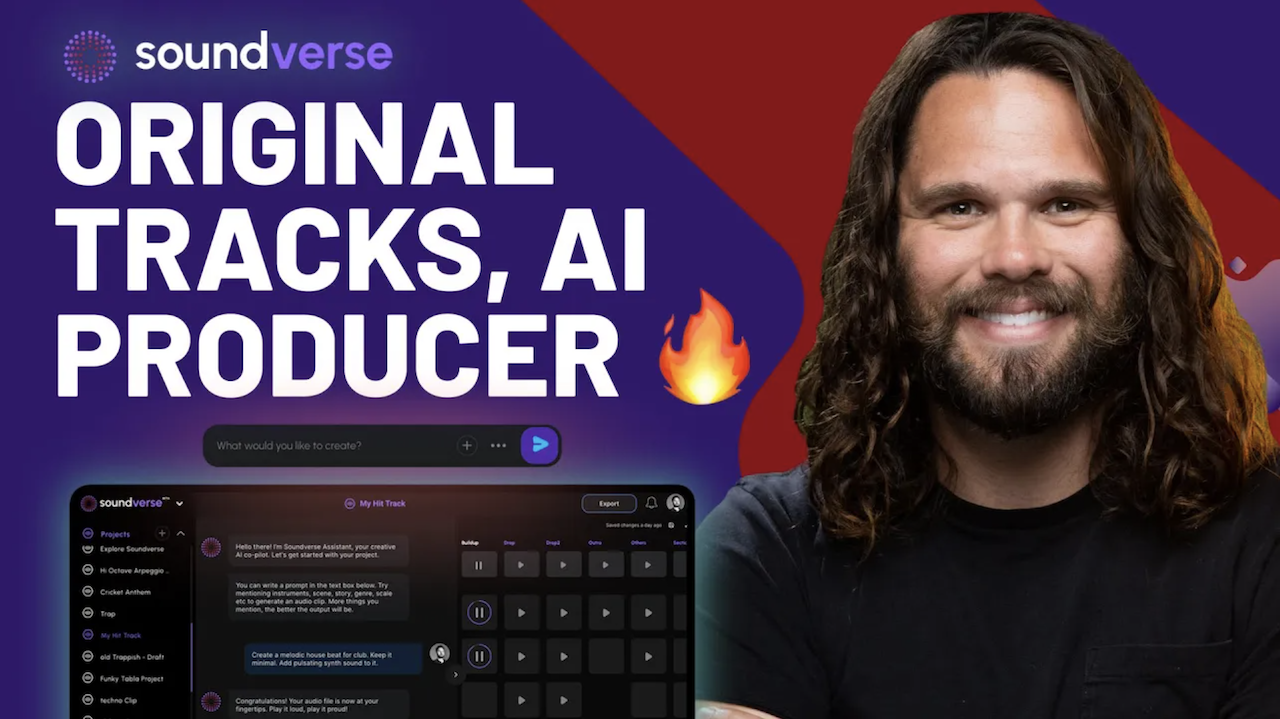
Here’s another long walkthrough of how to use Soundverse AI.
Text Guide
- To know more about AI Magic Tools, check here.
- To know more about Soundverse Assistant, check here.
- To know more about Arrangement Studio, check here.
Soundverse is an AI Assistant that allows content creators and music makers to create original content in a flash using Generative AI. With the help of Soundverse Assistant and AI Magic Tools, our users get an unfair advantage over other creators to create audio and music content quickly, easily and cheaply. Soundverse Assistant is your ultimate music companion. You simply speak to the assistant to get your stuff done. The more you speak to it, the more it starts understanding you and your goals. AI Magic Tools help convert your creative dreams into tangible music and audio. Use AI Magic Tools such as text to music, stem separation, or lyrics generation to realise your content dreams faster. Soundverse is here to take music production to the next level. We're not just a digital audio workstation (DAW) competing with Ableton or Logic, we're building a completely new paradigm of easy and conversational content creation.
TikTok: https://www.tiktok.com/@soundverse.ai
Twitter: https://twitter.com/soundverse_ai
Instagram: https://www.instagram.com/soundverse.ai
LinkedIn: https://www.linkedin.com/company/soundverseai
Youtube: https://www.youtube.com/@SoundverseAI
Facebook: https://www.facebook.com/profile.php?id=100095674445607
Join Soundverse for Free and Make Viral AI Music
We are constantly building more product experiences. Keep checking our Blog to stay updated about them!
Image Steps: []