Right of Publicity for Voices in Music: 2026 Legal and Technological Insights
Explore how AI and Soundverse DNA reshape publicity rights and voice commercialization in 2026.
Right of Publicity for Voices in Music
As music production enters 2026, one of the most debated topics within the creative industries is the right of publicity for voices in music. This issue touches the core of how artists, producers, and AI technology developers define ownership and monetization around vocal identity. Whether it's a singer’s timbre, a rapper’s signature flow, or an actor’s spoken tone, voices have become powerful assets—both culturally and economically.
What is the right of publicity for voices in music?
The right of publicity refers to an individual’s legal control over the commercial use of their persona. In music, this extends beyond appearance and name to include the recognizable elements of a person’s voice. This right prevents unauthorized exploitation—whether using a sampling technique or, today, recreating a voice via AI models. In fact, the right of publicity protects against the misappropriation of a person's name, image, and/or likeness for commercial benefit.

The rise of voice-centric production tools and AI-generation platforms has increased the urgency of protecting vocal identities. Digital voice cloning, often developed without consent, became an issue in 2024 and 2025 as artists discovered unauthorized voice replicas in online music. By 2026, lawmakers and technology firms are working together to enforce frameworks ensuring ethical commercialization and proper licensing. Legislative actions such as the NO FAKES Act emphasize the need to stop unapproved use of digital likenesses and voices in the context of AI.
Why do publicity rights matter in voice commercialization?
Voice commercialization is no longer limited to studio recordings or film performances. Artists now license their voices for branding, games, and virtual concerts, giving rise to an economy centered on vocal identity. Proper publicity rights define how creators can monetize their voice without losing control.

For instance, if a vocalist licenses her tonal DNA to a music generation system, any derivative sound created using her timbre must be traceable and fairly compensated. Without this protection, artists risk identity misappropriation and dilution of artistic reputation. The right of publicity allows artists to sue entities that appropriate their voice for profit, ensuring fair treatment and accountability.
The legal rights behind voice commercialization vary slightly across different jurisdictions but share key principles:
- Consent: An artist must agree to how their voice is used.
- Attribution: Platforms must disclose when a vocal model replicates an identifiable person.
- Compensation: Artists should earn royalties whenever their voice DNA contributes to new works.
- Transparency: Users must understand whether the AI music they generate includes real vocal DNA or synthetic voices.
Soundverse addresses these concerns directly by embedding ethical architecture within its AI ecosystem.
How does AI challenge traditional publicity rights?
AI voice generation has transformed creative workflows but also blurred traditional distinctions of originality and ownership. Systems capable of recreating singing voices with stunning realism have introduced both artistic and legal complexity. In 2026, platforms that use unlicensed training data face legal scrutiny for violating publicity rights. The new Synthetic Media & Voice Cloning regulations provide civil remedies for voice replication infringements.
The challenge lies in determining intent and consent. When a voice model sounds identical to a famous performer—even if technically generated from unrelated data—the public perception may mislead. Legal experts categorize this as “voice likeness infringement,” where imitation creates confusion or unfair commercial advantage.
Modern AI policies now emphasize transparent vocal labeling, ensuring listeners know whether a track uses authentic artist DNA or synthetic fabrication. For a deeper dive, watch our guide on creating Deep House music or explore the Soundverse “Explore” tab walkthrough for more insights into ethical AI creation.
How are music professionals adapting in 2026?
Entertainment lawyers and rights managers have expanded their practices to include digital voice protection clauses. Many artists now negotiate voice licensing for AI applications, similar to how they handle sampling rights. Additionally, music industry professionals are leveraging tools like Soundverse AI and Stem Separation Magic Tool to ensure their assets remain compartmentalized and traceable.
Independent vocal artists also benefit from a new ability to license voice DNA through ethical marketplaces. With evolving platforms such as Soundverse, authenticity and consent become integral elements of AI creation rather than afterthoughts. This trend aligns with global initiatives nurturing responsible innovation within creative AI.
How to make ethical voice-based music with Soundverse DNA
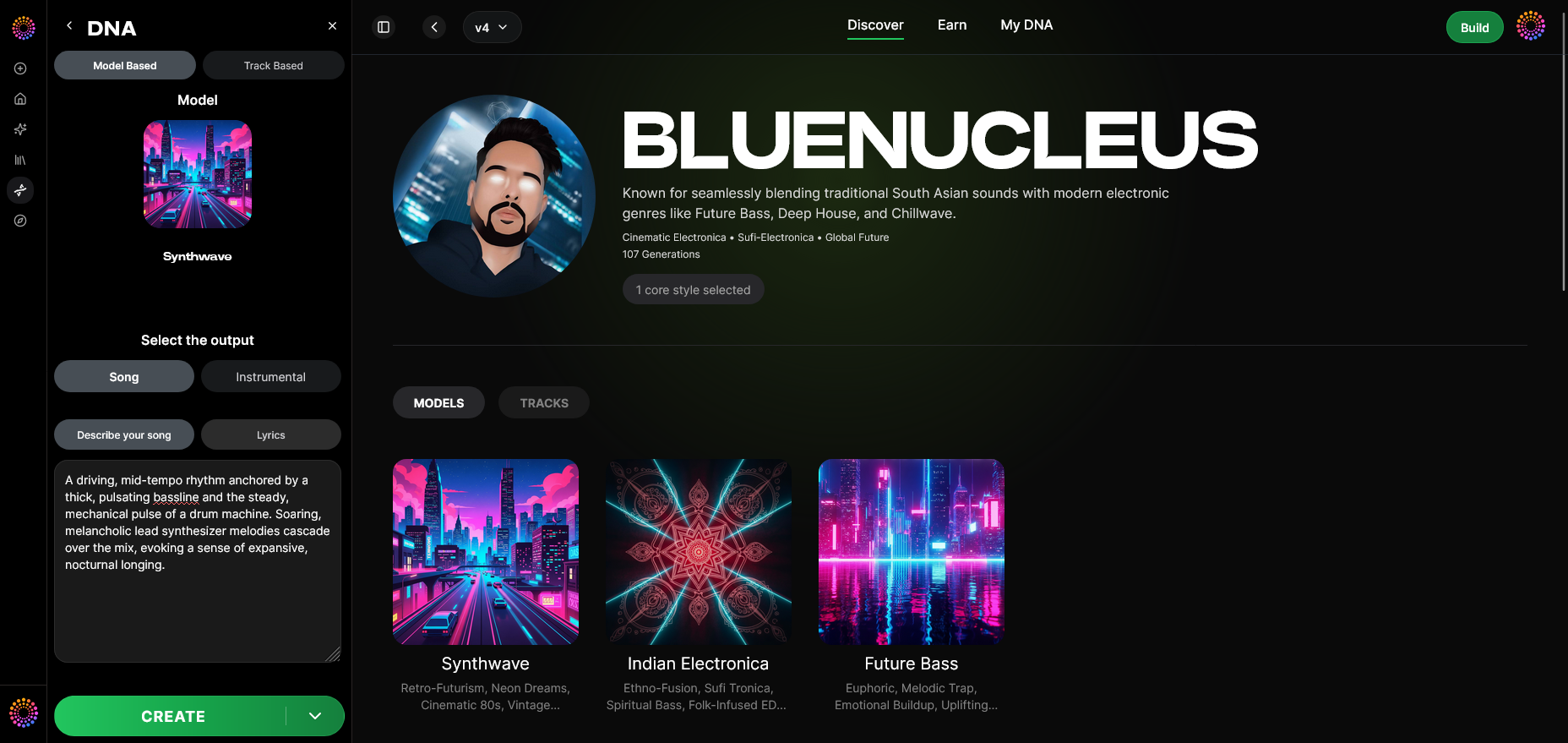
Soundverse DNA is designed specifically for creators who want to generate music while maintaining ethical and legal integrity. It functions as an artist-trained AI that uses licensed catalogs and distinct sonic identities.
Key capabilities of Soundverse DNA
- Full DNA and Voice DNA: Artists can train models based on songs, instrumentals, or vocal characteristics.
- DNA Marketplace: Enables artists to license their vocal style to fans and creators in a transparent manner.
- Sensitivity Selector: Allows creators to cluster voice models into stylistic eras without overexposing identifiable traits.
- Private Mode: Facilitates secure, consent-based co-creation sessions.
This system ensures artists earn revenue whenever their model is used to generate new tracks, preserving both creative value and legal compliance.
Primary use cases in voice publicity management
- Artist Monetization: Vocalists transform their natural voice into a sustainable digital asset.
- Sonic Branding: Brands maintain voice consistency across campaigns by licensing specific vocal DNA.
- Film/Game Scoring: Producers generate style-matched audio cues legally without infringing personality rights.
- Personal Workflow Optimization: Individual creators accelerate production using their own DNA without privacy concerns.
Platforms like Soundraw alternative, Mubert alternatives, and Country Music generation guide illustrate how technology now respects ownership frameworks rather than replacing them. Explore further through our tutorial on how to make music with AI.
What is the Ethical AI Music Framework, and why is it crucial?
Soundverse’s Ethical AI Music Framework upholds principles of transparency and recurring attribution. The system’s six-stage pipeline ensures every vocal DNA deployed within Soundverse applications has verified consent and royalty structures attached. This infrastructure helps dismantle the opaque black-box approach common to earlier AI models.
It validates the right of publicity for voices in music by embedding identification data within every generation instance. Through Soundverse Trace, attribution layers follow the tracks from dataset creation to export. Hence, artists can identify how and where their vocal profile has been utilized.
In practical terms, users who generate songs emphasizing particular vocal timbres can confirm licensing compliance automatically through this trust layer.
Can artists commercialize their voice responsibly in 2026?
Yes. The combination of evolving regulation and purpose-built technologies like Soundverse DNA empowers artists to transform their voice into a protected asset. Monetization no longer implies losing control—instead, the right of publicity becomes a guarantee of participation and transparency.
Emerging contracts now integrate clauses addressing AI voice use, royalties from synthetic collaborations, and secure distribution. Artists can selectively enable Private Mode within Soundverse DNA to conduct creative projects safely while earning from broader fan engagement through the DNA Marketplace.
This ecosystem also educates artists and legal professionals, bridging technical and regulatory conversations. For instance, the Soundverse team collaborates with entertainment law associations to standardize digital vocal licensing templates.
Protect Your Voice and Shape the Future of Music
Discover how Soundverse empowers creators to generate, license, and safeguard their musical identity in the age of AI innovation. Stay ahead by mastering the right of publicity for voices in music.
Start Creating with Soundverse
Related Articles
- How AI-Generated Music Is Transforming the Music Industry — Explore how artificial intelligence is reshaping music creation, distribution, and artist rights across the world.
- AI Music Generator and Human Composers: A Future Together — Learn how AI tools like Soundverse are enabling collaboration between human creativity and machine intelligence.
- Copyright-Free vs. Royalty-Free Music: What Creators Should Know — Understand the legal distinctions that help creators choose the right music licensing model while protecting their work.
- The Role of AI Music in Film and Television — See how AI-generated soundtracks are revolutionizing cinematic scoring and creative production for content creators.
Here's how to make AI Music with Soundverse
Video Guide
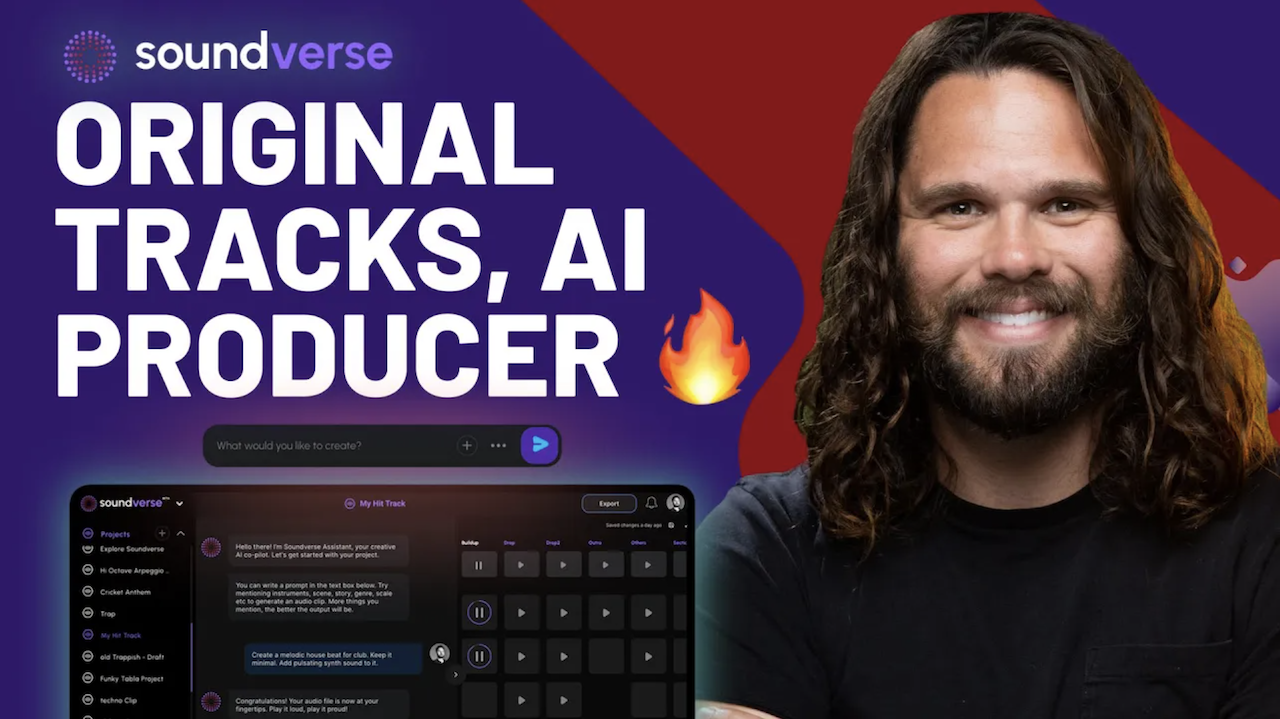
Here’s another long walkthrough of how to use Soundverse AI.
Text Guide
- To know more about AI Magic Tools, check here.
- To know more about Soundverse Assistant, check here.
- To know more about Arrangement Studio, check here.
Soundverse is an AI Assistant that allows content creators and music makers to create original content in a flash using Generative AI. With the help of Soundverse Assistant and AI Magic Tools, our users get an unfair advantage over other creators to create audio and music content quickly, easily and cheaply. Soundverse Assistant is your ultimate music companion. You simply speak to the assistant to get your stuff done. The more you speak to it, the more it starts understanding you and your goals. AI Magic Tools help convert your creative dreams into tangible music and audio. Use AI Magic Tools such as text to music, stem separation, or lyrics generation to realise your content dreams faster. Soundverse is here to take music production to the next level. We're not just a digital audio workstation (DAW) competing with Ableton or Logic, we're building a completely new paradigm of easy and conversational content creation.
TikTok: https://www.tiktok.com/@soundverse.ai
Twitter: https://twitter.com/soundverse_ai
Instagram: https://www.instagram.com/soundverse.ai
LinkedIn: https://www.linkedin.com/company/soundverseai
Youtube: https://www.youtube.com/@SoundverseAI
Facebook: https://www.facebook.com/profile.php?id=100095674445607
Join Soundverse for Free and make Viral AI Music
We are constantly building more product experiences. Keep checking our Blog to stay updated about them!