Opt-In AI Music Training: What Artists Need to Know in 2026
Learn what opt-in AI music training means for artists and rights-holders in 2026.
Opt-In AI Music Training: What Artists Need to Know
AI music training has rapidly evolved from a niche technological experiment into a cornerstone of modern music production. By 2026, the industry stands at a crossroads: how can artificial intelligence learn from artists ethically, while still rewarding those who make their creative DNA available for machine learning? This new age of consent-based AI systems—known as opt-in AI music training—marks a fundamental shift in artistic control, rights management, and the economics of digital music.
What does opt-in AI music training mean for artists in 2026?
Opt-in AI music training refers to systems where musicians, producers, and rights-holders deliberately choose to license their audio data for AI model development. Instead of AI tools scraping publicly available music from streaming platforms, ethical AI platforms now require clear consent and compensation. This model empowers artists to decide if, how, and to what extent they want their creations to influence future AI-generated music.
Until 2025, the lack of standardized licensing around AI learning created uncertainty. Many creators worried about losing control of their sound or competing against synthetic derivatives of their own work. In 2026, opt-in training programs have matured into a norm for responsible AI companies—offering transparency reports, consent workflows, and fair royalty frameworks. As industry reports from SentiSight.ai confirm, organizations like Universal Music Group and Udio have announced plans to launch artist opt-in platforms starting in 2026.
Why is consent-based AI training critical for creative integrity?
Consent-based AI ensures that musicians maintain autonomy over how their recordings, compositions, and sonic identity are used. This shift from unauthorized data scraping to artist-driven participation means that creators can earn royalties when AI systems draw inspiration from their catalog. It also transforms AI tools into collaborative partners rather than exploitative replicators. Initiatives like Suno and Udio’s partnership with labels demonstrate how this opt-in structure is being implemented across platforms.
For example, an independent jazz musician may decide to allow her back catalog to be used in an AI that generates human-like bass lines. Thanks to training permissions embedded in modern systems, she can specify licensing tiers, usage limits, and attribution requirements. In return, she receives recurring compensation whenever the AI model—built in part from her data—produces a new generation influenced by her work. For a deeper dive, watch our guide on creating Deep House music or learn how to make music with Soundverse.
How do training permissions reshape music monetization?
Training permissions redefine how music catalogs generate revenue in the digital era. Instead of relying solely on streaming payouts or sync placements, artists can generate passive income through participation in AI ecosystems. Each training contribution becomes a recurring asset—similar to how compositions earn royalties through performance or sampling.
This model creates a secondary income layer: one that is influence-based rather than consumption-based. The deeper an artist’s style influences AI generations, the larger their payout share. Transparent dashboards now allow rights-holders to view metrics on how often their data contributes to outputs and track earnings accordingly.
As part of this trend, musicians exploring AI-generated music or looking for music industry trends can see that opt-in licensing is gradually becoming a global standard. 2026 signifies not just the rise of fair technology but the rewriting of creative economics.
What are the main concerns artists face with AI data usage?
Even with improvements, skepticism remains. Common concerns include:
- Data misuse: Artists worry their material could be used outside agreed contexts.
- Attribution loss: Without transparent tracking, influencing the AI may go unnoticed.
- Royalty fairness: Determining proportional payouts is complex.
- Creative dilution: Frequent training can lead to overly derivative sonic outputs.
Modern systems tackle these issues via real-time transparency reports, usage analytics, and consent workflows built into platforms. These solutions ensure participation remains artist-led, not engineer-driven.
How to make AI music training ethical with Soundverse Content Partner Program
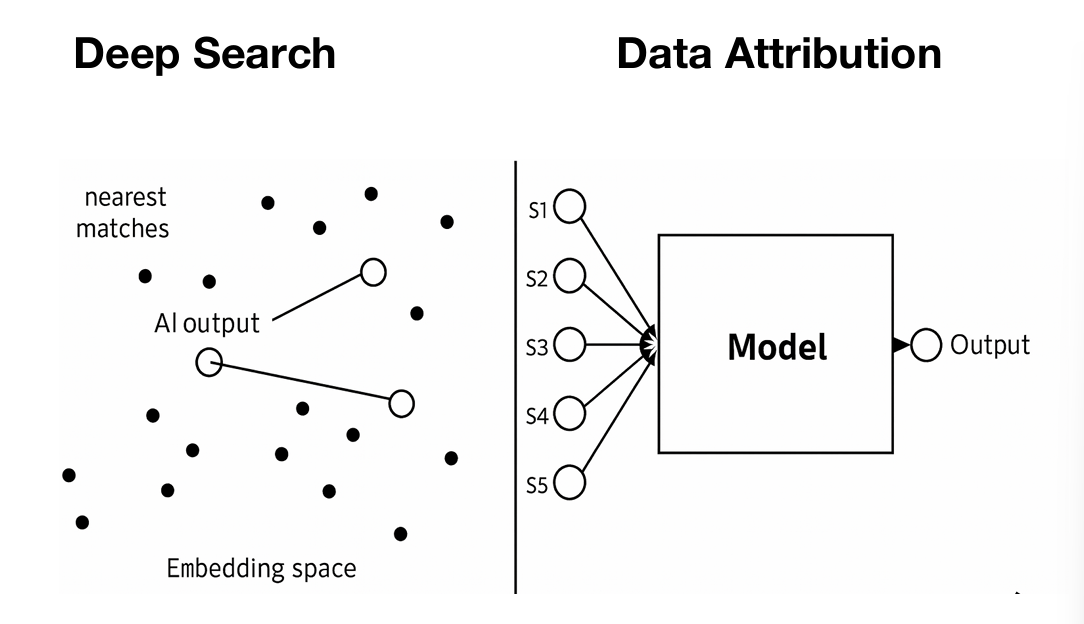
Soundverse directly addresses these challenges with its Content Partner Program—an opt-in licensing framework designed specifically for ethical AI learning.
Official Description: The program allows rights-holders to contribute their audio for AI training in exchange for recurring, usage-based royalties driven by attribution. In other words, artists are paid every time the AI uses their influence to generate a new composition.
Core Capabilities
- Influence-Based Payouts (Pay per generation): Earnings depend on the measurable impact of your music within AI outputs.
- Tiered Licensing (Tiers 1–6): Different licensing levels control how deeply your material participates in training—from limited style imprinting to full spectrum sonic modeling.
- Real-Time Dashboards: Creators access earnings insights and data attribution reports asynchronously through the Soundverse dashboard.
- Transparency Reports: Every data segment used in training is auditable, guaranteeing complete visibility.
Primary Use Cases
- Ethical AI model training: Participate in machine learning without compromising rights.
- Recurring revenue for back catalogs: Monetize older releases proactively.
- Protect rights while engaging with AI: Ensure every contribution is bound by legal consent and attribution mechanisms.
This framework represents a dynamic alternative to traditional royalty models. Instead of a single payout per stream, artists receive continuous earnings proportional to their influence across countless generations. Soundverse merges technology, fairness, and transparency—creating the foundation of consent-based AI music training in 2026.
What other Soundverse solutions support artist choice and transparency?
Several complementary tools strengthen this ecosystem:
- Soundverse DNA: An artist-trained AI music generation system that produces original compositions rooted in licensed sonic identities. It guarantees style monetization while protecting copyrights. Learn how it works in this breakdown of AI music generators.
- The Ethical AI Music Framework: A six-stage infrastructure ensuring consent, auditable attribution, and recurring payouts. It replaces opaque training pipelines with transparency, setting benchmarks for ethical AI development.
- Soundverse Trace: A trust layer embedding rights-tracking and attribution from dataset creation to export. It maintains artist ownership throughout the AI lifecycle.
Together, these tools create a comprehensive ethical AI ecosystem, bridging creative freedom and accountability.
What does the future of AI music training look like beyond 2026?
Industry experts predict the next frontier lies in interoperability—where multiple AI platforms recognize consent tokens from one another. Artists could manage permissions universally and withdraw or adjust licenses at any time. Transparent blockchain integrations may also simplify attribution and royalty disbursement across digital ecosystems.
Furthermore, the cultural perception of AI collaboration is transforming. Rather than viewing machines as competition, musicians increasingly treat them as extensions of their creative voice. Opt-in frameworks enable that collaboration to remain grounded in credit and compensation.
Those exploring new possibilities in AI-generated composition or AI music in film and television should actively research how training permissions intersect with rights management. The creators who adapt early reap both financial and reputational advantages.
Start Creating Music with AI Today
Join thousands of artists using Soundverse to explore AI-powered composition, stem separation, and style generation. Experience how AI music training can elevate your creativity and workflow.
Sign Up Free
Related Articles
- How AI-Generated Music Is Transforming the Music Industry: Discover how AI-generated music is shaping new possibilities for creativity, collaboration, and production.
- AI Music Generator and Human Composers: A Future Together: Explore how human artists and AI tools can co-create and redefine the boundaries of modern music-making.
- The Role of AI Music in Film and Television: Learn how AI-generated music is being used to enhance storytelling and production in screen industries.
- AI Music Generator: Top Picks and Review: Get an in-depth look at the best AI music generators and how they compare across creativity and usability.
Here's how to make AI Music with Soundverse
Video Guide
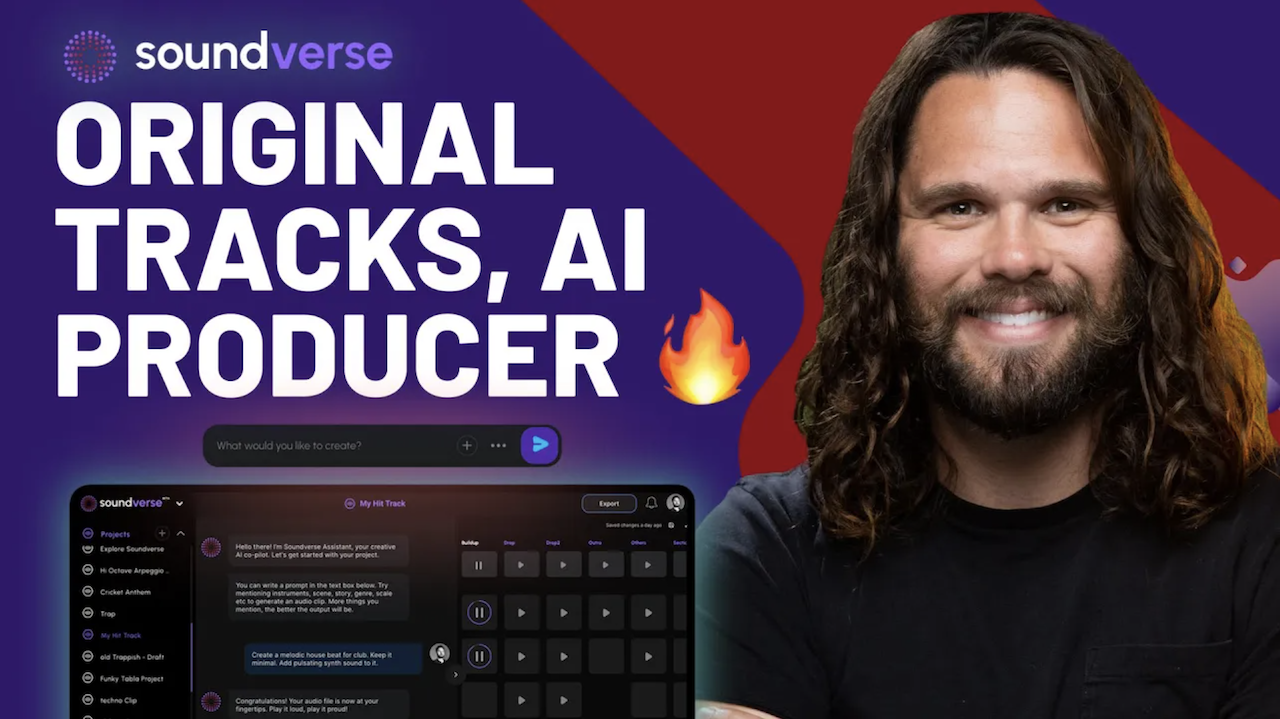
Here’s another long walkthrough of how to use Soundverse AI.
Text Guide
- To know more about AI Magic Tools, check here.
- To know more about Soundverse Assistant, check here.
- To know more about Arrangement Studio, check here.
Soundverse is an AI Assistant that allows content creators and music makers to create original content in a flash using Generative AI. With the help of Soundverse Assistant and AI Magic Tools, our users get an unfair advantage over other creators to create audio and music content quickly, easily and cheaply. Soundverse Assistant is your ultimate music companion. You simply speak to the assistant to get your stuff done. The more you speak to it, the more it starts understanding you and your goals. AI Magic Tools help convert your creative dreams into tangible music and audio. Use AI Magic Tools such as text to music, stem separation, or lyrics generation to realise your content dreams faster. Soundverse is here to take music production to the next level. We're not just a digital audio workstation (DAW) competing with Ableton or Logic, we're building a completely new paradigm of easy and conversational content creation.
TikTok: https://www.tiktok.com/@soundverse.ai
Twitter: https://twitter.com/soundverse_ai
Instagram: https://www.instagram.com/soundverse.ai
LinkedIn: https://www.linkedin.com/company/soundverseai
Youtube: https://www.youtube.com/@SoundverseAI
Facebook: https://www.facebook.com/profile.php?id=100095674445607
Join Soundverse for Free and make Viral AI Music
We are constantly building more product experiences. Keep checking our Blog to stay updated about them!
Image Steps: []