Maximalism in Music: Trend Analysis (2026)
Explore how maximalism in music dominates 2026 with dense production, layered sound, and complex music aesthetics.
Maximalism in Music: Trend Analysis (2026)
What does maximalism in music mean in 2026?
Maximalism in music, as we experience it in 2026, symbolizes the rejection of simplicity and minimalism. It embraces the intricate, the layered, and the excessive. Artists across genres are blending multiple textures, harmonies, and rhythms to achieve rich sonic experiences that challenge the listener’s expectations. This shift can be traced back to the early 2020s when producers began experimenting with hyperpop and futuristic electronic genres. However, by 2026, this has evolved into a refined aesthetic that values detail, emotion, and density.
Unlike minimalism, which thrives on space and restraint, maximalism thrives on saturation and depth. It turns each track into a tapestry of sound — layers of synths, live instruments, glitch effects, modular ambiances, and cinematic orchestrations. In practice, maximalism in music means using complex music structures, overlapping melodies, and dense production that keeps the listener constantly engaged.

Why has maximalism become the dominant trend in 2026?
Several factors contributed to the rise of maximalism in music this year:
- Listener Expectations Have Evolved: As streaming platforms curated millions of songs by 2025, audiences grew accustomed to dynamic, instantly gratifying audio experiences. In 2026, passive listening is giving way to immersive listening — audiences crave productions that demand attention.
- Advancements in AI Music Production Tools: AI-assisted tools like Soundverse and others have made it easier for producers to create deeply layered compositions without the traditional time constraints. What once required large production teams can now be achieved by independent artists using high-precision sound generation and structure analysis.
- Impact of Visual Culture: Social media platforms have emphasized multi-sensory content experiences. Producers now craft soundtracks that match bold visuals, leading to denser, more cinematic sound choices.
- Fusion of Genres: Maximalism also reflects genre crossovers — think classical strings embedded into trap beats, or jazz improvisation combined with ambient textures. The trend’s cross-genre nature aligns perfectly with modern content creation needs, as seen in tools showcased in how AI-generated music is transforming the music industry.
What defines the sound of maximalism in 2026?
The hallmark of maximalism in 2026 lies in its dense production and layered sound approaches. Let’s break down its key characteristics:
- Layered Textures: Producers are blending analog, digital, and sample-based sounds to create lush, unpredictable landscapes. One track might feature dozens of tracks stacking subtle pads, reversed notes, modular synth bursts, and organic percussions.
- Complex Music Structures: Rather than linear verse-chorus arrangements, maximalist compositions flow unpredictably, often skipping traditional hooks in favor of evolving movements.
- High Dynamic Range: Engineers experiment with varying intensities — from whisper-like segments to full-force walls of sound.
- Hybrid Mixing Aesthetics: Maximalist mixes intentionally blur clarity. Instead of the pristine separation characteristic of minimal techno or lo-fi genres, this trend thrives on controlled chaos.
Across pop, electronic, film scoring, and indie rock, musicians in 2026 are using technology to turn songs into emotional experiences, not just entertainment. For a deeper dive, watch our guide on creating Deep House music.
How has technology shaped maximalist production workflows?
Technology in 2026 is the enabler of maximalism. AI-assisted production platforms like Soundverse Assistant have shifted the creative focus from mechanical production to conceptual design. Instead of manually layering every element, creators now upload stems or reference tracks and let AI suggest structure, tempo shifts, and thematic expansions.
Meanwhile, AI Music Generators and Soundverse DNA systems help design cohesive sonic identities while avoiding copyright pitfalls. Even the rise of AI remixing tools has contributed to maximalism — artists now reinterpret multiple musical layers simultaneously, leading to a constantly evolving sonic culture. For tutorials, see our “Explore” tab walkthrough and guide on how to make music.
What genres are embracing maximalism today?
By 2026, maximalism is not a genre but a framework. The following genres have absorbed maximalist tendencies:
- Electronic & Hyperpop: Still at the forefront, characterized by over-processed vocals, supercharged arrangements, and kaleidoscopic beat layering.
- Cinematic Pop: Inspired by film scoring aesthetics, integrating orchestral layers with pop songwriting.
- Neo-Jazz & Fusion: Jazz producers now combine avant-garde improvisations with dense digital textures.
- Alternative Rock & Shoegaze Revival: Guitar-driven music is seeing a resurgence, enriched by ambient drones and feedback layers.
- Ambient Maximalism: Ironically, even ambient genres embrace high-dimensional sound staging, focusing on spatial depth instead of silence.
These sounds reflect a rejection of the algorithm-driven sameness of early 2020s mainstream music. It’s an auditory rebellion through excess.
How are audio engineers adapting to this dense production movement?
For engineers and producers, maximalism demands exceptional clarity within the chaos. Balancing dense frequency ranges requires new mixing philosophies — frequency carving, spatial automation, and dynamic layering. Tools like multiband compression, dynamic EQ, and AI-assisted stem management (as seen in Soundverse’s AI Magic Tool) are essential.
Additionally, mastering now focuses less on loudness wars and more on dimensional balance — ensuring every micro-layer contributes meaningfully. Engineers in 2026 often collaborate closely with AI stem analyzers that detect redundant layers or misaligned transitions, allowing human creativity to focus on narrative energy.
How to make maximalism in music with Soundverse Section Analysis
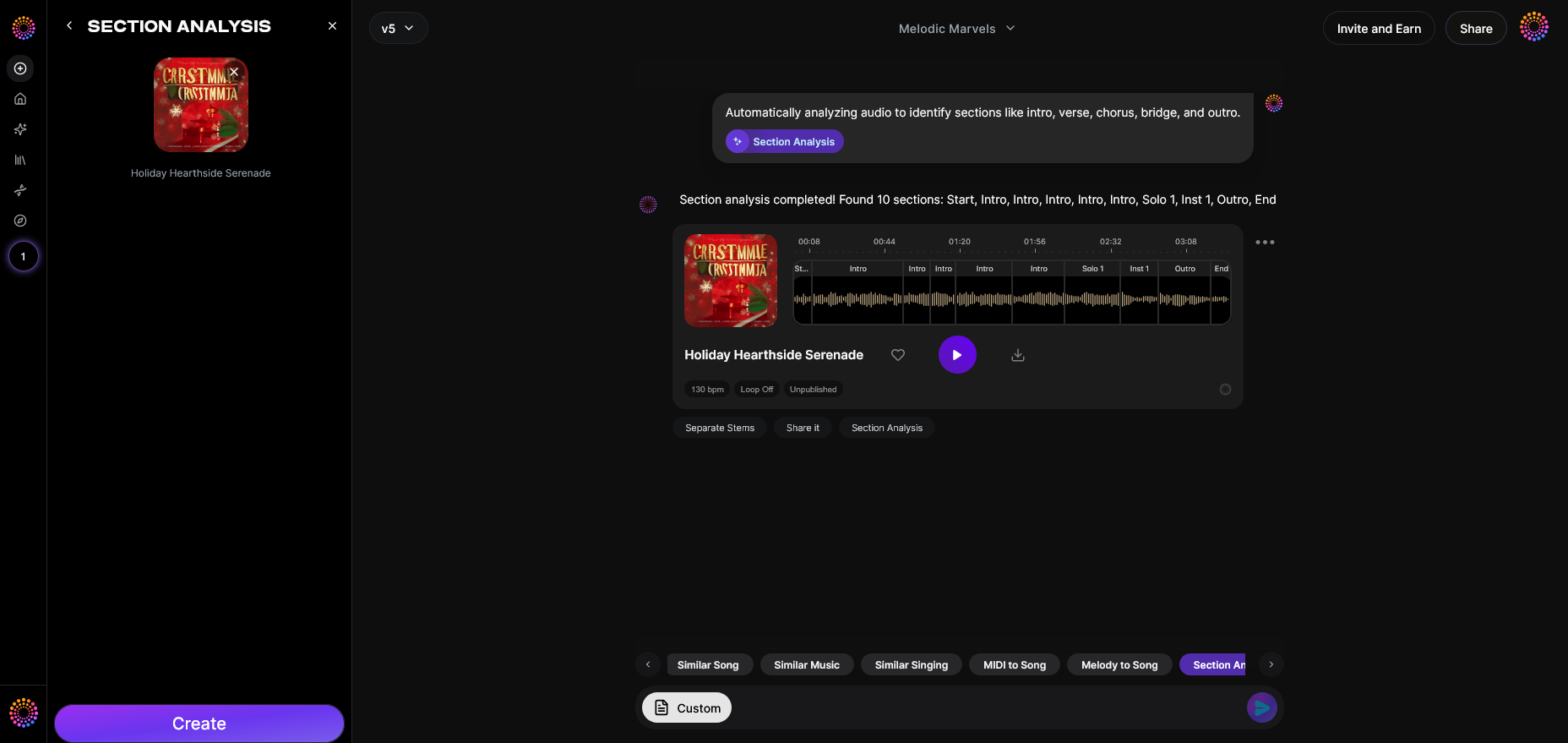
Soundverse’s Section Analysis tool is designed for modern producers exploring the complexity of layered compositions. The feature automatically detects and labels core song sections — Intro, Verse, Chorus, Bridge, and Outro — using precise timestamps. This roadmap helps remixers and producers visualize structure before editing or inpainting.
Core Capabilities:
- Automated structure detection for any uploaded track.
- Visual roadmap generation, showing where key transitions occur.
- Timestamp export for efficient remixing, DJ cue setup, or sync licensing assessment.
Primary Use Cases:
- Learning song structures: Understand how established songs employ sectional density.
- Remixing and Re-arranging: Redesign dense arrangements with clarity.
- Inpainting Edits: Perfect for maximalist compositions where structural consistency matters.
In maximalism, managing layer flow is crucial. Section Analysis enables maximalist producers to map their track’s energy distribution visually — revealing where to thin or thicken textures. When paired with other Soundverse tools such as the AI Music Generator or Soundverse DNA, it forms a robust toolkit for sculpting complex music without losing cohesion.
What does the future of maximalism look like beyond 2026?
Looking ahead, maximalism is expected to mature further, possibly integrating with interactive and spatial audio. As virtual and augmented reality content expands, producers will design multi-perspective audioscapes — layers that respond to motion or viewer proximity. AI systems will likely automate adaptive mixing, adjusting density based on playback context.
By 2027 and beyond, maximalism may evolve into experiential audio design, where music becomes an evolving ecosystem instead of a fixed file. Yet, the core appeal will remain — creating powerful, overwhelming musical statements that reflect our hyperconnected world.
Create Your Own Maximalist Sound Today
Unleash bold layers, intricate textures, and cinematic intensity with Soundverse’s AI music tools. Bring your maximalism in music ideas to life effortlessly.
Start Creating with Soundverse
Related Articles
- How AI-Generated Music Is Transforming the Music Industry — Discover how artificial intelligence is reshaping creative workflows and unlocking new possibilities for musicians worldwide.
- AI Music Generator and Human Composers: A Future Together — Explore the evolving partnership between human artistry and AI innovation in the modern music scene.
- The Role of AI Music in Film and Television — Learn how AI-driven sound production is elevating storytelling in film scores, soundtracks, and on-screen experiences.
- Most Popular Music Genres — Dive into the global music landscape and find out which genres dominate playlists and influence emerging trends.
Here's how to make AI Music with Soundverse
Video Guide

Here’s another long walkthrough of how to use Soundverse AI.
Text Guide
- To know more about AI Magic Tools, check here.
- To know more about Soundverse Assistant, check here.
- To know more about Arrangement Studio, check here.
Soundverse is an AI Assistant that allows content creators and music makers to create original content in a flash using Generative AI. With the help of Soundverse Assistant and AI Magic Tools, our users get an unfair advantage over other creators to create audio and music content quickly, easily and cheaply. Soundverse Assistant is your ultimate music companion. You simply speak to the assistant to get your stuff done. The more you speak to it, the more it starts understanding you and your goals. AI Magic Tools help convert your creative dreams into tangible music and audio. Use AI Magic Tools such as text to music, stem separation, or lyrics generation to realise your content dreams faster. Soundverse is here to take music production to the next level. We're not just a digital audio workstation (DAW) competing with Ableton or Logic, we're building a completely new paradigm of easy and conversational content creation.
TikTok: https://www.tiktok.com/@soundverse.ai
Twitter: https://twitter.com/soundverse_ai
Instagram: https://www.instagram.com/soundverse.ai
LinkedIn: https://www.linkedin.com/company/soundverseai
Youtube: https://www.youtube.com/@SoundverseAI
Facebook: https://www.facebook.com/profile.php?id=100095674445607
Join Soundverse for Free and make Viral AI Music
 We are constantly building more product experiences. Keep checking our Blog to stay updated about them!