Is 'Sad' a Music Genre? Understanding Emotion in Modern Music (2026 Insight)
Explore the emotional depth of sad music genre and how Soundverse lets you create melancholic soundscapes instantly.
Is 'Sad' a Music Genre?
Is 'Sad' a Music Genre in 2026?
When you search for songs to fit a somber mood—those quiet moments of introspection or heartbreak—you might notice a common playlist label: 'Sad Songs'. But is 'sad' actually a music genre? In 2026, music classification systems have evolved dramatically with AI-driven mood tagging and emotion detection, yet the question still sparks debate among listeners and creators.
What Defines a Music Genre?
Traditionally, genres are defined by stylistic elements: instrumentation, rhythm, harmony, and cultural origin. Pop, jazz, hip-hop, classical, and rock all have distinct structures and histories. The 'sad music genre,' however, describes an emotional tone rather than musical form. You can find sad pop, sad electronic, or even sad jazz—each conveying melancholy through tempo, key, or lyrical themes rather than belonging to a unique genre family.

What Makes Music 'Sad'?
Certain musical attributes evoke sadness universally:
- Minor Key Usage: Minor chords often generate tension or sorrow.
- Slow Tempo: Lower BPMs align with introspective moods.
- Sparse Arrangements: Minimal instrumentation emphasizes emotion.
- Melancholic Melody Lines: Descending notes mimic emotional decline.
- Soft Timbres and Reverb: These audio textures create a sense of distance and longing.
Research in emotional acoustics between 2024 and 2025 paved the way for music emotion classification systems that analyze tone, key, and tempo to predict listener response. In 2026, streaming platforms and AI music generators use this technology to tag tracks beyond genre—by emotion, mood, and even psychological context.
Is 'Sad' a Music Genre or a Mood Tag?
'Sad' fits better as a mood-based category than a formal genre. It spans multiple styles and is more fluid than traditional classifications. Emotion-based tagging is a hallmark of modern playlists—from Spotify’s “Life Sucks” collection to Apple Music’s “Melancholic Evening.” These playlists mix indie, pop, and cinematic instrumentals unified by an emotional throughline.
How Emotional Songs Changed the Listening Landscape
In 2026, emotional songs dominate streaming. Listeners curate based on how they feel rather than what style they prefer. This shift has given rise to new patterns:
- Mood-Based Playlists have exceeded genre playlists in monthly engagement metrics.
- AI-curated recommendations now adjust dynamically to a listener’s detected emotional state.
- Composers are designing soundtracks using music emotion classification, blending sad, hopeful, and nostalgic tones seamlessly.
For listeners, this means more personalized journeys. For creators, it opens creative freedom—combining melancholic music styles from ambient, lo-fi, or neoclassical categories to evoke specific emotions.
Why We Are Drawn to Depressing Songs
Psychologists suggest that listening to depressing songs isn’t simply indulgence—it can be emotionally therapeutic. Sad music activates empathy, helps process emotion, and fosters reflection. A slow piano track or distant guitar echo can feel comforting, transforming pain into beauty. By recognizing this emotional connection, musicians design tracks to mirror the human experience rather than stick to rigid genre boundaries.
How AI and Sound Design Reinvented Melancholy
Between 2024 and 2025, AI music generation became proficient at identifying emotional tonality. Tools like Soundverse introduced text-to-music generation, allowing creators to produce tracks that perfectly fit moods such as "sad," "gentle," or "melancholic." This capability expanded the concept of the sad music genre—now not a fixed category, but an algorithmically precise mood interpretation.
Platforms like Soundraw, Mubert, and Udio pushed early emotion-tagging in 2025, but by 2026, Soundverse’s V4 and V5 model improvements perfected genre/mood/instrument control for nuanced sad soundscapes. You can explore comparisons in related articles like Mubert alternatives and Soundraw alternative.
The Rise of Mood-Based Genres
Rather than focusing on traditional forms, modern curators classify music through hybrid mood genres:
- Melancholic Pop: Fuses emotional lyrics with smooth synth textures.
- Ambient Sadness: Minimalist soundscapes fostering meditation or reflection.
- Lo-Fi Loneliness: Relaxed, contemplative beats with vintage warmth.
- Neo-Classical Emotions: Piano- or string-driven compositions filled with nostalgia.
- Cinematic Depression: Dramatic scores for film and video storytelling.
These categories blur technical lines, proving that emotion has overshadowed form in modern listening culture. Refer to Music Industry Trends to understand how this change reshapes composition in 2026. This trend is also examined in The End of Genre: How Mood-Based Playlists Rule 2026 Music and in coverage of its rise from cultural movements like sadcore.
Are Musicians Embracing Emotion-Based Composition?
Composers today use emotion as a starting point rather than a result. Instead of writing 'a pop song,' they write 'a sorrowful moment turned sound.' Emotion-first composition aligns with an audience craving authenticity. Artists employ harmonic psychology and rhythmic spacing to induce emotional resonance.
Tools like Soundverse AI Lyrics Writer have empowered creators to pair meaningful words with mood-based instrumentals quickly. By selecting themes like 'loss,' 'distance,' or 'hope,' lyricists enhance emotional storytelling—perfectly fitting the sad music genre aesthetic.
The Emotional Spectrum in Contemporary Music
As AI progresses, every emotional nuance can be represented musically:
- Nostalgia: Mid-tempo, warm timbre, analog textures.
- Isolation: Minimalistic melodies, low ambient sounds.
- Despair: Dissonance, tension-based harmonies.
- Acceptance: Resolve through key modulation or chord completion.
This music emotion classification technology enables both listeners and creators to visualize feelings within sound. A single word can prompt AI to generate an entire emotional symphony.
How to Make Sad Music with Soundverse AI Music Generator
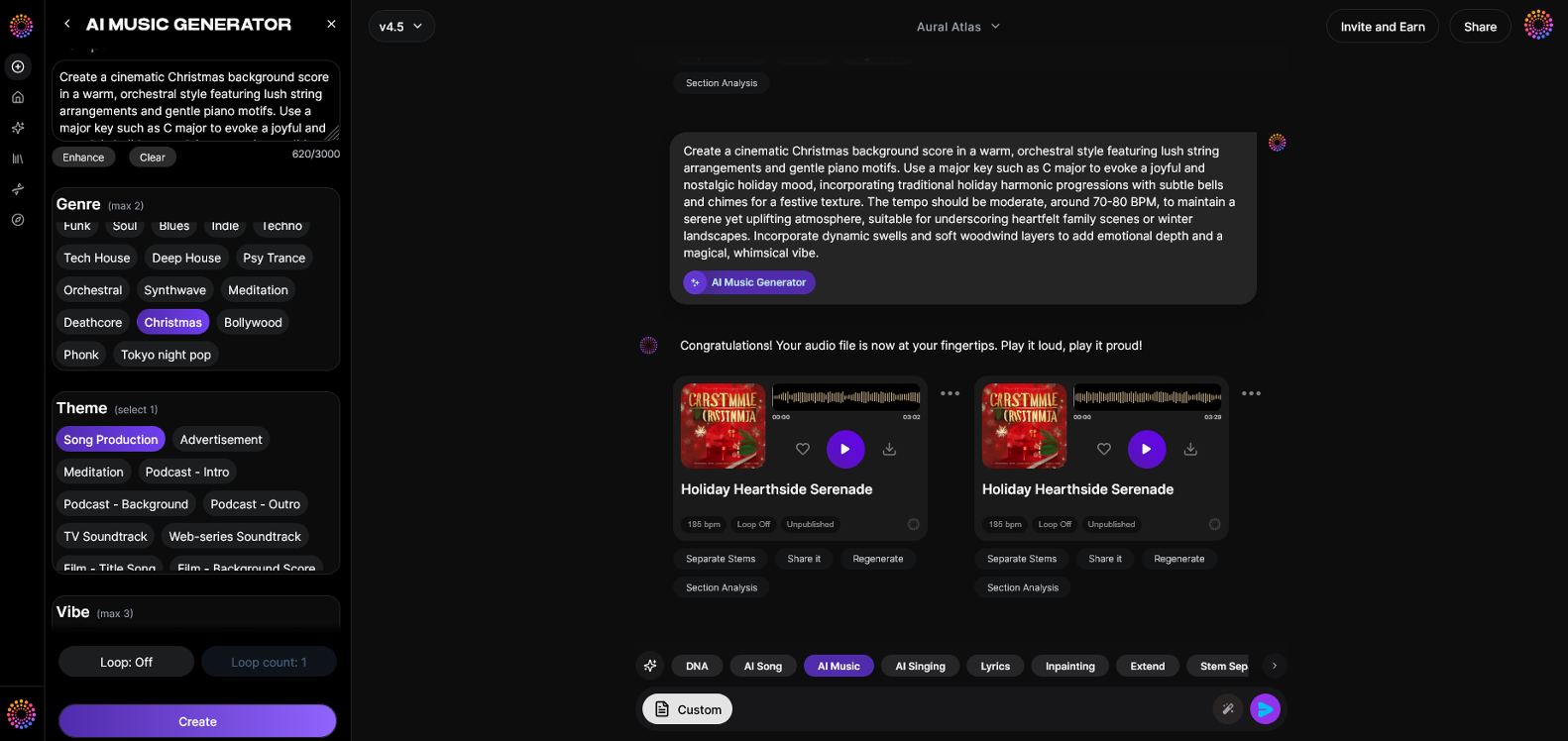
Now that you understand how the 'sad music genre' blends style and emotion, here’s how to create it instantly using Soundverse.
The Soundverse AI Music Generator lets users create fully produced instrumental tracks from text prompts—ideal for melancholic compositions without vocals. Enter a description like "slow ambient piano evoking heartbreak" and the generator produces looping instrumental music suited for film, relaxation, or background ambience.
Core Capabilities Explained
- Text-to-Music Generation: Describe the scene or emotion ('lonely evening in the rain') and the AI converts it into instrumental audio.
- Loop Mode: Create seamless repetitions for video background scores.
- Genre/Mood/Instrument Control: Select specific tonal colors—from minor piano to soft strings—to match the emotional core.
- V4 and V5 Models: Offer refined realism and nuanced emotion reproduction.
Perfect Use Cases for Sad or Melancholic Tracks
- Video and Film Backgrounds: Enhance emotional tension and storytelling.
- Game Soundtracks: Build immersive worlds around player empathy.
- Meditation or Reflection Sessions: Create soothing compositions with subtle melancholy.
- Advertising and Commercials: Add emotional depth to campaigns.
Start experimenting directly through Soundverse’s Text-to-Music generation tool. You can also expand creativity with guides like how to create healing meditation music or how to create country music with Soundverse AI.
For practical examples, explore Soundverse’s Tutorial Series - How to Make Music or watch our guide on creating Deep House music to understand how emotional soundscapes are constructed in practice.
Why Soundverse Leads Emotional Creation in 2026
Soundverse’s precise AI models help bridge emotion and structure. Rather than just composing by genre, creators now craft sonic feelings. The ability to dial into sadness, nostalgia, or subtle grief makes Soundverse invaluable for music producers and emotional storytellers alike.
Whether you're curating mood-based playlists, experimenting with new music emotion classification techniques, or composing melancholic music for film—Soundverse turns your abstract emotions into concrete audio form.
Create Emotionally-Powered Music with Soundverse AI
Transform your creative vision into soulful soundscapes with our AI-powered tools. Generate music that captures authentic emotion—from sad to euphoric—in just minutes.
Related Articles
- Most Popular Music Genres: Dive into the world’s most loved music styles and discover how they’ve evolved over time.
- Generate AI Music with Soundverse Text-to-Music: Learn how to turn words and emotions into melodies with Soundverse’s powerful text-to-music feature.
- How AI-Generated Music Is Transforming the Music Industry: Explore how artificial intelligence is reshaping creativity, production, and distribution in today’s music scene.
- How to Create Healing Meditation Music with Soundverse AI: Discover the process of producing soothing, emotion-driven music using AI-powered creation tools.
Here's how to make AI Music with Soundverse
Video Guide

Here’s another long walkthrough of how to use Soundverse AI.
Text Guide
- To know more about AI Magic Tools, check here.
- To know more about Soundverse Assistant, check here.
- To know more about Arrangement Studio, check here.
Soundverse is an AI Assistant that allows content creators and music makers to create original content in a flash using Generative AI. With the help of Soundverse Assistant and AI Magic Tools, our users get an unfair advantage over other creators to create audio and music content quickly, easily and cheaply. Soundverse Assistant is your ultimate music companion. You simply speak to the assistant to get your stuff done. The more you speak to it, the more it starts understanding you and your goals. AI Magic Tools help convert your creative dreams into tangible music and audio. Use AI Magic Tools such as text to music, stem separation, or lyrics generation to realise your content dreams faster. Soundverse is here to take music production to the next level. We're not just a digital audio workstation (DAW) competing with Ableton or Logic, we're building a completely new paradigm of easy and conversational content creation.
TikTok: https://www.tiktok.com/@soundverse.ai
Twitter: https://twitter.com/soundverse_ai
Instagram: https://www.instagram.com/soundverse.ai
LinkedIn: https://www.linkedin.com/company/soundverseai
Youtube: https://www.youtube.com/@SoundverseAI
Facebook: https://www.facebook.com/profile.php?id=100095674445607
Join Soundverse for Free and make Viral AI Music

We are constantly building more product experiences. Keep checking our Blog to stay updated about them!