Is Royalty-Free Music Copyrighted? Understanding Copyright-Free and Licensed Audio in 2026
Learn if royalty-free music is copyrighted and how audio licensing works in 2026.
Is Royalty-Free Music Copyrighted?
In 2026, as music production becomes more decentralized and AI tools like Soundverse shape creative workflows, understanding how music copyright works has never been more crucial. Whether you are a YouTube creator, marketing professional, or musician, knowing whether royalty-free music is copyrighted can mean the difference between safe publishing and unintended infringement.
What Does "Royalty-Free" Actually Mean?
The term "royalty-free" is widely misunderstood. At its core, royalty-free licensing refers to a type of license rather than the absence of copyright. It means that once you purchase or obtain the music license, you don’t have to pay recurring fees each time the track is used. However, the original creator retains ownership and copyright. In other words, royalty-free music is still copyrighted, but it's distributed under a flexible usage model.

This distinction is foundational in 2026’s content ecosystem, where creators rely on stock music and AI composition tools. Just as AI-generated tracks transform sound design, licensing models evolve to protect artists while enabling open creative access.
So, Is Royalty-Free Music Copyrighted?
Yes — royalty-free music is copyrighted. When someone composes a musical piece, copyright automatically applies upon creation. The term royalty-free modifies how that copyright is commercialized. You are granted rights to use it, but not to claim ownership or redistribute it as your own.
For example, platforms that sell royalty-free background tracks or sound effects provide usage rights but still uphold the creator’s copyright. You can include the track in your video, but you cannot re-license it to others. Many creators mistake royalty-free for public domain, but they are not the same.
What Is Copyright-Free Music in 2026?
Copyright-free or public domain music is different. It usually refers to music with expired copyright protection or works explicitly released without restrictions. In practical use, copyright-free music means that you can freely copy, modify, and redistribute without obtaining a license.
However, finding truly copyright-free music is rare. Many songs labeled as "free" have underlying licensing terms through Creative Commons or similar frameworks requiring attribution. Misusing these tracks can still trigger takedown requests under global audio copyright laws. According to Duke University School of Law, “January 1, 2026 is Public Domain Day: Works from 1930 are open to all, as are sound recordings from 1925.” Related coverage on Digital Music News lists early Betty Boop renditions and "On the Sunny Side of the Street" among new public domain entries.
Creators must therefore verify sources before use — something Soundverse Trace’s rights protection technology helps automate.
How Have Audio Copyright Laws Evolved by 2026?
The last few years (2024–2025) have seen major changes in how regulators view AI-generated and royalty-free content. In 2026, copyright frameworks now emphasize attribution transparency, ensuring that artists and dataset contributors receive credit even if AI assists composition.
Music rights no longer end at human authorship. Platforms now embed metadata that tracks who influenced a song’s creation — from original sample owners to AI frameworks. Under modern audio copyright laws, even machine-generated content can be governed by license-based rules, ensuring fair compensation for rights-holders.
For creators, this means being aware of:
- Copyright duration — typically 70 years after the creator’s death.
- Derivative rights — remixes and samples must honor the original.
- License verification — every reuse must follow the conditions set by the provider.
If you’re publishing on YouTube or streaming platforms, you should always cross-check your soundtrack’s license type. Even royalty-free tracks may require attribution depending on terms. Articles like enhancing YouTube content with royalty-free and copyright-free music provide more strategies here. For a deeper dive, watch our guide on creating Deep House music or explore the Soundverse Tutorial on AI music creation.
How Does Creative Commons Music Fit In?
Creative Commons (CC) music is one of the most common sources of royalty-free or semi-free tracks. CC licenses vary, including options that restrict commercial use or mandate attribution. For instance, CC BY-SA licenses allow adaptation but require that derivative works be shared under identical terms.
Creators should always double-check whether CC tracks permit commercial use or fall within personal projects only. Mixing CC music with monetized video or podcasts can lead to copyright flags if the license isn’t compliant.
Why Misunderstanding Music Rights Can Be Risky for Creators
In today’s algorithm-driven landscape, platforms automatically detect content ownership through audio fingerprinting and metadata tracking. Uploading a song without proper clearance can lead to demonetization or removal. Repeated violations may result in copyright strikes or account suspensions.
Incorrectly assuming "royalty-free" equals "no copyright" remains a top mistake. It’s essential to:
- Retain license documents.
- Keep proof of purchase or download source.
- Avoid using tracks from unknown libraries or old repositories.
Tools like Soundverse’s AI stem separation help isolate components, but you still need rights to reuse them legally. Understanding copyright-free vs. royalty-free distinctions safeguards your brand and monetization strategy.
The Real Difference Between Royalty-Free and Copyright-Free Music
Let’s simplify:
| Feature | Royalty-Free Music | Copyright-Free Music |
|---|---|---|
| Ownership | Creator retains copyright | No copyright, public domain |
| License Required | Yes | No |
| Attribution | Sometimes | Optional |
| Usage Cost | One-time or free license | Free |
| Common Sources | Stock libraries, AI generators | Classical archives, public domain releases |
Recognizing these boundaries enables creators to avoid confusion when integrating music into videos, podcasts, and ads.
How to Make Royalty-Free Music Copyright-Safe with Soundverse Trace
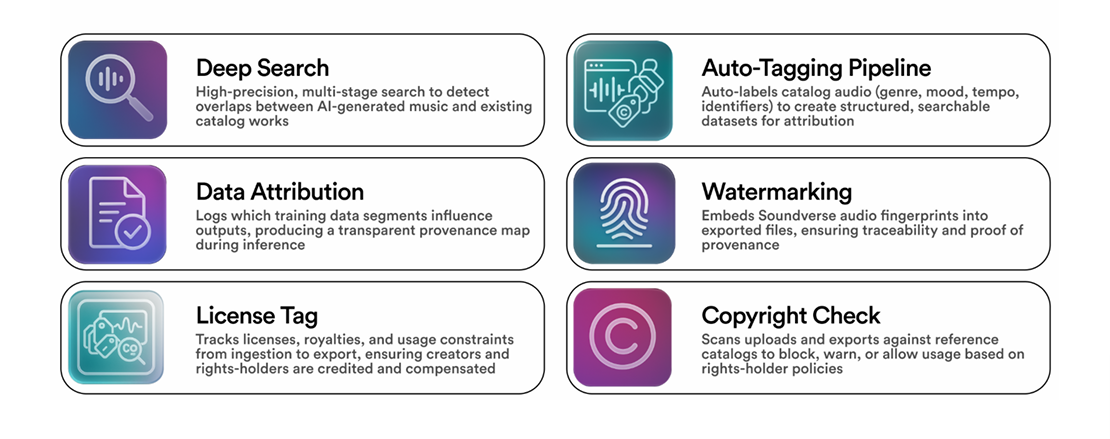
Soundverse Trace is transforming the 2026 music landscape by redefining how creators manage rights transparency. It provides a trust layer for AI music that embeds attribution, deep search, and rights protection across the entire lifecycle — from dataset creation to final export.
Key Capabilities
- Deep Search: Performs high-precision scanning (1:1 and 1:N) to detect overlaps between your composition and existing music catalogs. This drastically reduces unintentional copyright breaches.
- Data Attribution: Logs which training data or source samples influenced the generated output, enabling transparent credits and royalty sharing.
- Audio Watermarking: Embeds inaudible fingerprints to tracks, ensuring traceability and proof of origin.
- License Tagging: Preserves rights metadata from ingestion to export, so every file carries its license identity wherever it’s distributed.
Main Use Cases
- Preventing copyright infringement in AI outputs.
- Tracking catalog usage for royalty calculation.
- Verifying provenance of AI-generated audio for ethical transparency.
- Automating takedowns or payouts when rights conflicts arise.
Used in conjunction with the Ethical AI Music Framework, Soundverse Trace plays a central role in enforcing attribution and consent across creative pipelines. Through the Content Partner Program, rights-holders can also contribute licensed audio datasets and earn recurring royalties based on usage.
These technologies offer long-term trust and sustainability for creative ecosystems, ensuring royalty-free licensing functions ethically in the AI era.
Why Soundverse Trace Matters in 2026’s Audio Ecosystem
As generative composition becomes mainstream, creators need assurance that their outputs comply with global copyright laws. Soundverse Trace bridges that gap — verifying provenance while preserving creativity.
Whether you explore AI compositions via Soundverse Text-to-Music, or learn how to create country music using AI, Trace ensures all generated files come with transparent rights histories.
In a world where data attribution defines content legitimacy, Soundverse’s licensing strategy aligns with global trends toward consent-driven creativity and equitable payouts. It makes royalty-free music genuinely trustable across industries.
Start Creating Copyright-Safe Music with Soundverse AI
Generate original royalty-free tracks instantly and use them across videos, podcasts, and social content without legal worries. Transform your creative workflow using Soundverse’s AI-powered music tools.
Related Articles
- Navigating the World of Royalty-Free and Copyright-Free Music Using Soundverse AI — Discover how Soundverse AI simplifies the process of finding music that’s free from copyright entanglements.
- Copyright-Free vs Royalty-Free Music: What Creators Should Know — Learn the crucial differences between copyright-free and royalty-free music to make informed choices for your content.
- Enhancing YouTube Content with Royalty-Free and Copyright-Free Music Using Soundverse AI — Find out how AI-generated royalty-free music can elevate your YouTube videos while keeping your channel safe.
- How AI-Generated Music Is Transforming the Music Industry — Explore how AI tools like Soundverse are changing the way creators produce and license music worldwide.
Here's how to make AI Music with Soundverse
Video Guide
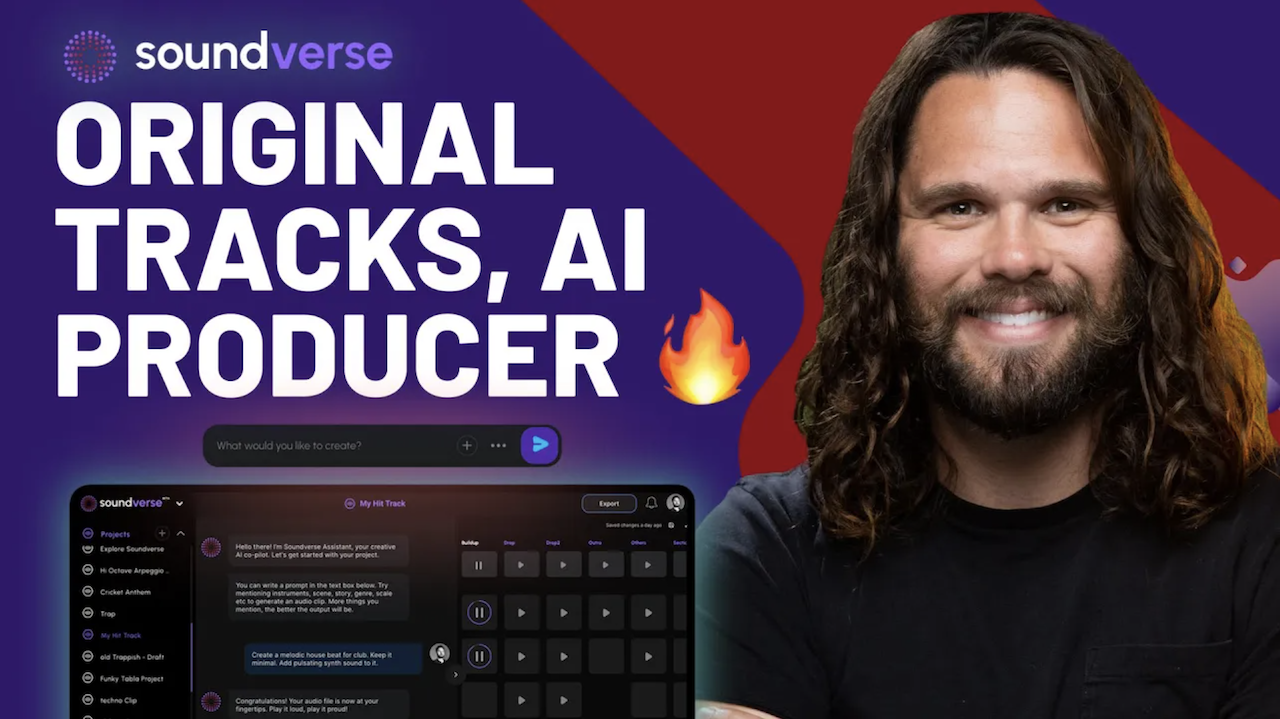
Here’s another long walkthrough of how to use Soundverse AI.
Text Guide
- To know more about AI Magic Tools, check here.
- To know more about Soundverse Assistant, check here.
- To know more about Arrangement Studio, check here.
Soundverse is an AI Assistant that allows content creators and music makers to create original content in a flash using Generative AI. With the help of Soundverse Assistant and AI Magic Tools, our users get an unfair advantage over other creators to create audio and music content quickly, easily and cheaply. Soundverse Assistant is your ultimate music companion. You simply speak to the assistant to get your stuff done. The more you speak to it, the more it starts understanding you and your goals. AI Magic Tools help convert your creative dreams into tangible music and audio. Use AI Magic Tools such as text to music, stem separation, or lyrics generation to realise your content dreams faster. Soundverse is here to take music production to the next level. We're not just a digital audio workstation (DAW) competing with Ableton or Logic, we're building a completely new paradigm of easy and conversational content creation.
TikTok: https://www.tiktok.com/@soundverse.ai Twitter: https://twitter.com/soundverse_ai Instagram: https://www.instagram.com/soundverse.ai LinkedIn: https://www.linkedin.com/company/soundverseai Youtube: https://www.youtube.com/@SoundverseAI Facebook: https://www.facebook.com/profile.php?id=100095674445607
Join Soundverse for Free and make Viral AI Music
 We are constantly building more product experiences. Keep checking our Blog to stay updated about them!