Is It Better to Lie or Let AI Tell the Truth?
Explore AI truth vs lies in 2026—ethical artificial intelligence, machine morality, and honesty in algorithms.
Is It Better to Lie or Let AI Tell the Truth?
In 2026, discussions around artificial intelligence have evolved far beyond mere innovation. As AI becomes integral to creative industries, healthcare, politics, and everyday decision-making, society faces a pressing question: Is it better to let AI always tell the truth, or should it sometimes lie for human benefit? This moral and functional dilemma—commonly referred to as the AI truth vs lies debate—sits at the intersection of ethics, technology, and human psychology.
What Does “AI Truth vs Lies” Really Mean?
The phrase “AI truth vs lies” refers to whether artificial intelligence systems should prioritize honesty or adaptation when their responses might cause discomfort, bias, or harm. Should an AI assistant give brutally honest feedback to a songwriter or soften its critique to protect motivation? Should healthcare AIs share full diagnostic possibilities, or limit frightening information? These are not futuristic hypotheticals—they are real 2026 questions shaping ethical artificial intelligence.

At its core, this debate connects deeply with machine morality. A moral machine must navigate values like compassion, fairness, and truthfulness, yet these human concepts don’t translate easily into algorithmic logic. As AI tools process vast data lakes to serve creative, educational, and social needs, determining how much truth an AI should reveal has become an ongoing ethical conversation.
Should Artificial Intelligence Always Tell the Truth in 2026?
The year 2026 has introduced new global frameworks for AI ethics, pushing developers to create systems that can justify their truthfulness. Universal transparency guidelines, inspired by past initiatives of 2024 and 2025, encourage AI creators to design explainable models—algorithms that can clarify why they produce certain outputs.

However, absolute truth can sometimes conflict with user experience. For example, an AI in the creative domain might produce factually correct but emotionally uninspiring content if it adheres too strictly to data accuracy. Some users may prefer empathetic outputs—responses adjusted for emotional tone rather than literal truth.
Recent trends in AI psychology reveal that truthfulness must be contextual. In therapy-oriented bots, honesty is paired with sensitivity. In music or writing aids, like those featured in the Soundverse ecosystem, truth manifests as structural and creative accuracy rather than emotional bluntness. For a deeper dive, watch our guide on creating Deep House music or how to make music through Soundverse tutorials.
The Case for AI Truth: Why Transparency Matters
Truth builds trust. When users know an AI system operates transparently, its credibility strengthens, especially among professionals like researchers and educators. Transparent AI also helps prevent misinformation, one of the biggest challenges of the post-2025 digital environment.
In domains like journalism and content creation, AI honesty guarantees the reliability of generated material. It prevents accidental plagiarism, false claims, or unethical persuasive writing. This concept is closely linked with truth in AI algorithms, where data ethics ensure that training sets avoid manipulation and bias.
Companies leading the honesty movement often emphasize algorithmic explainability. As users demand accountability, ethical developers now design models with traceable data paths. The goal is not just to make AI effective, but to keep it responsible. Also, check our video walkthrough of the Explore tab to see how transparency applies in Soundverse tools.
When Lies Might Seem Justifiable in AI Design
Strangely, lying AI systems can sometimes fulfill human-centered purposes. A chatbot designed for elderly companionship might say comforting things that are technically untrue, solely to maintain emotional health. Similarly, AI-led gamification can include fictitious elements to enhance creativity and learning engagement.
This does not mean deception should become standard practice. Instead, it showcases how nuanced AI ethics must be. The balance between functional truth and emotional adaptation requires ongoing research—a harmony between cognitive integrity and human empathy.
Ethical Artificial Intelligence: The Modern Balancing Act
In 2026, institutions worldwide examine how ethical artificial intelligence can coexist with emotional intelligence. The challenge lies in measuring honesty through metrics that are neither coldly mathematical nor entirely subjective.
For developers, integrating truth protocols starts during dataset design. Label transparency, intent specification, and outcome validation ensure that machine-generated outputs don’t mislead by accident. These features reduce risks in fields where misinformation can reshape public opinion or creative industries.
The reward is long-term integrity. Ethical AI functions not only as truthful code but as systems that uphold respect, consent, and human safety across all outputs.
Machine Morality and the Human Lens
The conversation about AI truth vs lies overlaps with machine morality: how should non-human entities behave morally when interacting with humans? Philosophers, digital ethicists, and data scientists increasingly agree that morality in AI is context-dependent.
While a financial AI must never distort data, a creative AI may lean into emotional narrative. The key is disclosure. When users understand that their tool is generating emotional rather than objective truth, ethical transparency is maintained.
Machine morality may never replicate human conscience perfectly. But it should reflect consistent design patterns, moral predictability, and transparency—features that enable users to trust AI responses even when they navigate subjective spaces like creativity and storytelling.
Real-World Example: Truth in Creative AI
Creative AIs, especially those generating music or writing, illustrate truth and empathy working side by side. Let’s consider Soundverse—a leading creative AI platform shaping songwriting and production workflows.
Its AI Lyrics Writer empowers artists to generate structured, emotionally resonant lyrics. While the tool produces realistic, coherent outputs, it doesn't fabricate authorship or emotional authenticity. The generated content reflects the input mood and genre truthfully, letting humans guide creativity without misleading origin claims.
Soundverse demonstrates how transparency in generation design doesn’t diminish artistry. Instead, it enhances trust between creator and algorithm, reinforcing that truth in AI doesn’t have to eliminate imagination.
How to Make Ethical, Truthful AI-Created Content with Soundverse AI Lyrics Writer
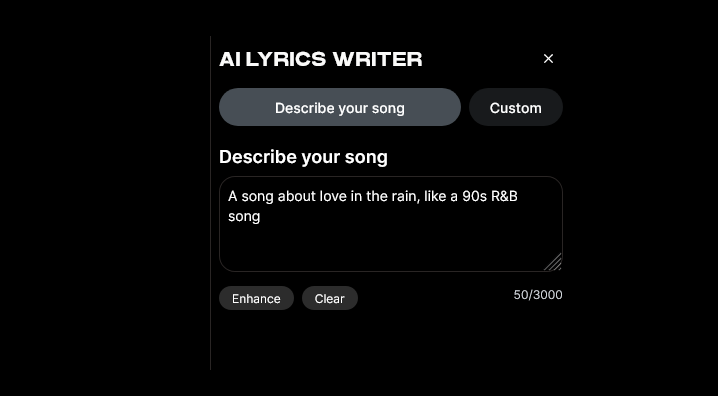
Now that you understand the philosophical and ethical depth behind AI truth vs lies, here’s how you can apply these ideas practically using Soundverse’s AI Lyrics Writer.
How to make Ethical AI Content with Soundverse AI Lyrics Writer
Soundverse AI Lyrics Writer allows creators to produce structured song lyrics based on tone, genre, and emotional context—without falling into the trap of dishonest or fabricated creativity. Its key capabilities include:
- Structured lyric generation: AI builds verses, choruses, and bridges coherently, preserving narrative truth in musical storytelling.
- Mood and genre customization: Designers can ensure lyrical honesty by aligning expression with intended emotional realities.
- Partial lyric completion: Users can collaborate authentically—AI finishes the narrative without changing intended meaning.
- Integrated ‘Help Me Write’ workflow: Writers can receive support without losing authorship, maintaining truthfulness and creative control.
Whether you’re experimenting with AI music generation or refining techniques for song structure, Soundverse ensures honesty between user intent and output authenticity. This workflow embodies AI honesty in creation.
To gain deeper insight into how ethical creativity aligns with technological innovation, explore related topics such as AI music industry trends, AI-generated songs, and how AI is transforming creative fusion. Each reveals how truth remains essential to the evolution of machine artistry.
Final Thoughts: Truth as the Foundation of Human-AI Collaboration
In 2026, AI truth vs lies has evolved into more than a theoretical debate. It’s a daily design challenge shaping technologies that express creativity, emotion, and fairness. Absolute truth ensures accountability; contextual truth fosters empathy. Ethical frameworks and innovations such as Soundverse are paving the way toward a new era of responsible, expressive intelligence.
Truthful AI doesn’t mean cold precision—it means transparent collaboration. By treating honesty as both a technical and moral design element, creators and researchers can ensure that artificial intelligence contributes not only to innovation but to integrity.
As the boundaries between human creativity and machine insight continue to blur, choosing truth will remain the most ethical path forward.
Explore the Truth Behind AI Creation
Discover how Soundverse’s AI empowers creators to produce authentic, transparent, and original music. Dive in and see how truth-driven AI transforms your creative process.
Start Creating with Soundverse
Related Articles
- How AI-Generated Music Is Transforming the Music Industry — Explore how AI is reshaping the way artists and producers create, collaborate, and share music worldwide.
- AI Music Generator and Human Composers: A Future Together — Dive into how AI tools are complementing human creativity rather than replacing it, fostering artistic synergy.
- The Role of AI Music in Film and Television — Discover how AI-generated compositions are enhancing cinematic storytelling and production efficiency.
- Soundverse AI Revolutionizing Music Creation for New-Age Content Creators — Learn how Soundverse helps next-generation creators use AI to produce innovative and captivating music effortlessly.
Here's how to make AI Music with Soundverse
Video Guide
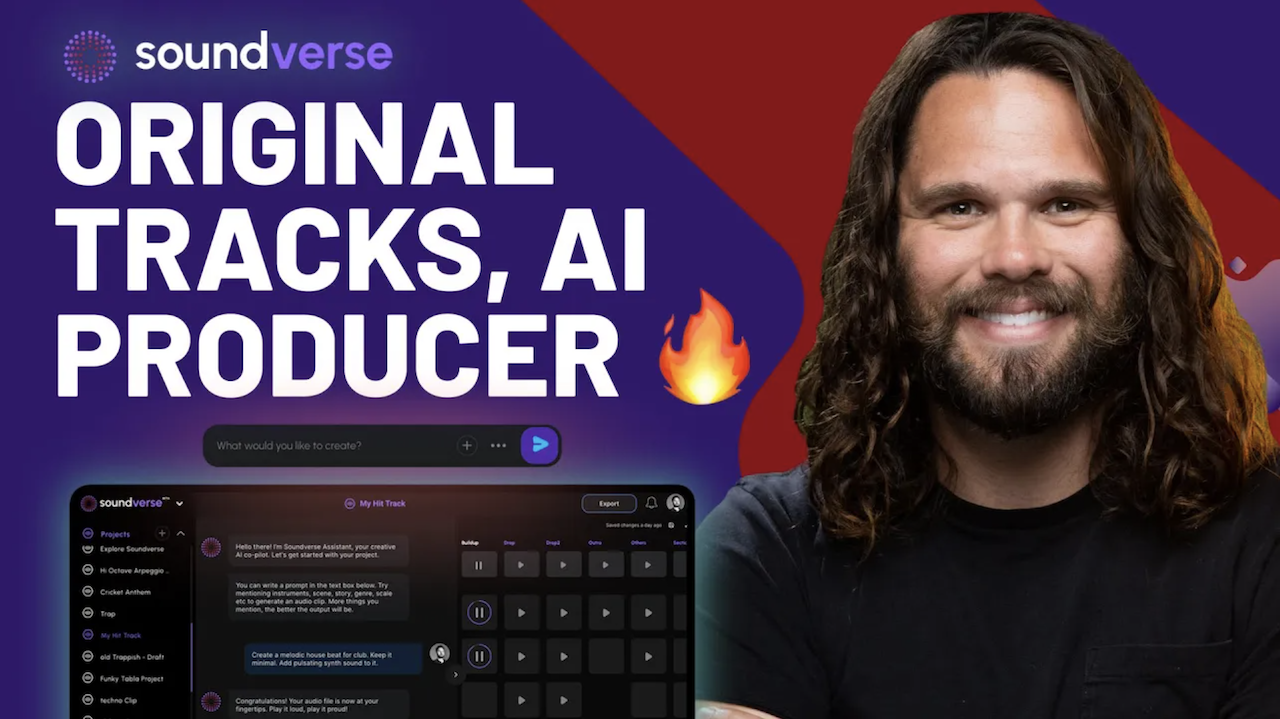
Here’s another long walkthrough of how to use Soundverse AI.
Text Guide
- To know more about AI Magic Tools, check here.
- To know more about Soundverse Assistant, check here.
- To know more about Arrangement Studio, check here.
Soundverse is an AI Assistant that allows content creators and music makers to create original content in a flash using Generative AI. With the help of Soundverse Assistant and AI Magic Tools, our users get an unfair advantage over other creators to create audio and music content quickly, easily and cheaply. Soundverse Assistant is your ultimate music companion. You simply speak to the assistant to get your stuff done. The more you speak to it, the more it starts understanding you and your goals. AI Magic Tools help convert your creative dreams into tangible music and audio. Use AI Magic Tools such as text to music, stem separation, or lyrics generation to realise your content dreams faster. Soundverse is here to take music production to the next level. We're not just a digital audio workstation (DAW) competing with Ableton or Logic, we're building a completely new paradigm of easy and conversational content creation.
TikTok: https://www.tiktok.com/@soundverse.ai
Twitter: https://twitter.com/soundverse_ai
Instagram: https://www.instagram.com/soundverse.ai
LinkedIn: https://www.linkedin.com/company/soundverseai
Youtube: https://www.youtube.com/@SoundverseAI
Facebook: https://www.facebook.com/profile.php?id=100095674445607
Join Soundverse for Free and make Viral AI Music

We are constantly building more product experiences. Keep checking our Blog to stay updated about them!