Is a Lie Made with AI? Understanding AI-Generated Misinformation in 2026
Explore the ethics and technology behind AI-generated misinformation in 2026.
Is a Lie Made with AI?
Is a Lie Made with AI? Understanding AI-Generated Misinformation in 2026
Artificial intelligence has revolutionized how information is created, distributed, and consumed. Yet, as much as AI empowers innovation, it also introduces profound ethical dilemmas—especially around the concept of truth. By 2026, discussions about AI-generated misinformation have reached a critical point, as researchers, technologists, and policymakers seek new solutions to prevent digital deception at scale.
What is AI-Generated Misinformation?
AI-generated misinformation refers to false or misleading content created partially or entirely by artificial intelligence algorithms. It can appear as fabricated news stories (AI To Produce 90% Of News By 2026?), synthetic videos made with deepfake technology, or even realistic audio clips imitating known voices. These outputs often leverage machine learning models trained on billions of data points, some legitimate and others not.

Misinformation generated by AI is not merely accidental. In many cases, biases embedded in the training datasets—known as machine learning bias—propagate and magnify distortions. When such systems are used irresponsibly, the result is a digital world where truth and fiction blur indistinguishably.
How Do Deepfakes Contribute to Digital Deception?
Since 2024, deepfake technology has evolved dramatically. By 2026, hyper-realistic AI-generated faces and voices can replicate genuine individuals with uncanny precision. This technological progress supports authentic content creation for film and gaming but simultaneously enables deceptive practices. Deepfakes are often weaponized to distort political narratives, manipulate public opinions, or even impersonate celebrities.

For researchers studying digital deception, the central question is not only how deepfakes are made but also how to detect and mitigate them. AI truth detection tools have emerged to counter these synthetic manipulations, relying on watermarking, pattern recognition, and verification protocols. For a deeper dive, watch our guide on creating Deep House music, or explore the tutorial on AI music creation basics to see how realistic AI-generated audio can be authenticated.
Why Are Artificial Intelligence Ethics Crucial in 2026?
Ethics in AI has transitioned from theoretical debate to daily operational concern. The spread of AI-generated misinformation directly challenges artificial intelligence ethics, forcing developers and organizations to introduce transparency into their systems.
The ethical framework in 2026 includes:
- Data Transparency: Understanding the origins and use of datasets.
- Consent-Driven Training: Ensuring contributors of training data have provided explicit permission.
- Attribution and Accountability: Allowing visibility into how AI models influence or replicate human-created content.
- Regulatory Oversight: Governments introducing traceability laws related to deepfake and misinformation detection.
The ethical foundation ensures that responsibility is evenly distributed between model creators, platform providers, and end-users.
What Are the Advances in AI Truth Detection?
AI truth detection in 2026 uses a multi-layered approach involving:
- Source Authentication: Verifying whether the content originates from humans or AI.
- Metadata Tracking: Analyzing creation timestamps and watermark identifiers embedded in media.
- Attribution Models: Mapping outputs back to datasets through transparency layers.
For multimedia creators, truth detection is part of the production pipeline. AI-generated music, visuals, and text require verifiable metadata, especially as generative content increasingly enters commercial channels. Advanced tools have been developed to help creators embed proof of authenticity, mitigating the risks of losing control over their intellectual property.
For more insight into generative content evolution, explore related articles such as How AI-Generated Music is Transforming the Music Industry, Soundverse Introduces Stem Separation AI Magic Tool, and Navigating the World of Royalty-Free and Copyright-Free Music Using Soundverse AI.
Can Machine Learning Bias Create False Narratives?
Machine learning bias is perhaps the most subtle yet pervasive driver of misinformation. When models are trained on skewed or incomplete data, their outputs reflect that imbalance. For instance, text-generating AIs may unintentionally reinforce stereotypes or misrepresent populations. In visual domains, dataset bias can result in inappropriate or misleading depictions.
Bias in AI systems can lead to false narratives being accepted as truth. The ongoing challenge in 2026 is correcting these biases through algorithmic auditing and ethical dataset curation. Research teams are implementing bias mitigation layers—algorithms trained specifically to detect the presence of misrepresentation.
How Does AI Shape Our Understanding of Truth?
AI doesn’t lie in the conventional human sense. Yet, the outputs of generative systems can distort truth if not properly contextualized. The philosophical question, “Is a lie made with AI?” underscores how intent and authorship interact. If a human provides deceptive input to an AI model, the resulting misinformation may lack a conscious source but still achieves deceit.
By 2026, technology scholars define lies made with AI as synthetic distortions resulting from either manipulated inputs or irresponsible model deployment. This reconceptualization shifts focus from blame to responsibility, highlighting the importance of transparency tools within AI ecosystems.
What Are the Implications for Artists and Creatives?
Artists increasingly rely on AI to produce music and multimedia content. This reliance comes with ethical expectations around data provenance. Musicians generating songs using platforms like Soundverse or other tools must ensure their outputs respect rights and attribution principles.
Creative ecosystems now integrate digital fingerprinting and audio watermarking to track usage and prevent infringement. The intersection of AI creativity and misinformation ethics ensures that even artistic outputs maintain verifiable authenticity.
For example, creators exploring genre-based generation tools can engage resources like Now Generate Music with Filters Such as Genre, Theme, Instruments or Even Vibe or learn the implications of rights protection from Copyright-Free vs Royalty-Free Music: What Creators Should Know. Watch our “Explore” tab walkthrough to see how Soundverse organizes creative workflows transparently.
How to Make AI Truth Trustworthy with Soundverse Trace
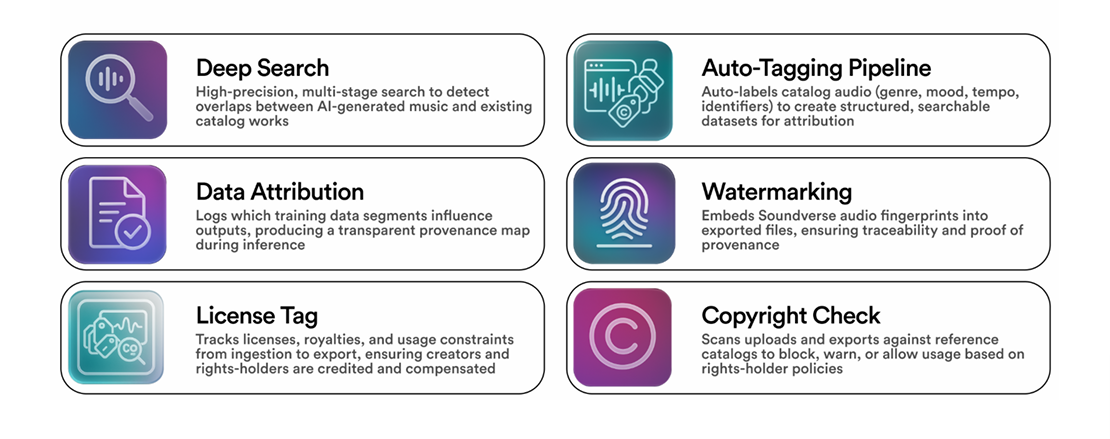
Now that you understand the ethical and technical dimensions of AI-generated misinformation, here is how to establish authenticity instantly using Soundverse Trace.
Soundverse Trace acts as a comprehensive trust layer for AI music. It embeds attribution, deep search, and rights protection across the full lifecycle—from dataset creation to final export. As misinformation concerns expand, verifying provenance in digital audio becomes critical.
Core capabilities include:
- Deep Search: High-precision scanning (1:1, 1:N) to detect overlaps and data similarities.
- Data Attribution: Logging training data that influenced outputs for transparent insight.
- Audio Watermarking: Embedding inaudible fingerprints unique to each piece of audio.
- License Tagging: Maintaining rights metadata from ingestion through export.
Soundverse Trace enables creators, research teams, and rights-holders to:
- Prevent copyright infringement across AI-generated content.
- Track catalog usage for royalties automatically.
- Verify provenance and authenticity in AI audio outputs.
- Facilitate automated takedowns or payouts for rights-holders.
This trust layer operates asynchronously: users upload or record audio, Soundverse processes it, and delivers verifiable results. It does not involve real-time monitoring but ensures auditable transparency after generation.
Why Soundverse Trace Matters in AI Ethics
Soundverse Trace contributes to the broader ethical conversation by providing verifiable accountability. It bridges innovation and artist integrity—a principle embedded in the Ethical AI Music Framework. Through transparent data handling and technical watermarking, Soundverse empowers AI creators to counter misinformation proactively.
In 2026, trust technology has become indispensable. As generative systems continue to blur the line between originality and imitation, platforms with embedded provenance layers are defining the next era of responsible AI.
Discover the Power of Ethical AI Creation
Transform your content workflows with Soundverse’s suite of AI tools designed to inspire, educate, and create responsibly. Start leveraging AI that respects truth and creativity today.
Start Creating with Soundverse
- How AI-Generated Music Is Transforming the Music Industry - Explore how AI-powered music creation is reshaping production, creativity, and collaboration across the industry.
- Soundverse AI Revolutionizing Music Creation for New-Age Content Creators - Discover how Soundverse empowers creators with intelligent tools to produce groundbreaking music effortlessly.
- The Role of AI Music in Film and Television - Uncover how AI-driven compositions are bringing cinematic experiences to life across film and TV.
- AI Music Generator and Human Composers – A Future Together - Learn how AI and human creativity can harmonize to shape the next generation of music production.
Here's how to make AI Music with Soundverse
Video Guide
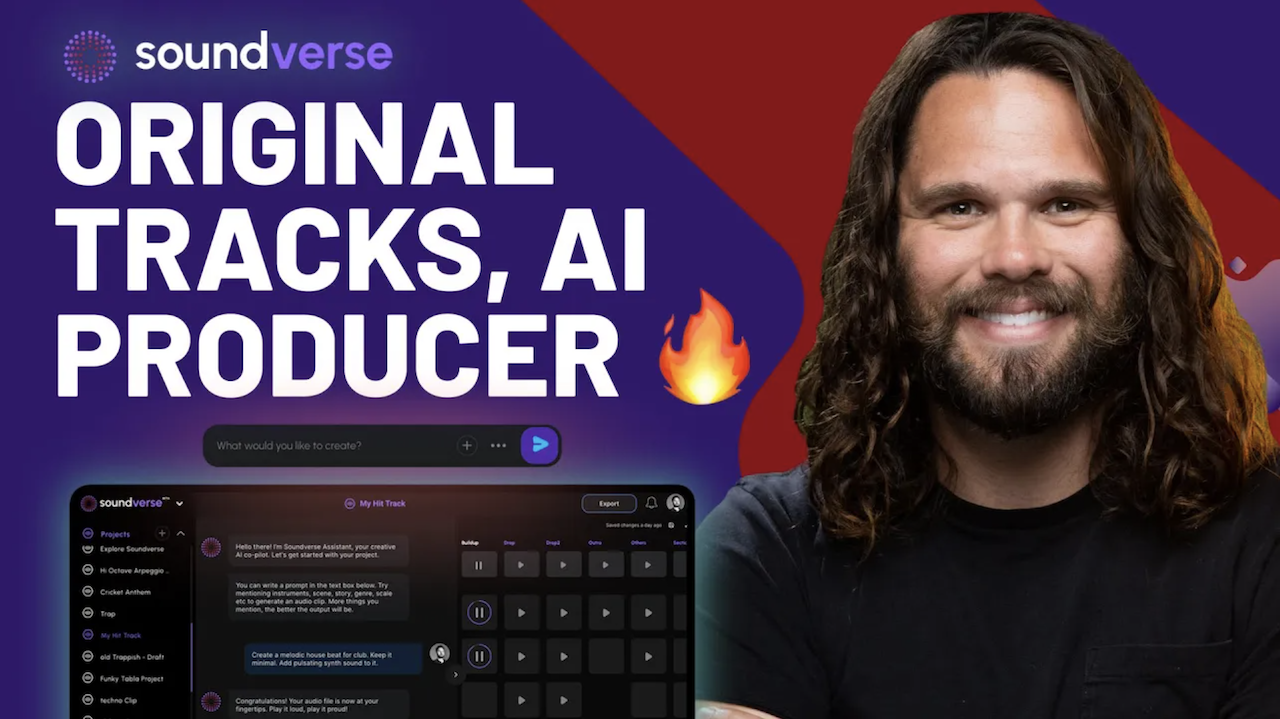
Here’s another long walkthrough of how to use Soundverse AI.
Text Guide
- To know more about AI Magic Tools, check here.
- To know more about Soundverse Assistant, check here.
- To know more about Arrangement Studio, check here.
Soundverse is an AI Assistant that allows content creators and music makers to create original content in a flash using Generative AI. With the help of Soundverse Assistant and AI Magic Tools, our users get an unfair advantage over other creators to create audio and music content quickly, easily and cheaply. Soundverse Assistant is your ultimate music companion. You simply speak to the assistant to get your stuff done. The more you speak to it, the more it starts understanding you and your goals. AI Magic Tools help convert your creative dreams into tangible music and audio. Use AI Magic Tools such as text to music, stem separation, or lyrics generation to realise your content dreams faster. Soundverse is here to take music production to the next level. We're not just a digital audio workstation (DAW) competing with Ableton or Logic, we're building a completely new paradigm of easy and conversational content creation.
TikTok: https://www.tiktok.com/@soundverse.ai
Twitter: https://twitter.com/soundverse_ai
Instagram: https://www.instagram.com/soundverse.ai
LinkedIn: https://www.linkedin.com/company/soundverseai
Youtube: https://www.youtube.com/@SoundverseAI
Facebook: https://www.facebook.com/profile.php?id=100095674445607
Join Soundverse for Free and make Viral AI Music

We are constantly building more product experiences. Keep checking our Blog to stay updated about them!
Image Steps: []