International Voice Rights: Country-by-Country Guide
Explore 2026 global voice laws and international voice rights with Soundverse Trace.
International Voice Rights: Country-by-Country Guide
In 2026, the concept of international voice rights has matured from a niche legal question into a critical pillar of global intellectual property policy. As AI voices, deepfakes, and synthetic performances dominate marketing, entertainment, and social media, stakeholders across continents are asking: how do global voice laws apply, and what rights do individuals or organizations have over voice data?
What are international voice rights in 2026?
International voice rights refer to the legal frameworks governing ownership, consent, and usage of recorded, generated, or recreated voices worldwide. These laws define when a voice can be used commercially, how AI systems may process it, and what compensation or consent obligations apply. The primary keyword—international voice rights—encompasses consent agreements, digital personality control, and data attribution for AI voice systems. Secondary to this are global voice laws and country regulations, which vary significantly across jurisdictions.

How do global voice laws differ across major regions?
United States
In the U.S., voice rights fall under a combination of state-level publicity laws and federal copyright regimes. States like California and Tennessee grant individuals the right to control their voice likeness, much like their image. These rights have expanded to address AI-generated content where synthetic voices closely resemble known personalities. By 2026, the Federal Trade Commission (FTC) introduced new guidance on synthetic media disclosures—requiring brands to identify AI voices in commercial contexts.
European Union
Europe leans on privacy and data protection frameworks under the General Data Protection Regulation (GDPR). Voices are treated as biometric identifiers; recording or processing a voice for commercial use demands explicit consent. Voice actors benefit from collective bargaining agreements ensuring royalty distributions for AI reuse cases—a trend that emerged in 2025 and solidified in 2026.
United Kingdom
Post-Brexit, the UK established unique safeguards around AI-generated media under the Digital Creativity Act (2025). In 2026, organizations using synthetic voices must document provenance using licensed data sources, respecting individual rights and proper attribution. Violations may lead to civil penalties.

Japan
Japan’s Copyright Act was updated in 2025 to include provisions for AI voice cloning. Permission is required when a voice is used to imitate a specific performer. The country also supports transparent metadata tagging for voice datasets to preserve authorship records.
Canada
Canada’s Privacy Commissioner holds that voices are personal data under the Personal Information Protection and Electronic Documents Act (PIPEDA). Voice actors must opt-in for recordings used in training AI systems, showing strong emphasis on consent and clear reporting metrics.
Australia
Australia revised its Digital Rights Framework, protecting voices used in generative AI settings. By 2026, a dual system operates: performers’ rights for artistic content and consumer protection laws for public data voices.
India
India’s IT Governance Act (2025) added clauses regulating synthetic audio content. Consent is mandatory for voice replication, and attribution must be maintained throughout production pipelines.
South Korea
South Korea took early action on deepfake regulation. By 2026, AI voice generation must include watermark verification to trace the voice’s origin, both protecting artists and enabling transparency.
Brazil
Brazil’s Law of Digital Expression reinforces performer control over audio used for AI creation. Any export or reprocessing of voice data must maintain the source attribution trail.
Global Interpretation
Across the globe, international voice rights represent an intersection of data protection, performer remuneration, and identity preservation. While some nations classify voices as biometric data, others view them through creative ownership principles, demanding dynamic compliance strategies.
Why are worldwide rights important for AI voice development?
The explosion of AI music and voice synthesis requires accurate legal frameworks that span borders. Global voice laws protect rights-holders, balancing artistic freedom with ethical AI innovation. For content creators working across platforms, knowing these regulations prevents inadvertent infringements and promotes fair collaboration.
Creators generating multilingual content or dubbing with AI need to manage worldwide rights, ensuring data sources comply with local attribution standards. Unlike general copyright, voice ownership carries additional ethical weight, as it touches upon identity and consent.
How do companies comply with country regulations for voice data in 2026?
Compliance typically involves:
- Consent Documentation – Obtaining performer approval for training or mimicry.
- License Management – Ensuring rights metadata is attached to all audio assets.
- Data Attribution – Tracking which datasets influence model output.
- Watermarking and Fingerprinting – Embedding inaudible tags to trace origin and prevent unauthorized distribution.
Businesses integrating AI voices across multiple countries must deploy trust-layer technologies capable of mapping regional compliance into their operations.
How Soundverse Trace enables secure attribution for international voice rights
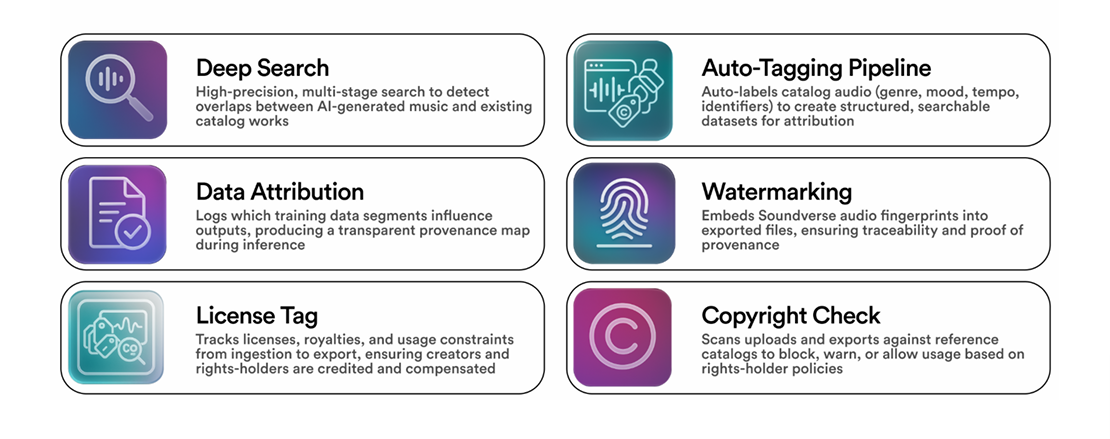
Soundverse Trace serves as a comprehensive trust layer for AI audio and music creation, offering advanced protection and transparency for rights-holders. It embeds attribution, deep search, and rights safeguards from dataset creation to final export.
Core capabilities include:
- Deep Search: High-precision scanning (1:1 and 1:N) to detect overlaps and similarities with known recordings. For a deeper dive, watch our guide on creating Deep House music and how to make music using Soundverse.
- Data Attribution: Logs which training data influenced each output, enabling transparent documentation for legal audits.
- Audio Watermarking: Embeds robust, inaudible fingerprints into AI-generated voices, allowing rights tracking across global networks.
- License Tagging: Preserves rights metadata from ingestion through export, guaranteeing compliance with country-specific rules.
Use cases:
- Preventing copyright infringement within AI outputs.
- Tracking catalog usage for royalties.
- Verifying provenance of AI-generated audio.
- Automating takedowns or payouts for rights-holders.
For organizations navigating varying global voice laws, Soundverse Trace bridges compliance gaps. It seamlessly integrates attribution obligations demanded by GDPR-style regulation and supports performers’ remuneration protections seen in Japan, Brazil, and the EU.
How legal professionals and creators benefit from technological transparency
By employing platforms like Soundverse Trace, lawyers and audio creators reduce their dependency on manual audits. Consistent attribution means consistent compensation. It ensures legal professionals can confirm rightful licensure across borders, a task previously slowed by fragmented regional laws.
Voice actors, influencers, and media houses operating globally now achieve data continuity—maintaining verified ownership chains from recording to distribution.
If you’re exploring ethical audio creation or rights protection frameworks, you may also find helpful insights in related articles like Soundverse AI Revolutionizing Music Creation for New Age Content Creators, Navigating the World of Royalty-Free and Copyright-Free Music Using Soundverse AI, and The Role of AI Music in Film and Television.
What future trends are shaping international voice rights?
By 2026, the most notable developments include:
- Blockchain-Based Royalties: Voice contracts recorded on blockchain ensure automated payment tracking.
- Cross-Border Voice Registries: Multinational cooperatives now log performer identity databases to validate authorization for AI voices.
- AI Governance Standards: Global discussions continue on harmonizing intellectual property frameworks for AI models generating voice data.
- Transparency Requirements: Most countries now require clear labeling for synthetic voices in advertising or public broadcasts.
These trends underscore the demand for automated compliance infrastructure. As synthetic media expands, the role of trust layers like Soundverse Trace grows in protecting creative authenticity and global accountability.
Protect and Monetize Your Voice Globally
Learn how to navigate international voice rights and ensure your creations are respected and rewarded across borders. Soundverse helps you stay ahead with AI tools designed for modern creators.
- AI Music in the USA: Explore how AI music laws and industry standards are evolving within the United States and what they mean for creators.
- Copyright-Free vs Royalty-Free Music: What Creators Should Know: Understand the key differences between copyright-free and royalty-free music and how each impacts your creative freedom.
- Navigating the World of Royalty-Free and Copyright-Free Music Using Soundverse AI: A practical guide to leveraging AI tools for hassle-free licensing and distribution of your voice and music projects.
- The Role of AI Music in Film and Television: Discover how AI-generated soundtracks are changing international media rights and production landscapes.
Here's how to make AI Music with Soundverse
Video Guide
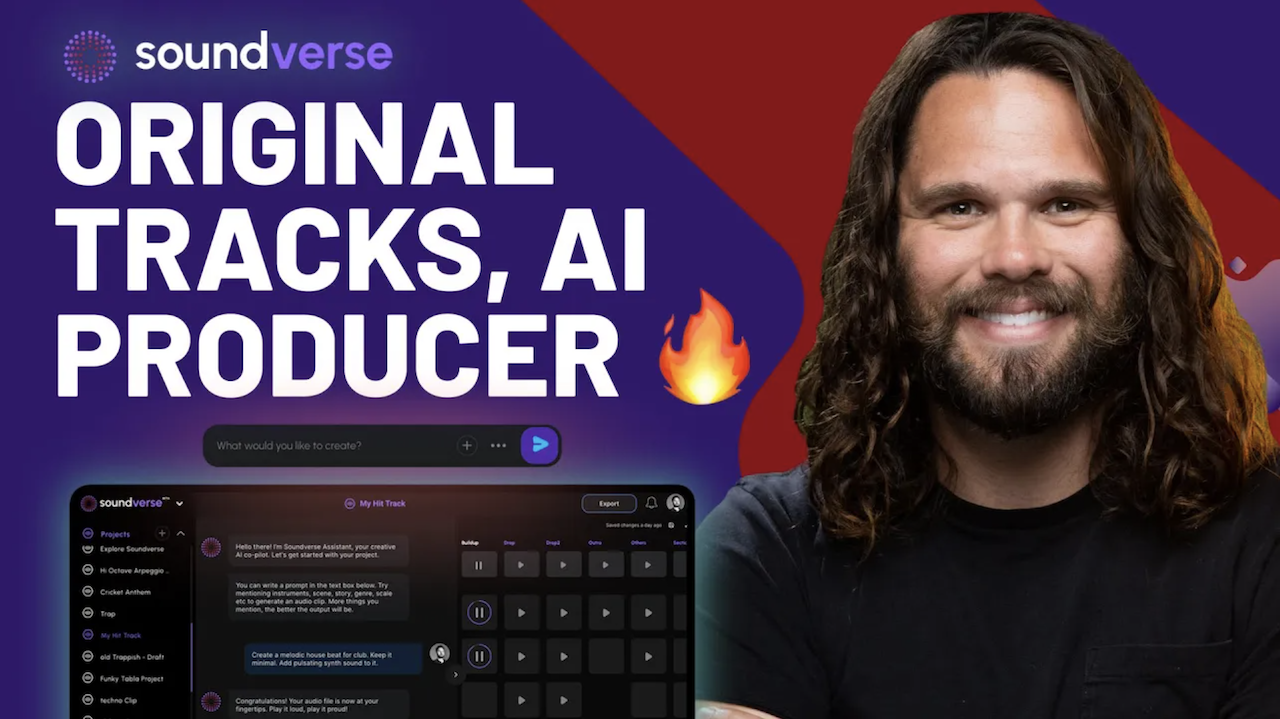
Here’s another long walkthrough of how to use Soundverse AI.
Text Guide
- To know more about AI Magic Tools, check here.
- To know more about Soundverse Assistant, check here.
- To know more about Arrangement Studio, check here.
Soundverse is an AI Assistant that allows content creators and music makers to create original content in a flash using Generative AI. With the help of Soundverse Assistant and AI Magic Tools, our users get an unfair advantage over other creators to create audio and music content quickly, easily and cheaply. Soundverse Assistant is your ultimate music companion. You simply speak to the assistant to get your stuff done. The more you speak to it, the more it starts understanding you and your goals. AI Magic Tools help convert your creative dreams into tangible music and audio. Use AI Magic Tools such as text to music, stem separation, or lyrics generation to realise your content dreams faster. Soundverse is here to take music production to the next level. We're not just a digital audio workstation (DAW) competing with Ableton or Logic, we're building a completely new paradigm of easy and conversational content creation.
TikTok: https://www.tiktok.com/@soundverse.ai
Twitter: https://twitter.com/soundverse_ai
Instagram: https://www.instagram.com/soundverse.ai
LinkedIn: https://www.linkedin.com/company/soundverseai
Youtube: https://www.youtube.com/@SoundverseAI
Facebook: https://www.facebook.com/profile.php?id=100095674445607
Join Soundverse for Free and make Viral AI Music

We are constantly building more product experiences. Keep checking our Blog to stay updated about them!
Image Steps: []