How Wildlife Conservation Uses AI Soundscapes in 2026
Explore how AI soundscapes revolutionize wildlife conservation through sound analysis and environmental audio in 2026.
How Wildlife Conservation Uses AI Soundscapes
Introduction
The intersection of artificial intelligence and ecology has taken a significant leap forward in 2026. Conservationists around the world are turning to AI in wildlife conservation to understand fragile ecosystems through sound. From tropical jungles to coral reefs, sound data is transforming how we protect endangered species. Using nature audio collected through inexpensive acoustic sensors, advanced algorithms analyze patterns, detect calls, and even predict environmental changes before they are visible to the human eye. This auditory revolution is reshaping how we monitor biodiversity in real time.
Today, AI soundscapes provide continuous, passive monitoring capabilities that surpass traditional methods of field observation. For environmental researchers, conservation technologists, and eco-documentary producers, this technology opens up a new dimension of ecological storytelling. The essence of nature—from birdsongs to ocean hums—is being translated into actionable conservation insights.
What are AI soundscapes and why are they becoming central to wildlife conservation?
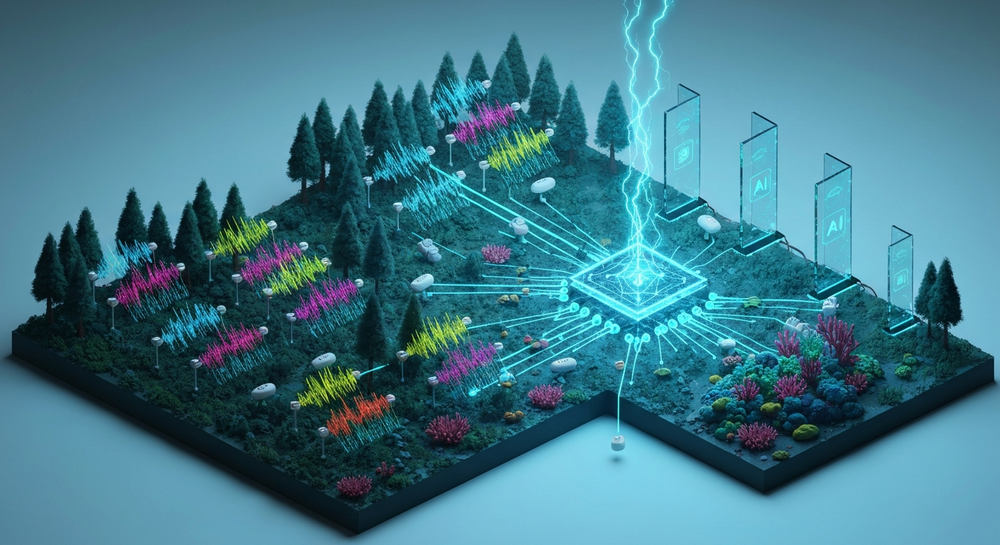
An AI soundscape is a machine-learning-driven representation of environmental sound. Instead of relying on static photographs or limited video footage, researchers can now assess entire ecosystems through audio fingerprints. This technique has become invaluable in studying animals that are elusive or operate mainly in auditory domains, such as bats, frogs, and cetaceans.
Over the past two years, innovations in edge computing and signal processing have reduced the cost and complexity of deploying remote listening stations. The sensors continuously record audio data, and then AI models filter and classify the sounds—distinguishing species, human noise interference, or weather events. The outcome is a detailed sound profile that provides insight into biodiversity health, habitat degradation, and seasonal changes.
How does AI assist in recognizing species through sound?

AI in wildlife conservation leverages pattern recognition techniques—the same technology that powers speech recognition or music streaming recommendations. Algorithms can detect frequency ranges and temporal sequences that correspond to specific species. For example, machine learning models trained on thousands of labeled recordings can accurately identify bird species by their vocalizations, even when several are calling simultaneously. Systems like Rainforest Connection (RFCx) and Sound Sense: Global Wildlife Listening Network demonstrate how real-time detection and alert systems have already become viable tools in the field.
The next evolution, seen in 2026 systems, includes deep learning architectures capable of understanding variations due to distance, overlapping noise, and atmospheric interference. This makes it possible to monitor large-scale habitats more efficiently than ever before, echoing the vision presented in Revolutionizing Conservation: AI in Acoustic Monitoring - Sinay.
Why is nature audio critical for environmental monitoring?
Sound is often the first indicator of ecological imbalance. A healthy forest crackles with insects, birds, and mammals, while a stressed one grows unnervingly silent. Nature audio provides a non-invasive way to monitor change, unlike tagging or visual tracking, which may disturb wildlife. Continuous environmental sound collection also enables longitudinal studies that measure changes across seasons or even decades.
Conservationists have also begun incorporating these natural recordings into conservation video productions, blending data and storytelling. By turning raw data into compelling sound-rich narratives, they increase public awareness and emotional connection to threatened ecosystems. This trend mirrors how initiatives like Google Launches Forest Listeners: Crowdsourced AI for Rainforest Conservation are engaging the public in bioacoustic science.
For instance, oceanographers use hydrophones—underwater microphones—to collect environmental sound data that AI systems later analyze for identifying whale migration patterns or illegal fishing activity. Similarly, forest technicians use terrestrial sensors to detect logging trucks or chainsaws, automating the early detection of habitat disturbance.
How are conservation technologists enhancing storytelling through AI-generated soundscapes?
AI-generated soundscapes not only analyze but also recreate the acoustic environment. For environmental filmmakers and educators, synthesizing faithful recreations of natural spaces is an emerging form of creative conservation. Using tools like Soundverse AI Music Generator, technologists can design soundscapes that replicate the ambience of rainforests, deserts, or coral reefs to accompany visual media, documentaries, or public exhibitions.
By combining real environmental sound recordings with AI-generated textures, creators produce immersive experiences. These soundscapes help audiences feel connected to distant habitats and understand the importance of preserving them. Such innovation bridges science and art, helping advocate for preservation using emotionally compelling media. The concept connects with broader AI explorations such as Using Artificial Intelligence to Study Natural Environments and How AI trained on birds is surfacing underwater mysteries.
What are the current challenges and opportunities in AI-based conservation sound analytics?
While the benefits are transformative, the field is still evolving. Challenges include noise pollution, data overload, and ethical considerations around data privacy—especially in protected areas inhabited by indigenous communities. Moreover, AI models require substantial training data, which is not uniformly available across ecosystems.
Yet, 2026 marks a turning point. Open data policies by global initiatives and partnerships between research institutions are democratizing acoustic datasets. With greater data diversity, AI systems are becoming more accurate in detecting subtle ecological signals.
Opportunities also abound in cross-disciplinary applications. Environmental sound data can integrate with satellite imagery, DNA barcoding, or drone footage, creating multi-modal conservation intelligence systems. These collaborative platforms give policymakers and NGOs near-real-time insights into biodiversity health. In parallel, related research such as AI analyzes 300,000 hours of mammal calls to improve wildlife conservation showcases the expanding scale of analysis.
How to make wildlife conservation soundscapes with Soundverse AI Music Generator
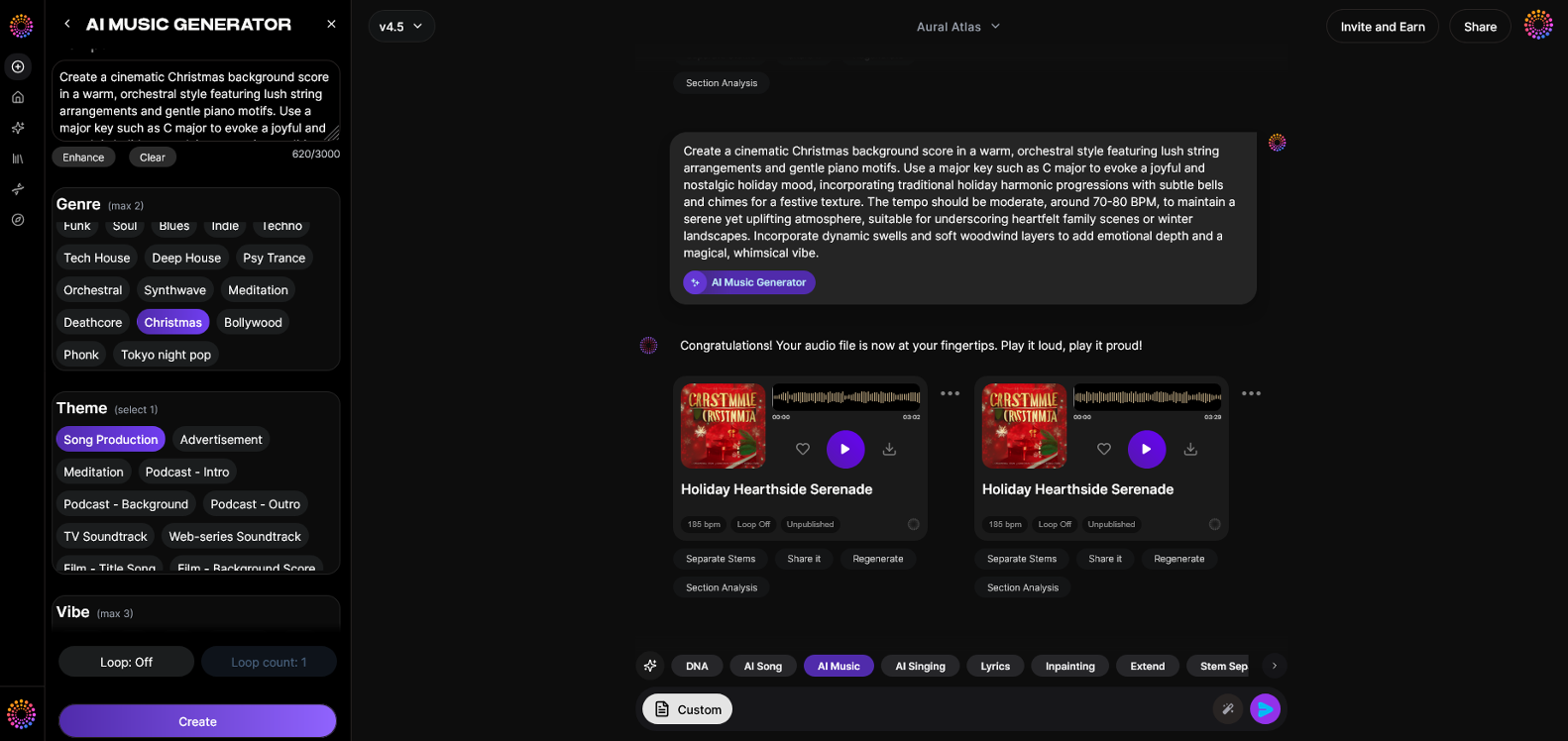
Soundverse’s AI Music Generator is designed for creators who need high-quality, text-to-music compositions and ambient soundscapes for documentaries, educational films, or conservation campaigns.
Product Overview
The AI Music Generator can create fully produced instrumental music from text prompts. It specializes in background tracks, beats, and seamless loops—perfect for layering beneath conservation videos or ambient displays. With its advanced Loop Mode, creators can generate continuous playback suited for exhibitions or online learning modules.
Core capabilities include:
- Text-to-music creation with mood and instrument control.
- Loop Mode for endless playback.
- Flexible genre and sound style adjustment.
- Two model modes (V4 and V5) for different tonal flavors.
For environmental organizations using AI in wildlife conservation, this feature enables integration of evocative background audio that complements recorded field ambient sounds, making research presentations and media projects more emotionally engaging. For a deeper dive, watch our guide on how to make music or explore our tutorial on the Explore tab from the Soundverse YouTube channel.
Soundverse’s related tools also support production workflows:
- The Similar Music Generator can match a reference track or ambient tone.
- The Section Analysis Tool automatically identifies sections (Intro, Chorus, Outro) in generated music—useful for editing long-form conservation films.
How AI sound design enhances conservation storytelling
Incorporating AI-created music allows environmental media producers to have full control over tone and pacing without licensing issues. Teams can design an emotional arc—from the hopeful symphony of a thriving jungle to the haunting stillness of a deforested zone. Because Soundverse outputs instrumental audio with no vocals, it blends naturally with environmental recordings.
Environmental communicators often align their media strategy with AI-driven trends in the music industry or study tools that enhance royalty-free audio production. In this way, conservation sound projects remain both technically sophisticated and accessible to public audiences.
Additionally, the Soundverse blog features insights like how AI-generated music is transforming the industry and how to generate AI music from text, helping environmental creators expand their capabilities with minimal effort.
What will drive the future of AI in wildlife acoustic monitoring?
Looking ahead to 2027, trends in biological acoustics are expected to include edge AI devices capable of real-time classification of environmental sound without relying on cloud infrastructure. These self-sufficient systems can send alerts when critical shifts—like the disappearance of insect sound diversity—are detected.
Another focal area is ethical AI governance. As acoustic monitoring expands globally, standards around data storage, biodiversity privacy, and co-ownership with local communities will shape responsible implementation.
Bring AI Innovation Into Your Creative Workflow
Discover how Soundverse empowers creators, researchers, and innovators with powerful AI-driven sound generation tools. Create, analyze, and explore soundscapes intelligently to enhance both artistic and scientific projects.
Start Creating with Soundverse
Related Articles
- How AI-Generated Music Is Transforming the Music Industry: Explore the profound impact of artificial intelligence on modern music creation, production, and distribution.
- Soundverse AI Revolutionizing Music Creation for New-Age Content Creators: Learn how Soundverse’s AI tools are empowering content creators to craft unique, copyright-free sound effortlessly.
- AI Music Generator and Human Composers: A Future Together: Discover how AI and human creativity can collaborate to shape the future of music and sound generation.
- The Role of AI Music in Film and Television: Uncover how AI-generated soundscapes and scores are enhancing storytelling across film and TV industries.
Here's how to make AI Music with Soundverse
Video Guide

Here’s another long walkthrough of how to use Soundverse AI.
Text Guide
- To know more about AI Magic Tools, check here.
- To know more about Soundverse Assistant, check here.
- To know more about Arrangement Studio, check here.
Soundverse is an AI Assistant that allows content creators and music makers to create original content in a flash using Generative AI. With the help of Soundverse Assistant and AI Magic Tools, our users get an unfair advantage over other creators to create audio and music content quickly, easily and cheaply. Soundverse Assistant is your ultimate music companion. You simply speak to the assistant to get your stuff done. The more you speak to it, the more it starts understanding you and your goals. AI Magic Tools help convert your creative dreams into tangible music and audio. Use AI Magic Tools such as text to music, stem separation, or lyrics generation to realise your content dreams faster. Soundverse is here to take music production to the next level. We're not just a digital audio workstation (DAW) competing with Ableton or Logic, we're building a completely new paradigm of easy and conversational content creation.
TikTok: https://www.tiktok.com/@soundverse.ai
Twitter: https://twitter.com/soundverse_ai
Instagram: https://www.instagram.com/soundverse.ai
LinkedIn: https://www.linkedin.com/company/soundverseai
YouTube: https://www.youtube.com/@SoundverseAI
Facebook: https://www.facebook.com/profile.php?id=100095674445607
Join Soundverse for Free and make Viral AI Music

We are constantly building more product experiences. Keep checking our Blog to stay updated about them!