How to Write Rap Bars: A Step-by-Step Guide for Aspiring Lyricists
Learn how to write rap bars using proven techniques and Soundverse AI Lyrics Writer.
How to Write Rap Bars: A Step-by-Step Guide for Aspiring Lyricists
Rap has evolved endlessly since its beginnings in the late 20th century, and by 2026, artists use technology as much as creativity to sharpen their skills. One question continues to dominate among beginners: how to write rap bars that stand out? Whether you aim to craft complex rhyme schemes or learn the fundamentals of flow and structure, this guide breaks down the process step-by-step, helping aspiring lyricists master rap writing techniques and improve their songwriting for rappers.
Why learning how to write rap bars matters in 2026
Rap music has never been more diverse or competitive. Emerging subgenres like cyber trap and emo drill dominate streaming platforms, while artists blend spoken word and digital poetry. Learning how to write rap bars helps you navigate this landscape—combining storytelling, rhythm, and authenticity. In 2026, audiences value originality more than production gloss, making strong lyrical foundations essential for long-term success.
Writing rap bars means aligning your words to the beat’s time signature, typically in sets of four lines per musical measure. A bar equates to one measure, and your bars interconnect to form verses and hooks. Structuring these well ensures your message flows naturally and connects emotionally.

How to make rap bars with Soundverse AI Lyrics Writer
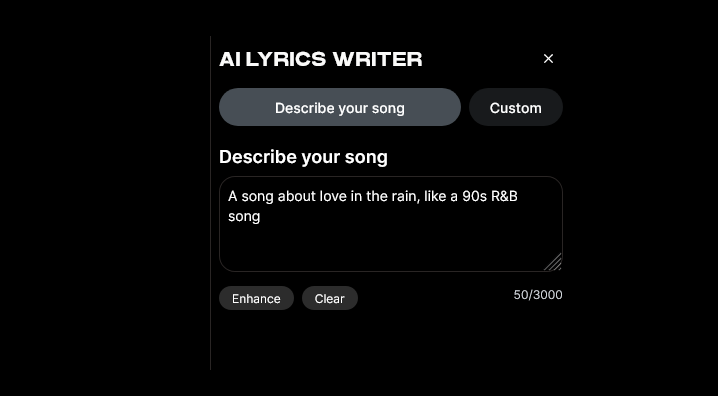
Before diving into technique, it’s worth using modern tools that accelerate learning. Soundverse’s AI Lyrics Writer helps you generate structured song lyrics instantly based on tone, theme, or genre. Integrated within the ‘Help Me Write’ AI workflow, this tool is especially useful for overcoming writer’s block or learning proper songwriting formats.
The core features include:
- Structure generation: Automatically creates verses, choruses, and bridges for cohesive song flow.
- Mood and genre customization: Allows tuning lyrics for hip hop, drill, trap, or conscious rap tones.
- Partial lyric completion: Start with a few lines, and Soundverse fills in the rest using matching rhyme and rhythm.
- Educational examples: Ideal for studying how professional rap songs maintain balance between bars and message.
Soundverse pairs perfectly with the AI Song Generator for full music creation. Once you’ve written your bars, you can convert them into a complete track with vocals and arrangement. If you prefer raw acapella ideas, try the AI Singing Generator—capable of turning text lyrics into vocal performances. Together, these tools simplify creative workflows and support experimentation in hip hop songwriting.
Step 1: Feature Overview — Access AI Lyrics Writer
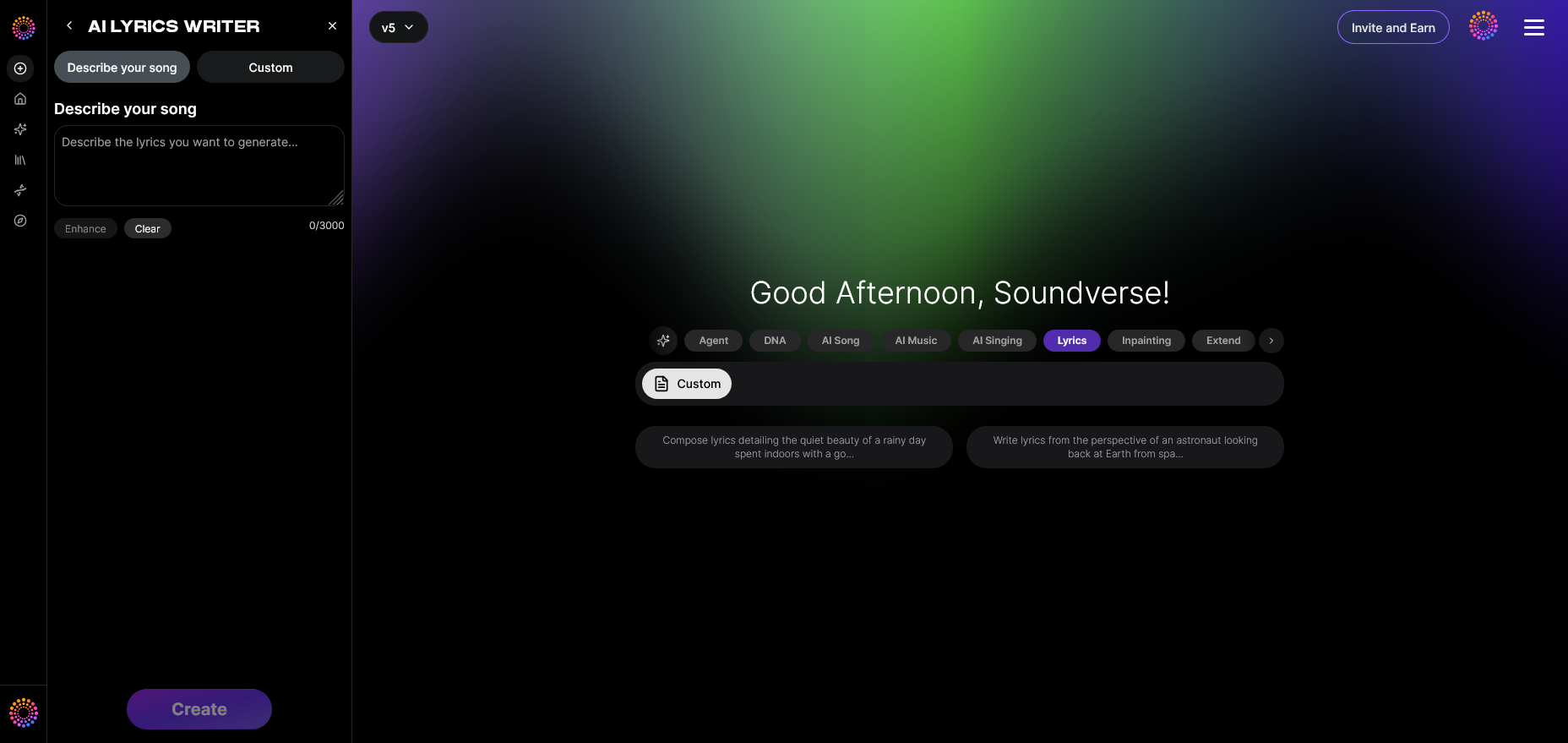
Start by opening the AI Lyrics Writer from your Soundverse dashboard. The tool sits under the ‘Help Me Write’ section, ready for lyric generation. Choose your project type—rap, hip hop, or freestyle—and open a new lyric workspace.
Step 2: Theme Input — Enter song theme or mood
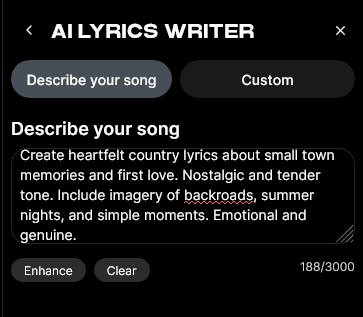
Decide the direction for your rap. Whether you want gritty street realism, introspective storytelling, or party energy, describe the theme or tone clearly in the input field. AI adapts to your keywords, building vocabulary and rhythm patterns suited to your intent. For example, typing “motivational trap anthem” yields upbeat word sets and sharp rhyme layouts fitting energetic beats.
Step 3: Generation — AI creates lyrics based on theme
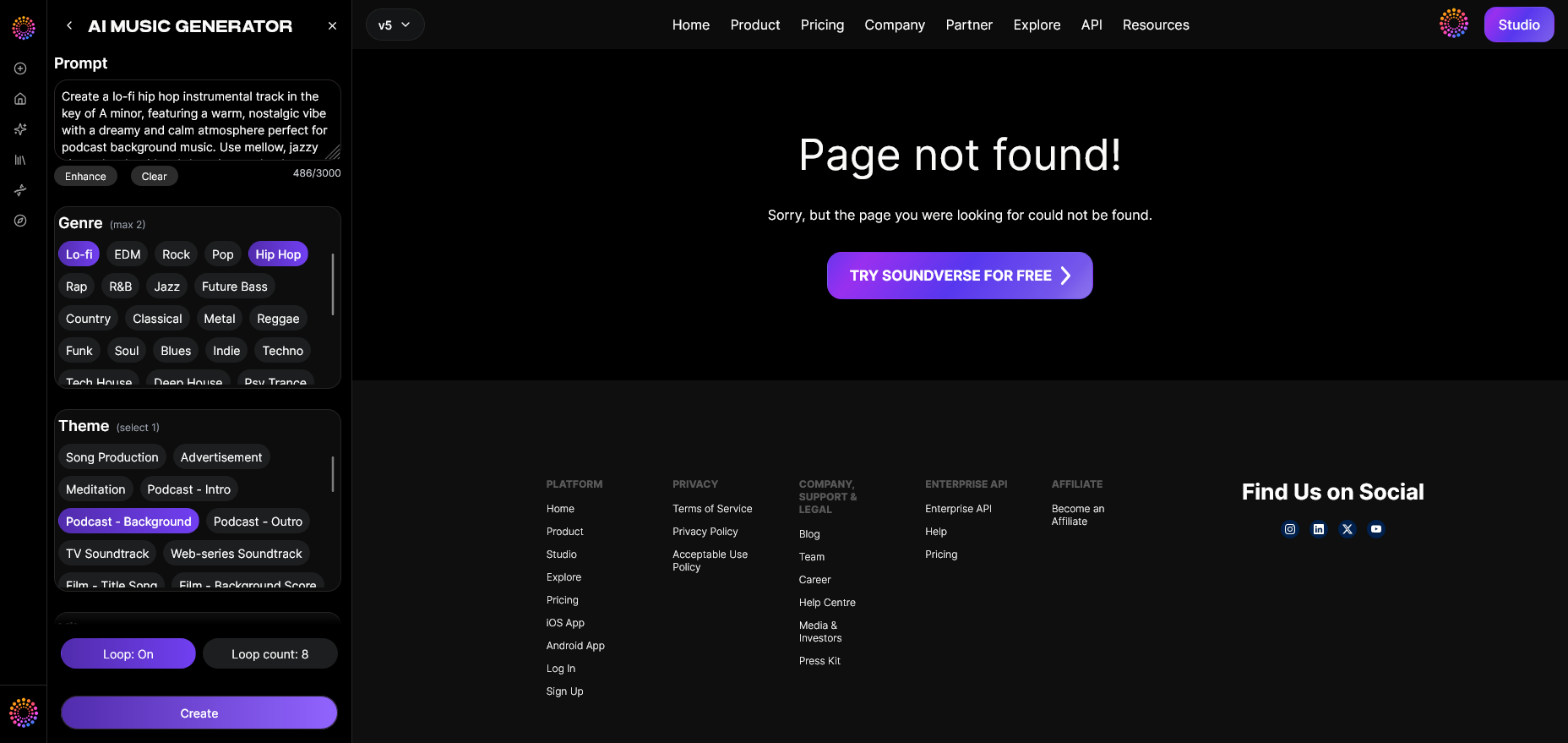
Once you hit generate, the AI Lyrics Writer drafts verses with consistent rhythmic spacing, rhyme density, and word flow. You can edit within the interface—expand specific bars, shorten lines, or replace punchlines manually. This asynchronous workflow eliminates creative slumps and offers formatted examples that help you understand flow alignment and syllable balance.
What makes a great rap bar?
A rap bar succeeds when rhythm, wordplay, and message align seamlessly. Mastering this takes understanding several technical aspects:
- Syllable control – Match syllable counts with the beat to ensure delivery sounds natural.
- Rhyme structure – Combine internal rhymes, end rhymes, and multisyllabic rhymes for texture.
- Flow patterns – Practice on different beats per minute (BPM) to adjust phrasing and breathing.
- Punchlines – End a sequence with witty or impactful lines to keep listeners engaged.
- Cadence variation – Switch speeds, tone, or pauses to inject personality.
These rap writing techniques distinguish beginners from professionals. Try studying classic bars structurally but create original content—copying isn’t how artists evolve. You can also review advanced techniques explained in Crafting Bars: The Art of Writing Rap Lyrics for deeper insight.
How do rhyme and flow connect in hip hop lyrics?
Flow defines how lyrics ride the beat. In 2026 trends, artists often use adaptive BPM and unconventional syncopation—where rhymes fall slightly before or after strong beats. This style keeps listeners guessing while maintaining rhythm consistency. When practicing, record yourself over various instrumental styles and focus on breath control.
You can explore music industry trends or learn about how AI tools are revolutionizing artistry in Soundverse AI Revolutionizing Music Creation to understand how flow is changing globally. For more structured learning, refer to Rap Song Structure & Parts guides.
For a deeper dive into music creation patterns, watch our Soundverse Tutorial Series - How to Make Music.
How to plan your verse like a pro
When designing verses, think narratively. Every 16 bars should tell a mini-story or emotion arc—rising tension, climax, and resolution. You can outline your verses in three mini-sections:
- Bars 1–4: Introduce concept or setup.
- Bars 5–12: Amplify message with metaphors and complex rhyming.
- Bars 13–16: Deliver final punch or transition to chorus.
Try linking these sections using connectors or refrains. You can test arrangements using Soundverse’s Stem Separation AI Magic Tool to analyze beats for timing accuracy when aligning bars.
Should you freestyle or write?
Freestyle rap remains influential even in 2026, and many breakthrough artists originated from freestyle competitions. To improve improvisation:
- Practice spontaneous rhyming over random instrumentals.
- Record sessions to spot natural flow moments.
- Use Soundverse’s AI Lyrics Writer to create half-drafts you can modify during live freestyling.
Freestyle rap tips often emphasize rhythm discipline and adaptability. Writing allows for polish; freestyling trains instinct. You can also check How to Rap - Learn to Write Rap Lyrics & Spit Bars for practical freestyle strategies.
Advanced songwriting for rappers in 2026
Songwriting for rappers now integrates digital assistance. Using AI doesn’t dilute authenticity—it enhances creativity by freeing time for vocal and delivery practice. Combining Soundverse tools helps you experiment beyond traditional boundaries. You can even explore genre fusion, as explained in How to Create Rap Music with AI to merge trap and jazz or lofi elements.
AI-guided learning streamlines songwriting for rappers by:
- Providing lyric outlines you can expand stylistically.
- Teaching structure through formatted examples.
- Suggesting vocabulary relevant to your genre.
For reference, explore How to Write Good Rap Lyrics, which expands on lyric mastery and inspiration.
Pro tips for mastering your rap craft
- Build word banks – Keep lists of personal experiences, slang, and adjectives to personalize lyrics.
- Study rhythmic poetry – Reading written verse strengthens pattern awareness without needing a beat.
- Record drafts daily – Writing regularly increases fluency and originality.
- Collaborate digitally – Exchange AI-generated drafts with peers using Soundverse sharing features.
- Experiment with sound themes – Try integrating AI-generated instrumentals from Generate AI Music with Soundverse for new inspiration.
Start Creating Your Own Rap Hits with Soundverse AI
Transform your lyrics into full rap tracks using Soundverse’s intuitive AI music tools. Generate beats, experiment with flows, and bring your bars to life instantly—no studio required.
Related Articles
- How to Make Good Rap Lyrics — Discover key strategies and creative techniques to craft powerful rap lyrics that resonate.
- How to Create Rap Music with AI — Learn how AI-powered tools like Soundverse can help you produce full rap tracks in minutes.
- Generate AI Music with Soundverse Text-to-Music — Explore how text prompts can generate unique, genre-perfect music tailored to your words.
- Soundverse Assistant: Your AI Music Co-Producer — Meet your creative partner that helps refine lyrics, beats, and mixes effortlessly.
Here's how to make AI Music with Soundverse
Video Guide
Here’s another long walkthrough of how to use Soundverse AI.
Text Guide
- To know more about AI Magic Tools, check here.
- To know more about Soundverse Assistant, check here.
- To know more about Arrangement Studio, check here.
Soundverse is an AI Assistant that allows content creators and music makers to create original content in a flash using Generative AI.
With the help of Soundverse Assistant and AI Magic Tools, our users get an unfair advantage over other creators to create audio and music content quickly, easily and cheaply.
Soundverse Assistant is your ultimate music companion. You simply speak to the assistant to get your stuff done. The more you speak to it, the more it starts understanding you and your goals.
AI Magic Tools help convert your creative dreams into tangible music and audio. Use AI Magic Tools such as text to music, stem separation, or lyrics generation to realise your content dreams faster.
Soundverse is here to take music production to the next level. We're not just a digital audio workstation (DAW) competing with Ableton or Logic, we're building a completely new paradigm of easy and conversational content creation.
TikTok: https://www.tiktok.com/@soundverse.ai
Twitter: https://twitter.com/soundverse_ai
Instagram: https://www.instagram.com/soundverse.ai
LinkedIn: https://www.linkedin.com/company/soundverseai
Youtube: https://www.youtube.com/@SoundverseAI
Facebook: https://www.facebook.com/profile.php?id=100095674445607
Join Soundverse for Free and make Viral AI Music

We are constantly building more product experiences. Keep checking our Blog to stay updated about them!