How to Write Better Melodies: A Complete Guide for Musicians in 2026
Learn how to write better melodies with expert melody writing tips, structure insights, and Soundverse AI tools.
How to Write Better Melodies
Writing a compelling melody remains one of the most challenging yet rewarding aspects of music composition. In 2026, the art of melody writing continues evolving alongside advancements in AI-driven music tools like Soundverse. Whether you're a seasoned songwriter or just starting to create music, understanding how to write better melodies can transform raw ideas into memorable songs that connect emotionally with listeners.
Why do melodies matter more than ever in 2026?
Melodies are the emotional anchor of any song. As music trends evolve with influences from genres such as hyperpop, neo-jazz, and cinematic ambient, the expectation for melodic creativity has grown. Listeners now crave tunes that feel both fresh and timeless — catchy enough to trend online, yet meaningful enough to sustain repeated listening.

In the current music industry landscape (see Music Industry Trends), melodies serve as the defining element separating algorithmically generated content from truly moving artistic expression. The right melody can elevate production quality, ensure long-term relevance, and create deeper emotional resonance.
How to make your melodies stand out?

To write better melodies, focus on five essential dimensions: contour, rhythm, tonality, repetition, and emotional intent. Combining these intelligently creates memorable results that listeners can instantly connect with.
- Contour (Shape and Movement): Great melodies move with direction and intention. They balance ascent and descent, tension and release. Experiment with varying intervals, yet keep the contour smooth enough to feel natural when sung or played.
- Rhythm and Phrasing: Rhythmic placement of notes determines how listeners perceive energy. Syncopation and unique phrasing can make even simple notes lively.
- Tonality and Mode: Use modes to create distinct atmosphere — major for bright pop, minor for emotional ballads, Dorian for neo-soul tones, and Lydian for cinematic effects.
- Repetition and Variation: Repetition ensures memorability, while variation sustains interest. Try repeating a motif but altering rhythm or pitch slightly.
- Emotional Intent: Every melody tells a story. Even instrumental pieces evoke emotions through phrasing. Always define what feeling you want to inspire.
By mastering these principles, you can elevate your melody writing beyond standard progressions and create something unique.
How to make melodies with Soundverse Melody to Song Generator
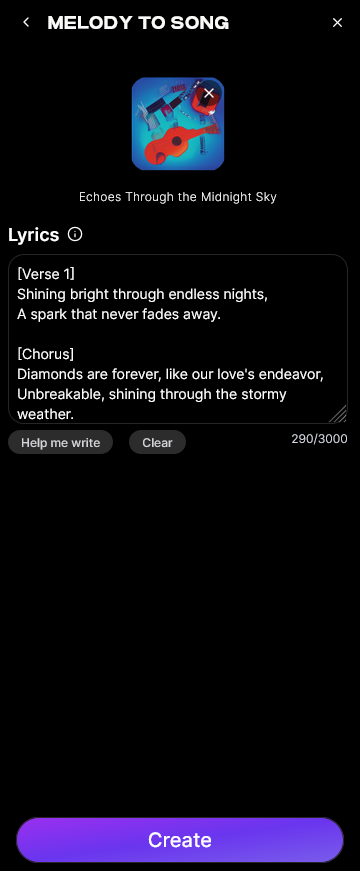
Soundverse simplifies melody development through its Melody to Song Generator, a powerful feature that transforms a raw melodic idea into a fully produced piece.
Official Description: Converts raw melodic audio — whether vocal humming or instrument recordings — into complete songs. The AI analyzes melodic structure, incorporates lyrics input, and builds a full arrangement with harmonies and vocals.
Primary Use Cases
- Turning voice memos into professional tracks
- Helping instrumentalists create vocal versions
- Reviving and modernizing old melody drafts
Core Capabilities
- Audio input analysis: Recognizes pitch, rhythm, and contour in the uploaded melody.
- Lyric input: Lets users optionally supply lyrics for integration.
- Full arrangement generation: Produces instrumental and vocal layers based on the melody’s musical context.
This makes Soundverse an invaluable resource for anyone seeking to understand how to write better melodies and convert them directly into ready-to-release compositions.
Step 1: Feature Overview — Access Melody to Song Generator
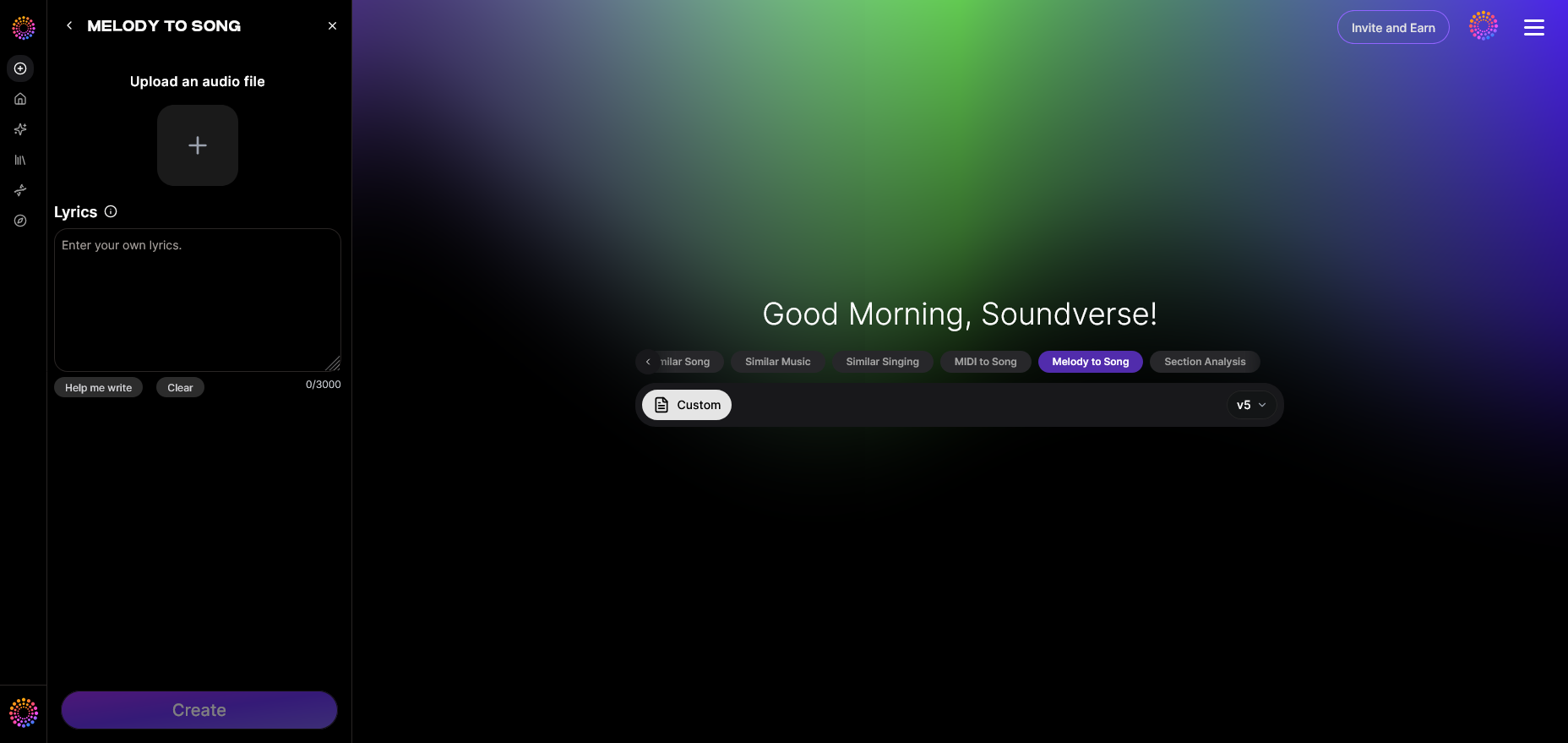
Log in to your Soundverse workspace. Under AI tools, find the Melody to Song Generator. It’s designed for melody-based inputs—ideal whether you prefer humming into a mic or uploading short instrumental phrases.
Step 2: Melody Input — Record or Upload Melody
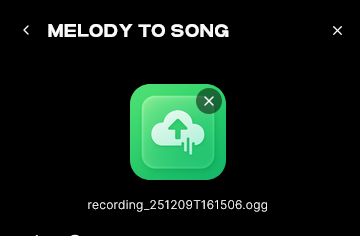
You can record yourself humming a tune or upload a single-instrument recording. The system then detects pitch patterns, phrasing, and rhythm to extract your melodic foundation. This step encourages creative experimentation — no precision needed; even rough ideas work, as the AI reconstructs the musical contour.
Step 3: Enter Optional Lyrics — Give Lyrics Context
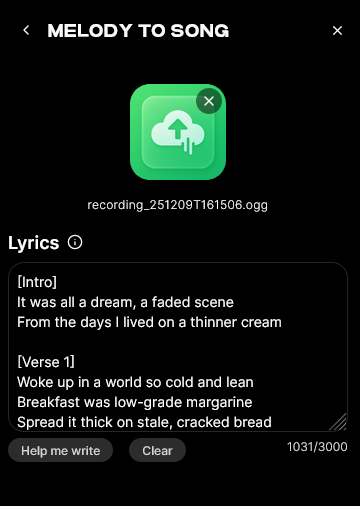
Optionally provide lyrics to complement the melody. This helps contextualize emotional direction, aligning phrasing and syllabic emphasis with melodic accents.
Step 4: Generation — Generate Full Song with Lyrics and Vocals
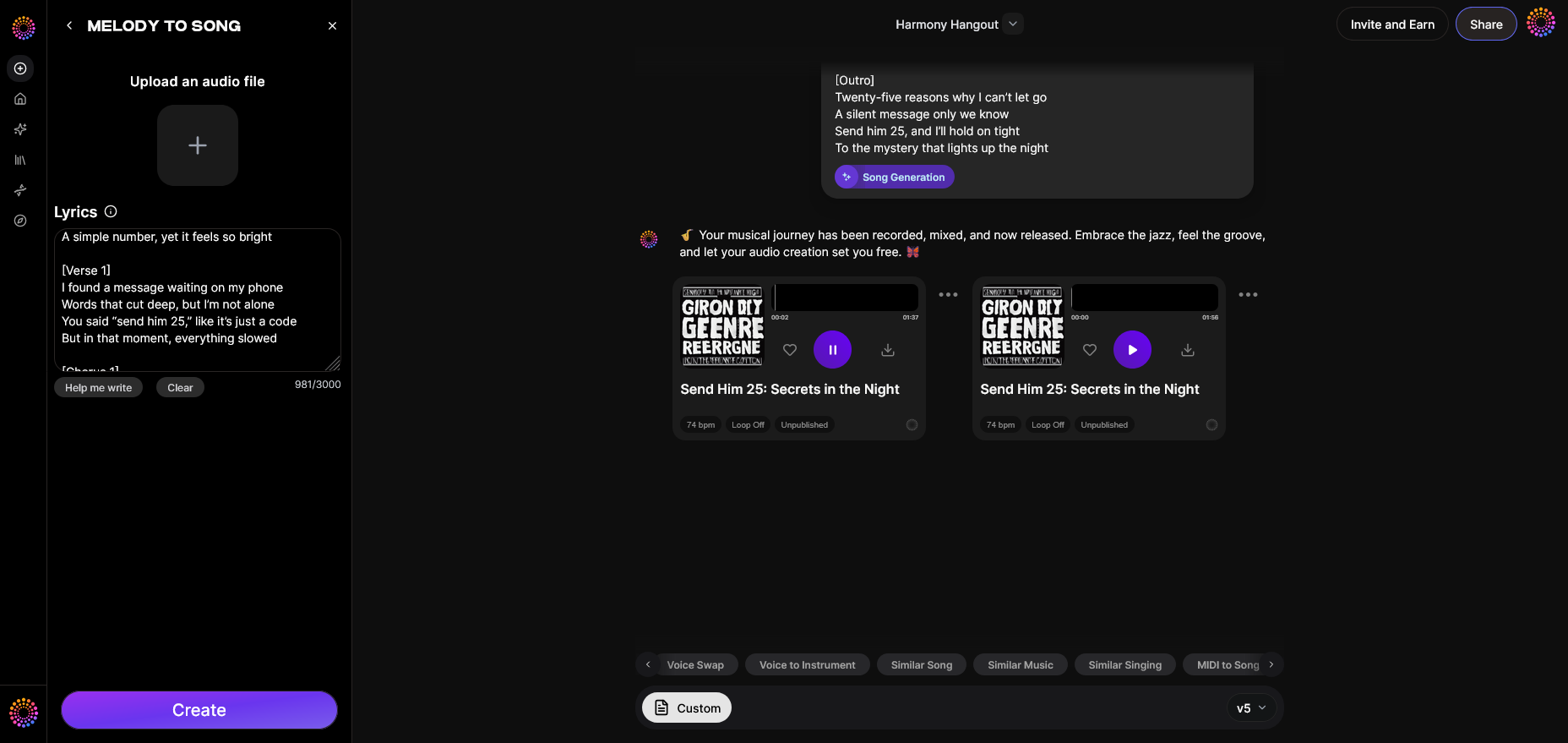
Once your melody (and optional lyrics) are set, click Generate. The AI builds arrangement layers—bass, harmony, percussion—and adds human-like vocals. In minutes, an idea becomes a full composition ready for post-production or mixing. For further inspiration, check the Soundverse Tutorial Series - How to Make Music.
The process is asynchronous, meaning Soundverse processes the audio first and returns the finished track, rather than streaming a live preview.
What makes melodies memorable?
Memorable melodies usually share core structural traits: simplicity, repetition, and emotional character. They often rely on rhythmic clarity and limited intervals that sing easily. For instance, pop hits often restrict melodic leaps to keep singability intact, while classical or jazz compositions explore complex interval dynamics for depth.
Focus on motif development
Creating a motif — a recognizable musical idea — builds listener association. Repeat the motif strategically throughout your music to create identity.
Incorporate dynamic contrast
Use volume, instrumentation, and register shifts to give melodic interest across sections. A melody that starts gently and rises over time feels more cinematic and impactful.
Harmony interaction
Your melody should fit seamlessly within chordal structure. Understanding chord-tone relationships helps smooth transitions and avoid tonal clashes. Refer to basic music composition resources for foundational chord progressions.
Storytelling through notes
Each part of your melody can symbolize emotional transitions — joy, tension, resolution. Musicians in 2026 often explore narrative composition, aligning melodic contour with storyline mood shifts.
Essential melody writing tips every songwriter should know
- Sing what you write: Even instrumentalists benefit from singing melodies to gauge natural phrasing.
- Use call-and-response: Segment melody lines into phrases that “answer” each other.
- Avoid monotony: Subtle rhythmic or pitch changes maintain interest.
- Don’t fear silence: Pauses are part of melody. They create anticipation.
- Explore modes and scales: Go beyond major/minor. Try Phrygian or Mixolydian for fresh tonal colors.
- Reference influences but innovate: In 2026, fusing genre-bending melodic ideas creates standout tracks.
For deeper insights on stylistic creation, explore guides such as How to Create Jazz Music with Soundverse AI or How to Create Country Music with Soundverse AI.
Advanced songwriting techniques to improve melody structure
Modern composers blend traditional music theory with technological experimentation. AI tools have liberated musicians from rigid theory constraints, allowing melodic realignment based on emotion or genre.
- Layering melodies: Try dual or counter melodies for harmonic complexity.
- Rhythmic displacement: Shift rhythmic accents to create syncopation.
- Melodic inversion: Flip upward and downward patterns to reveal new contours.
- Adaptive loops: Use AI-based arrangement to analyze repetition efficiency.
Check out related articles like Soundverse AI Revolutionizing Music Creation for New Age Content Creators and Let Soundverse Assistant Auto Select the Right AI Magic Tool For You.
Why using AI like Soundverse enhances creativity
In 2026, AI doesn’t replace creativity—it expands it. Platforms like Soundverse allow artists to test melodic possibilities instantaneously and turn sketches into full songs, freeing them to focus on musical narrative rather than technical limitations.
Other tools within the Soundverse ecosystem include:
- MIDI to Song Generator: Converts monophonic MIDI notes to full songs.
- AI Song Generator: Builds entire tracks from text or lyric concepts.
- AI Music Generator: Creates instrumental backdrops or loops from text prompts.
Together, they streamline every stage of composition—from humming an idea to publishing a mastered song.
Start Creating Better Melodies with AI Today!
Unlock your musical potential with Soundverse’s intelligent music tools. Compose melodies, harmonies, and instrumentals effortlessly while focusing on creativity instead of technical limitations.
Related Articles
- How to Create Country Music with Soundverse AI — Learn how AI can help you craft authentic, emotional country tracks with ease using Soundverse’s music tools.
- How to Create Jazz Music with Soundverse AI — Discover the process of blending traditional jazz elements with AI-powered composition for timeless grooves.
- Generate AI Music with Soundverse Text-to-Music — Transform your lyrics, moods, or prompts into complete music tracks using Soundverse’s text-to-music generator.
- The Benefits of Composing with AI Music Generator — Explore how AI tools amplify creativity and help musicians produce complex compositions faster.
Here's how to make AI Music with Soundverse
Video Guide

Here’s another long walkthrough of how to use Soundverse AI.
Text Guide
- To know more about AI Magic Tools, check here.
- To know more about Soundverse Assistant, check here.
- To know more about Arrangement Studio, check here.
Soundverse is an AI Assistant that allows content creators and music makers to create original content in a flash using Generative AI.
With the help of Soundverse Assistant and AI Magic Tools, our users get an unfair advantage over other creators to create audio and music content quickly, easily and cheaply.
Soundverse Assistant is your ultimate music companion. You simply speak to the assistant to get your stuff done. The more you speak to it, the more it starts understanding you and your goals.
AI Magic Tools help convert your creative dreams into tangible music and audio. Use AI Magic Tools such as text to music, stem separation, or lyrics generation to realise your content dreams faster.
Soundverse is here to take music production to the next level. We're not just a digital audio workstation (DAW) competing with Ableton or Logic, we're building a completely new paradigm of easy and conversational content creation.
TikTok: https://www.tiktok.com/@soundverse.ai Twitter: https://twitter.com/soundverse_ai Instagram: https://www.instagram.com/soundverse.ai LinkedIn: https://www.linkedin.com/company/soundverseai Youtube: https://www.youtube.com/@SoundverseAI Facebook: https://www.facebook.com/profile.php?id=100095674445607
Join Soundverse for Free and make Viral AI Music

We are constantly building more product experiences. Keep checking our Blog to stay updated about them!