How to Mix Choir Vocals: A Complete 2026 Guide for Professional Choral Sound
Discover pro choral mixing techniques and how to use Soundverse Stem Separator for perfect choir vocal blends.
How to Mix Choir Vocals
Mixing choir vocals requires a delicate balance between clarity, harmony, and atmosphere. As of 2026, many producers and audio engineers are investing in advanced AI tools and refined ear training to achieve mixes that sound authentic, lush, and emotionally moving. Whether you’re working with gospel choirs, cinematic ensembles, or virtual voices created by AI, understanding modern mixing choir vocals techniques can transform the final production.
Why mixing choir vocals is different from solo vocal mixing
Solo vocal mixing often focuses on bringing one lead voice to the forefront with polished EQ, compression, and effects. Mixing choir vocals, however, is about managing a collective sound — the blend, space, and articulation across multiple singers. It’s less about spotlighting an individual and more about creating a harmonic fabric.
When dealing with large ensembles, producers typically confront challenges like frequency masking, reverb control, and stereo placement. In a choir mix, each group—soprano, alto, tenor, and bass—must occupy its own distinct space while still merging seamlessly into one beautiful body of sound.

How to make professional choir mixes with Soundverse Stem Separator
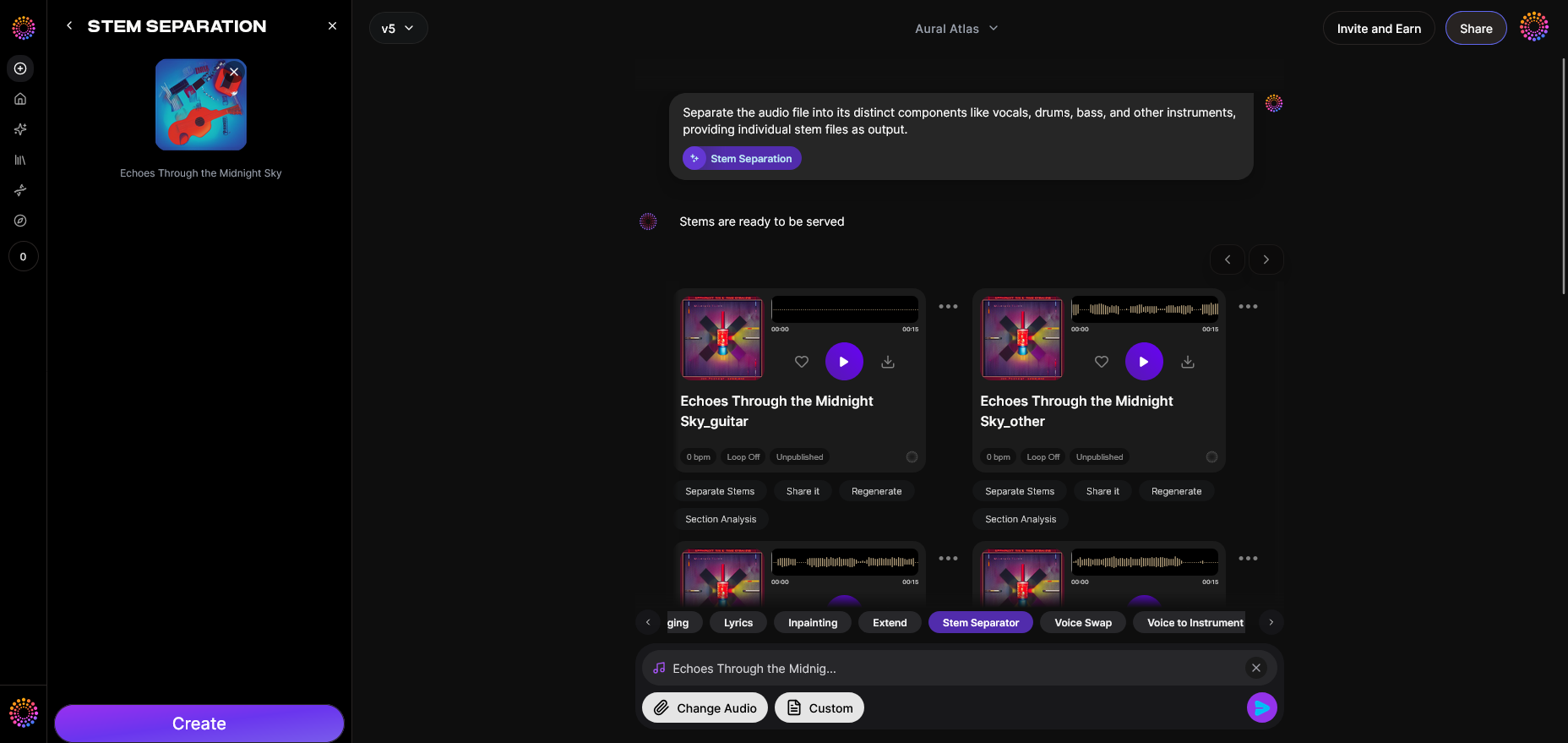
Soundverse provides innovative audio tools for modern music creation — one of its most powerful being the Stem Separator. This feature dissects mixed audio into up to six individual editable stems, such as Vocals, Drums, Bass, Guitar, and Accompaniment. For choral production, this means you can isolate choir performances from backing instrumentation, refine the harmony balance, and apply detailed post-processing.
Core capabilities include:
- 6-stem separation: Ideal for dissecting complex recordings into mixable layers.
- Support for URL, File, and Recording inputs: Flexibility to work from online sources, uploaded tracks, or direct recording.
- High-quality isolation: Ensures clean vocal extraction suitable for EQ, compression, and spatial design.
Use cases for choral productions:
- Removing instrumentation so you can focus purely on vocal blending.
- Creating backing tracks for live choir performances.
- Analyzing mixed works to understand arrangement density and harmonic layering.
- Cleaning up legacy choir recordings with unwanted mix bleed.
Let's walk through a step-by-step guide on using the Soundverse Stem Separator and applying essential choral mixing techniques to achieve an angelic sound.

Step 1: Upload Interface – Prepare your choir audio
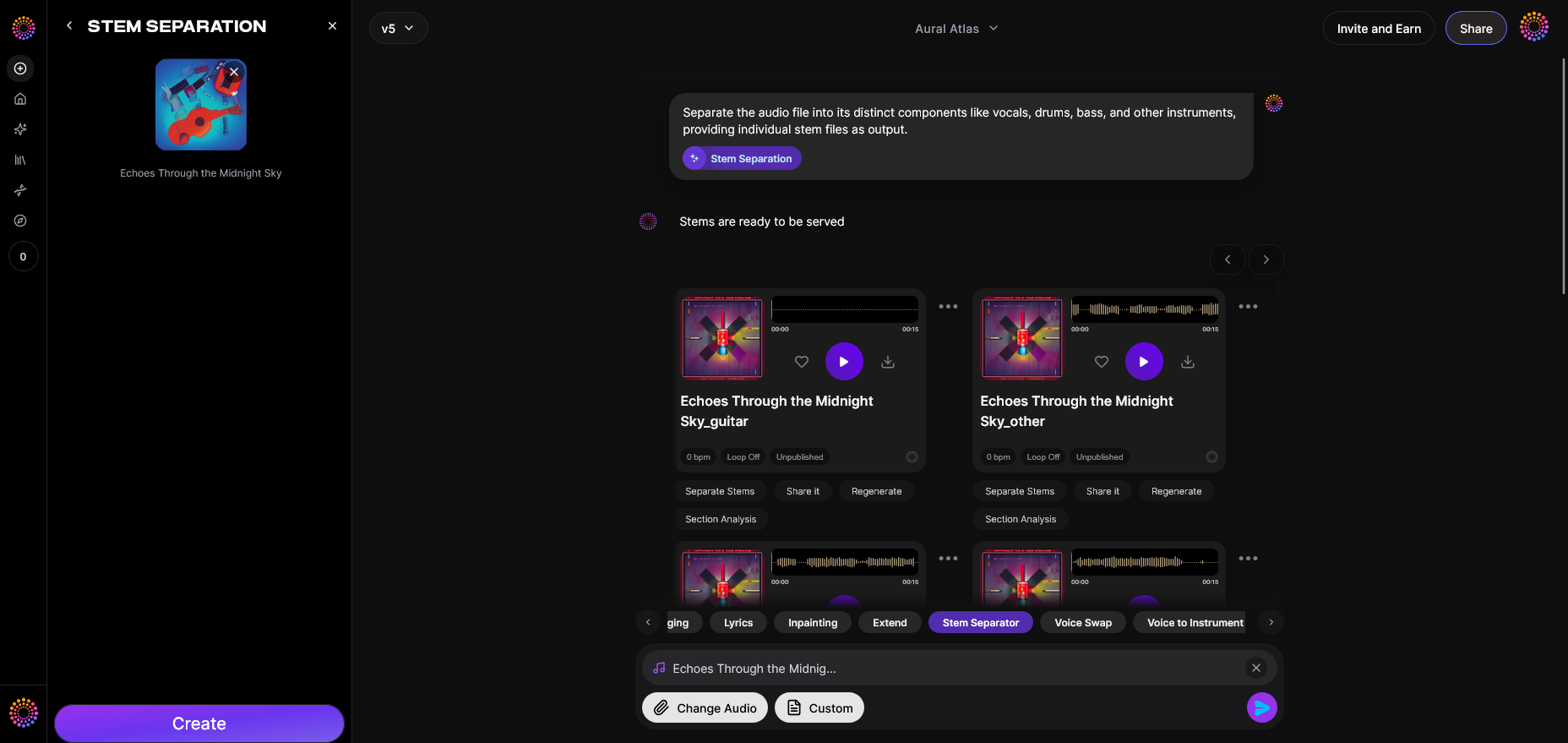
Start by opening the Soundverse platform and selecting the Stem Separator tool. You’ll see an upload dialog where you can import your choir recording either from a local file, a URL, or a live recording. For optimal accuracy, ensure your file is high quality (WAV or FLAC preferred). This initial upload defines the base data Soundverse will use for separation.
Step 2: Additional References – Adding support material
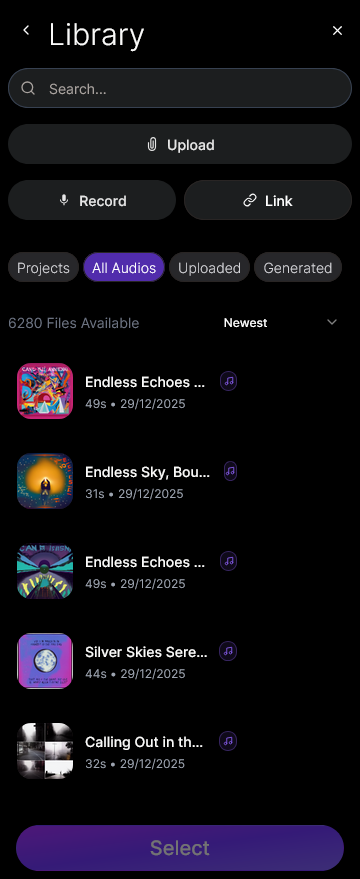
Soundverse allows additional reference audio uploads. If you have separate takes—such as sectional recordings of sopranos or altos—you can add those for enhanced isolation consistency. By including reference tracks, the AI better learns the frequency patterns unique to your choir.
Step 3: Results Display – View separated stems
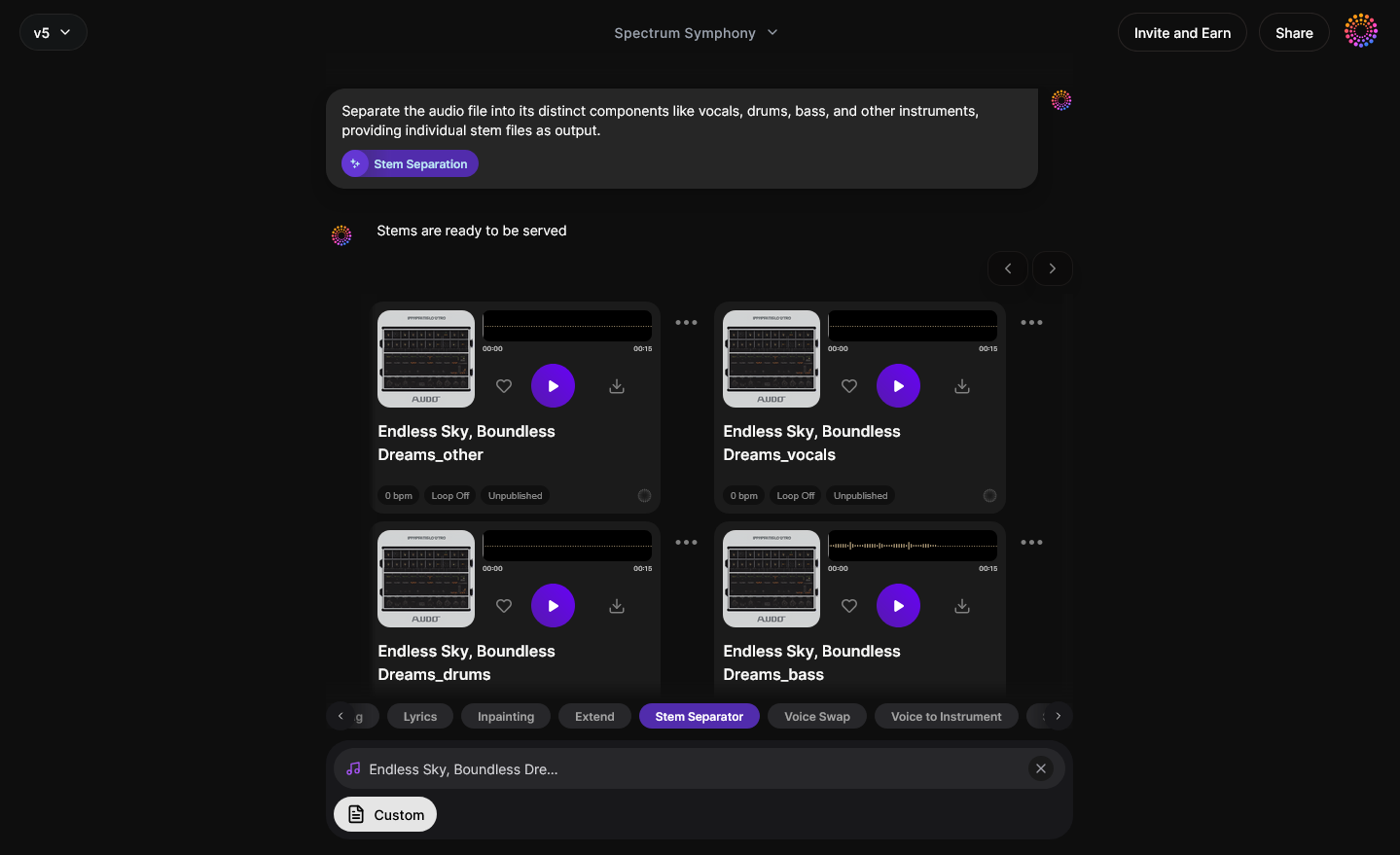
After processing, you’ll receive up to six clearly labeled stems. For choir projects, most users primarily rely on the Vocals stem. This is your clean choir track ready for EQ, reverb, and balance adjustments. The interface visually displays waveform data for each stem so you can compare dynamic range, pinpoint buildup frequencies, and ensure the vocal energy is cohesive.
Step 4: Download Stems – Work in your DAW
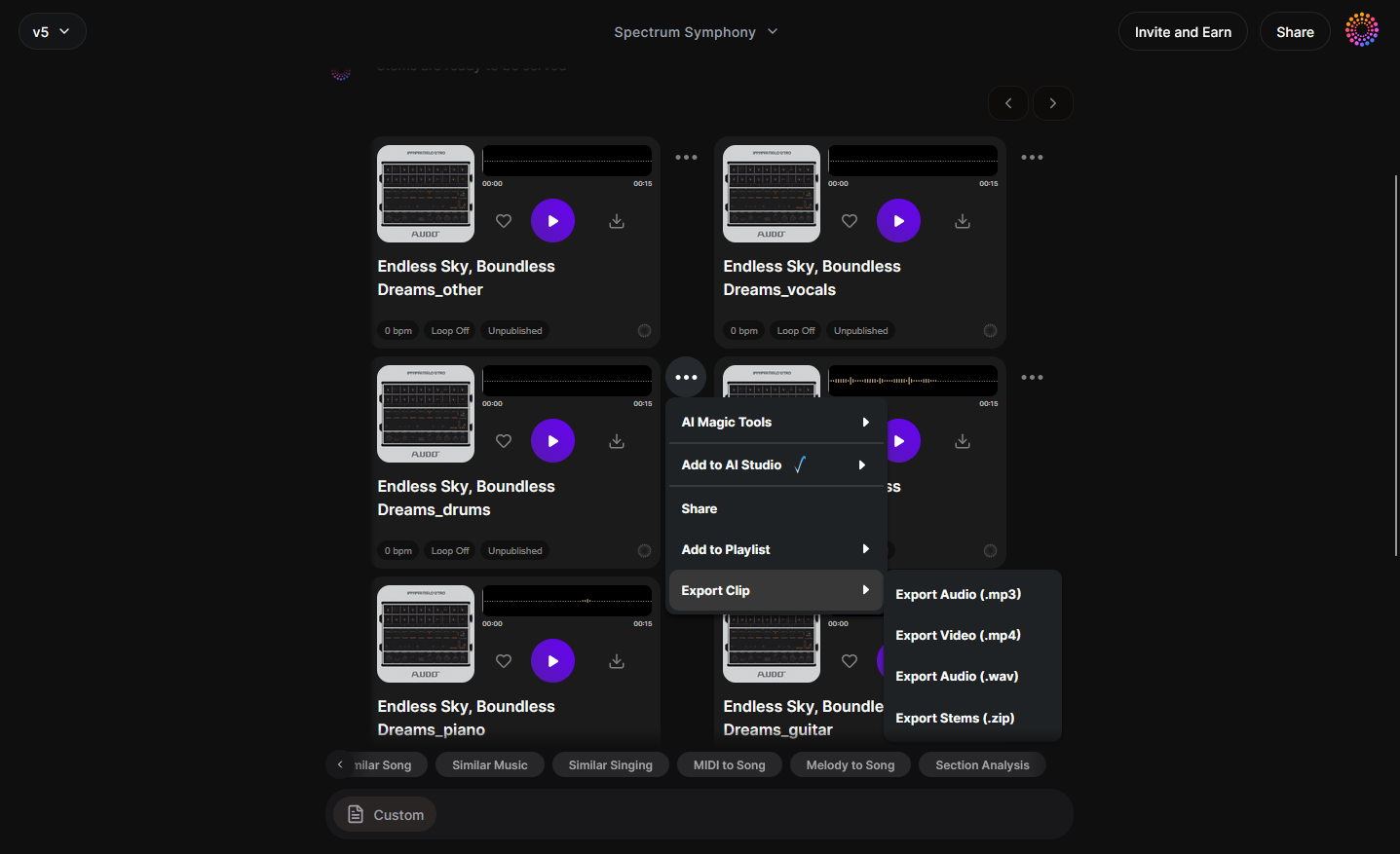
Once satisfied with your separated stems, download them individually. Import the choir vocal stem into your DAW (Logic, Pro Tools, FL Studio, etc.). This gives you complete control to apply EQ for choir voices, fine-tune reverb settings for choir, and manage stereo width.
What EQ settings work best for choir voices?
EQ for choir voices often starts with clarity and warmth. Choirs tend to have dense midrange content, especially around 500 Hz–2 kHz, which can become muddy if unchecked. Here’s a professional EQ approach:
- High-pass filter below 100 Hz to remove low-end rumble.
- Boost gently around 3 kHz for articulation, especially for large groups.
- Dip slightly around 500–800 Hz to reduce boxiness.
- Add air between 10–12 kHz for subtle brilliance.
For large ensembles, use dynamic EQ or multiband compression to keep resonance smooth across changing harmonies.
How much reverb should you use for a choir mix?
Reverb settings for choir mixing are crucial for realism and depth. Unlike pop vocals, choirs often benefit from longer tails to mimic church or hall acoustics. In 2026, hybrid convolution reverbs are popular—combining authentic impulse responses with algorithmic control.
Try this setup:
- Pre-delay: 30–50 ms to maintain clarity.
- Decay: 2.0–3.5 seconds for medium-sized choir rooms.
- Damping: Moderate to prevent excessive sibilant buildup.
- High-cut: Around 8 kHz for smoother reverb texture.
Apply reverb subtly per group (Soprano, Alto, Tenor, Bass) instead of globally to maintain coherent space while preserving natural blend.
How do you achieve perfect vocal harmony blending?
Vocal harmony blending depends on dynamic balance, timing precision, and tone consistency. Here are key choral mixing techniques used by professionals:
- Group compression: Apply light parallel compression across ensemble buses to unify dynamic range.
- Pan intelligently: Soprano slightly left, alto slightly right, tenor center, bass deep center. This creates a layered stereo image.
- Automation: Use volume rides across phrases to emphasize crescendos or diminuendos.
- Phase alignment: Check for phase issues when layering multiple choir tracks.
Many mixers use Soundverse’s extracted stems to run individual EQ and spatial processing per section, making tonal clarity much easier to achieve without mix clutter. For more advanced creative results, watch the Soundverse Tutorial Series such as Explore Tab and How to Make Music.
Advanced choir production tips for 2026
In 2026, AI-driven tools are deeply integrated in professional studios. Soundverse remains among the top platforms advancing artistic workflow, as seen in their stem separation innovations. Producers often combine it with Arrangement Studio for rearranging performances or with Inpainting for post-editing harmonic regions.
Other valuable reading includes how AI-generated music is transforming the industry and guides like How to Create EDM with Soundverse AI, which explore similar mixing strategies adapted to different genres. For deeper creative application, you can also watch the Make Deep House Music tutorial on the Soundverse YouTube channel.
Bonus Tip: Use Soundverse Inpainting for precise vocal correction
If a single section of the choir has off-pitch moments or unwanted background noise, the Inpainting tool can surgically regenerate that region without altering the rest of your mix. This is extremely valuable when managing complex choral arrangements.
Bonus Tip: Final polish with Arrangement Studio
Once stems are optimized, open them in Arrangement Studio for collaborative composition refinement. Here, dynamic and structural adjustments can be made without affecting overall tonal balance.
Start Mixing Like a Pro with Soundverse AI
Discover how Soundverse’s AI tools simplify vocal balancing, reverb control, and blending. Perfect your choir mixes faster with intelligent, studio-grade results.
Related Articles
- Soundverse Introduces Stem Separation AI Magic Tool – Learn how AI-powered stem separation helps producers isolate vocals and harmonies for better control in mixing projects.
- Soundverse Assistant: Your AI Music Co-Producer – Explore how the Soundverse Assistant brings intelligent suggestions to enhance your mixing workflow and creative process.
- What Are Song Stems and Why Do You Need Them – Understand the role of stems in mixing and why proper stem management is essential for creating balanced choir vocals.
- Enhancing YouTube Content with Royalty-Free and Copyright-Free Music Using Soundverse AI – Find out how you can enrich your video content with legally safe, professional-grade choir and background music using AI.
Here's how to make AI Music with Soundverse
Video Guide

Here’s another long walkthrough of how to use Soundverse AI.
Text Guide
- To know more about AI Magic Tools, check here.
- To know more about Soundverse Assistant, check here.
- To know more about Arrangement Studio, check here.
Soundverse is an AI Assistant that allows content creators and music makers to create original content in a flash using Generative AI.
With the help of Soundverse Assistant and AI Magic Tools, our users get an unfair advantage over other creators to create audio and music content quickly, easily and cheaply.
Soundverse Assistant is your ultimate music companion. You simply speak to the assistant to get your stuff done. The more you speak to it, the more it starts understanding you and your goals.
AI Magic Tools help convert your creative dreams into tangible music and audio. Use AI Magic Tools such as text to music, stem separation, or lyrics generation to realise your content dreams faster.
Soundverse is here to take music production to the next level. We're not just a digital audio workstation (DAW) competing with Ableton or Logic, we're building a completely new paradigm of easy and conversational content creation.
TikTok: https://www.tiktok.com/@soundverse.ai
Twitter: https://twitter.com/soundverse_ai
Instagram: https://www.instagram.com/soundverse.ai
LinkedIn: https://www.linkedin.com/company/soundverseai
Youtube: https://www.youtube.com/@SoundverseAI
Facebook: https://www.facebook.com/profile.php?id=100095674445607
Join Soundverse for Free and make Viral AI Music

We are constantly building more product experiences. Keep checking our Blog to stay updated about them!