How to Join a Voice Rights Class Action Lawsuit in 2026
Learn how to join a voice rights class action lawsuit and protect your vocal identity in 2026.
How to Join a Voice Rights Class Action Lawsuit
Voice technology and AI-generated music have evolved at lightning speed in the past few years, transforming how creators interact with digital platforms. By 2026, the conversation around protecting vocal identities and ownership of voice likeness has intensified. Musicians, vocal performers, and independent artists are now exploring collective action—specifically through voice rights class action lawsuits—to reclaim control and demand fair compensation for the use of their vocal work.
Why are voice rights class action lawsuits becoming so common in 2026?
The rise of AI voice models and synthetic singers has blurred the boundary between human performance and algorithmic replication. Between 2024 and 2025, numerous creators discovered their voices were reproduced by AI systems without authorization. This sparked outrage and subsequently led to organized class actions representing hundreds of artists affected by voice misuse.

In 2026, voice rights lawsuits focus on one central issue: consent. These cases often challenge companies that have trained voice-recognition or generative AI models on copyrighted or personally identifiable vocal data without clear licensing agreements. As the music industry transitions toward ethical AI usage, these lawsuits have become an important pillar for collective rights enforcement. For instance, Google Settles Class-Action Suit Over Voice Assistant demonstrates growing scrutiny over voice privacy, and Apple’s $95 million Siri settlement shows similar accountability emerging within tech giants.
What does a voice rights class action lawsuit involve?
A voice rights class action lawsuit allows multiple affected individuals with similar claims to consolidate their legal efforts against a company or organization. Instead of pursuing hundreds of small, individual cases, artists join forces to strengthen legal standing and reduce costs. The core objectives include:
- Proving unauthorized use of voice recordings by AI tools or sound libraries.
- Requesting statutory damages and compensation for loss of revenue or reputation.
- Securing court enforcement of consent-based data usage for AI model training.
- Establishing future licensing protections and obligations for organizations using artist voices.
Aside from litigating existing damages, these collective suits aim to reshape future data and copyright frameworks for voice assets—an evolution particularly relevant to class action music cases emerging across regions like the US, UK, and EU. To learn about class action trends and major 2026 settlements, visit Class Action Review – 2026 or the directory at ClassAction.org for ongoing updates.

How to make joining a voice rights class action lawsuit with Soundverse The Ethical AI Music Framework
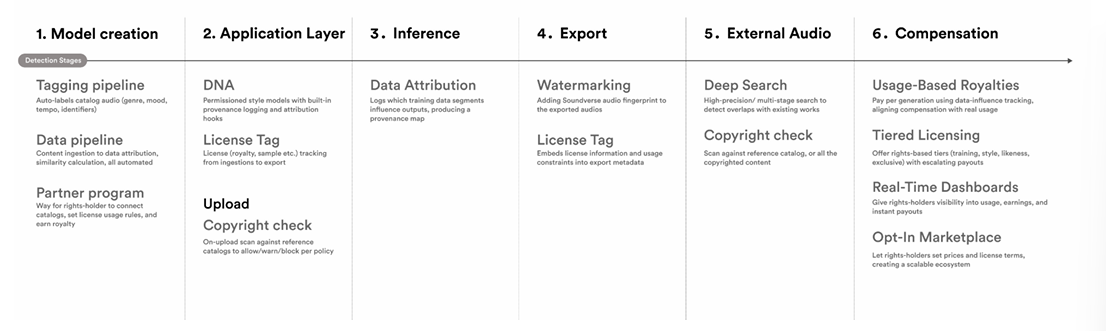
Before learning the steps to join any lawsuit, understanding modern safeguards for vocal data is critical. Soundverse has developed a robust infrastructure—the Ethical AI Music Framework—that aligns perfectly with the growing movement toward artist transparency.
Soundverse’s Ethical AI Music Framework establishes a six-stage pipeline meant to protect creators’ voices from unauthorized exploitation:
- Stage 1: Licensed Data Sourcing – Soundverse uses strictly licensed data, never scraping from the Internet. This guarantees that artists’ voices enter the system only with documented consent.
- Stage 2: Permissioned Models (DNA) – Each AI model operates with permissioned training protocols, preserving voice integrity and traceability.
- Stage 3: Explainable Inference (Attribution) – The system ensures attribution clarity. Every AI-produced vocal texture can be traced back to its reference source, preventing voice theft.
- Stage 4: Traceable Export (Watermarking) – Outputs are watermarked for authentication, ensuring external parties can verify origin and authorship.
- Stage 5: Deep Search (External Scanning) – This layer continuously scans external systems for potential unauthorized use, a key aid in evidence collection for any legal case.
- Stage 6: Recurring Compensation (Partner Program) – When voice datasets are used ethically, rights-holders earn ongoing royalties through the Soundverse Content Partner Program.
Together, these features promote consent, transparency, and continual protection across the AI music lifecycle. Soundverse Trace extends this protection further, embedding deep search and attribution mechanisms across both internal and external assets. For a deeper dive into creative voice applications, watch our tutorial on making Deep House music or how to make music with Soundverse.
Step 1: Identify whether your voice has been misused
Begin by determining if your voice samples, songs, or performances have been used without permission. Scan recent releases on streaming platforms and generative audio services, looking for vocal patterns that resemble yours. Tools like Soundverse Trace offer deep search functionality to confirm voice source matches and gather evidence for court filings.
Step 2: Collect documentation and proof
Gather contractual documents that prove ownership of your recordings and copyright registrations. Include timestamps of your original works, signed licensing agreements, and any third-party service policies you accepted. These records help strengthen your eligibility to join a class action lawsuit focused on voice rights violations.
Step 3: Locate active class actions related to voice rights
Search for existing lawsuits filed between 2025 and 2026 involving AI companies accused of unauthorized voice sampling or replication. Legal consortiums often post information about pending collective rights cases online. Communicate with a certified entertainment attorney to assess which group aligns with your experience.
Step 4: Enroll through verified legal channels
Joining a class action lawsuit requires signing a formal participation agreement via the appointed legal counsel or firm hosting the class. Never provide private information through unsolicited messages or unverified online portals. Ensure the firm’s identity and case verification match official legal directories.
Step 5: Collaborate with rights organizations and ethical AI partners
Engage with ethical music technology companies like Soundverse that proactively safeguard artists. Joining the Soundverse Content Partner Program ensures continuous royalty distribution when your vocal assets are licensed transparently. This partnership complements legal efforts and prevents future misuse.
By using traceable watermarks, attribution certificates, and recurring compensation, you’re protecting your creative legacy beyond courtroom litigation.
Pro Tips for Musicians Joining Voice Rights Lawsuits
- Document every recording session: Keep metadata of your vocal files. Timestamped data becomes indispensable legal proof.
- Track AI usage: If your voice is publicly available online, monitor AI song generators for similar outcomes using services like Soundverse Trace.
- Stay updated with class action music developments: Follow news recaps at Soundverse blog for evolving policy and settlement updates.
- Consider ethical platforms first: Explore alternatives to unauthorized generation platforms such as Soundraw alternative.
In 2026, combining legal advocacy with technical transparency amplifies artists’ bargaining power. Ethical engagement now defines the future of music production and distribution.
How Soundverse strengthens collective rights
Soundverse’s vision transcends litigation. The Ethical AI Music Framework serves as a practical foundation for protecting voice assets through both technology and policy. It empowers musicians to retain creative ownership while granting businesses compliant access to high-quality vocal data.
Moreover, the Soundverse ecosystem encourages collaboration via the Content Partner Program, helping artists monetize through recurring royalties rather than one-time settlements. The platform integrates trust and attribution deeply into AI audio generation workflows—advancing sustainable value models instead of exploitation.
For creators entering 2026’s rapidly changing AI music landscape, understanding the intersection of law and technology is vital. Joining a voice rights class action lawsuit is not only about reacting to past injustices—it’s about defining ethical standards for the next generation of musical innovation.
Protect Your Voice Rights Today
Stay informed and take action in the fast-changing world of AI-generated audio. Join Soundverse to explore ethical AI tools, learn your rights, and secure fair representation for your creative voice.
Related Articles
- Soundverse Introduces Stem Separation AI Magic Tool: Discover how Soundverse’s stem separation technology helps artists isolate, remix, and protect creative voice content effortlessly.
- AI Music in the USA: Explore the current landscape of AI music creation in the United States and understand how legal frameworks affect creators and rights holders.
- Copyright-Free vs. Royalty-Free Music: What Creators Should Know: Learn the differences between copyright-free and royalty-free music to ensure your AI-generated soundtracks respect creator rights.
- Soundverse SAAR: AI Voice Assistant: Meet SAAR, the AI assistant designed to help creators manage, generate, and protect voice assets in the new age of digital creativity.
Here's how to make AI Music with Soundverse
Video Guide
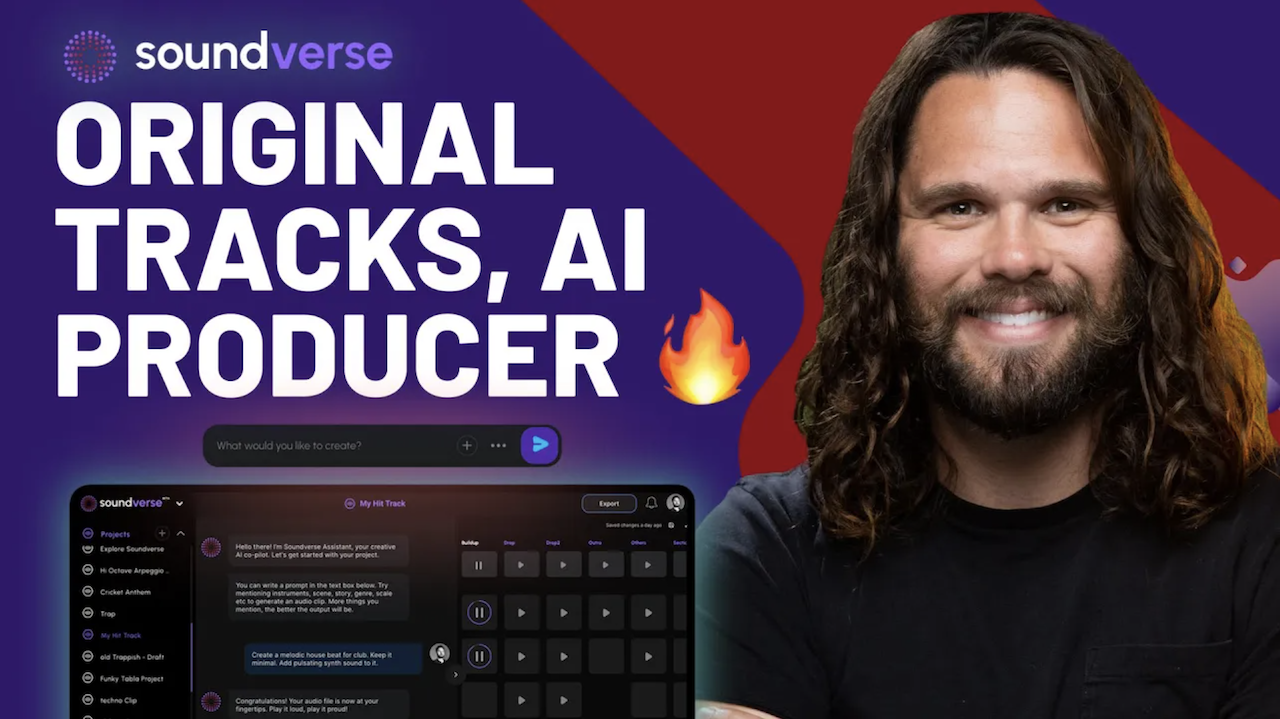
Here’s another long walkthrough of how to use Soundverse AI.
Text Guide
- To know more about AI Magic Tools, check here.
- To know more about Soundverse Assistant, check here.
- To know more about Arrangement Studio, check here.
Soundverse is an AI Assistant that allows content creators and music makers to create original content in a flash using Generative AI. With the help of Soundverse Assistant and AI Magic Tools, our users get an unfair advantage over other creators to create audio and music content quickly, easily and cheaply. Soundverse Assistant is your ultimate music companion. You simply speak to the assistant to get your stuff done. The more you speak to it, the more it starts understanding you and your goals. AI Magic Tools help convert your creative dreams into tangible music and audio. Use AI Magic Tools such as text to music, stem separation, or lyrics generation to realise your content dreams faster. Soundverse is here to take music production to the next level. We're not just a digital audio workstation (DAW) competing with Ableton or Logic, we're building a completely new paradigm of easy and conversational content creation.
TikTok: https://www.tiktok.com/@soundverse.ai
Twitter: https://twitter.com/soundverse_ai
Instagram: https://www.instagram.com/soundverse.ai
LinkedIn: https://www.linkedin.com/company/soundverseai
Youtube: https://www.youtube.com/@SoundverseAI
Facebook: https://www.facebook.com/profile.php?id=100095674445607
Join Soundverse for Free and make Viral AI Music
We are constantly building more product experiences. Keep checking our Blog to stay updated about them!