How to Get Permission for Voice Cloning in Music (2026 Guide)
Learn how musicians can get legal permission for voice cloning in music using ethical AI frameworks.
How to Get Permission for Voice Cloning in Music
Voice cloning has become one of the most debated technological frontiers in the music industry by 2026. For musicians and producers, the ability to reproduce or emulate a singer’s voice using artificial intelligence opens new doors for creativity—but also serious questions around consent, rights, and ethics. In this guide, we’ll explore exactly how to get permission for voice cloning in music responsibly, and how frameworks like Soundverse’s Ethical AI Music Framework make the process transparent, fair, and compliant for all parties involved.
Why Do You Need Permission for Voice Cloning in Music?
When using AI to simulate a voice, you are engaging with a deeply personal asset—someone’s vocal identity. Just as image rights protect visual likenesses, voice rights safeguard the sound characteristics that define an artist’s vocal signature. Cloning a voice without consent can lead to legal disputes, copyright claims, and reputational damage. Artists like vocalists, actors, and voice performers now treat their voice as intellectual property. In 2026, this perspective has become mainstream following major updates in international voice rights law around 2025. See also Synthetic Media & Voice Cloning: Right of Publicity Risks for 2026 for a relevant legal overview.
To protect creative integrity, every producer must follow a clear consent process before generating or using cloned voices in music projects. This process confirms whether the voice owner—or their estate or label—grants legal permission for usage, recording, and distribution.

What Is the Voice Cloning Consent Process in Music?
Getting permission involves both legal and ethical steps. Broadly, the consent process includes:
- Identifying the voice source. Establish whose voice you want to clone—be it a featured singer, session artist, or legacy performer.
- Requesting consent. Contact their representative, manager, or label to present your project’s context, usage type (commercial or non-commercial), and distribution scope.
- Drafting legal permission documents. A standard license agreement should outline voice usage duration, rights, royalties, and potential AI training authorization.
- Ethical declaration. Ensure transparency by stating the voice is AI-generated from licensed data.
- Verification and record keeping. Consent records should be digitally logged to demonstrate compliance during audits.
This authentication process ensures that creators of AI music respect artist integrity while also securing themselves from future claims. For more legal examples, see AI Music Regulation News 2026: Laws, Lawsuits & What Creators ....

How to Make Voice Cloning Permission in Music Easy with Soundverse The Ethical AI Music Framework
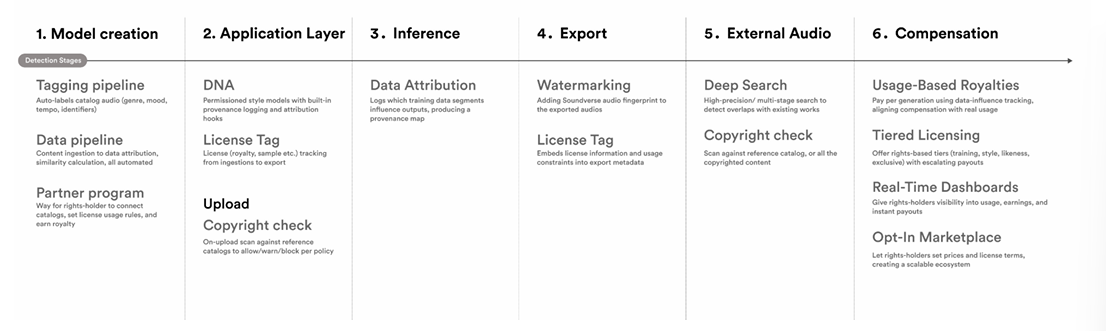
Soundverse’s Ethical AI Music Framework acts as the gold standard for obtaining and validating voice cloning permission in music. It eliminates opacity from the AI training and generation process through a six-stage ethical pipeline:
- Stage 1: Licensed Data Sourcing (No scraping) – Every voice dataset used is 100% licensed from content partners or artists directly, not scraped from online media.
- Stage 2: Permissioned Models (DNA) – The Soundverse DNA system creates unique AI models only from artists who have explicitly opted in and granted written consent.
- Stage 3: Explainable Inference (Attribution) – Each generated output includes clear attribution pathways so rights-holders know when and how their voice was used.
- Stage 4: Traceable Export (Watermarking) – Every generated voice track is watermarked, enabling traceability across platforms.
- Stage 5: Deep Search (External Scanning) – Outputs are regularly scanned using Soundverse Trace, ensuring no unauthorized cloning or misuse.
- Stage 6: Recurring Compensation (Partner Program) – Artists and rights-holders are paid recurring royalties through the Content Partner Program whenever their data influences generated outputs.
This framework turns voice cloning permission from a complex legal maze into a structured, auditable workflow. By using Soundverse, producers integrate innovation with artist protection seamlessly.
For a step-by-step demonstration of creating music ethically, watch our Soundverse Tutorial Series - 9. How to Make Music.
Step-by-Step Guide: How to Get Legal Permission for Voice Cloning in Music
Step 1: Define Your Creative and Legal Intent
Clarify your goal. Are you trying to reproduce a singer’s tone for a remix, emulate a historical voice for tribute concerts, or create a new synthetic vocalist trained ethically? These details determine the level of permission you’ll need.
Step 2: Identify the Rights Holder
Before reaching out, research whether the singer owns their voice rights or if the label manages them. In many 2026 contracts, vocal likeness licensing clauses specify whether AI voice reproduction is allowed. See What You Need to Know If You're Using AI-Generated Voices for ... for details on the ELVIS Act.
Step 3: Request Consent Formally
Prepare a written proposal explaining purpose, platform usage, and distribution reach. This should include disclosure of the AI tool used—for instance, Soundverse DNA—to show ethical handling.
Step 4: Draft a Legal License Agreement
Include sections for speaker identification, AI dataset usage rights, attribution rules, and recurring royalties. Most creators now integrate automatic attribution systems like those in Soundverse Trace for ongoing compliance.
Step 5: Validate Ethical AI Compliance
Once you obtain permission, ensure that the actual voice cloning follows licensed training mechanisms. Tools trained through open web scraping should never be used for commercial outputs.
Step 6: Log Documentation and Attribution
Maintain a digital log—Soundverse’s Trace layer automatically records every voice instance used for your music creation, helping auditors verify ethical standards. For deeper training in voice-based music creation, see Soundverse Tutorial Series - 10. Make Deep House Music.
What Are Common Mistakes When Seeking Voice Rights?
- Assuming automatic permission: Recording an artist or having their sample doesn’t allow cloning for AI synthesis.
- Ignoring consent depth: Some artists grant permission for personalization, not commercial broadcasting.
- Skipping attribution: Proper acknowledgment is not just ethical—it’s necessary for transparent distribution and royalty tracking.
- Using public datasets without review: Voice data without confirmed rights can breach privacy and copyright laws.
By 2026, AI voice ethics are a central requirement in label compliance audits. Failing to meet standards can lead to digital takedowns or major licensing penalties. See how artists and producers navigate this space in AI Music and the Law in 2026: What Creators Can and Cannot Do.
How AI Voice Ethics Shape the Music Industry in 2026
Ethics isn’t just policy—it’s market demand. Enterprises and independent creators are expected to follow fair voice rights management. Consumers increasingly prefer music made with transparent AI processes. Frameworks like Soundverse enable record labels and producers to future-proof their workflows by combining creative flexibility with artist respect.
Ethical voice cloning also supports recurring monetization models. Artists can securely monetize their sonic identity, and fans experience innovative tracks without compromising authenticity. This paradigm shift reinforces trust between AI developers and the music community. Learn more trends shaping this landscape from Music and AI: 2025's developments that will shape 2026's disputes.
Industry Standards and AI Music Compliance
In 2026, compliance standards focus on:
- Transparent consent workflows verifying all artist participation.
- Traceable watermark systems tracking voice data lineage.
- Cross-platform attribution sharing among record labels, streaming services, and AI vendors.
Soundverse’s technology ecosystem—including Soundverse Trace, Soundverse DNA, and the Content Partner Program—leads this transformation, ensuring end-to-end accountability.
Pro Tips for Musicians and Producers
- Always work with frameworks that document voice sourcing and attribution.
- Educate clients and collaborators about AI voice ethics.
- Maintain written agreements defining ownership of cloned output.
- Audit all AI music with external scanning tools like Soundverse Trace for ongoing compliance.
- Stay updated on changes via resources like music industry trends to adapt your workflow accordingly.
Start Creating Ethically with AI Voices Today
Leverage Soundverse’s AI tools to generate music and voice tracks responsibly. Ensure your creations comply with licensing and get inspired with limitless, ethical possibilities.
Related Articles
- How AI-Generated Music Is Transforming the Music Industry — Discover how AI tools are redefining creativity and the economics of music production.
- Soundverse SAAR: AI Voice Assistant — Learn how Soundverse SAAR helps creators streamline music and voice generation with intelligent AI assistance.
- Enhancing YouTube Content with Royalty-Free and Copyright-Free Music — Understand the essentials of using AI-generated music safely for online videos without infringement risks.
- Copyright-Free vs. Royalty-Free Music: What Creators Should Know — A clear breakdown of the difference between copyright-free and royalty-free content to help creators make smarter decisions.
Here's how to make AI Music with Soundverse
Video Guide
Here’s another long walkthrough of how to use Soundverse AI.
Text Guide
- To know more about AI Magic Tools, check here.
- To know more about Soundverse Assistant, check here.
- To know more about Arrangement Studio, check here.
Soundverse is an AI Assistant that allows content creators and music makers to create original content in a flash using Generative AI. With the help of Soundverse Assistant and AI Magic Tools, our users get an unfair advantage over other creators to create audio and music content quickly, easily and cheaply. Soundverse Assistant is your ultimate music companion. You simply speak to the assistant to get your stuff done. The more you speak to it, the more it starts understanding you and your goals. AI Magic Tools help convert your creative dreams into tangible music and audio. Use AI Magic Tools such as text to music, stem separation, or lyrics generation to realise your content dreams faster. Soundverse is here to take music production to the next level. We're not just a digital audio workstation (DAW) competing with Ableton or Logic, we're building a completely new paradigm of easy and conversational content creation.
TikTok: https://www.tiktok.com/@soundverse.ai Twitter: https://twitter.com/soundverse_ai Instagram: https://www.instagram.com/soundverse.ai LinkedIn: https://www.linkedin.com/company/soundverseai Youtube: https://www.youtube.com/@SoundverseAI Facebook: https://www.facebook.com/profile.php?id=100095674445607
Join Soundverse for Free and make Viral AI Music
 We are constantly building more product experiences. Keep checking our Blog to stay updated about them!