How to Find the Beat of Any Song: A Complete Guide for 2026
Learn how to find the beat of a song with modern techniques and Soundverse tools.
How to Find the Beat of Any Song
Finding the beat of a song is one of the first critical skills every musician, producer, or aspiring DJ must master. In 2026, as AI-powered music tools have become commonplace, learning how to identify rhythm, tempo, and timing accurately can set you apart from others in your sound-based journey. Whether you’re mixing tracks, composing an original piece, or training your ear for consistent rhythmic performance, understanding the fundamental pulse of a song is key.
Beat detection goes far beyond tapping your foot to a rhythm. It involves connecting to the internal structure of music — recognizing how verses, choruses, and bridges are defined and how tempo drives emotional impact. This guide will explore how to find the beat of a song effectively, including modern AI-assisted techniques enabled by Soundverse and essential listening skills for musicians.
Why learning how to find the beat of a song matters in 2026

Beat recognition isn't just theoretical; it’s a working skill used across the modern music creation pipeline. Producers rely on precise beat detection for remixing projects, music students use it to understand song timing during performance training, and DJs need accurate tempo identification for smooth transitions. As hybrid workflows combining AI and human artistry continue evolving, developing solid listening skills ensures that you remain connected to the human feel of rhythm even when machines assist you.
Music rhythm training in 2026 emphasizes dynamic listening and creative interpretation. Tools such as AI-assisted beat detection and tempo mapping now complement traditional ear-training exercises. This means that aspiring musicians can visualize beats, segments, and tempo changes through interactive visuals generated by software rather than relying purely on manual timing clicks. For more context, check out YouTube’s popular tutorials such as How To Find The Beat In Any Song If You Can't Dance and How To Beatmatch in 2026 (Complete Guide) for practical understanding.
How to make beat detection and analysis easy with Soundverse Section Analysis
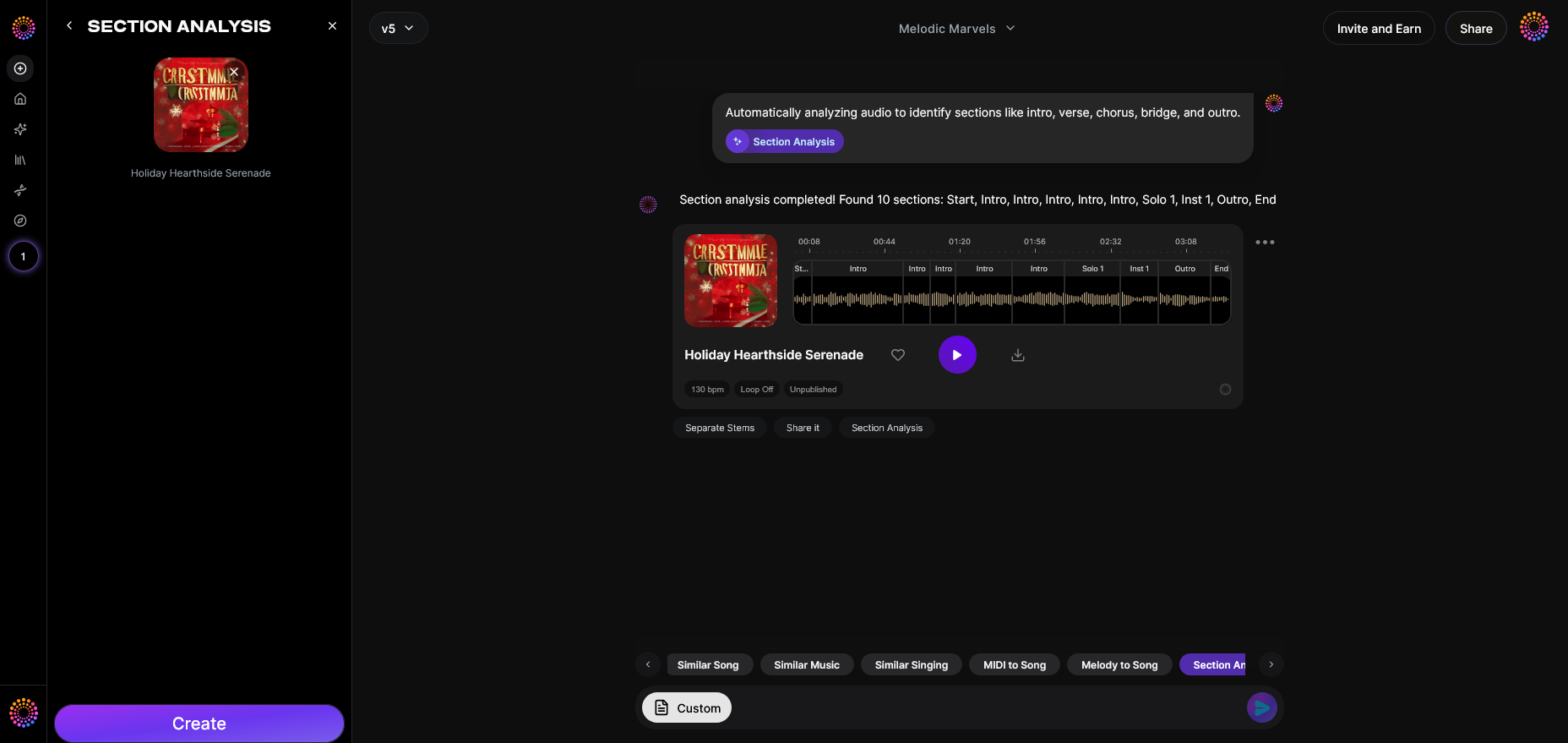

Soundverse’s Section Analysis feature is designed to help musicians visualize and understand how musical sections flow in any song. Instead of struggling to manually mark segments or estimate timing breaks, users can upload a track and let the AI automatically detect and label sections including the intro, verse, chorus, bridge, and outro with exact timestamps. This provides a transparent roadmap for rhythmic understanding and remix preparation.
Feature Overview: Soundverse Section Analysis automatically detects and labels song structure sections (Intro, Verse, Chorus, Bridge, Outro) with precise timestamps. Once processed, it generates a visual roadmap that can be exported and integrated into your editing or remix workflow.
Core Capabilities:
- Automated structure detection for easy beat recognition.
- Visual roadmap generation showing each section’s timeline.
- Timestamp export for use in DAWs and remix projects.
Whether you’re studying how the beat changes between the verse and chorus or planning where to drop new drum layers, Section Analysis enhances your grasp of song timing. The feature operates asynchronously — users upload the audio, Soundverse processes it, and results are displayed in the dashboard once finished. No real-time preview is involved; the focus is on deep post-analysis accuracy.
Let’s walk through how to use the Section Analysis feature to find the beat in any song.
Step 1: Feature Overview — Access Section Analysis Tool
Log in to Soundverse and navigate to the Section Analysis tool. This is where all rhythm and structure evaluation starts. Within your workspace, you’ll find a section dedicated to analyzing uploaded tracks. Select “Section Analysis” to begin setting up your beat study session.
Step 2: Upload Audio — Upload Song for Analysis
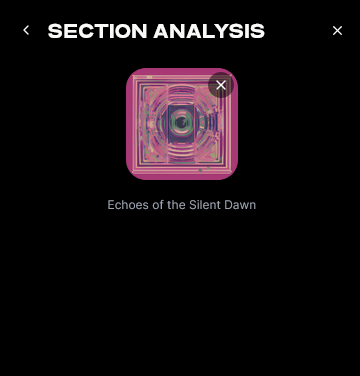
Choose the song file you want to analyze — it can be an MP3, WAV, or another standard format. Upload the audio to Soundverse. The system processes the track asynchronously, meaning you’ll receive the completed analysis results after it examines the rhythmic and structural flow.
To supplement your learning visually, watch our Soundverse Tutorial Series - 9. How to Make Music to understand fundamental structure analysis processes.
Step 3: Analysis — AI Analyzes Song Structure and Sections
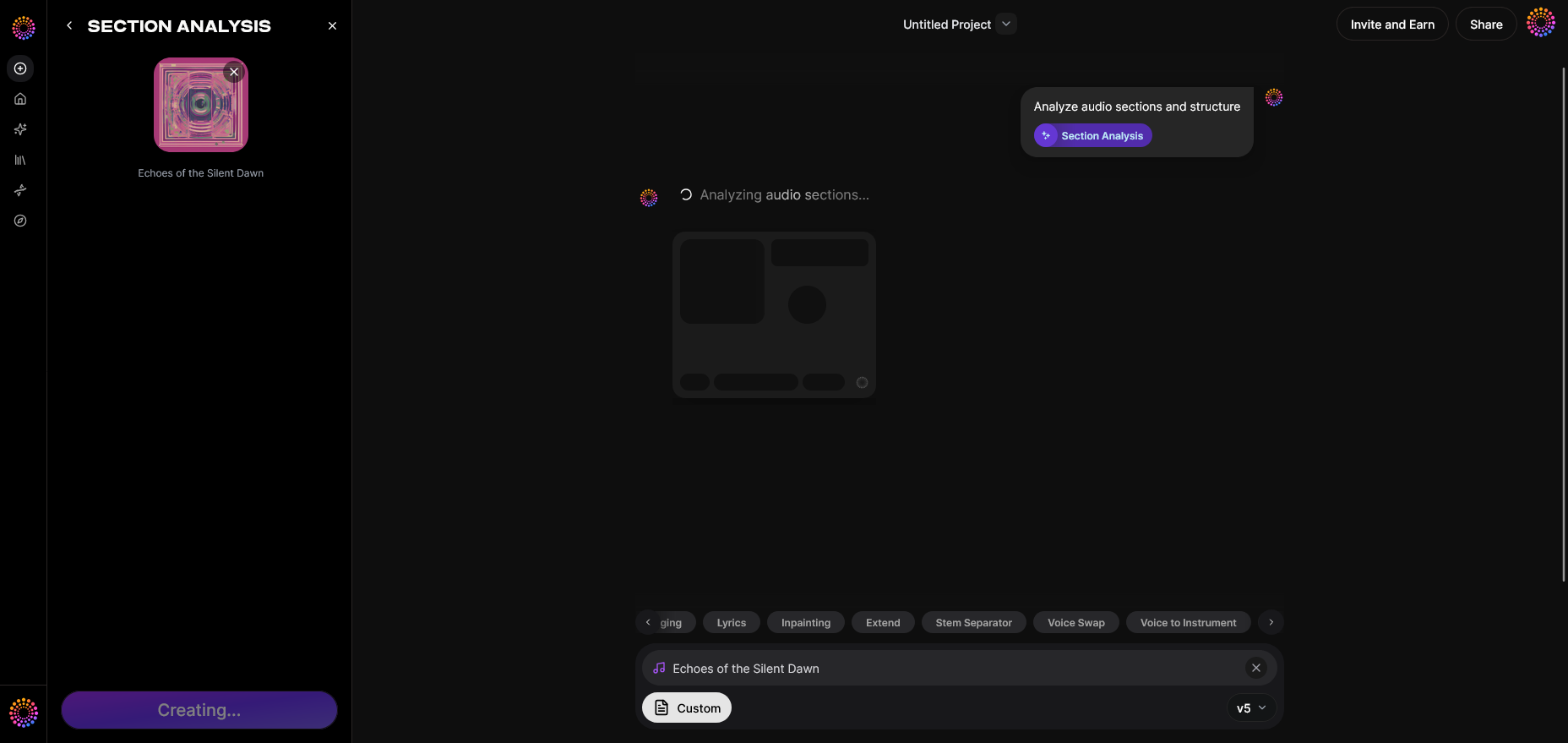
Soundverse’s AI breaks down the composition into its key sections. The algorithm identifies tempo consistency and rhythmic transitions between parts, offering a detailed map of where beat changes occur. This aids in tempo identification and timing visualization, particularly for those practicing music rhythm training or remixing workflows where timing precision is vital. For a deeper exploration of practical application, see Beat Making 101: How to Make a Beat.
Step 4: Results Display — View Identified Sections with Timestamps
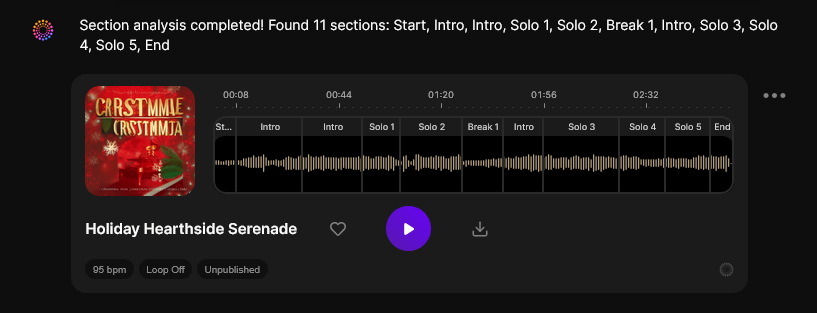
After analysis completes, Soundverse displays labeled segments: Intro, Verse, Chorus, Bridge, and Outro, each paired with accurate timestamps. This structure allows you to visually trace how the beat evolves throughout the song. If you want to focus on specific rhythmic moments, you can use timestamp exports for deeper study inside your digital audio workstation (DAW). For extended learning, try following the Soundverse Tutorial Series - 10. Make Deep House Music on our official channel.
With these steps, you can objectively determine where beats shift and understand the rhythmic placement that defines each song section.
What techniques help beginners find the beat manually?
For learners without AI tools, developing the ear through traditional listening exercises is essential. Here are timeless techniques you can practice alongside modern solutions:
- Clap or tap along: Start with simple pop songs. Clap on what feels like the main pulse — usually on each kick drum or main rhythm accent.
- Use a metronome: Adjust tempo until it syncs with the groove. This strengthens your internal pacing.
- Count beats in bars: Most songs are structured in 4/4, so you can count “1-2-3-4.” Identifying when sections reset helps you feel timing changes.
- Analyze drum patterns: Recognizing recurring rhythmic motifs helps distinguish between verse and chorus structures.
- Slow down audio files: Slower playback makes it easier to pick up subtle rhythm variations.
Combining these manual methods with AI insights from Soundverse creates an ideal balance between intuitive listening and data-driven precision.
How tempo identification enhances your production workflow
Tempo identification underpins every musical task — from creating transitions to looping samples or syncing visuals. In 2026, even intermediate-level producers rely on automated tempo mapping to save time while keeping creative flexibility. Platforms like Soundverse support this workflow by integrating machine learning that detects nuanced tempo shifts and highlights where rhythmic tension builds or relaxes.
Tempo recognition also feeds into advanced remixing. When coupled with the Stem Separator tool, producers can isolate drums or percussion stems and study their rhythm independently. You can then reassemble stems while retaining tempo consistency or reimagine drum grooves using Soundverse’s data-driven timestamps.
For composers, accurate tempo matching allows consistent emotional pacing in music for film or video projects. It helps ensure that the rhythm supports action beats and scene timing effectively. Explore related creative cases in The Role of AI Music in Film and Television to understand how beat control affects scoring in 2026’s multimedia landscape.
Pro tips for improving listening skills for musicians
- Focus on transients: Listen for initial attacks — a snare hit, kick drum, or hand clap — they define rhythmic boundaries.
- Compare genres: Tempo varies between styles. Analyze differences in beats per minute between jazz (around 120 BPM) and EDM (often 128-140 BPM) to strengthen tempo discernment.
- Visual learning: Use waveform visualizers to notice beat spacing visually.
- Record and replay: Capture your own drumming or clapping. Playback reveals microtiming inconsistencies that train precision.
For more examples, explore How to Create Jazz Music with Soundverse AI to see how jazz rhythm intricacy integrates with technological learning tools.
Building a connection between human rhythm and AI beat detection
The synergy between human musicianship and algorithmic accuracy drives music education forward. AI helps eliminate guesswork while human ears maintain expression. As we progress through 2026, producers increasingly blend these perspectives — using machine precision for structure detection, while maintaining the organic groove that defines live performance.
Beat analysis is not merely machine execution; it’s the interplay of logic and feel. Tools like Soundverse Section Analysis offer logical segmentation and timestamp precision, while human interpretation contextualizes those findings emotionally.
Start Creating Music with Perfect Rhythm Using Soundverse
Discover how Soundverse’s AI tools help you generate music with accurate timing and beat alignment—no experience required. Bring your song ideas to life effortlessly.
Create Your First Track
Related Articles
- Generate AI Music with Soundverse Text-to-Music: Learn how to turn your ideas or lyrics into complete AI-generated songs with Soundverse’s text-to-music technology.
- Soundverse Introduces Stem Separation AI Magic Tool: Explore how Soundverse’s stem separation tool lets you isolate beats, vocals, or instruments to remix and refine your tracks.
- What Are Song Stems and Why Do You Need Them: Understand the importance of song stems and how they can help you master, remix, or analyze the beat structure of a song.
- Soundverse Assistant: Your AI Music Co-Producer: Meet the AI assistant that helps you create consistent, beat-perfect music tailored to your unique sound.
Here's how to make AI Music with Soundverse
Video Guide
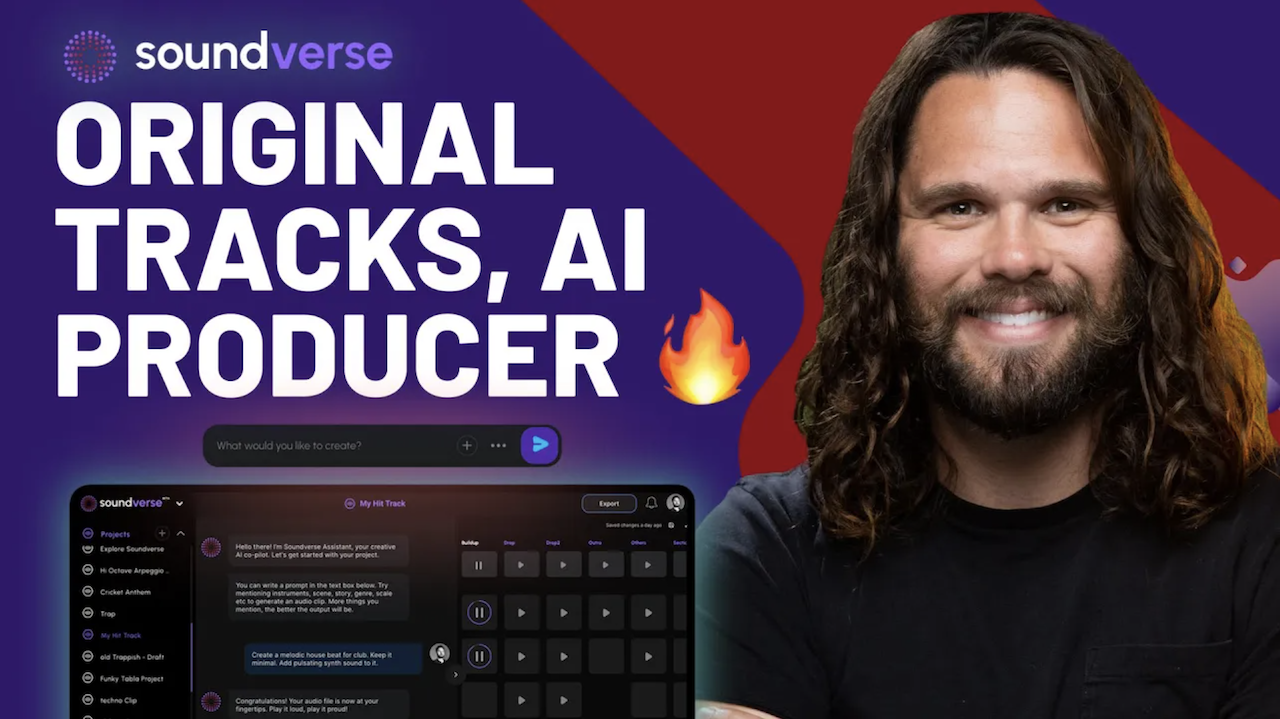
Here’s another long walkthrough of how to use Soundverse AI.
Text Guide
- To know more about AI Magic Tools, check here.
- To know more about Soundverse Assistant, check here.
- To know more about Arrangement Studio, check here.
Soundverse is an AI Assistant that allows content creators and music makers to create original content in a flash using Generative AI.
With the help of Soundverse Assistant and AI Magic Tools, our users get an unfair advantage over other creators to create audio and music content quickly, easily and cheaply.
Soundverse Assistant is your ultimate music companion. You simply speak to the assistant to get your stuff done. The more you speak to it, the more it starts understanding you and your goals.
AI Magic Tools help convert your creative dreams into tangible music and audio. Use AI Magic Tools such as text to music, stem separation, or lyrics generation to realise your content dreams faster.
Soundverse is here to take music production to the next level. We're not just a digital audio workstation (DAW) competing with Ableton or Logic, we're building a completely new paradigm of easy and conversational content creation.
TikTok: https://www.tiktok.com/@soundverse.ai
Twitter: https://twitter.com/soundverse_ai
Instagram: https://www.instagram.com/soundverse.ai
LinkedIn: https://www.linkedin.com/company/soundverseai
Youtube: https://www.youtube.com/@SoundverseAI
Facebook: https://www.facebook.com/profile.php?id=100095674445607
Join Soundverse for Free and make Viral AI Music

We are constantly building more product experiences. Keep checking our Blog to stay updated about them!