How to EQ Music for Open-Ear Earbuds: A Complete Guide for 2026
Learn how to EQ music for open-ear earbuds and improve sound quality with Soundverse's Stem Separator tool.
How to EQ Music for Open-Ear Earbuds
In 2026, open-ear earbuds have become the go-to choice for music lovers who crave comfort without isolation. These innovative devices let you enjoy crisp sound while keeping awareness of your surroundings—a feature ideal for urban commuters, fitness enthusiasts, and content creators alike. However, one challenge remains: achieving the perfect EQ (equalization) balance for open-ear listening. This article explores how to master EQ for open-ear earbuds using modern techniques and tools like Soundverse’s Stem Separator.
Why is EQ for Open-Ear Earbuds Different in 2026?
Equalization is the art of adjusting frequencies to tailor sound output. Traditional earbuds and headphones create a closed acoustic environment, allowing more precise control over low frequencies. In contrast, open-ear earbuds project sound outside the ear canal, causing natural acoustic leakage. This leads to weaker bass and sometimes harsher highs. Therefore, open-ear equalization requires compensating for these acoustic characteristics.

Audiophiles and producers in 2026 recognize that open-ear audio tuning is not about making it sound like studio monitors; it’s about enhancing clarity and restoring frequency balance suitable for open-air listening. Adjusting the low frequencies, taming sibilant highs, and boosting vocals are common priorities.
How to Make EQ for Open-Ear Earbuds with Soundverse Stem Separator
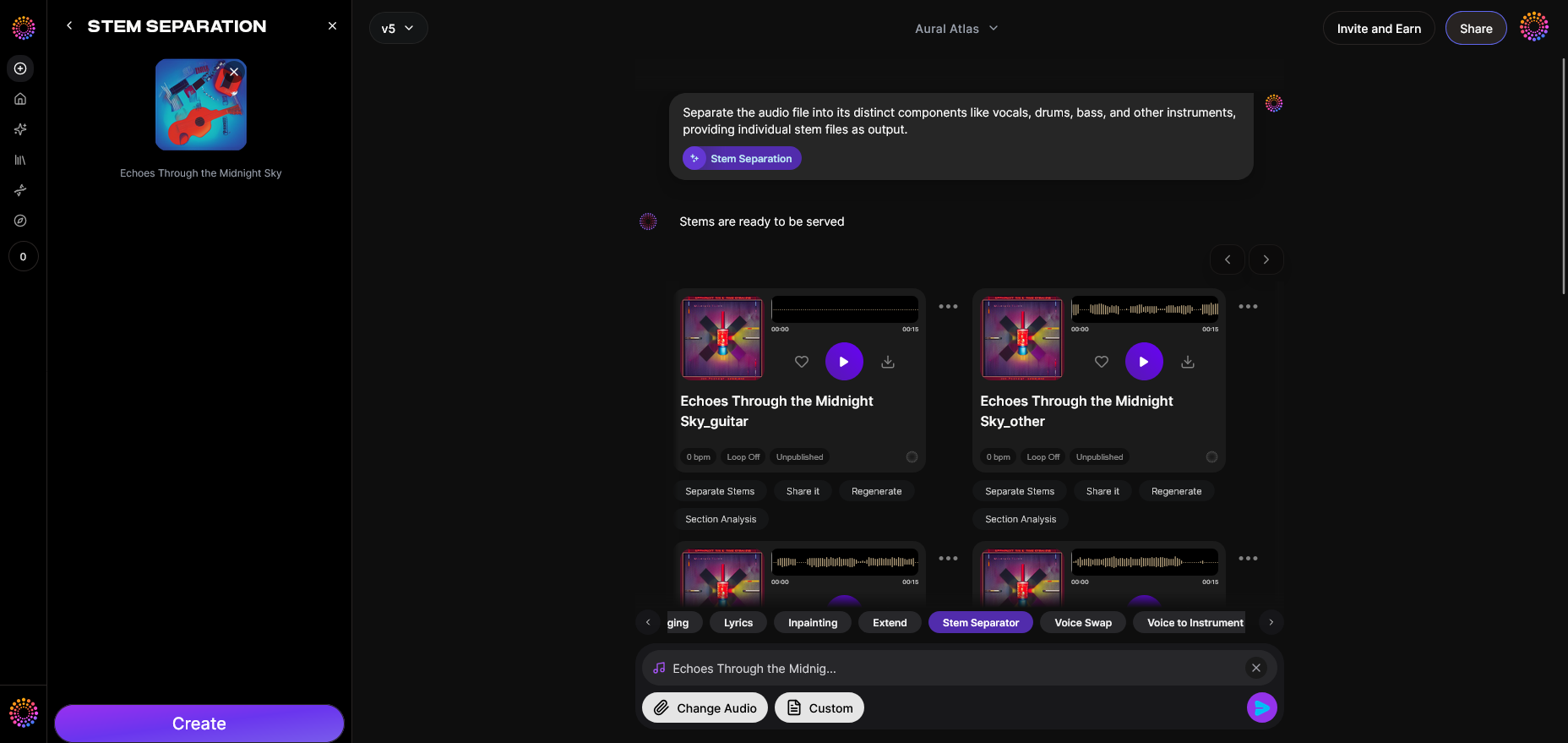
To create a refined EQ curve for open-ear earbuds, Soundverse offers a game-changing tool: the Stem Separator.

What is Soundverse Stem Separator?
The Soundverse Stem Separator dissects mixed audio into up to six editable stems—Vocals, Drums, Bass, Guitar, and Accompaniment, among others. This means you can isolate and fine-tune each part of the song before creating your final EQ mix tailored to open-ear listening.
Key Capabilities
- 6-stem separation: Enables detailed editing of individual components.
- Multi-source input: Supports URL, file, or recorded audio uploads.
- High-quality isolation: Produces clean separations ready for EQ processing.
These functions make it an ideal platform for anyone looking to take EQ customization to the next level, whether remixing, creating karaoke tracks, or crafting audio designed specifically for open-ear devices. For a deeper dive, watch our guide on creating Deep House music.
Step 1: Upload Interface
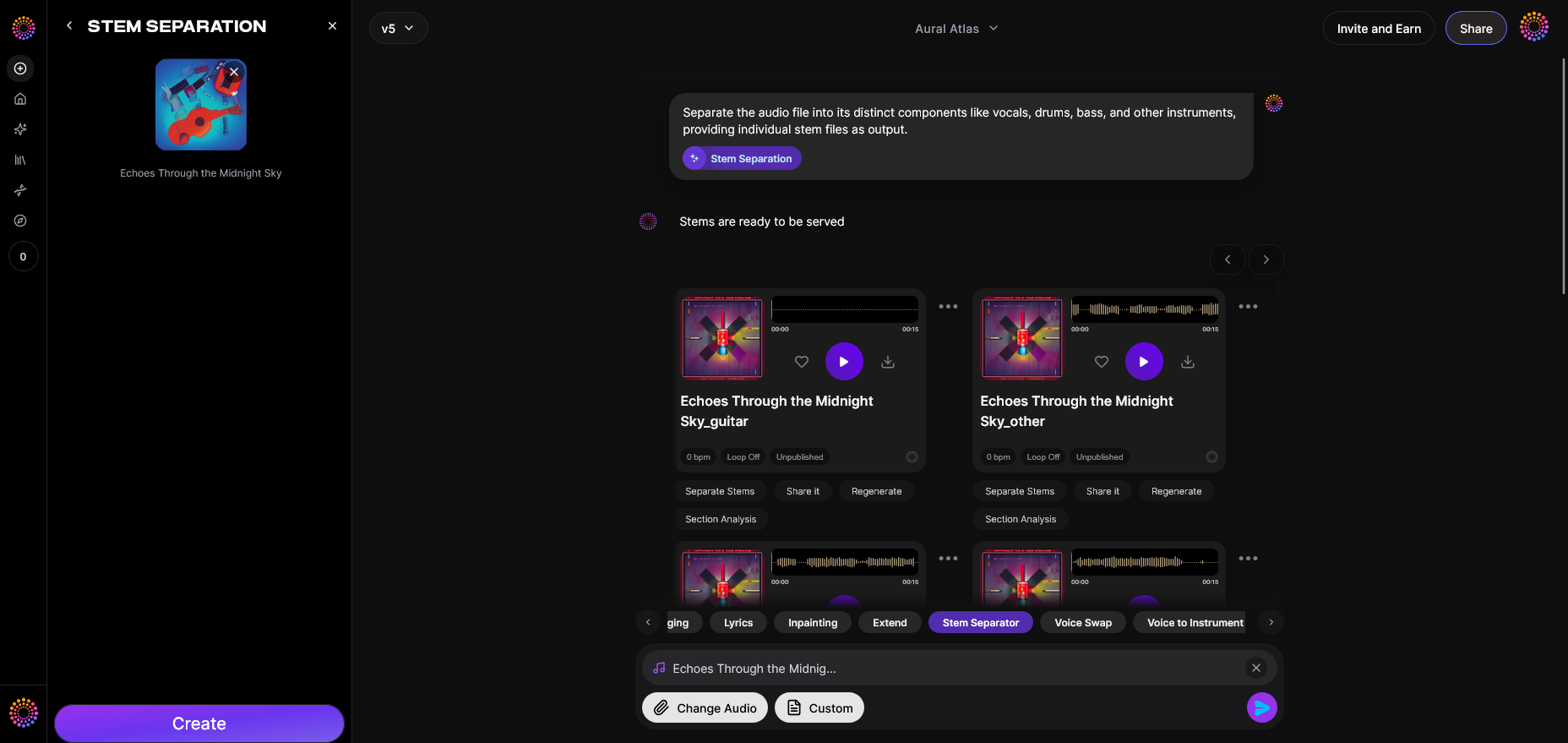
Start by opening Soundverse and accessing the upload dialog. Here, you can choose between uploading a file, sharing a song link, or recording directly. This step initializes the stem separation process essential for precise open ear equalization.
Step 2: Additional References
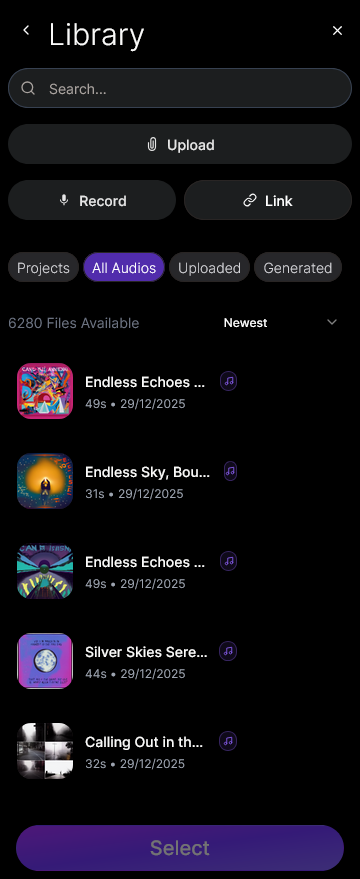
You can also upload reference audio that reflects your preferred sound EQ. For example, a professionally mastered track tuned for open listening can serve as a benchmark. This helps align tone and balance when you later apply EQ adjustments.
Step 3: Results Display
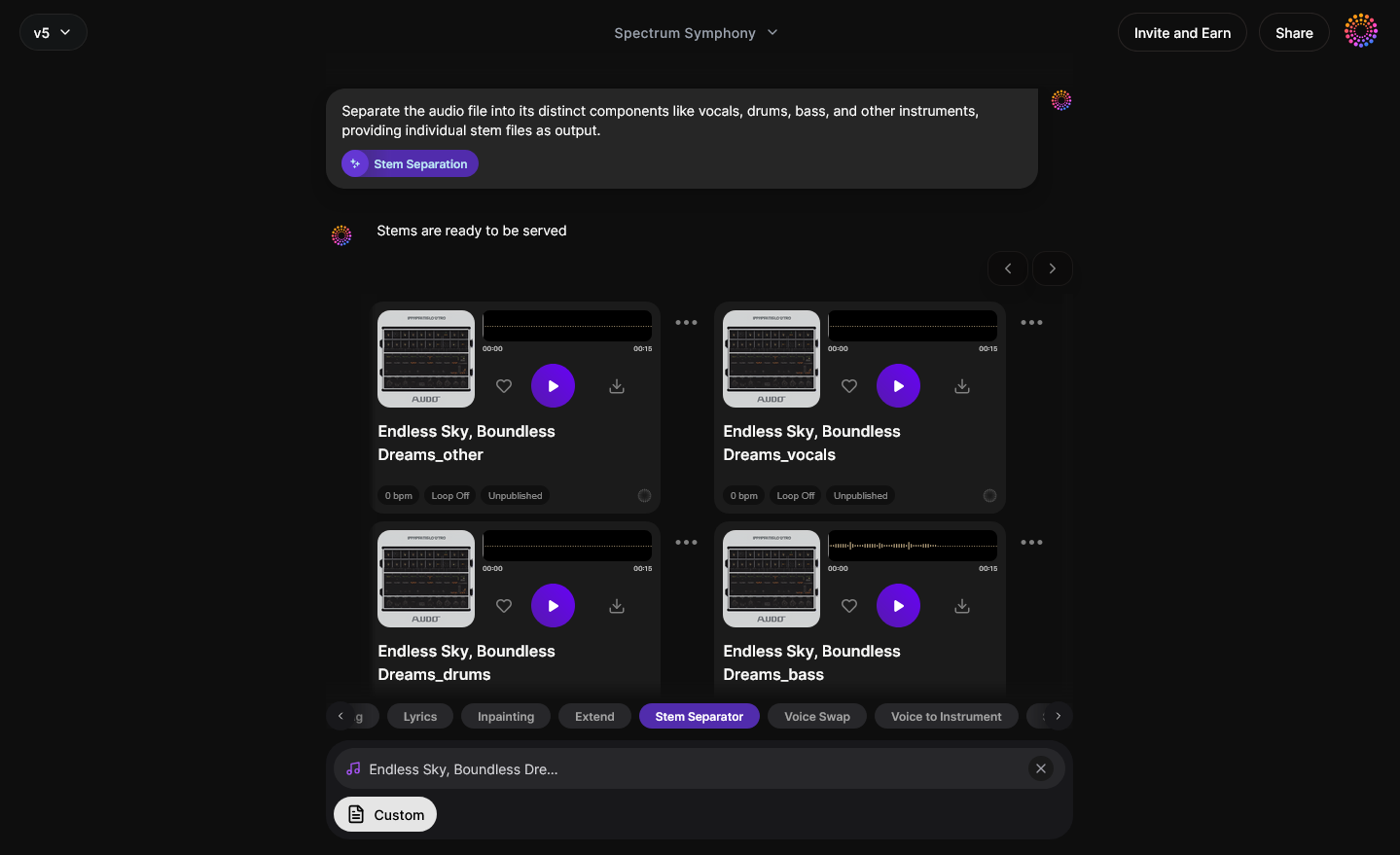
Once processing completes, Soundverse presents a visual layout of separated stems. You’ll see individual channels for vocals, bass, drums, and accompaniment. This interface simplifies adjusting each component for optimal open-ear balance. For example, you can boost bass by a few decibels to compensate for low-frequency loss, or slightly reduce treble to avoid piercing highs.
Step 4: Download Stems
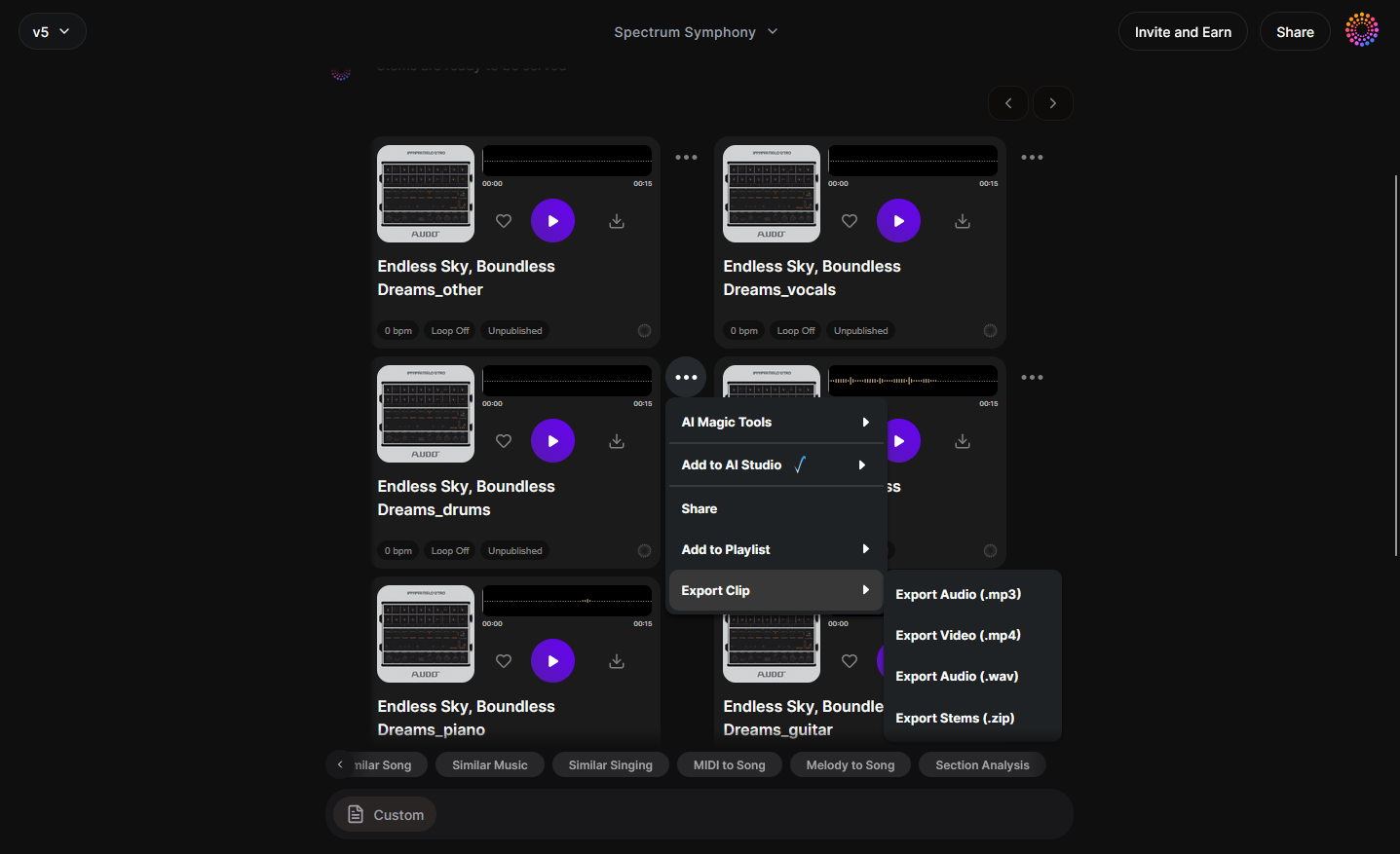
After fine-tuning each stem, download your new versions. You can then mix them using your DAW (digital audio workstation) or EQ plugin to ensure they deliver the perfect experience on open-ear earbuds. Learn more EQ strategies from How To EQ Your Headphones.
What Frequencies Should You Adjust for Open-Ear Listening?
When optimizing EQ for open-ear earbuds, it’s essential to focus on specific frequency bands:
- Bass (20–250 Hz): Open-ear designs often reduce bass perception. A gentle boost around 80–120 Hz can help retain warmth without distortion.
- Mids (250–2000 Hz): Vocals and instruments primarily sit in this range. Keep mids clean and avoid excessive boosting, which can lead to boxy sound.
- Highs (2k–10k Hz): Add a slight dip in the 4k–6k range to reduce harshness. A subtle boost near 10k Hz introduces natural airiness.
With Soundverse, separating stems ensures these EQ moves are more effective since bass and vocals can be treated independently. Check out NOTHING Ear (Open) - Create Equalizer Preset for more device-specific EQ inspiration.
How Does Open Ear Equalization Affect Audio Experience?
Open ear equalization shapes how you perceive music outdoors or during activity. A finely tuned EQ profile helps maintain tonal balance despite ambient noise. Audiophiles experimenting with open ear EQ find that clarity, depth, and dynamic range vastly improve once frequencies are specifically tailored for semi-open acoustics.
What Are Common Mistakes When EQing Music for Open-Ear Earbuds?
- Overboosting bass: Unlike closed headphones, open earbuds can’t handle exaggerated lows effectively.
- Ignoring midrange definition: Vocals may become muddy if mids aren’t properly sculpted.
- Excessive brightness: High-frequency emphasis may seem sharp in open air.
Avoid these pitfalls by working on isolated stems using Soundverse. By referencing your track’s tonal balance and applying moderate EQ changes, you can achieve natural sound projection.
Pro Tips for Perfect Sound Adjustment
- Test multiple profiles: Create EQ presets for different genres—EDM, jazz, rock, etc.—similar to guides like the How to Create EDM with Soundverse AI post.
- Analyze mix structure: Combine Soundverse tools like Section Analysis to detect intros, choruses, and bridges for dynamic EQ automation.
- Clean up recorded material: Use Inpainting for regenerating problematic sections or fixing noisy elements before EQing.
- Listen outdoors: Always finalize EQ while listening in an environment that mirrors typical open-ear use, such as outdoor running or walking.
The Role of AI in Audio Tuning by 2026
AI-based mixing technology has matured over the last two years. In 2024–2025, the focus was on basic tone matching; in 2026, tools like Soundverse enable contextual EQ depending on playback devices. This means AI no longer only analyzes tonal balance—it understands listening modes. As seen in How AI-Generated Music Is Transforming the Music Industry, the same intelligence driving music creation now revolutionizes sound adjustment workflows.
Why Choose Soundverse for Open Ear Audio Tuning?
Soundverse isn’t just an AI music generator—it’s a precision audio editing suite. With its Stem Separator feature, users gain granular control over frequency balance thanks to isolated instrument layers. This allows effective adjustments before mastering, making it ideal for crafting open-ear optimized mixes.
For creators already using Soundverse for genre creation (see the How to Create Jazz Music with Soundverse AI article), integrating EQ customization completes the production process.
Fine-Tune Your Sound with Soundverse AI
Transform your mixes for open-ear earbuds using Soundverse’s smart audio tools. Shape frequencies, balance tones, and generate music that sounds perfect in every setting.
Start Creating with Soundverse
- Soundverse Introduces Stem Separation AI Magic Tool: Discover how Soundverse’s stem separation technology lets you isolate vocals, instruments, and effects for precise EQ control.
- Soundverse Assistant: Your AI Music Co-Producer: Learn how Soundverse Assistant helps you balance your mix, adjust EQ settings, and craft professional-quality tracks effortlessly.
- Generate AI Music with Soundverse Text-to-Music: Turn your ideas into fully produced songs using Soundverse’s text-to-music generator and experiment with EQ settings instantly.
- The Benefits of Composing with AI Music Generator: Explore how AI tools can enhance your EQ and mixing workflow to create consistent, high-quality audio for open-ear listening.
Here's how to make AI Music with Soundverse
Video Guide

Here’s another long walkthrough of how to use Soundverse AI.
Text Guide
- To know more about AI Magic Tools, check here.
- To know more about Soundverse Assistant, check here.
- To know more about Arrangement Studio, check here.
Soundverse is an AI Assistant that allows content creators and music makers to create original content in a flash using Generative AI.
With the help of Soundverse Assistant and AI Magic Tools, our users get an unfair advantage over other creators to create audio and music content quickly, easily and cheaply.
Soundverse Assistant is your ultimate music companion. You simply speak to the assistant to get your stuff done. The more you speak to it, the more it starts understanding you and your goals.
AI Magic Tools help convert your creative dreams into tangible music and audio. Use AI Magic Tools such as text to music, stem separation, or lyrics generation to realise your content dreams faster.
Soundverse is here to take music production to the next level. We're not just a digital audio workstation (DAW) competing with Ableton or Logic, we're building a completely new paradigm of easy and conversational content creation.
TikTok: https://www.tiktok.com/@soundverse.ai
Twitter: https://twitter.com/soundverse_ai
Instagram: https://www.instagram.com/soundverse.ai
LinkedIn: https://www.linkedin.com/company/soundverseai
Youtube: https://www.youtube.com/@SoundverseAI
Facebook: https://www.facebook.com/profile.php?id=100095674445607
Join Soundverse for Free and make Viral AI Music

We are constantly building more product experiences. Keep checking our Blog to stay updated about them!