How to Calibrate Music to Boxing Rhythm Accuracy in 2026
Learn precise music calibration for boxing rhythm using Soundverse’s Voice to Instrument feature.
How to Calibrate Music to Boxing Rhythm Accuracy
Calibrating music to boxing rhythm accuracy has become one of the most effective methods for enhancing athletic performance, timing, and focus in 2026. Whether you are a boxing coach, fitness trainer, or athlete, mastering music calibration for boxing rhythm can elevate the entire training experience. When music matches the rhythm of punches and footwork, every jab, cross, and uppercut aligns with beats designed to maximize reaction time and performance output.
Why does music calibration matter for boxing rhythm in 2026?
Music calibration for boxing rhythm allows trainers to sync musical beats with the tempo of specific boxing drills. This synchronization builds muscle memory, sharpens timing, and maintains a consistent energy level throughout workouts. With advanced AI-assisted music tools becoming mainstream since 2024, 2026 has seen a huge adoption among top-level fitness programs integrating sound-based rhythm precision.
In boxing, rhythm determines not just fluidity but control. A boxer who can move and strike in sync with carefully calibrated beats develops a stronger understanding of pace and cadence. This connection between music and motion enhances spatial awareness—critical when dodging punches or adjusting footwork mid-round.
How does music calibration influence sync accuracy and timing adjustment?
Sync accuracy ensures that your music beats align precisely with your boxing intervals. It creates consistency and helps trainers structure exercises with precision. For example, calibrating background beats to 120 BPM might match speed bag routines, while 80 BPM complements slow shadowboxing sequences.
Timing adjustment comes into play when changing song sections or modifying tempo mid-session. Adjusting rhythm allows matching round transitions, rest intervals, and intensity builds without interrupting flow. This fosters rhythm precision—not only improving coordination but also sustaining engagement throughout the workout.
Since 2025, wearable sensors and AI-based analysis platforms have also been used to measure rhythm alignment. Now in 2026, systems like Soundverse integrate this data into music production workflows, helping coaches easily customize training pace with audio perfectly calibrated to real-time athlete metrics. For more insight on AI sync principles, watch our Soundverse Tutorial Series - How to Make Music.
How to make music calibration for boxing rhythm with Soundverse Voice to Instrument
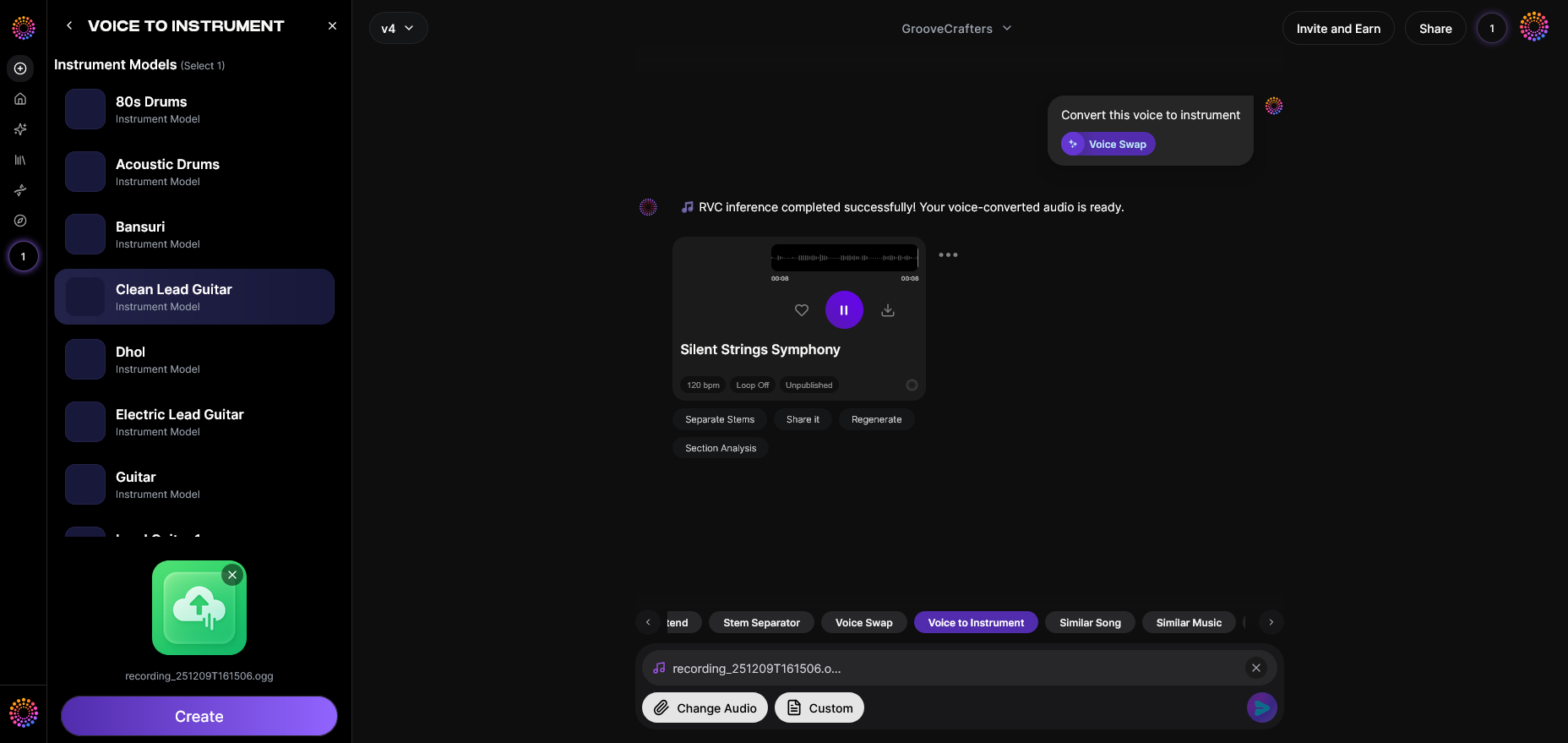
Soundverse’s Voice to Instrument feature is ideal for boxing professionals seeking custom rhythm calibration. It transforms vocal input—whether hummed beats, rhythmic breathing, or even boxing pad sounds—into realistic instrumental tracks. This is especially useful for constructing personalized tempo patterns matching individual boxing styles.
Primary Capabilities:
- Timbre Transfer: Converts vocal timbre to instrumental tones while preserving rhythm.
- Wide Instrument Library: Choose from drums, sitar, flute, guitar, or ethnic percussive sounds suitable for diverse training moods.
- Melodic and Rhythmic Input Support: Works with both melody sketches and rhythm-based beatboxing inputs, ensuring creative flexibility.
Whether developing an Indian fusion rhythm using sitar beats or a Western tempo with snare patterns, trainers can personalize every sound to match unique boxing drills. The feature empowers non-musicians to create authentic workout soundtracks without prior instrumental skills.
Step 1: Feature Overview
To begin, log in to Soundverse and access the Voice to Instrument tool. This feature is available under the music generation workspace designed for converting vocal input into instrument tracks. Once accessed, the dashboard provides options to upload or record rhythmic samples.
Step 2: Instrument Selection
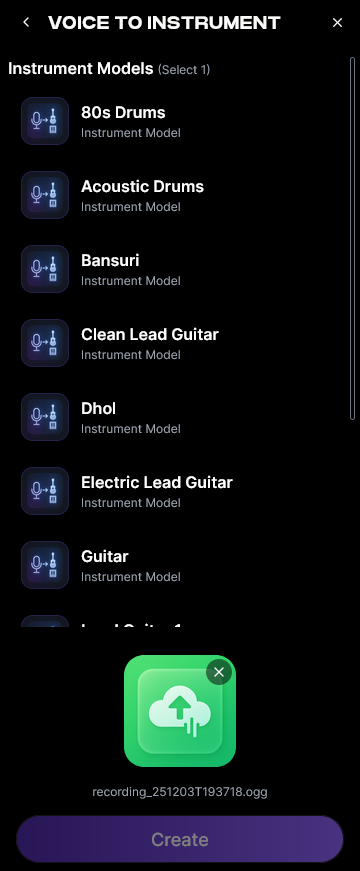
Choose the preferred instrument sound for your boxing rhythm. For high-energy pad drills, select drums for pulse intensity. For warming up or timing coordination exercises, choose softer instruments like flute or guitar to calibrate slow rhythm accuracy.
Step 3: Upload Target Audio
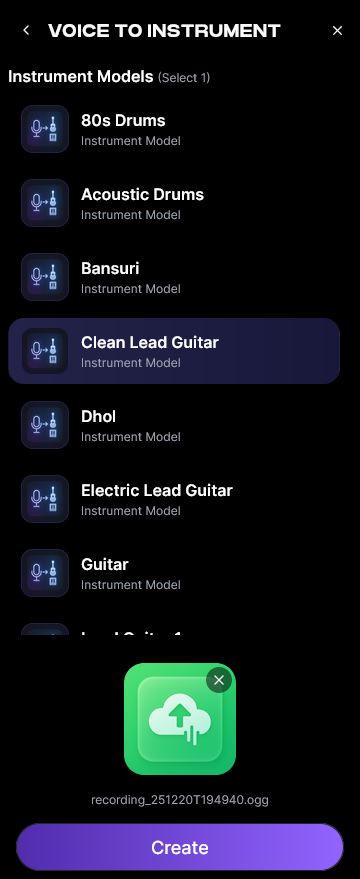
Upload your vocal or beatboxing track that represents the rhythm pattern of your boxing session. This can include breathing cadence, glove tapping sounds, or rhythmic counting used during training. The AI detects pitch and timing data relevant to rhythmic calibration.
Step 4: Generation
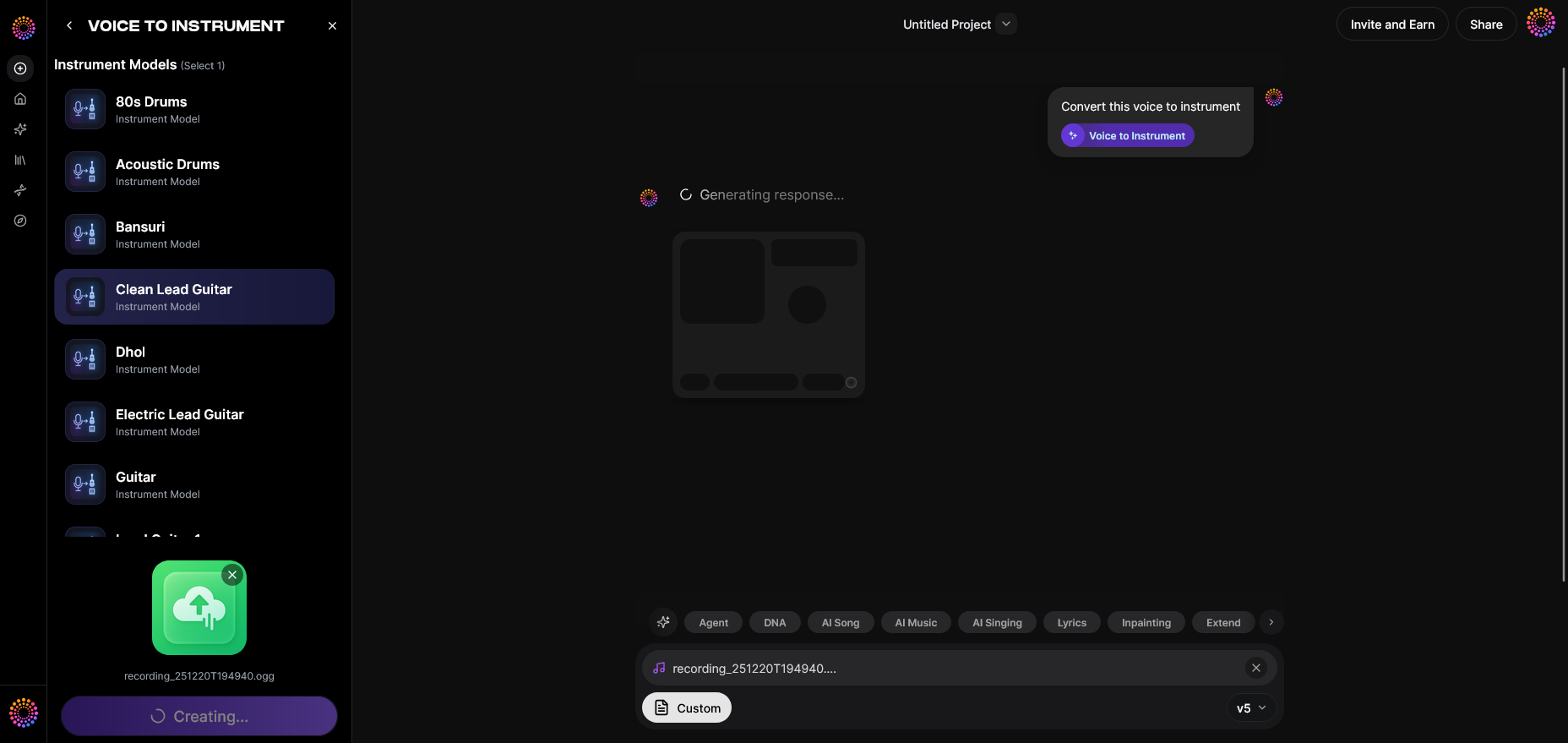
Once your track is uploaded, Soundverse asynchronously processes the file to transform your voice rhythm into an instrumental version. Using advanced timbre transfer, it maintains phrasing and tempo, ensuring sync accuracy that mirrors the intended boxing timing.
Step 5: Download Result

After generation completes, download your instrument-converted rhythm file. You can use this as a loop track, overlay for coaching videos, or sync it with wearable rhythm feedback systems for real-world boxing drills.
For extended workflow, pair Soundverse’s Similar Music Generator or AI Music Generator to produce full-length background tracks derived from your rhythm calibration. Additionally, the Section Analysis tool helps label structures like intro or outro, perfect for segmenting training rounds.
What are pro tips for achieving rhythm precision in boxing training?
- Measure Tempo Using BPM Counters: Always quantify rhythm before calibrating music. A steady beat matched to your sparring speed ensures consistency.
- Experiment with Instrument Layers: Blend percussion and melodic tones. Drums drive base movement, while soft instruments add controlled breathing synchronization.
- Use Section-Based Audio: Separate intensity sections—intro for warm-up, chorus for sparring peaks, and outro for cooldown.
- Apply Timing Adjustments Between Rounds: Adjust BPM dynamically during transitions for realistic fight pacing and recovery intervals.
Why 2026 is a turning point for rhythm-based athletic conditioning
Since AI music reached mainstream by late 2025, 2026 showcases accelerated adoption in gyms and training centers worldwide. Athletes increasingly rely on rhythm precision tools for maximizing endurance and learning timing discipline. Music calibration for boxing rhythm is no longer experimental—it’s part of structured training science.
AI tools like Soundverse simplify the process, transforming data-driven insights into sound. Coaches can generate rhythmic patterns faster than editing manually, saving hours per week while offering higher sync accuracy. Related tools, such as AI Music Generator and Soundverse Assistant, enhance workflow synergy by connecting rhythm design with broader automation features.
Additionally, boxing programs are using AI music calibration for visualization-based drills, combining motion tracking with rhythmic analysis. As outlined in music industry trends, AI-powered performance synchronization is reshaping not just music creation but athletic training environments globally.
How precise rhythm calibration creates psychological flow
Psychological flow—a state of deep focus—is vital for boxing. When rhythm matches movement, athletes experience greater immersion, eliminating distractions. Soundverse enhances this through rhythmic cue consistency, providing smoother flow between auditory feedback and physical motion.
Studies from late 2025 revealed that athletes training with rhythm-calibrated music exhibited up to 18% improvement in timing accuracy compared to those using standard playlists. The relationship between rhythm precision and neural synchronization continues to be a leading focus of training innovation in 2026.
Start Calibrating Your Boxing Music Today
Unlock the perfect tempo and rhythm accuracy for every round. Create synced, high-energy tracks with Soundverse to match your training intensity and momentum.
Generate Boxing Rhythm Music Now
Related Articles:
- Generate AI Music with Soundverse Text-to-Music — Discover how to turn simple prompts into dynamic tracks tailored for workouts, videos, or performances.
- Soundverse Assistant: Your AI Music Co-Producer — Learn how the Soundverse Assistant can help automate rhythm calibration and creative sound production.
- How an AI Music Generator Inspires Creative Fusion — Explore the synergy between AI tools and human creativity for designing rhythm-rich compositions.
- Now Generate Music with Filters Such as Genre, Theme, Instruments or Even Vibe — Fine-tune your boxing rhythm tracks by customizing genre, tempo, and vibe filters with Soundverse AI.
Here's how to make AI Music with Soundverse
Video Guide
Here’s another long walkthrough of how to use Soundverse AI.
Text Guide
- To know more about AI Magic Tools, check here.
- To know more about Soundverse Assistant, check here.
- To know more about Arrangement Studio, check here.
Soundverse is an AI Assistant that allows content creators and music makers to create original content in a flash using Generative AI. With the help of Soundverse Assistant and AI Magic Tools, our users get an unfair advantage over other creators to create audio and music content quickly, easily and cheaply. Soundverse Assistant is your ultimate music companion. You simply speak to the assistant to get your stuff done. The more you speak to it, the more it starts understanding you and your goals. AI Magic Tools help convert your creative dreams into tangible music and audio. Use AI Magic Tools such as text to music, stem separation, or lyrics generation to realize your content dreams faster. Soundverse is here to take music production to the next level. We're not just a digital audio workstation (DAW) competing with Ableton or Logic; we're building a completely new paradigm of easy and conversational content creation.
TikTok: https://www.tiktok.com/@soundverse.ai
Twitter: https://twitter.com/soundverse_ai
Instagram: https://www.instagram.com/soundverse.ai
LinkedIn: https://www.linkedin.com/company/soundverseai
Youtube: https://www.youtube.com/@SoundverseAI
Facebook: https://www.facebook.com/profile.php?id=100095674445607
Join Soundverse for Free and make Viral AI Music
We are constantly building more product experiences. Keep checking our Blog to stay updated about them!