How to Beat What Beats Rock: A Guide to Winning the Classic Game of Choices
Master the best rock paper scissors strategy in 2026 and learn how to win every time with psychology and game techniques.
How to Beat What Beats Rock: A Guide to Winning the Classic Game of Choices
If you've ever thought of rock paper scissors as a simple game of chance, think again. In 2026, players around the world—from casual gamers to competitive enthusiasts—are diving deeper into the psychology and strategy behind this timeless game. The question is no longer just who wins, but how to win rock paper scissors consistently using patterns, tactics, and even a bit of psychology.
What Makes Rock Paper Scissors So Fascinating?
Rock paper scissors is a quick, universal decision-making game with three possible outcomes: rock, paper, or scissors. Its simplicity hides layers of human behavior and prediction. Everyone has habits, subconscious tells, and default choices, which means the game isn’t completely random—it’s psychological warfare in miniature.

Understanding rock paper scissors strategy starts with recognizing that your opponent’s decisions are rarely random. Humans tend to follow sequences, respond emotionally, and form predictable patterns.
What Are the Core Strategies to Win Rock Paper Scissors?
The best techniques blend pattern analysis, psychological reading, and controlled randomness. Here’s how you can tilt the odds in your favor:

1. Analyze Patterns and Habits
Most players unconsciously develop habits. Beginners often favor rock because it feels strong and dominant. If you notice someone starting repeatedly with rock, your best opening play might be paper. Keep track of what your opponent throws over time—many follow repetitive cycles like rock → paper → scissors. According to game developer Nick Metzler’s psychological tip, recognizing these habits nearly guarantees a strategic edge.
2. Employ Conditional Strategies
Conditional strategies mean adjusting your move based on your previous result:
- If you win: People tend to repeat what worked. Assume your opponent will mimic your last winning choice and choose the move that beats that next.
- If you lose: Players usually change strategy after losing. Predict they’ll switch to what beats your last choice, and counter it.
- If you tie: Many psychological studies from 2024–2025 showed that players often switch their choice after a tie. In 2026, competitive players use this knowledge to anticipate the next move after a draw. Research cited in Rock-Paper-Scissors Is A Game Of Pure Chance, Right? Studies Have Found There Are Strategies That Actually Win More Often confirms such tendencies among experienced players.
3. Use Controlled Randomness
While strategy helps, complete predictability makes you easy to read. The art is maintaining controlled randomness. Mix deliberate selections with spontaneous ones. Professional players often use apps or coin flips to simulate random choice patterns. As noted in Scientists Reveal a Clever Trick to Help Win Rock, Paper, Scissors, embracing unpredictability remains one of the most valuable tactics.
4. Watch Body Language and Psychology
Body language matters. A confident stance may indicate a strong choice like rock. Nervous players might pick scissors due to its lighter appearance. Understanding rock paper scissors psychology gives you an edge—especially in real-world matches. Exploring the blend of strategy and psychology reveals that Mathematical Strategy in Rock-Paper-Scissors highlights a layer of depth beyond mere chance.
5. Reverse Expectation Play
If your opponent knows these strategies too, play the reverse. If you suspect they’ll try to outthink you, simplify your approach. Rather than overanalyzing, stick to short bursts of random play followed by quickly adapting to their responses.
How Does Psychology Impact the Game?
In 2026, behavioral gaming research confirms that emotions greatly influence choices. Fatigue, stress, or excitement can shift decision patterns. Online platforms that host rock paper scissors tournaments often include detailed analytics of user habits. The key takeaway? Predictability is emotional. Keeping calm while observing others’ tendencies brings a strategic advantage.
Cognitive studies during 2025 revealed that humans rarely make a purely random choice more than three times in a row. This means observing sequences in your opponent’s playset can help you foresee their upcoming move.
What Are Advanced Game Techniques in Rock Paper Scissors?
For serious enthusiasts, understanding rock paper scissors game techniques like sequential analysis and counter-strategies turns casual play into competitive fun.
- Mirror Play Catching: If your opponent mirrors your choice often, intentionally switch after a tie.
- Predictive Recurrence: Some players unconsciously repeat their winning move every third round.
- Inertia Exploitation: Opponents tend to repeat certain gestures when giving up mentally—rock being the most common.
If you’re competing in tournaments or simply want bragging rights among friends, mastering these nuances makes the game more tactical and engaging.
How Has Rock Paper Scissors Strategy Evolved by 2026?
Since 2024, interest in the game surged across social media platforms, with strategy breakdowns and AI simulation tools teaching predictive play. By 2026, digital gaming communities have developed pattern-based learning models to simulate strategic opponents. The fusion of psychology and probability has made RPS (Rock Paper Scissors) a training ground for machine learning behavior analysis.
Gamers now record matches and analyze outcomes statistically, similar to how musicians analyze song rhythm. You can read about how AI affects creative play in this Soundverse article on music industry trends.
For creative inspiration on how rhythm translates into sound design, watch our Soundverse Tutorial Series - 9. How to Make Music.
What Are the Common Mistakes to Avoid?
- Playing predictably: Do not always start with rock. Diversify.
- Ignoring opponent behavior: Always watch patterns.
- Overthinking every move: Psychological games are fun only if balanced with instinct.
- Being too reactive: Reacting instead of planning ahead results in being predictable.
Consistency comes from understanding when to plan and when to improvise.
How to Train Your Mind for Rock Paper Scissors
Training can involve pattern recognition games or simply practicing with friends. Online simulators (like RPS trainers) allow you to test reaction time and see decision trends. Some AI-powered gaming platforms use predictive feedback loops to enhance human pattern awareness.
Learning competitive strategy here is similar to rhythm training in music production. For creators who love rhythm-based games, connecting this process to creativity platforms such as Soundverse AI deepens understanding of sequence-driven logic.
You can also explore how compositional sequences are managed through Soundverse tools in our Explore Tab guide.
Why Rock Paper Scissors Is More Than a Game
The game symbolizes adaptability—knowing that every move has a counter and that winning depends on prediction as much as chance. It’s the same principle used in creative thinking and digital content algorithms today. The best players are those who study trends, apply psychology, and maintain unpredictability.
How to Make Rock Paper Scissors-Inspired Songs with Soundverse AI Song Generator
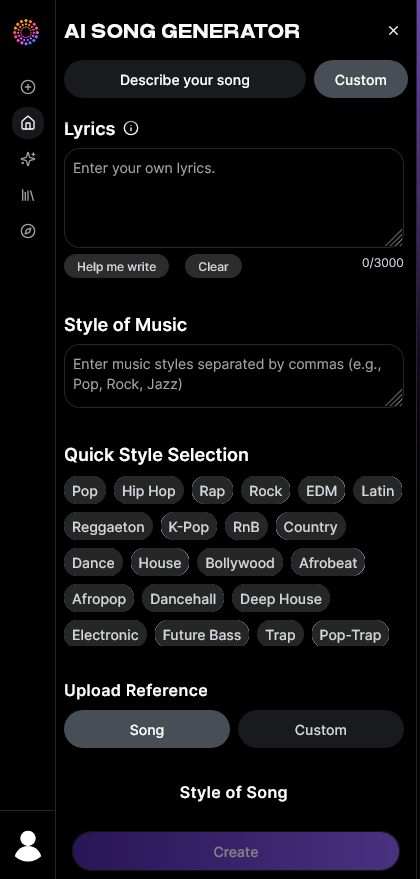
Now that you understand rock paper scissors strategy, here’s how to capture the spirit of this exciting game in music form using Soundverse.
Soundverse’s AI Song Generator can turn written lyrics or text ideas inspired by rock paper scissors into complete songs. Its multi-stage pipeline manages melody, arrangement, and mixing automatically.
Step 1: Feature Overview
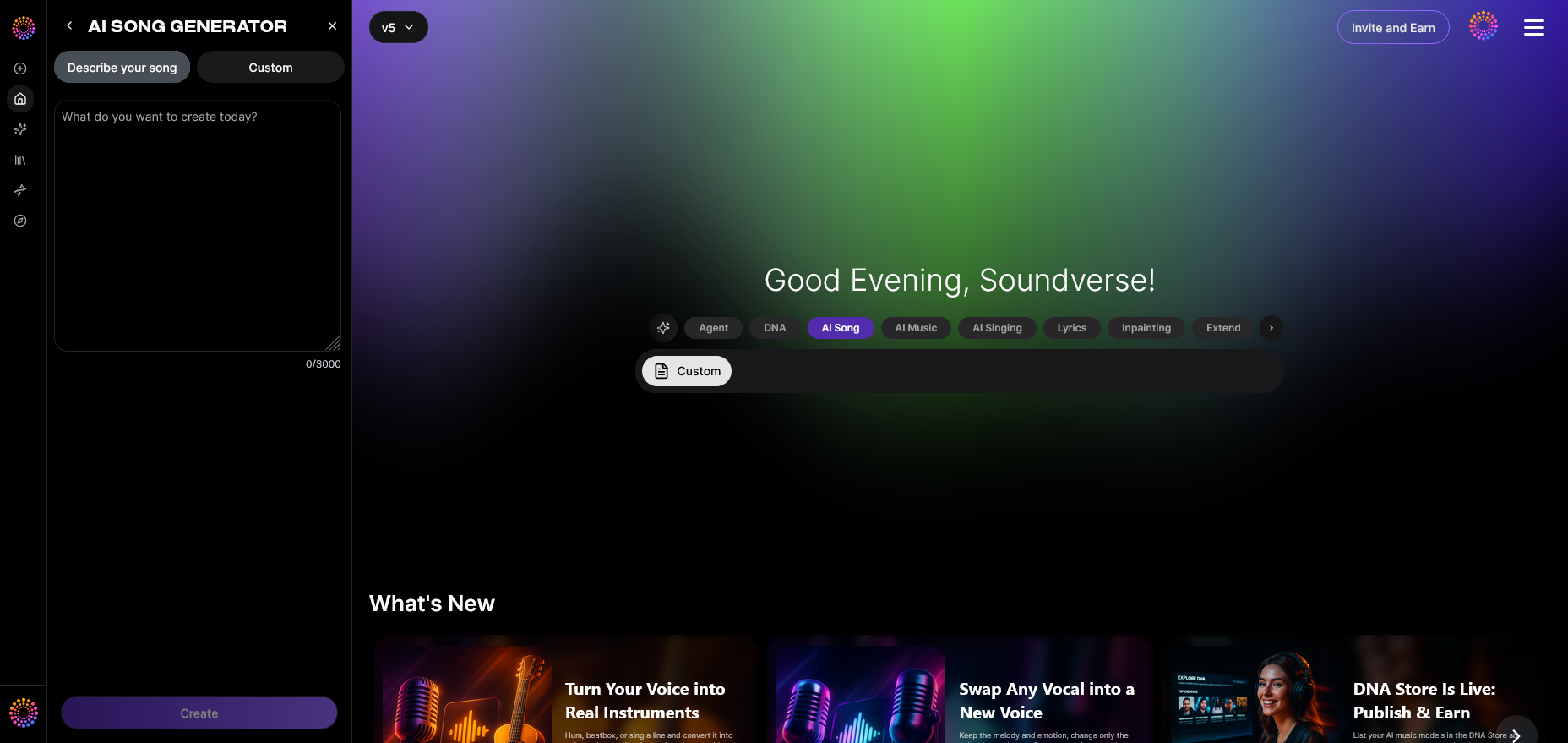
Access the AI Song Generator from the Soundverse main menu to start creating.
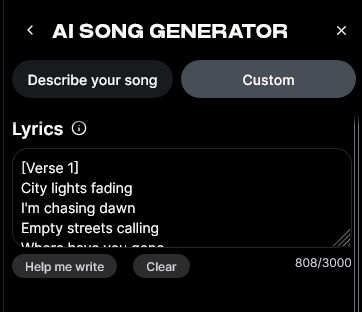
Step 2: Lyrics Input
Enter or paste lyrics inspired by game strategy—describe victory themes, rivalry, or similar motifs.
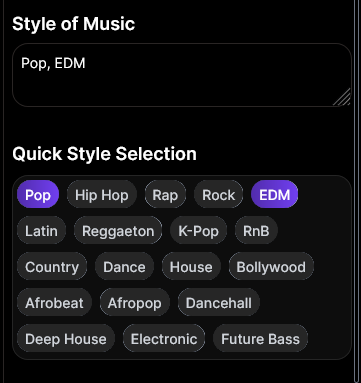
Step 3: Style Selection
Use Quick Style Selection to choose between rock, EDM, pop, or other genres that fit your vibe.
Step 4: Configuration
Adjust generation parameters such as tempo or energy level. You can also upload reference audio—either music or vocals—to guide tone.
Step 5: Generation

Click Generate to produce the full song complete with AI vocals and instrumentals.
Step 6: Generation Complete
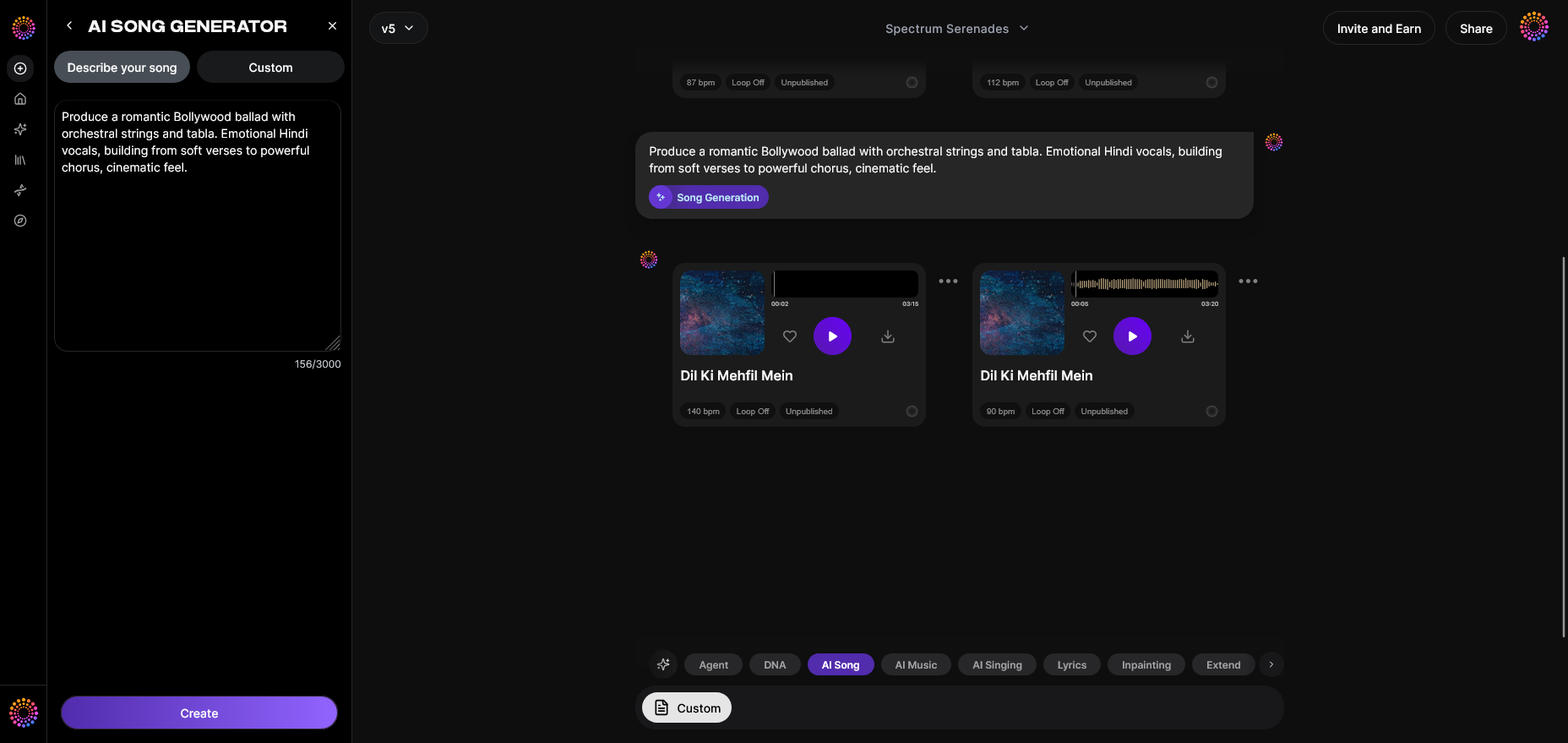
Soundverse will process your input and provide a completed track based on your choices.
Step 7: Export Results

Download your new song in multiple formats to share or use for social content.
For more inspiration, watch our Soundverse Tutorial - Make Deep House Music and see how creativity connects across genres.
Soundverse also integrates closely with related tools:
- AI Singing Generator – Creates realistic acapella renditions of your lyrics.
- Similar Song Generator – Generates original songs inspired by reference tracks while avoiding copyright issues.
To see how Soundverse fits into broader creative workflows, explore articles like Mubert alternatives for Soundverse, Soundraw alternative guide, and Soundverse assistant tool overview.
In 2026, mastering rock paper scissors strategy is no longer just about beating your friend—it’s about understanding human nature, pattern logic, and rhythm, the same principles driving innovation in game design and AI music creation. Play smarter, think deeper, and maybe create your victory soundtrack with Soundverse.
Level Up Your Creative Game with Soundverse AI
Unlock the power of AI-driven music and sound design to bring your content ideas to life. Whether you’re creating videos, podcasts, or games, Soundverse helps you generate quality audio instantly.
Start Creating Free
Related Articles
- How AI-Generated Music Is Transforming the Music Industry: Discover how AI is reshaping music creation, production, and performance across genres and platforms.
- How an AI Music Generator Inspires Creative Fusion: Explore the ways AI music tools spark creativity and help artists merge unique styles for compelling compositions.
- The Benefits of Composing with an AI Music Generator: Learn how AI-assisted composition simplifies workflow, enhances creativity, and delivers professional results in minutes.
- AI Music Generator and Human Composers: A Future Together: Find out how collaboration between AI and human composers is shaping the next evolution of music creation.
Here's how to make AI Music with Soundverse
Video Guide

Here’s another long walkthrough of how to use Soundverse AI.
Text Guide
- To know more about AI Magic Tools, check here.
- To know more about Soundverse Assistant, check here.
- To know more about Arrangement Studio, check here.
Soundverse is an AI Assistant that allows content creators and music makers to create original content in a flash using Generative AI.
With the help of Soundverse Assistant and AI Magic Tools, our users get an unfair advantage over other creators to create audio and music content quickly, easily and cheaply.
Soundverse Assistant is your ultimate music companion. You simply speak to the assistant to get your stuff done. The more you speak to it, the more it starts understanding you and your goals.
AI Magic Tools help convert your creative dreams into tangible music and audio. Use AI Magic Tools such as text to music, stem separation, or lyrics generation to realise your content dreams faster.
Soundverse is here to take music production to the next level. We're not just a digital audio workstation (DAW) competing with Ableton or Logic, we're building a completely new paradigm of easy and conversational content creation.
TikTok: https://www.tiktok.com/@soundverse.ai
Twitter: https://twitter.com/soundverse_ai
Instagram: https://www.instagram.com/soundverse.ai
LinkedIn: https://www.linkedin.com/company/soundverseai
Youtube: https://www.youtube.com/@SoundverseAI
Facebook: https://www.facebook.com/profile.php?id=100095674445607
Join Soundverse for Free and make Viral AI Music

We are constantly building more product experiences. Keep checking our Blog to stay updated about them!