How Soundverse's Agent One Picks the Right Tool Without You Having to Know What It Is
There are dozens of tools inside Soundverse. You don't need to know any of them. Here's how Agent One reads what you actually mean, picks the right tool for the job, and chains them together — all without you having to think about it once.
Here's something most people never think about when they use Agent One.
When you say "make a song in my voice" , you're not telling Agent One which tools to use. You're not saying "run Voice Clone, then pass the output to AI Song Generator with that voice model selected." You're just saying what you want.
And yet that's exactly what happens. Voice Clone runs. The model gets built. AI Song Generator uses it. The output sounds like you. You described an outcome. Agent One figured out the path. That gap between what you say and what actually runs is tool selection. And it's one of the most important things Agent One does that nobody ever sees.
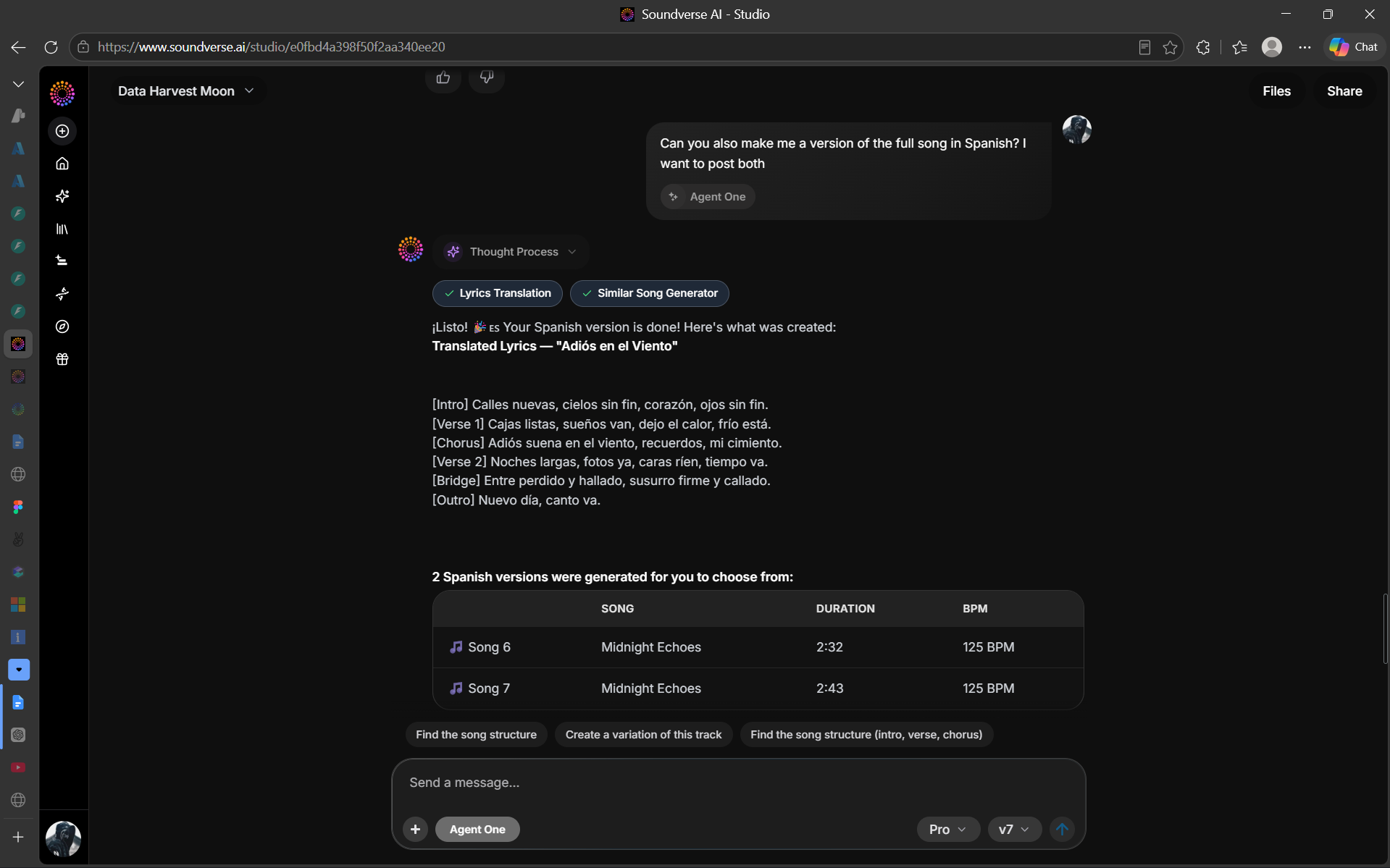
Why Tool Selection Matters Soundverse has a lot of tools. Song generation. Stem separation. Voice cloning. Voice swap. Inpainting. Melody-to-song. MIDI conversion. Section analysis. Tempo and key detection. Effects. Web search. DNA models. And more.Italic
Each one does something specific. Each one takes specific inputs. Each one produces specific outputs. And many of them only make sense in a particular sequence, you can't swap a voice before you've separated the stems. You can't target a chorus before you've run section analysis to find it.
If you had to manage all of that yourself, choosing the right tool, setting it up correctly, feeding outputs from one into inputs of the next making music with AI would feel like operating software, not creating something.
Tool selection is what removes that burden entirely. It's the layer that sits between what you say and what technically needs to happen, and translates one into the other automatically.
How Agent One Reads Your Intent The first thing Agent One does with any message is figure out what you actually mean not just what you literally said. This sounds obvious. It's actually quite hard.
"Make a song similar to this YouTube link" could mean a lot of things. A naive system might just take the URL and generate something vaguely in the same genre. Agent One understands it differently, it means extract the audio from the link, analyse its structure and sonic characteristics, and generate something new that matches both the style and the arrangement logic of the reference. That's three distinct tools running in sequence, none of which you named.
"Replace the singer" could mean anything from re-recording to a complete vocal replacement. Agent One reads it as: separate the stems to isolate the vocal and instrumental, swap the vocal identity using Voice Swap with the user's preferred voice model, and re-merge the result. Again, three tools, none named, all correct.
"Make this feel more lo-fi" isn't a tool call at all in the traditional sense. But Agent One maps it to a specific effects chain,** slow tempo slightly, low-pass filter, vinyl noise, subtle distortion** and applies it to the right layer of the mix.
In every case, Agent One is doing something beyond keyword matching. It's reading intent understanding the creative outcome you're describing and then working backward to figure out which tools, in which order, produce that outcome. ** The Tool Selection Logic — What's Actually Happening** When Agent One receives a message, it goes through a fast internal reasoning process before anything runs. Here's roughly what that looks like:
What is the user trying to achieve? Not which tool do they want, but what is the end state they're describing? A finished song. A translated version. A shorter cut. A different vocal. A cleaned-up mix.
_What inputs are available? Is there an uploaded track? A voice recording? A YouTube link? A DNA model? A library selection? _ The available inputs constrain and inform which tools can run.
_Which tools produce the right output given those inputs? _ Some outcomes can only be reached one way. Others have multiple valid paths. Agent One picks the most direct one.
What order do they need to run in? Which steps depend on previous steps? Which ones can run in parallel? This is where multi-step reasoning and tool selection overlap, the plan and the tool choices are made together.
Are there edge cases to account for? If the input is a vocal-heavy track and a key change is requested, naive pitch-shifting will introduce artifacts. Agent One accounts for this by separating vocals first and re-rendering them at the new key rather than pitching the recording without you ever knowing that was a potential problem.
All of this happens before the first tool runs. The selection is made, the sequence is planned, and then execution begins.
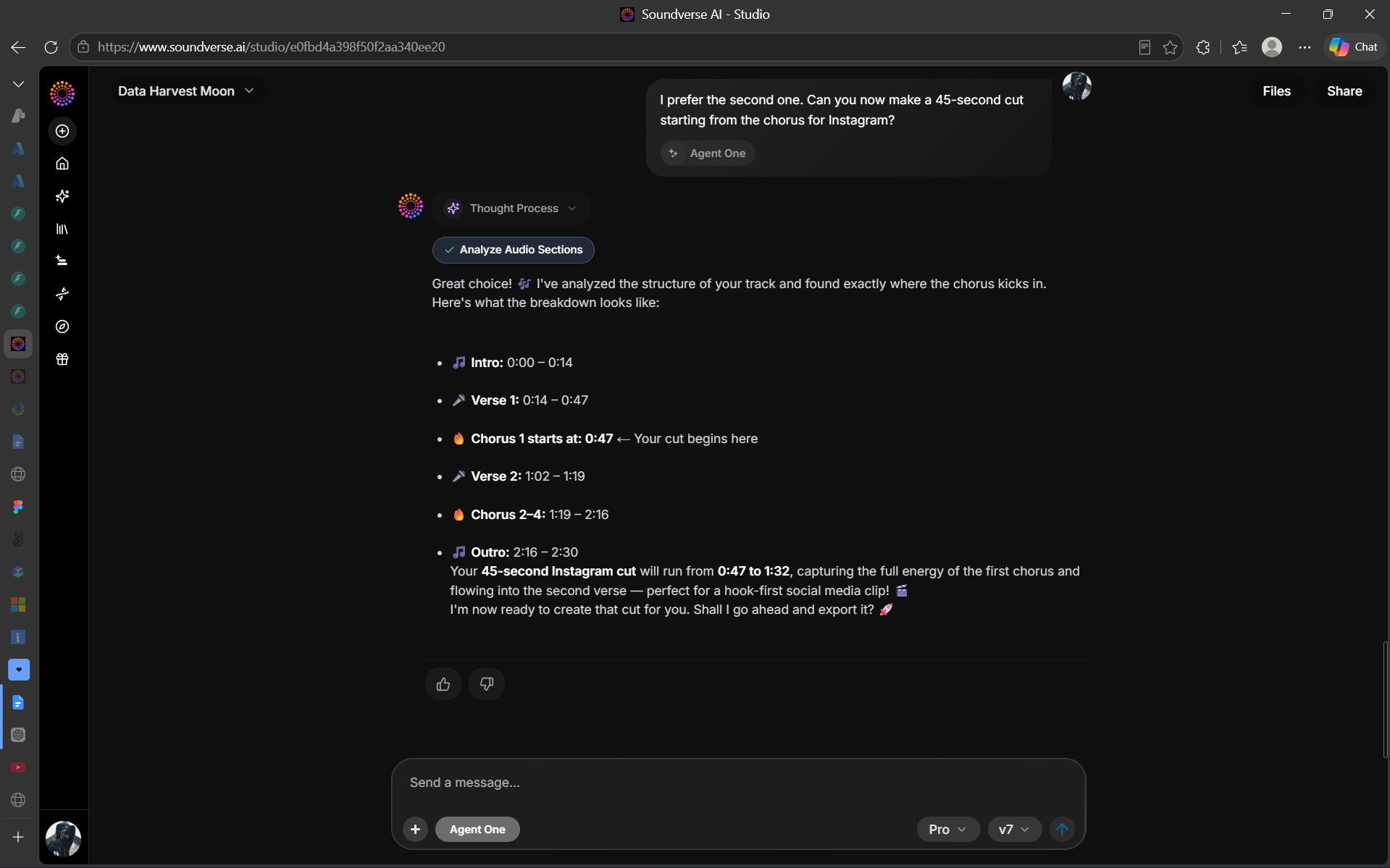
Real Examples — What You Say vs What Runs The clearest way to understand tool selection is to see the gap between the user message and the actual tool calls. Here are five examples:
"Make a song in my voice." What runs: Voice Clone → AI Song Generator with the cloned voice model active. What you had to know: nothing.
"Translate this song into four languages." What runs: Stem Separator → AI Lyrics Writer (Translate) in four parallel instances → AI Singing Generator in four parallel instances → Audio Layering × 4. What you had to know: nothing.
"Add reverb only to the guitar in the choruses." What runs: Stem Separator → Section Analysis → Effects Engine (reverb, chorus regions only) → Re-merge. What you had to know: nothing. ** "Make a 30-second TikTok cut starting with the hook."** What runs: Section Analysis → Reorder and Trim → Effects Engine (hook boost) → Export. What you had to know: nothing.
In every case the user described an outcome. In every case Agent One translated that outcome into a specific sequence of tools, ran them in the right order, and returned a finished result. The tools were completely invisible.
What Happens When a Request Is Ambiguous Not every message is clear. Sometimes what you say could mean several different things, or the right tool depends on context Agent One doesn't have yet. In those cases, Agent One does two things.
First, it uses everything it knows about you: your history, your preferences, your usual patterns to resolve the ambiguity toward the most likely interpretation. If you almost always use Female Pop vocals, an ambiguous vocal request defaults there. If you've been working in a specific DNA style all session, a new generation continues in that style unless you say otherwise.
Second, if the ambiguity is too significant to resolve confidently, Agent One asks. Not with a long form to fill out with one specific question that gets it the information it needs. "Do you want this in your voice or a different style?" One question. One answer. Then it proceeds.
What it doesn't do is guess wildly and return something completely off-base, or ask a series of clarifying questions before doing anything. The goal is always to get to a useful output with the minimum friction possible.
The Deeper Point — You Shouldn't Have to Think in Tools There's a philosophy behind tool selection that's worth naming directly. The tools exist to serve creative outcomes. They're means, not ends. No creator sits down and thinks "I want to run Stem Separator today." They think _"I want a version of this song where only the vocals are different." _
The tool is just the mechanism, it shouldn't be the thing you have to think about. Agent One is built on the belief that the best interface between a creator and a set of capabilities is plain language. Say what you want to make. Let the system figure out how to make it.
Tool selection is what makes that possible. It's the translation layer between your creative intent and the technical reality of how music production actually works. And when it works well which is most of the time, it's completely invisible. That invisibility is the whole point.
Try it at soundverse.ai/?tool=agent, describe what you want to make, and let Agent One figure out the rest.
Social Links:
Instagram: https://www.instagram.com/soundverse.ai
TikTok: https://www.tiktok.com/@soundverse.ai
Twitter: https://twitter.com/soundverse_ai
LinkedIn: https://www.linkedin.com/company/soundverseai
Youtube: https://www.youtube.com/@SoundverseAI
Facebook: https://www.facebook.com/profile.php?id=100095674445607
## Join Soundverse for Free and make Viral AI Music

We are building more product experiences. Keep checking our Blog to stay updated about them!