How Many Genres of Music Are There in 2024?
Discover how many music genres existed in 2024 and explore modern classifications, popular types, and evolving styles.
How Many Genres of Music Are There in 2024?
Music has always reflected human culture, emotion, and innovation. In 2024, the classification of music expanded dramatically, reflecting globalization, technological advancements, and AI-driven creativity. While genre boundaries have blurred, researchers and artists still study the concept of 'music genres 2024' to understand modern sonic identity.
What Defines a Music Genre in 2024?
A music genre is a categorization based on shared elements like rhythm, melody, instrumentation, and cultural context. In 2024, genre definitions grew flexible due to hybridization — pop merging with electronic, hip-hop blending with jazz, and global sounds integrating into mainstream charts. This complexity has made 'music classification 2024' an evolving field blending data science and cultural analytics.
Music streaming platforms like Spotify and Apple Music began tagging songs with multi-genre attributes, considering mood, tempo, and production techniques. This multidimensional classification helped content creators and AI systems better understand style diversity — the data that later fueled innovations like AI music generators.
How Many Types of Music Existed in 2024?
By 2024, most academic and industry reports identified over 1,200 subgenres across global music systems, supported by insights from Chartmetric Year in Music 2024. However, broader grouping condensed these into roughly 40 primary genres, which continue to dominate charts and playlists. These include classical, jazz, rock, pop, hip-hop, country, electronic, and folk, but within them, thousands of niche categories emerged, as also categorized by Music Genre List and Wikipedia’s list of music genres.
Below is a simplified list of music styles that gained major traction or recognized diversity during 2024:
1. Pop
Pop remained a universal genre, absorbing regional influences. In 2024, hyper-pop and AI-assisted pop production surged, creating futuristic and emotionally rich soundscapes.
2. Rock
Classic rock endured but evolved into cyber-rock, punk-fusion, and indie-electronic hybrids. Experimental rock bands used AI composition tools to generate unconventional riffs and loops.
3. Hip-Hop and Rap
Rap continued dominating global charts. Subgenres such as conscious rap, trap soul, drill, and lofi hip-hop gained momentum, especially across TikTok and YouTube music trends.
4. Electronic and EDM
EDM diversified in 2024 into deep house, progressive trance, tech minimalism, and cosmic trance. Artists leveraged text-to-music tools to generate electronic beats quickly, fostering collaboration between human and AI producers. For a deeper dive, watch our guide on creating Deep House music.
5. Jazz and Neo-Jazz
Neo-jazz integrated electronic textures and algorithmic rhythm generation. As detailed in How to Create Jazz Music with Soundverse AI, creators in 2024 explored generative harmony models that preserved jazz’s improvisational spirit.
6. Classical and Orchestral
Classical composition entered digital spaces, with composers using algorithmic orchestration tools. The genre expanded through cinematic scoring and video game symphonies.
7. Country and Folk
Country music fused with pop and electronic influences. Artists widely experimented with ambient country textures generated by AI platforms — see How to Create Country Music with Soundverse AI for insights on this creative process.
8. World and Ethnic Music
World music diversified as digital collaboration increased. Regional instruments from Africa, Asia, and Latin America merged into global hits.
9. Ambient and Meditation Music
Meditation music saw a huge boost in streaming numbers. Platforms highlighted tracks generated through text-to-music AI that produce calming background loops. Resources like How to Create Healing Meditation Music with Soundverse AI showed how ambient studios evolved.
10. Experimental and Fusion Genres
Fusion music represented 2024's creative frontier, combining classical technique with electronic experimentation. It blurred boundaries between traditional sound and AI-composed frameworks. You can explore this process in our Soundverse Tutorial - How to Make Music.

Why 2024 Was a Turning Point for Genre Innovation
Several factors defined 2024’s transformation in music classification:
- AI-Assisted Production: Tools such as text-to-music algorithms, including Soundverse’s generators, allowed rapid creation of genre-specific or hybrid music.
- Cultural Exchange Online: Cross-country collaborations expanded genre diversity.
- Short-Form Media Influence: Social platforms boosted new subgenres optimized for viral formats.
- DIY Creation Movement: Every creator gained access to professional-grade music-making tools.
By 2024, music genres evolved beyond rigid classification systems into fluid ecosystems. Artists used mood, narrative, or purpose instead of fixed labels, making music endlessly adaptive.
What Are the Most Popular Music Genres in 2024?
Popularity varied across continents, but according to aggregate streaming data trends from that year, including Mubert’s global genre ranking:
- Pop led the charts worldwide.
- Hip-Hop/Rap ranked second due to viral content and digital storytelling.
- Electronic/EDM surged in Europe and Asia.
- Latin and Afrobeat achieved massive international recognition.
- Country and Folk Revival re-emerged through modern hybridization.
These rankings also reflected AI influence, with many producers creating genre-inspired tracks using automation tools.
Evolution from 2024 to 2026: What Changed?
Looking back from 2026, we can see how AI reshaped genre perception after 2024. Many hybrid categories formed, such as “AI Ballad Pop,” “Neural Jazz,” and “Synthetic Folk.” AI didn’t erase traditional genres — it expanded them. By merging data-based sound design with human creativity, music classification systems became more intuitive.
Articles like AI Music Generator and Human Composers: A Future Together explore this synergy between man and machine. You can also study hybridization trends visually through Musicmap.
How to Make Genre-Inspired Music with Soundverse AI Music Generator
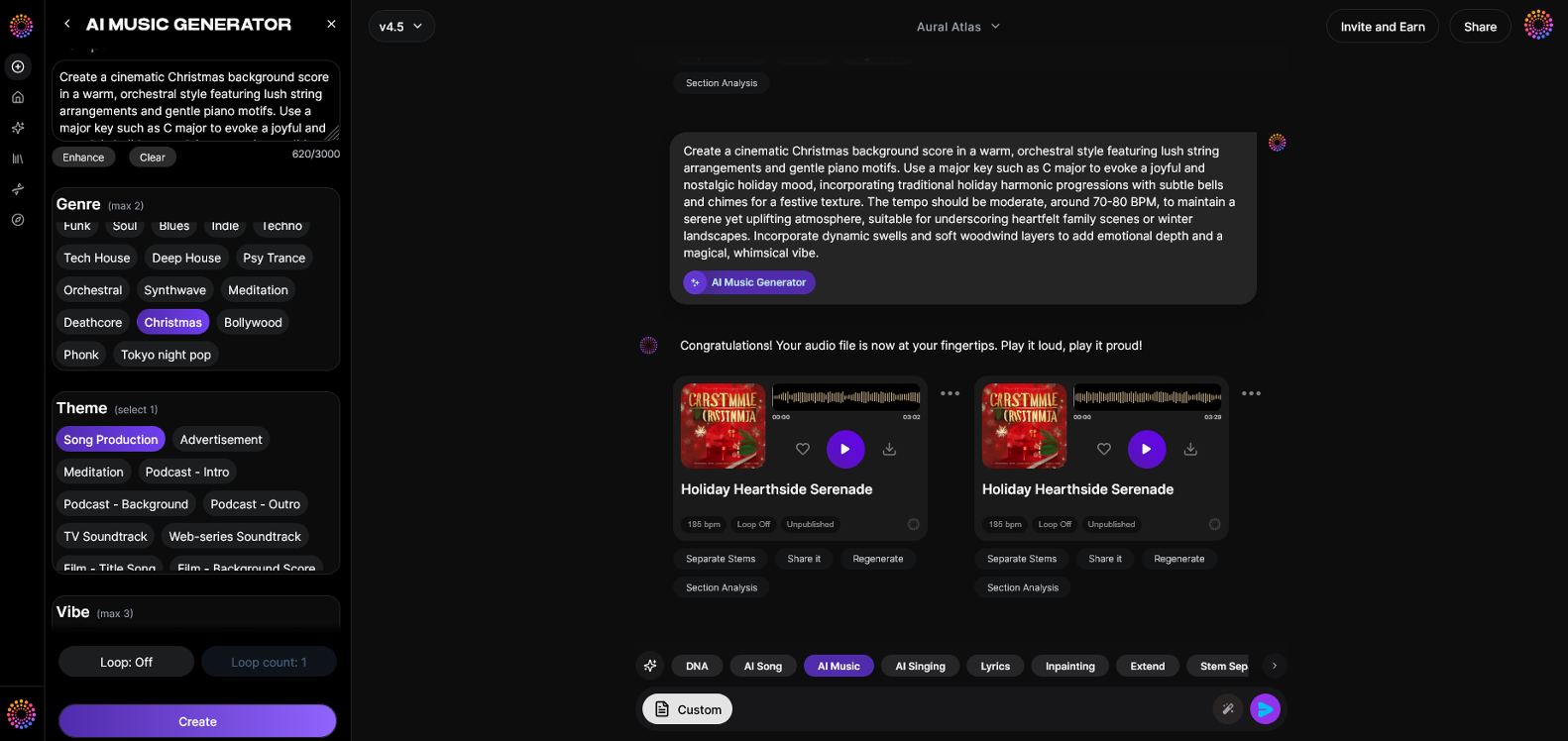
Soundverse’s AI Music Generator is central to exploring the diversity of music genres 2024. This AI-powered tool allows users to create fully produced instrumental tracks from text prompts — an ideal solution for content creators who want background loops or stylized soundscapes.
Core Capabilities
- Text-to-Music Generation: Inputs descriptive phrases like "uplifting electronic pop" or "dark cinematic ambient" to output complete instrumentals.
- Loop Mode: Generates seamless loops for video, meditation, or gaming.
- Genre and Mood Control: Offers precise genre, emotion, and instrument selection to recreate 2024’s popular sonic profiles.
- Model Variants (V4 and V5): Each version provides unique tonal balance and production aesthetic.
Primary Use Cases
- Video Backgrounds for creators combining genre-rich atmospheres.
- Game Soundtracks modeled after electronic or orchestral genres.
- Meditation Tracks built on ambient and chill-wave categories.
- Advertising Scores reflecting modern pop and electronic styles.
Creators exploring AI composition should also check Generate AI Music with Soundverse Text-to-Music and The Benefits of Composing with AI Music Generator for full creative potential.
Start Creating Your Own Music Genres with Soundverse AI
Discover how Soundverse empowers you to produce unique tracks across every genre imaginable. Harness AI tools to compose, remix, and experiment with sounds that match your creative vision in 2024.
Related Articles
- Most Popular Music Genres — Explore the most listened-to music genres around the world and how they’re reshaping the music landscape in 2024.
- How AI-Generated Music Is Transforming the Music Industry — Learn how artificial intelligence is pushing boundaries and changing how music is produced, distributed, and discovered.
- AI Music Generator and Human Composers: A Future Together — Find out how AI tools and human creativity are merging to create an exciting new era of music composition.
- The Role of AI Music in Film and Television — Discover how AI-generated music is being used to elevate storytelling and score production in films and series.
Here's how to make AI Music with Soundverse
Video Guide
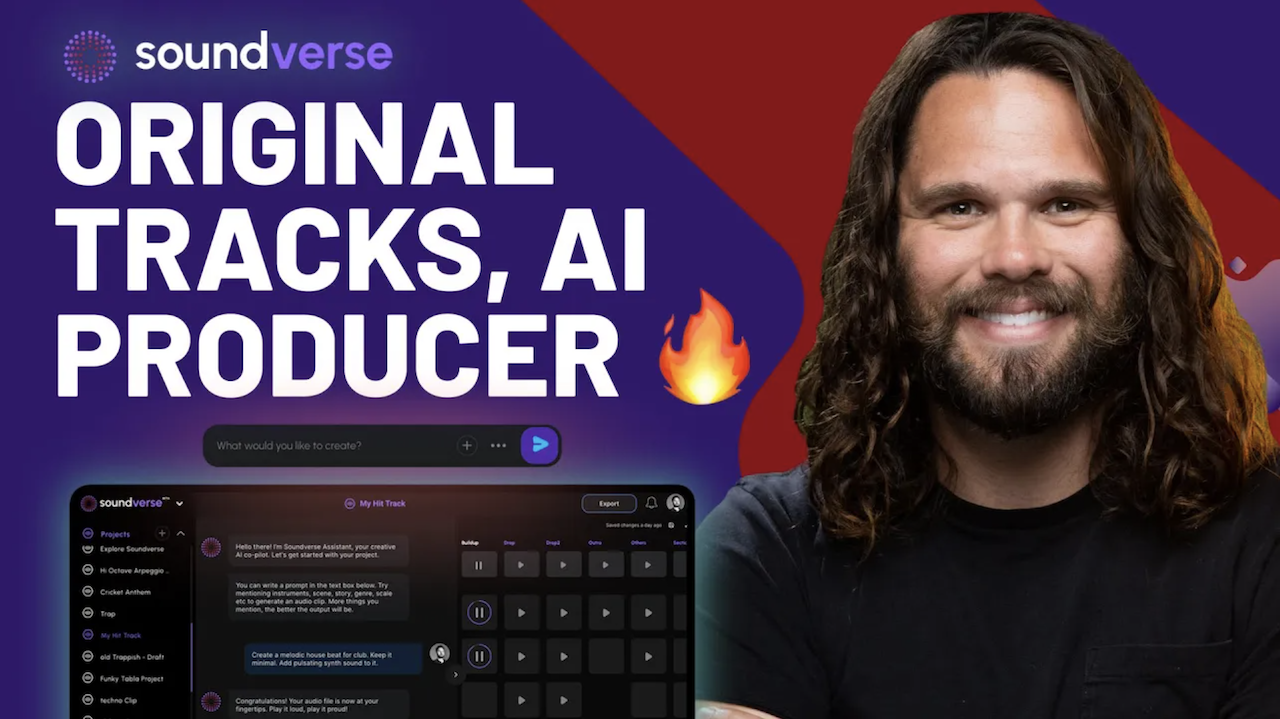
Here’s another long walkthrough of how to use Soundverse AI.
Text Guide
- To know more about AI Magic Tools, check here.
- To know more about Soundverse Assistant, check here.
- To know more about Arrangement Studio, check here.
Soundverse is an AI Assistant that allows content creators and music makers to create original content in a flash using Generative AI. With the help of Soundverse Assistant and AI Magic Tools, our users get an unfair advantage over other creators to create audio and music content quickly, easily and cheaply. Soundverse Assistant is your ultimate music companion. You simply speak to the assistant to get your stuff done. The more you speak to it, the more it starts understanding you and your goals. AI Magic Tools help convert your creative dreams into tangible music and audio. Use AI Magic Tools such as text to music, stem separation, or lyrics generation to realise your content dreams faster. Soundverse is here to take music production to the next level. We're not just a digital audio workstation (DAW) competing with Ableton or Logic, we're building a completely new paradigm of easy and conversational content creation.
TikTok: https://www.tiktok.com/@soundverse.ai
Twitter: https://twitter.com/soundverse_ai
Instagram: https://www.instagram.com/soundverse.ai
LinkedIn: https://www.linkedin.com/company/soundverseai
Youtube: https://www.youtube.com/@SoundverseAI
Facebook: https://www.facebook.com/profile.php?id=100095674445607
Join Soundverse for Free and make Viral AI Music

We are constantly building more product experiences. Keep checking our Blog to stay updated about them!