How Do You Spell Chauffeur Correctly?
Learn the correct spelling, meaning, and pronunciation of 'chauffeur' in English.
How Do You Spell Chauffeur Correctly?
The English language is full of words that can trip up learners and even native speakers. One of those tricky words is “chauffeur.” If you’ve ever hesitated before writing it, wondering whether it’s ‘chaufur,’ ‘shofer,’ or something else entirely, you’re not alone. This article explains everything about the correct chauffeur spelling, its meaning, definition, and pronunciation, along with guidance to help you never misspell it again.
What is the Correct Spelling of Chauffeur?

The correct spelling of the word is chauffeur. It has eight letters and is spelled C-H-A-U-F-F-E-U-R. The word originates from French, where it once meant “stoker” — referring to someone who fed coal into an engine’s fire. Over time, its meaning evolved to refer to a person who drives a car for someone else.
In English, the chauffeur spelling has remained faithful to its French roots. That’s one reason it looks complex — it uses letter combinations uncommon in other English words. But memorizing its components helps:
- The beginning “chau” sounds like “show.”
- The middle “ff” indicates the stress.
- The ending “eur” gives it a French flavor and is pronounced “urr” or “er.”
How Do You Spell Chauffeur When Writing?

When writing the word, always double-check to ensure you have the double “f” and the “eur” ending. Misspellings often occur because English speakers simplify the sound and write it as “shofer” or “chafuer.” These are phonetically logical but grammatically incorrect.
Popular wrong versions include:
- Shofur
- Chofur
- Shaffeur
- Chaufer
As of 2026, language learning applications often highlight French-origin words like “chauffeur” as examples of linguistic borrowing that enrich English vocabulary. English learners should pay attention to how French pronunciations influence English spelling patterns.
What Does Chauffeur Mean?
The chauffeur meaning is straightforward: it refers to a professional driver who operates a private vehicle for another person, usually for comfort or luxury travel. The chauffeur drives their employer or passenger to specific destinations, often ensuring safety, etiquette, and professionalism. You can verify this definition in reliable sources like Merriam-Webster and Dictionary.com.
Chauffeur Definition (According to Modern Dictionaries)
A chauffeur is “a person employed to drive a private or hired automobile for someone.” The term differs from “driver” because a chauffeur implies formality and professionalism. More spelling insights are explained by Word Finder’s How to Spell Chauffeur Guide.
For example:
- Driver: Anyone who drives a vehicle.
- Chauffeur: Someone professionally assigned to transport clients or employers.
So when you see luxury sedans, corporate cars, or VIP transportation services, the person behind the wheel is properly called a chauffeur.
How Do You Pronounce Chauffeur Correctly?
Pronunciation plays a big role in mastering spelling comprehension. The chauffeur pronunciation can be broken down phonetically as /ʃoʊˈfɜːr/ or “show-fur,” as noted by Oreate AI Blog.
Here’s how to articulate it:
- The first sound “chau” is pronounced “show.”
- The “ffeur” part sounds like “fur.”
Put together, it sounds like “show-fur.”
Listening to native speakers or interactive dictionaries helps strengthen your memory. A helpful video explanation is offered on YouTube.
For an even deeper music-based pronunciation exercise, watch our Soundverse Tutorial Series - How to Make Music.
Why Is Chauffeur a Commonly Misspelled Word?
The chauffeur spelling is tricky because it retains its French structure in English. French-origin words often contain silent letters and unusual sequences like “eau,” “eu,” or “ff.” English learners tend to simplify them phonetically. Since most English words end with simple vowels, “eur” is easy to confuse.
Additionally, word processors and speech-to-text systems can occasionally misinterpret the sound, offering erroneous suggestions like “shofer.” That’s why understanding the correct spelling through visual memorization helps prevent mistakes. Check the historical analysis of this confusion from Allcarbooking and CT’s Chauffeurs.
In contemporary writing — especially in 2026, where global English usage continues to rise through online content — being accurate with such words enhances professional credibility. Writers, students, and translators benefit from mastering formal terms like chauffeur.
How Can You Remember the Correct Chauffeur Spelling?
Here are effective memory strategies:
- Break it into syllables: chau–ffeur. Two clear parts make recall easier.
- Visualize the profession: Imagine a person in a suit holding open a car door — the role connects meaning with spelling.
- Use mnemonic tricks: “Chau” sounds like “show,” and “ffeur” sounds like “fur.” So, “show the fur coat to the chauffeur.”
- Practice spelling drills: Write the word ten times in succession or use digital flashcards.
- Incorporate it in sentences: Writing examples helps fix the spelling in your muscle memory.
Example sentence: “The chauffeur waited patiently as the guests exited the hotel.”
How Is Chauffeur Used in Everyday English?
The word can serve as either a noun or a verb, both correctly documented by Cambridge Dictionary:
- Noun usage: “Our company hired a chauffeur for the executive team.”
- Verb usage: “He chauffeured the ambassador to the event.”
In modern writing (2026), the verb form “chauffeured” is becoming slightly more casual in social media contexts, while the noun remains formal.
Writers in the luxury travel industry, film scripts, and lifestyle blogs often emphasize this distinction to maintain tone accuracy. It’s part of mastering vocabulary subtleties in professional writing.
To see vocabulary and tone in action through music creation examples, check out Soundverse Tutorial Series - Explore Tab.
Common Confusions With Chauffeur
Many learners mix chauffeur with similar words like:
- Driver: A general term without professional connotation.
- Valet: A person assisting with parking, not driving.
- Pilot: Drives aircraft; unrelated in context.
More comparisons are found on Vocabulary.com.
Remember: the chauffeur spelling is unique, referring specifically to professional automobile drivers.
Historical Context of the Word Chauffeur
The word entered English in the early 20th century, when automobiles became symbols of status. Wealthy families often hired chauffeurs to manage the complicated operation of cars. Over time, the word expanded to include private transport services and elite experiences.
By 2026, the term is still widely used though automated vehicles and mobility apps have shifted how it’s perceived. Many transportation companies now blend human and AI navigation — yet still use “chauffeur” as a mark of distinction.
How to Make Chauffeur-Inspired Content With Soundverse Agent
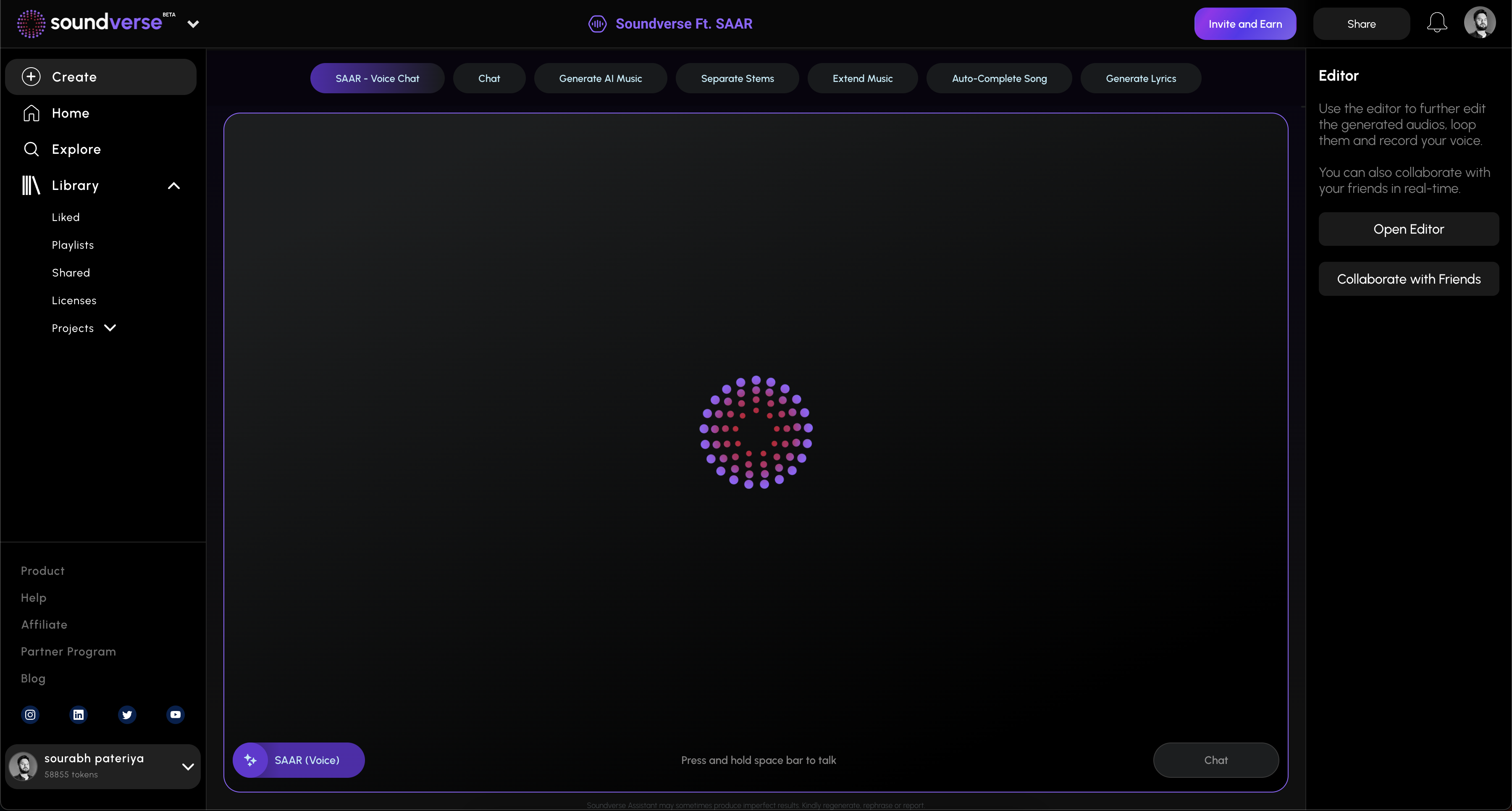
Now that you understand chauffeur spelling, meaning, and pronunciation, let’s explore how Soundverse can assist in creating music or audio inspired by such themes.
The Soundverse Agent is an advanced conversational AI music assistant built for efficiency and creativity. It serves as the central controller within Soundverse, interpreting natural language like “create a classical song for luxury travel, then remove the percussion.” Its multi-step reasoning enables full orchestration of underlying creative tools.
How Soundverse Agent Works
Soundverse Agent offers several key features that simplify music creation and educational use:
- Multi-step tool orchestration: Automatically manages creative workflows from generation to refinement.
- Contextual memory: Remembers your previous requests and builds upon them.
- Voice input support: You can speak commands directly.
- Cross-tool workflow automation: It connects various tools seamlessly.
Primary Use Cases
- Beginners: It allows newcomers to make music without any technical expertise.
- Producers: Automate multi-step tasks like “generate → separate → extend” for professional production speed.
- Education: Enables interactive learning of music theory and structure.
- Rapid prototyping: Experiment with variations and refine ideas instantly.
So, for instance, if you wanted to create elegant background music for a video featuring luxury cars and chauffeurs, you could use Soundverse Agent to generate a piece that evokes sophistication in seconds.
To understand more about how Soundverse automates creativity, explore articles like Soundverse Introduces Stem Separation AI Magic Tool, AI Music Generator and Human Composers: A Future Together, Music Industry Trends, and How AI-Generated Music Is Transforming the Industry.
Create Unique Music Instantly with Soundverse AI
Turn ideas into full-length tracks using AI-powered composition tools. Save hours and unleash your creativity with automatic stem separation, genre filters, and voice generation features.
Start Creating for Free
Related Articles
- How to Make AI-Generated Music — Learn how to produce complete songs using Soundverse’s smart music creation tools.
- Soundverse Introduces Stem Separation AI Magic Tool — Discover how Soundverse’s stem separation feature revolutionizes remixing and production.
- Soundverse Assistant: Your AI Music Co-Producer — Meet the AI assistant that helps you plan and produce music effortlessly.
- AI Music Generator and Human Composers: A Future Together — Explore how AI complements human creativity in modern music composition.
Here's how to make AI Music with Soundverse
Video Guide

Here’s another long walkthrough of how to use Soundverse AI.
Text Guide
- To know more about AI Magic Tools, check here.
- To know more about Soundverse Assistant, check here.
- To know more about Arrangement Studio, check here.
Soundverse is an AI Assistant that allows content creators and music makers to create original content in a flash using Generative AI.
With the help of Soundverse Assistant and AI Magic Tools, our users get an unfair advantage over other creators to create audio and music content quickly, easily and cheaply.
Soundverse Assistant is your ultimate music companion. You simply speak to the assistant to get your stuff done. The more you speak to it, the more it starts understanding you and your goals.
AI Magic Tools help convert your creative dreams into tangible music and audio. Use AI Magic Tools such as text to music, stem separation, or lyrics generation to realise your content dreams faster.
Soundverse is here to take music production to the next level. We're not just a digital audio workstation (DAW) competing with Ableton or Logic, we're building a completely new paradigm of easy and conversational content creation.
TikTok: https://www.tiktok.com/@soundverse.ai
Twitter: https://twitter.com/soundverse_ai
Instagram: https://www.instagram.com/soundverse.ai
LinkedIn: https://www.linkedin.com/company/soundverseai
Youtube: https://www.youtube.com/@SoundverseAI
Facebook: https://www.facebook.com/profile.php?id=100095674445607
Join Soundverse for Free and make Viral AI Music

We are constantly building more product experiences. Keep checking our Blog to stay updated about them!