How AI Is Used in Audio and Sound Design in 2026
Explore how AI is transforming audio and sound design in 2026. Learn about Voice to Instrument, AI sound design tools, and machine learning audio processing.
How AI Is Used in Audio and Sound Design
Artificial intelligence (AI) has become an inseparable part of creative technology by 2026, profoundly reshaping audio and sound design workflows across music production, game audio, film scoring, and podcast creation. Professionals now rely on sophisticated AI systems for everything from mixing and mastering to generating original sounds that evolve dynamically. The integration of AI in audio and sound design has elevated precision, efficiency, and expression in ways that were unheard of just a few years ago.
What is AI in Audio and Sound Design?
AI in audio and sound design refers to the use of artificial intelligence and machine learning algorithms to generate, modify, or analyze sound. This includes everything from creating musical arrangements and realistic instrumental sounds to complex processes like automatic stem separation and intelligent audio editing. In 2026, AI’s role has expanded far beyond simple automation—it is now deeply creative, understanding context, artistic intention, and sonic texture.
Machine learning audio processing, a major component of this domain, analyzes huge datasets of sound samples and musical styles to learn nuanced audio patterns. It can now generate realistic timbres, emulate acoustic spaces, and even craft hybrid tones never heard before. The result is an ecosystem of AI sound design tools that empower creators with professional-grade results from concept to production.
How Has Artificial Intelligence Changed Music Production?
Artificial intelligence in music production between 2024 and 2025 grew rapidly, but in 2026 it reached maturity. Producers now leverage AI to enhance creativity rather than replace it. Intelligent audio editing software removes tedious tasks—like cleaning noise or aligning beats—while maintaining artistic control.
Here are the major ways AI impacts modern production:
- Automated Mixing and Mastering: AI algorithms analyze frequency balance, dynamics, and stereo field, creating polished masters suitable for streaming platforms or theatrical sound systems.
- Virtual Instrument Generation: Tools powered by neural synthesis offer realistic acoustic representations of instruments without sampling. Creators can hum, sing, or beatbox ideas, and the system transforms them into fully playable instrument tracks.
- Sound Restoration and Editing: Intelligent systems detect unwanted clicks or clipping automatically, reconstructing clean audio using AI-based inpainting techniques.
- Dynamic Composition: Generative AI allows adaptive music creation, where audio evolves in response to user interactions, perfectly suited for game design or immersive installations.
For an in-depth tutorial, watch Soundverse Tutorial Series - How to Make Music or explore the Explore Tab Guide from Soundverse’s official channel.
What Are the Most Popular AI Sound Design Tools in 2026?
Audio engineers and producers depend on a growing selection of specialized AI sound design tools that meet diverse creative needs. Key among them:
- Soundverse Voice to Instrument: Converts voice input into instrument sounds.
- AIVA (https://aiva.ai): Focused on orchestral composition and film scoring.
- Boomy (https://boomy.com): For fast, DJ-style song creation.
- Soundful (https://soundful.com): Designed for social media creators needing royalty-free soundtracks.
- Endlesss (https://endlesss.fm): Real-time collaborative jam sessions enabling creative fusion online.
Each platform contributes unique elements, yet Soundverse stands out for bridging performative creativity and professional production workflows seamlessly. External explorations like Emerging AI Audio and Music Apps Trends 2026 also outline breakthrough innovations shaping this space.
For readers exploring alternative creation tools, visit Soundverse’s comparison of Mubert alternatives or learn how AI-generated music is transforming the music industry to understand the broader impact.
Why Are Machine Learning and Audio Processing Linked?
Machine learning audio processing powers many innovations that sound designers use daily. Instead of manually shaping filters or envelopes, AI systems learn from datasets of professionally mixed tracks, predicting the desired outcome when certain characteristics are detected. For instance:
- Timbre Modeling: Deep learning models capture subtle textures of natural instruments and emulate them digitally.
- Spatial Audio Mapping: AI reconstructs immersive environments by predicting reverb response and sound diffusion from sample data.
- Pattern Recognition: Enables automatic separation of vocals, bass, drums, and accompaniment for remix or restoration work.
Technologies like AI-generated instruments for creative sound design and best AI tools for audio editing 2026 exemplify how machine learning and audio synthesis are converging for expressive results. In 2026, this deep convergence allows engineers to prototype sonic experiences that merge scientific precision with artistic experimentation. Articles like Soundverse AI Revolutionizing Music Creation explore similar transformations shaping creative workflows.
How to Make AI-Enhanced Sound Design with Soundverse Voice to Instrument
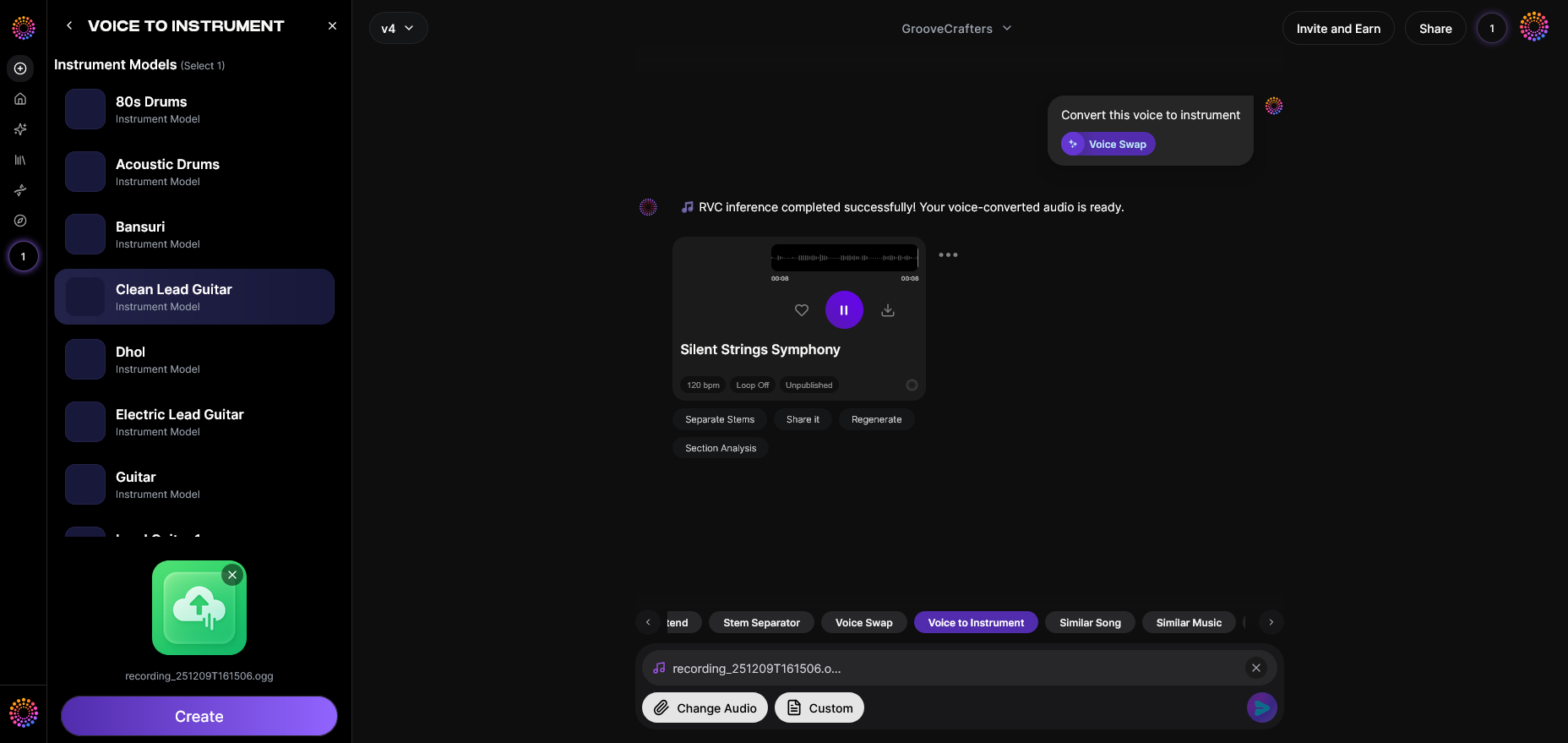
Soundverse’s Voice to Instrument feature exemplifies the latest leap in creative sound transformation. It lets users sing, hum, or beatbox a tune that AI turns into realistic instruments such as guitar, sitar, drums, or flute. Built on timbre transfer technology, it maintains phrasing and emotion while adapting pitch and tone to chosen instruments. This feature bridges vocal intuition with instrumental expression.
What Makes Voice to Instrument Unique?
- Timbre Transfer: The system learns and re-synthesizes timbre, mapping a human voice’s texture onto instrument sound characteristics.
- Wide Instrument Library: Supports Western instruments like piano and acoustic guitar, and ethnic selections like sitar and bansuri, enabling world music production.
- Melodic & Rhythmic Input Compatibility: It can interpret melodies or rhythmic beatboxing equally, letting creators draft musical ideas quickly.
Ideal Use Cases
- Composers can sketch instrumental demos without needing to play instruments.
- Sound designers can generate textures that fuse vocal warmth with instrument realism.
- Producers can prototype cultural crossovers using ethnic timbres for global appeal.
If you’re curious about AI-powered genre exploration, check How to Create Jazz Music with Soundverse AI or Generate AI Music with Soundverse Text-to-Music to see related capabilities. For hands-on learning, watch Soundverse Tutorial Series - Make Deep House Music.
How Soundverse Complements Other Tools in Audio Design
In addition to Voice to Instrument, Soundverse offers interconnected AI tools expanding production flexibility:
- AI Music Generator: Creates instrumental compositions from text prompts—perfect for background scores or looping beats.
- Inpainting: Regenerates specific sections of audio to fix issues or change parts of a recording while retaining the rest.
- Stem Separator: Extracts up to six editable stems, such as vocals, drums, bass, and accompaniment, enabling precise editing and remixing.
Together, these provide a comprehensive suite for music professionals aiming to modernize their workflow. Learn more about Soundverse’s Stem Separation tool that has become a standard for remix artists in 2026.
Why AI Sound Design Matters for Future Creators
The rise of AI in audio and sound design signifies more than just automation—it is shaping a future where technology enhances human creativity. By 2026, most production studios integrate AI to:
- Prototype sound quickly before recording sessions.
- Achieve uniform quality across projects without losing individuality.
- democratize access for non-musicians who rely on intuitive voice or text inputs.
The next frontier includes intelligent emotional modeling—systems that understand the mood intended and select appropriate instrument or tempo patterns automatically.
Start Creating Smarter Soundscapes with AI
Experience the power of AI in audio and sound design. Generate, edit, and customize music effortlessly with Soundverse’s intelligent tools and innovative features built for creators.
Related Articles
- Soundverse Introduces Stem Separation AI Magic Tool: Discover how Soundverse’s stem separation technology lets creators isolate instruments and vocals with precision for next-level sound design.
- Soundverse AI Revolutionary Music Creation for New Age Content Creators: Learn how Soundverse is transforming the music creation process for digital artists using cutting-edge AI technology.
- The Role of AI Music in Film and Television: Explore how AI-generated music is redefining sound design and scoring in film and TV production.
- AI Music Generator and Human Composers: A Future Together: Find out how AI tools complement human creativity to shape the future of musical composition and sound design.
Here's how to make AI Music with Soundverse
Video Guide
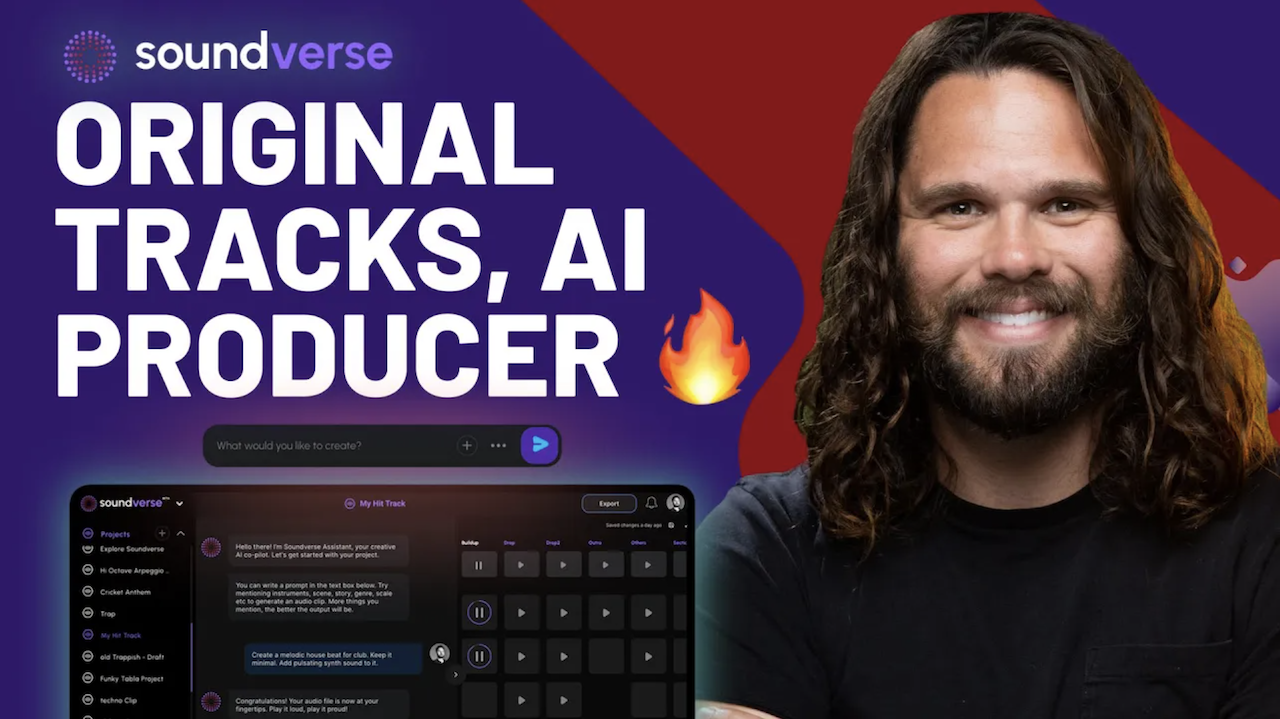
Here’s another long walkthrough of how to use Soundverse AI.
Text Guide
- To know more about AI Magic Tools, check here.
- To know more about Soundverse Assistant, check here.
- To know more about Arrangement Studio, check here.
Soundverse is an AI Assistant that allows content creators and music makers to create original content in a flash using Generative AI. With the help of Soundverse Assistant and AI Magic Tools, our users get an unfair advantage over other creators to create audio and music content quickly, easily and cheaply. Soundverse Assistant is your ultimate music companion. You simply speak to the assistant to get your stuff done. The more you speak to it, the more it starts understanding you and your goals. AI Magic Tools help convert your creative dreams into tangible music and audio. Use AI Magic Tools such as text to music, stem separation, or lyrics generation to realise your content dreams faster. Soundverse is here to take music production to the next level. We're not just a digital audio workstation (DAW) competing with Ableton or Logic, we're building a completely new paradigm of easy and conversational content creation.
TikTok: https://www.tiktok.com/@soundverse.ai
Twitter: https://twitter.com/soundverse_ai
Instagram: https://www.instagram.com/soundverse.ai
LinkedIn: https://www.linkedin.com/company/soundverseai
Youtube: https://www.youtube.com/@SoundverseAI
Facebook: https://www.facebook.com/profile.php?id=100095674445607
Join Soundverse for Free and make Viral AI Music

We are constantly building more product experiences. Keep checking our Blog to stay updated about them!