How AI Is Transforming Desert Environments in 2026
Discover how AI in desert technology is revolutionizing sustainability and smart farming in arid regions this year.
How AI Is Transforming Desert Environments
Artificial intelligence (AI) is reshaping how humanity interacts with some of Earth’s most challenging ecosystems — deserts. Once viewed merely as vast barren landscapes, deserts are emerging as hubs of innovation where smart systems, machine learning, and advanced sustainability models converge. In 2026, the focus on AI in desert technology has reached new heights, offering solutions that address environmental stress, optimize water usage, and foster new models of desert development.
What is driving the rise of AI in desert technology in 2026?
Deserts are expanding due to accelerating climate change and land degradation, placing pressure on ecosystems and human societies. Artificial intelligence offers powerful tools for analyzing these changes and implementing effective strategies. The integration of artificial intelligence and climate solutions allows researchers and policymakers to collect real-time data, predict environmental risks, and suggest actionable plans.
In recent years (2024–2025), governments in regions such as the Middle East, North Africa, and southwestern United States began deploying AI-driven sensors and predictive climate models. These efforts continue in 2026 with greater precision, made possible by enhanced machine learning algorithms trained on multispectral satellite data and IoT devices that monitor soil composition, rainfall patterns, and temperature swings.
For example, as AI-guided systems are tested from space to the Sonoran Desert, developers expect new prototypes ready for demonstrations and testing phases in 2026.
How does AI enable smart farming in arid regions?
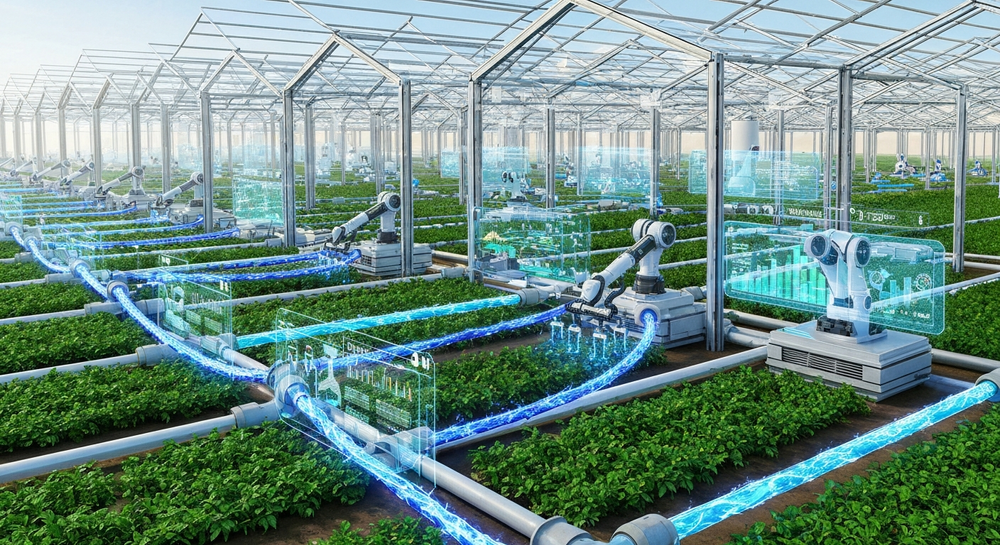
One of the most transformative applications of AI in desert technology is smart farming in arid regions. Utilizing machine learning and robotics, modern agriculture is being adapted to environments where traditional farming was nearly impossible. Predictive analytics assess soil moisture and nutrient levels, enabling automated irrigation that minimizes waste. Computer vision systems monitor crop health and yield prediction, allowing farmers to optimize input resources like water and fertilizer.
AI-controlled greenhouses have become the backbone of sustainable agriculture in deserts such as the Atacama and Sahara. These closed-loop environments benefit from energy-efficient cooling powered by solar arrays, while AI adjusts internal conditions dynamically. Through technologies such as machine learning for water conservation, farms are able to recycle up to 90% of their water — a feat unthinkable just a few years ago. As scientists use AI to combat water scarcity and desertification, these models continue shaping efficient desert farming systems globally.
What role does AI play in environmental monitoring and conservation?
AI-driven environmental monitoring provides an unprecedented look into desert dynamics. By using image recognition and predictive modeling, autonomous drones and ground sensors are tracking the spread of vegetation, wildlife migration, and sand dune activity. This integration of AI-driven environmental monitoring allows for immediate detection of ecological threats such as illegal mining, poaching, or deforestation in fragile desert zones.
Machine learning models can now recognize subtle patterns invisible to human observers. For instance, temperature irregularities over vast desert plains can indicate groundwater movement beneath the surface. These insights guide sustainable water extraction, keeping aquifers replenished rather than overexploited.
How is AI accelerating sustainable desert development?
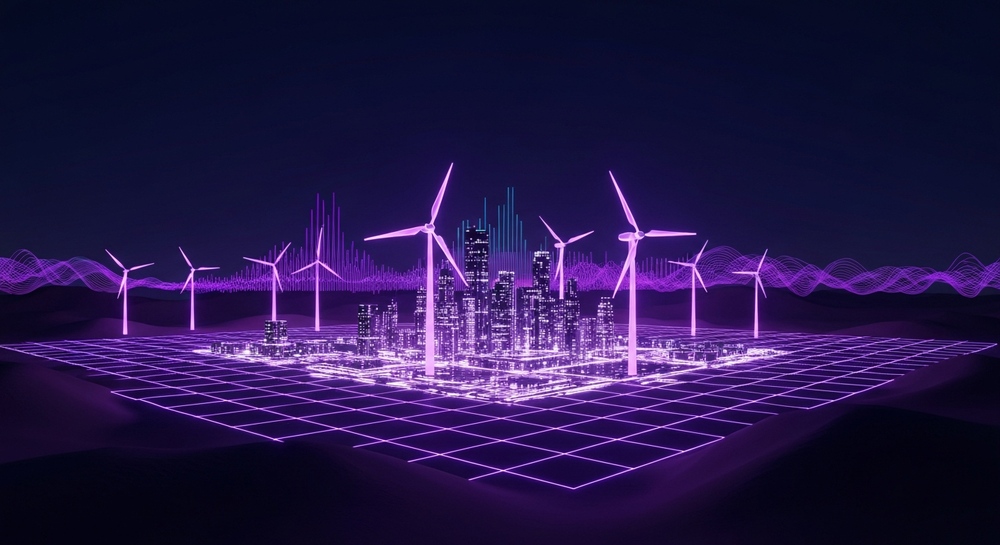
Sustainable desert development in 2026 hinges on the fusion of AI with green infrastructure. Smart city prototypes built in desert areas — such as NEOM in Saudi Arabia — integrate AI-powered climate systems with renewable energy grids. Data-driven urban planning ensures that resources are balanced between energy needs, waste recycling, and biodiversity preservation. World Future Energy Summit 2026 explores such advances, spotlighting AI’s potential in clean energy strategies.
Through generative design algorithms, architects and environmental engineers are creating structures that mimic desert flora and fauna to maintain temperature balance and minimize environmental footprint. AI-powered simulations also forecast how extreme temperatures impact urban materials, ensuring longer lifespans and less maintenance. As COD x GenGPS demonstrates, the desert is fast becoming the digital frontier of AI-enabled sustainability.
What breakthroughs in machine learning for water conservation are being achieved?
Water scarcity has always been the defining challenge of desert environments. The combination of AI and IoT is now revolutionizing water management systems. Using machine learning for water conservation, smart networks learn consumption patterns and dynamically adjust supply to prevent waste. Predictive leak detection, humidity analysis, and optimized reservoir storage are all powered by deep learning models.
In 2026, large-scale desalination plants employ AI to predict maintenance cycles and manage energy-efficient conversion rates. Machine learning also identifies where captured rainwater and runoff can best be stored or distributed to crops. The effect is a drastic reduction in groundwater depletion.
How Soundverse aligns with AI in desert technology breakthroughs

Music and technology converge uniquely when exploring desert innovation. The Soundverse ecosystem — known for its creative AI tools — contributes indirectly to this field through sensory and environmental design.
How to make desert-inspired soundscapes with Soundverse AI Music Generator
The Soundverse AI Music Generator is a creative tool that produces full instrumental compositions from simple text prompts. It specializes in crafting background tracks, ambient beats, and immersive soundscapes without vocals. Using the Loop Mode feature, you can create seamless musical layers that reflect desert stillness, wind movement, or sunset tones symbolically associated with desert imagery.
Core Capabilities:
- Text-to-music generation that interprets natural language prompts.
- Loop Mode for uninterrupted playback fitting research presentations or multimedia environments.
- Detailed control of genre, mood, and instruments — ideal for simulating environmental atmospheres.
- Options to choose between V4 and V5 model variations for refined results.
Professionals researching arid ecosystems can use these features to design immersive educational or cultural experiences. Soundscape compositions inspired by desert technology can be integrated into exhibitions, documentaries, or wellness spaces to evoke the serenity and vastness of arid landscapes.
For examples of AI-powered music creation relevant to these themes, explore AI Music Generator and Human Composers: A Future Together, How to Create Music Evoking the Desert, and AI Music Generator Is Transforming the Music Industry. For a deeper dive, watch our guide on creating Deep House music or our tutorial on how to make music with Soundverse.
Soundverse also complements creative workflows through related tools like the Similar Music Generator, which crafts instrumental compositions based on a reference track. This feature supports consistent audio branding for sustainability organizations or tech exhibits that aim to convey concepts of ecological equilibrium through music.
Why is artistic AI relevant to environmental innovation?
Every scientific presentation and policy report benefits from clear narrative and emotional engagement. AI-generated soundscapes add this dimension by helping audiences connect with the data visually and sonically. In desert technology showcases and sustainability conferences, immersive audio generated by tools like Soundverse creates experiential layers that amplify understanding and empathy.
Moreover, creative AI applications highlight the harmony between technological precision and natural aesthetics. By integrating AI music into climate projects, organizations demonstrate that innovation and ecology can coexist — a vital message in 2026 as climate policies accelerate globally.
Explore the Future of AI Innovation
Join Soundverse to discover cutting-edge AI tools that empower creators and technologists to harness intelligent sound, data, and automation—bringing the future of music and environmental technology closer than ever.
Start Creating with AI
Related Articles
- How to Create Music Evoking the Desert — Learn how to compose music inspired by desert landscapes using AI-powered sound generation tools.
- Soundverse Introduces Stem Separation AI Magic Tool — Discover how Soundverse’s stem separation technology is revolutionizing the way creators remix and refine audio tracks.
- Soundverse AI Revolutionizing Music Creation for New-Age Content Creators — Explore how Soundverse AI empowers modern creators to produce studio-quality music effortlessly with intelligent automation.
- How An AI Music Generator Inspires Creative Fusion — Uncover how AI music generators spark unprecedented creative synergy across diverse artistic fields.
Here's how to make AI Music with Soundverse
Video Guide

Here’s another long walkthrough of how to use Soundverse AI.
Text Guide
- To know more about AI Magic Tools, check here.
- To know more about Soundverse Assistant, check here.
- To know more about Arrangement Studio, check here.
Soundverse is an AI Assistant that allows content creators and music makers to create original content in a flash using Generative AI. With the help of Soundverse Assistant and AI Magic Tools, our users get an unfair advantage over other creators to create audio and music content quickly, easily and cheaply. Soundverse Assistant is your ultimate music companion. You simply speak to the assistant to get your stuff done. The more you speak to it, the more it starts understanding you and your goals. AI Magic Tools help convert your creative dreams into tangible music and audio. Use AI Magic Tools such as text to music, stem separation, or lyrics generation to realise your content dreams faster. Soundverse is here to take music production to the next level. We're not just a digital audio workstation (DAW) competing with Ableton or Logic, we're building a completely new paradigm of easy and conversational content creation.
TikTok: https://www.tiktok.com/@soundverse.ai
Twitter: https://twitter.com/soundverse_ai
Instagram: https://www.instagram.com/soundverse.ai
LinkedIn: https://www.linkedin.com/company/soundverseai
Youtube: https://www.youtube.com/@SoundverseAI
Facebook: https://www.facebook.com/profile.php?id=100095674445607
Join Soundverse for Free and make Viral AI Music

We are constantly building more product experiences. Keep checking our Blog to stay updated about them!