Do Music Producers Make Beats? Understanding the Modern Production Workflow in 2026
Learn if music producers make beats, their workflow, and how Soundverse AI helps create music.
Do Music Producers Make Beats?
In 2026, the line between music producers and beat makers has become increasingly blurred, thanks to the evolution of digital production tools and AI-driven platforms like Soundverse. Aspiring musicians often ask a simple but essential question — do music producers make beats? The answer lies in understanding how music production has evolved from traditional studio work to modern AI-assisted creativity.
What does a music producer do?
Music producers are the creative directors behind a song or instrumental project. Their role goes far beyond beat-making. A producer oversees the entire production process — conceptualizing, arranging, recording, mixing, and mastering. They collaborate closely with artists to translate musical ideas into polished tracks. While some producers specialize solely in composition, others handle engineering tasks or guide vocal performances.
In earlier decades, producers like Quincy Jones or Rick Rubin shaped iconic records through analog techniques. By contrast, producers in 2026 use hybrid digital setups and intelligent music generation tools. The fundamentals, however, remain the same: a producer aims to craft cohesive music that resonates emotionally and technically. You can learn more in What is a Music Producer Responsible For? - OIART, CareerExplorer’s guide on music producers, and the Music Producer Job Description from Indeed.
Do music producers make beats themselves?
Yes, many music producers do make beats — but not all. Beat-making is one aspect of music production basics. A beat typically refers to the rhythmic foundation of a track, often composed of drums, basslines, and looped instrumental elements. Some producers create their own beats using DAWs (Digital Audio Workstations) and virtual instruments, while others collaborate with dedicated beat makers who specialize in crafting rhythm-driven structures.
In genres like hip-hop, EDM, and pop, producers frequently tailor beats to fit the song’s mood and purpose. For example, a rapper’s producer might design a trap-style beat emphasizing heavy 808s and sharp hi-hats. Alternatively, a pop producer might build smoother percussion patterns paired with melodic synths. The beat-making process defines the track’s energy and identity. Check out our Soundverse Tutorial Series - How to Make Music for an engaging walkthrough of beat creation workflows.

What is the difference between a producer and a beat maker?
The distinction between producer vs beat maker is subtle but important. A beat maker focuses primarily on creating the instrumental backbone—the groove and sonic texture that musicians perform over. Their job ends when the beat is ready. A producer, on the other hand, handles broader responsibilities:
- Arranging how instruments and vocals fit together.
- Recording and mixing sessions to achieve sonic clarity.
- Making creative decisions that define the mood or narrative of the piece.
- Guiding the artist through the songwriting and performance process.
In 2026, many creators embody both roles, particularly in independent music communities. Platforms like Soundverse introduce stem separation AI magic tools encouraging hybrid creativity by enabling faster beat-making, track arrangement, and adaptive sound design — effectively merging the boundaries between beat makers and producers.
How do producers create music today?
The modern music production workflow combines creativity, technology, and experimentation. Here’s an overview of how producers generally create music:
- Idea Development: They start by sketching concepts, either through melodies, chord progressions, or rhythmic loops.
- Beat Making Process: Using DAWs like FL Studio, Ableton Live, or AI tools, the producer creates the core beat — balancing drums, bass, and effects.
- Arrangement and Composition: Producers structure songs, deciding how verses, choruses, and bridges flow.
- Sound Design: They shape the timbre and tone of instruments, often layering samples or synthesizing new ones.
- Recording: The vocals or instruments are tracked according to the project’s vision.
- Mixing and Mastering: Producers refine audio levels, frequencies, and dynamics to achieve the final polished sound.
In 2026, automated workflows and AI music generation tools simplify parts of this process, allowing producers to focus more on creative direction. For instance, Soundverse generate AI music with text prompts enables instant instrumental generation, revolutionizing how producers compose and experiment with new sounds. For further exploration, watch Soundverse Tutorial Series - Explore Tab to understand how to discover new AI-generated sounds.
What role does technology play in beat making and production?
Advances in artificial intelligence, machine learning, and digital audio synthesis have redefined music creation. Producers no longer need massive studios or complex setups; cloud-based tools can handle the heavy lifting. AI now assists in everything from mastering tracks automatically to generating beats that match specific moods.
For producers seeking to expand their capabilities, tools like Soundverse’s Voice to Instrument and Extend Music provide flexibility. Voice to Instrument converts hummed melodies or beatboxing into authentic instrumental tones, while Extend Music allows seamless track lengthening — key for looping or evolving compositions. These intelligent features empower producers to move effortlessly from idea to production.
You can also explore how AI music connects to industry changes in how AI-generated music is transforming the music industry, where tools like Soundverse continuously reshape the boundaries of creativity.
How to make beats with Soundverse AI Music Generator
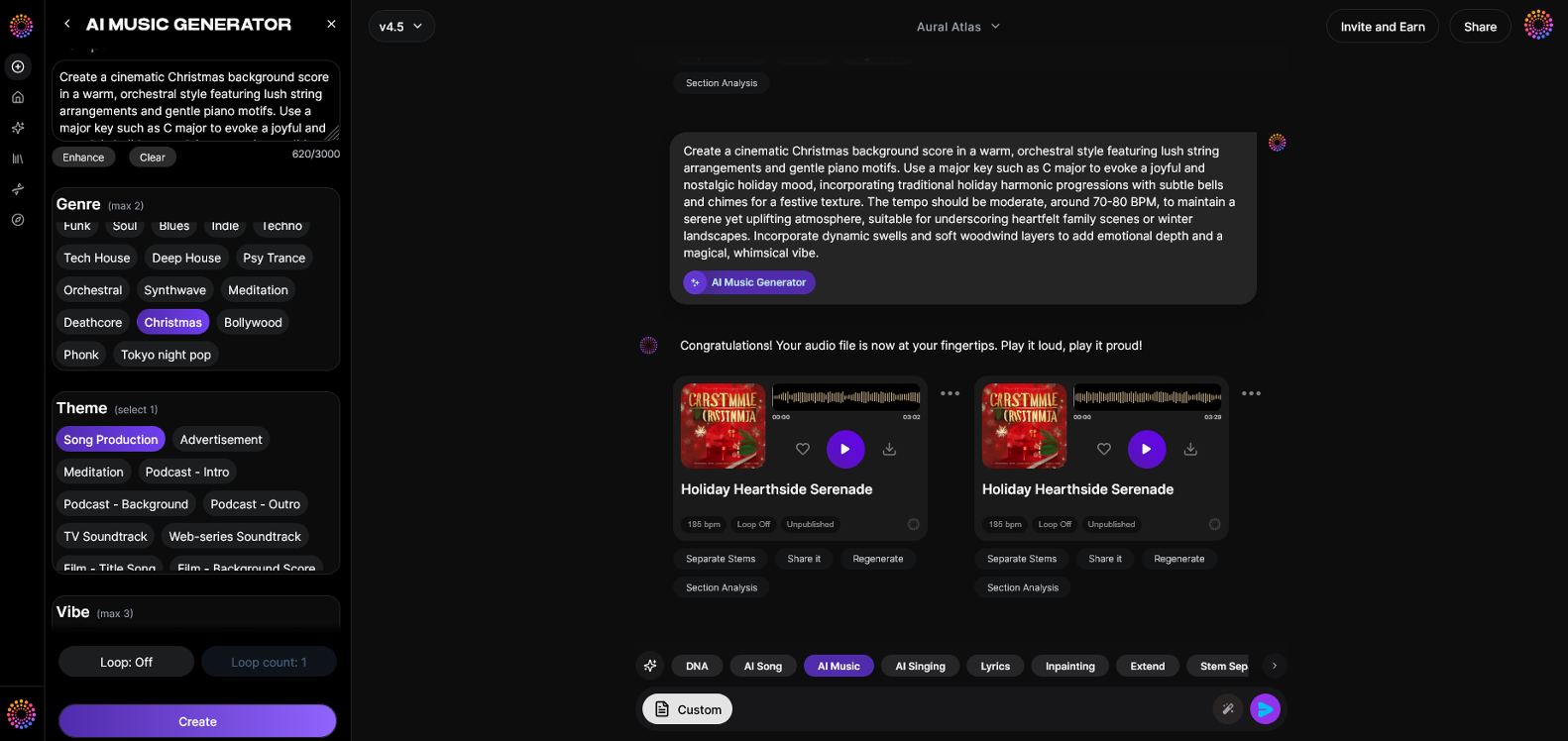
Soundverse’s AI Music Generator automates beat production through a text-to-music approach, providing an intuitive path for both beginners and seasoned producers.
- Feature Overview: The AI Music Generator creates fully produced instrumental music using text prompts. It specializes in background tracks, beats, and soundscapes without vocals. Users can enable Loop Mode for seamless repetition and use detailed genre, mood, and instrument control.
- Core Capabilities: It supports both V4 and V5 model options, offering diverse stylistic interpretations. Producers specify tempo, duration, or vibe to generate music aligned with their vision.
- Primary Use Cases: Ideal for video scoring, game loops, meditation audio, and advertising tracks.
In practice, Soundverse’s text-to-music workflow enables producers to describe the desired mood — for instance, “a calm lo-fi beat with soft piano and ambient pads.” Within moments, the system generates a complete instrumental ready for download and fine-tuning.
The platform’s integration with the Stem Separator feature lets users extract individual stems for remixing or detailed production adjustments, extending creative flexibility.
For those interested in exploring genre-specific creations, check guides like How to Create EDM with Soundverse AI or How to Create Jazz Music with Soundverse AI, which demonstrate genre control through AI-powered beat crafting. For an engaging walkthrough, watch our tutorial on making Deep House Music.
Why AI-powered production benefits aspiring producers
AI-driven beat making eliminates technical barriers. Instead of spending hours programming drums or adjusting EQs, aspiring producers can focus on learning arrangement and style. This acceleration empowers newcomers to experiment across genres without requiring years of music production experience. Additionally, Soundverse’s system fosters inspiration through prompt-based creativity — encouraging users to articulate musical emotions rather than just manipulate knobs.
By 2026, many educational platforms integrate Soundverse or similar tools into their teaching workflows. This aligns with current music industry trends, emphasizing technological collaboration rather than replacement. AI becomes the co-producer, helping transform initial ideas into structured musical compositions.
Start Creating Beats with AI Today
Unleash your creativity and make professional-quality beats in minutes using Soundverse’s AI-powered tools. No studio setup required — just your ideas and our technology working together to inspire your next sound.
Related Articles
- How an AI Music Generator Inspires Creative Fusion — Discover how AI-driven tools transform creative workflows for producers and musicians seeking new inspiration.
- Soundverse Assistant: Your AI Music Co-Producer — Learn how Soundverse’s AI assistant can help you produce beats, arrange tracks, and co-create music effortlessly.
- Generate AI Music with Soundverse Text-to-Music — Explore how to turn text prompts into full musical compositions using Soundverse’s advanced AI platform.
- How AI-Generated Music Is Transforming the Music Industry — Understand how artificial intelligence is reshaping music production, collaboration, and creativity across genres.
Here's how to make AI Music with Soundverse
Video Guide
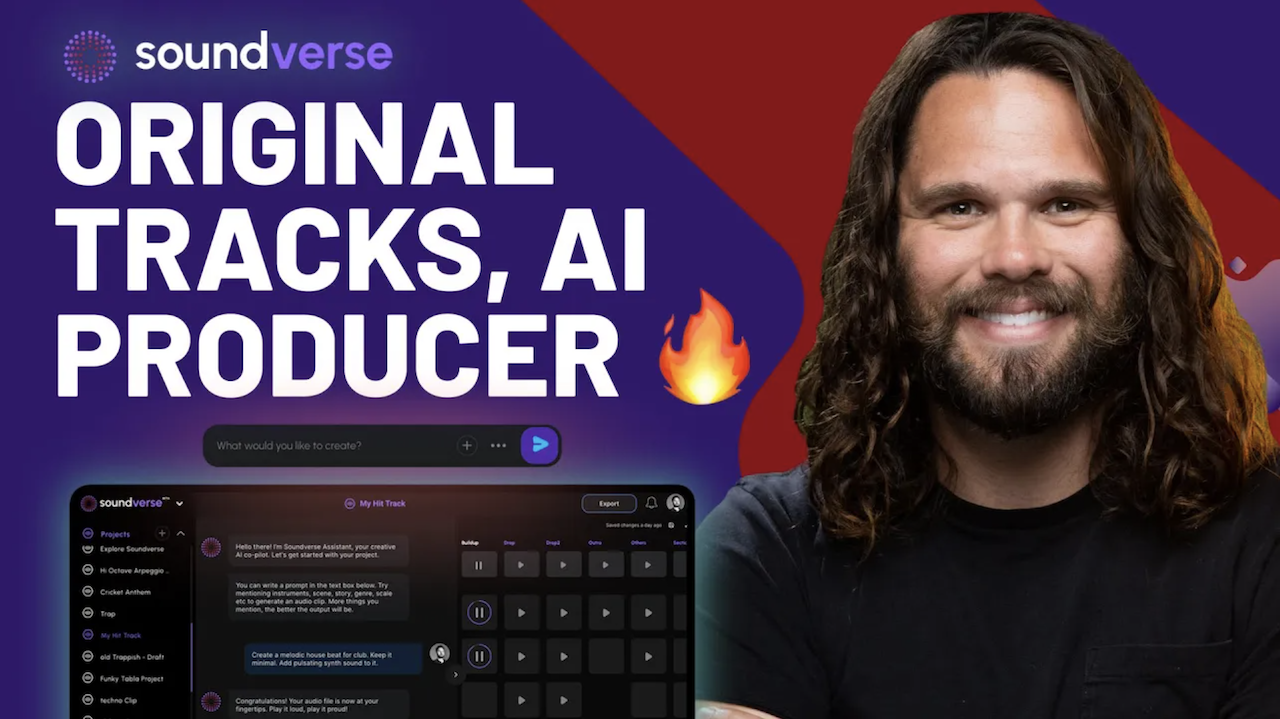
Here’s another long walkthrough of how to use Soundverse AI.
Text Guide
- To know more about AI Magic Tools, check here.
- To know more about Soundverse Assistant, check here.
- To know more about Arrangement Studio, check here.
Soundverse is an AI Assistant that allows content creators and music makers to create original content in a flash using Generative AI. With the help of Soundverse Assistant and AI Magic Tools, our users get an unfair advantage over other creators to create audio and music content quickly, easily and cheaply. Soundverse Assistant is your ultimate music companion. You simply speak to the assistant to get your stuff done. The more you speak to it, the more it starts understanding you and your goals. AI Magic Tools help convert your creative dreams into tangible music and audio. Use AI Magic Tools such as text to music, stem separation, or lyrics generation to realise your content dreams faster. Soundverse is here to take music production to the next level. We're not just a digital audio workstation (DAW) competing with Ableton or Logic, we're building a completely new paradigm of easy and conversational content creation.
TikTok: https://www.tiktok.com/@soundverse.ai
Twitter: https://twitter.com/soundverse_ai
Instagram: https://www.instagram.com/soundverse.ai
LinkedIn: https://www.linkedin.com/company/soundverseai
Youtube: https://www.youtube.com/@SoundverseAI
Facebook: https://www.facebook.com/profile.php?id=100095674445607
Join Soundverse for Free and make Viral AI Music

We are constantly building more product experiences. Keep checking our Blog to stay updated about them!