Do AI Assistants Have Singing Capabilities in 2026?
Discover AI assistant singing capabilities in 2026, from voice synthesis AI to AI music generation.
Do AI Assistants Have Singing Capabilities?
Artificial intelligence has rapidly expanded into every corner of the creative world, and music is no exception. By 2026, AI singing technologies have evolved from basic robotic tones to full-fledged, emotive performances capable of capturing human-like nuances. But how far have we come — and do AI assistants truly have singing capabilities today?
What Are AI Assistant Singing Capabilities?
AI assistant singing capabilities refer to the ability of conversational or voice-based AI systems to create, generate, or perform singing vocals using advanced algorithms like neural voice synthesis and machine learning. In essence, these systems can interpret musical notes and lyrics, produce vocal sound structures, and generate melodies that sound remarkably human.
In early stages — around 2024 and 2025 — most AI assistants lacked musical emotion and contextual understanding. They could mimic tones but struggled with phrasing, rhythm, and emotion. As of 2026, advancements in voice synthesis AI and virtual singer technology have significantly improved the realism and adaptability of AI performances.
How Does Voice Synthesis AI Work?
Voice synthesis AI, the underlying technology behind singing assistants, uses deep neural networks and generative models trained on thousands of hours of vocal data. The AI breaks down the task into three stages:
- Text Interpretation: Analyzing lyrics or phonetic instructions.
- Pitch and Timing Mapping: Assigning musical scales, rhythm, and intonation.
- Vocal Rendering: Generating audio samples that match desired vocal style and emotion.
Modern systems use diffusion models and transformer architectures that capture extremely detailed patterns of articulation and breath control. This enables vocal generation in different singing styles — from opera to lo-fi pop.
Voice synthesis AI has also expanded creatively, allowing artists to generate fictional characters or modify their vocal attributes without needing professional singers. You can explore more innovations in this field in Soundverse’s guide to AI music generation.
What Is AI Music Generation and How Is It Connected?
AI music generation works hand-in-hand with singing capabilities. It is the broader field that produces full musical compositions — melodies, harmony, rhythm, arrangement, and mixing — often combined with AI-generated vocals.
An AI assistant with singing capabilities can function as both a voice generator and a composer. For example, it can create an instrumental backing track, then generate matching vocals in a consistent emotional tone.
Several AI platforms illustrate this integration. Systems like Mubert or Soundraw pioneered instrumental generation, while next-gen products like Soundverse have extended the workflow to include complete production cycles — from lyric writing to vocal synthesis. Learn more about Soundverse vs. Soundraw alternatives and why full-scale music assistants dominate 2026’s digital creation space.
What Is Virtual Singer Technology?
Virtual singer technology refers to AI models tailored specifically for singing performances. These models do not simply read lyrics but analyze phonetic rhythm, pitch data, and emotional inflections.
They are often trained to adapt across languages, tonal structures, and genres — enabling the creation of AI characters capable of performing multilingual songs. Popular implementations include anime vocal characters, virtual idols, and fully digital performers featured in concerts.
In 2026, virtual singer technology has empowered independent musicians to create virtual collaborations without scheduling studio sessions or hiring vocalists. It also supports educational functions: learning music theory by hearing AI perform scales or harmonies demonstrates concepts instantly.
For deeper insight on music creation, check how AI-generated music inspires creative fusion. For a deeper dive, watch our Soundverse Tutorial Series - 9. How to Make Music.
Can AI Assistants Actually Sing?
Yes — modern AI assistants can sing. However, “singing” in this context doesn’t mean a human-like act of vocalization through physical cords. It means algorithmic production of sound waves that replicate human singing behaviors.
An AI assistant can synthesize vibrato, breathiness, and vocal patterns to emulate emotion. Advanced assistants analyze lyrics’ sentiment to choose compatible pitch and tempo settings. While they cannot improvise live or sing spontaneously during real-time conversation, they can process requests like “generate me a jazz vocal in the tone of a soulful singer” and deliver a recorded output.
AI singing today is thus an asynchronous process: the system takes text or reference input, processes it using deep learning models, and returns the final vocal audio file.
How Far Have We Come by 2026?
By 2026, the implementation of machine learning in music and voice generation has matured. It’s no longer experimental — it’s production-grade. Studios and creators are embedding AI voices in:
- Soundtracks and advertisements
- YouTube and podcast intros
- Independent artist projects
- Concept albums featuring AI characters
These capabilities have opened doors to new possibilities, from multilingual singing to adaptive compositions that shift genres mid-track. The technology now plays a central role in creative prototyping, freeing artists from technical constraints.
Read more on how AI is shaping music industry trends in 2026. And for a visual breakdown, check out our Soundverse Tutorial Series - 10. Make Deep House Music.
What Limitations Still Exist?
Even though AI assistant singing capabilities are impressive, several challenges remain:
- Emotional Intuition: Unlike human singers, AI lacks authentic emotional intent. While it can simulate sadness or joy, it doesn’t feel it.
- Cultural Nuance: Regional inflection and contextual phrasing require extensive data adaptation.
- Real-Time Singing: As of 2026, assistants cannot perform live streaming vocals. They operate via asynchronous rendering.
- Dynamic Interaction: AI cannot yet improvise harmonies with human performers in live settings.
Still, these limitations are shrinking. Continuous research in interactive voice synthesis and multimodal learning promises near-real-time response systems within a few years.
How Soundverse Agent Unifies Singing and Music Generation
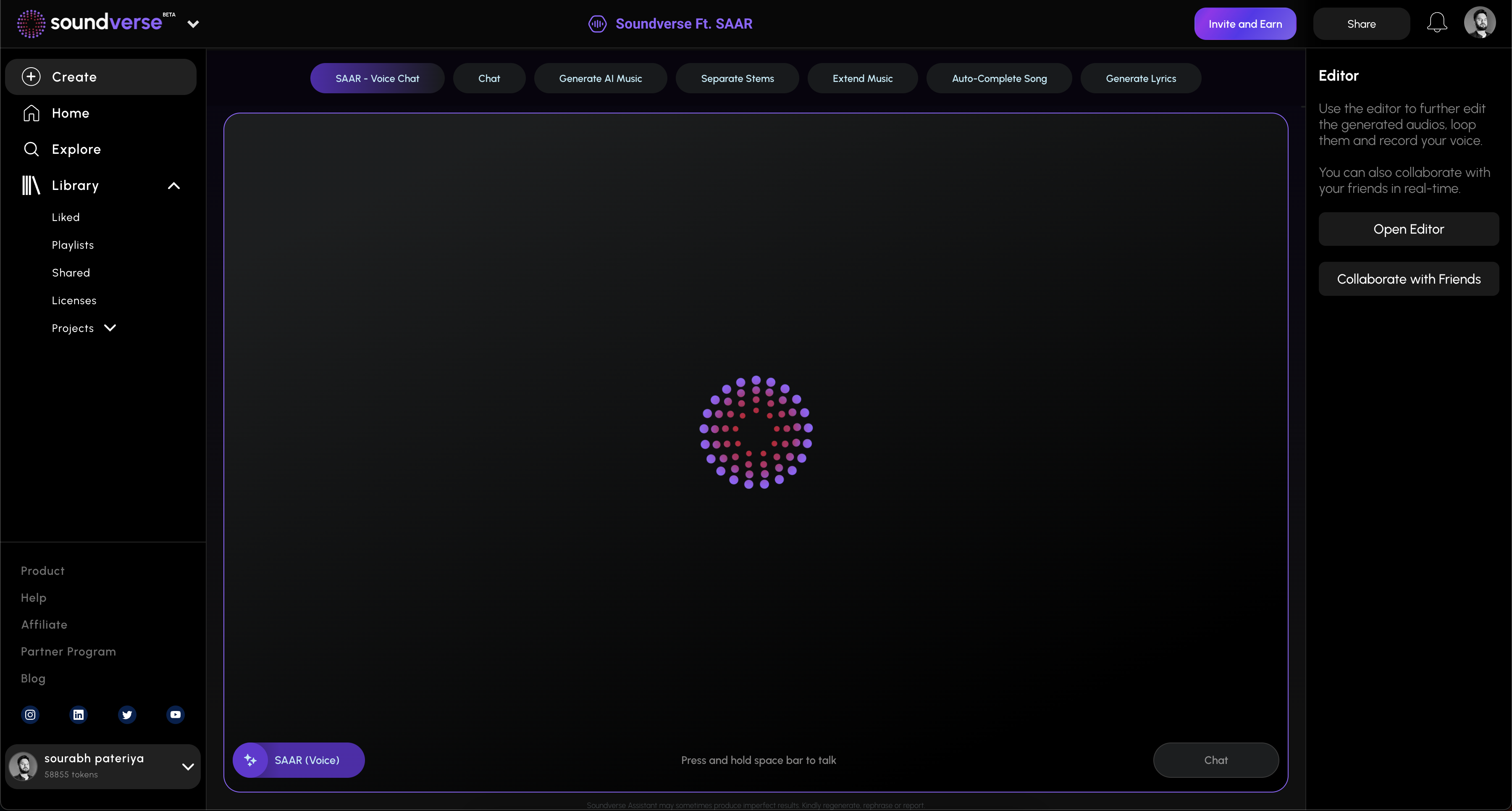
Now that you understand AI assistant singing capabilities, here is how you can experience them instantly through Soundverse Agent.
How to Make AI Assistant Singing Capabilities with Soundverse Agent
Soundverse’s Agent is the conversational AI music assistant that orchestrates all underlying singing and generation tools into a single interface. It understands natural language commands like “create a pop song, then remove the drums,” and executes those requests automatically using multi-step reasoning.
Core Capabilities
- Multi-step Tool Orchestration: Agent coordinates multiple tools, such as the AI Singing Generator and Song Generator, seamlessly.
- Contextual Memory: It remembers your previous instructions, enabling iterative refinement.
- Voice Input Support: You can speak your creative prompts instead of typing.
- Cross-Tool Workflow Automation: It bridges song creation, vocal performance, and editing in one workflow.
Related Singing Tools in Soundverse
- AI Singing Generator: Produces high-quality acapella vocals from text, supporting both standard singing and experimental textures like whispering or playful “Meow Meow” effects.
- AI Song Generator: Converts lyrics or descriptive text into complete compositions — with AI vocals and instruments combined.
- Similar Singing Generator: Creates new vocals that preserve the tone and emotion of a reference voice, yielding consistent character performances.
Together, these tools make Soundverse one of the most comprehensive systems for AI singing and music creation in 2026. You can seamlessly integrate them using Agent, refine each detail conversationally, and export in various formats. Learn how easy integration works in Soundverse Assistant: Your AI co-producer. For more exploration, watch our Soundverse Tutorial Series - 8. "Explore" Tab.
Discover the Future of AI Music Creation
Experience how AI assistants can compose, harmonize, and even sing. Unlock creativity with Soundverse’s intelligent music generation tools designed for artists, producers, and content creators.
- Soundverse Saar: AI Voice Assistant — Explore how Soundverse Saar brings authentic AI voices and singing capabilities to life for creative music projects.
- AI Ranks Soundverse’s AI Singer #1: The Ultimate AI Singing Platform Dominating 2025 — Discover why Soundverse’s AI Singer is leading the 2025 trend in automated vocal performance and AI-enhanced singing.
- What AI Can Generate Songs — Learn how different AI technologies generate songs, melodies, and vocals that rival traditional human creativity.
- Soundverse Assistant: Your AI Music Co-Producer — See how Soundverse Assistant helps you arrange, mix, and produce your music through intuitive AI collaboration.
Here's how to make AI Music with Soundverse
Video Guide
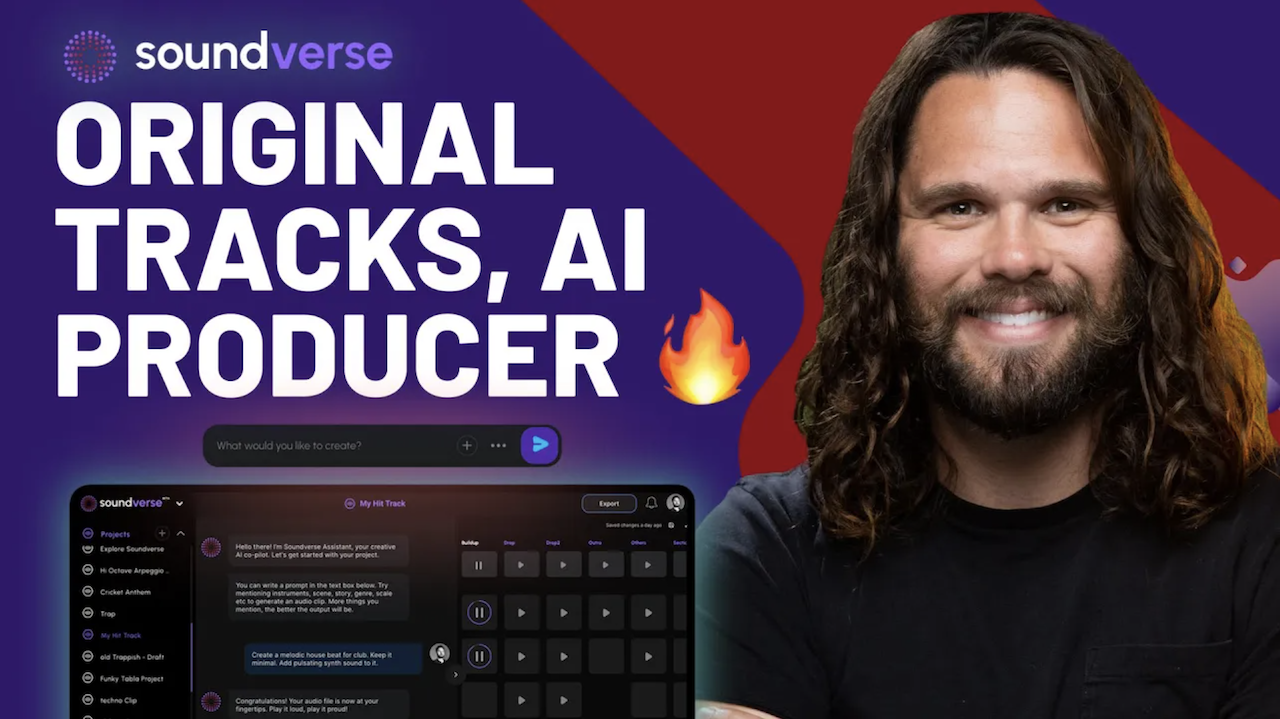
Here’s another long walkthrough of how to use Soundverse AI.
Text Guide
- To know more about AI Magic Tools, check here.
- To know more about Soundverse Assistant, check here.
- To know more about Arrangement Studio, check here.
Soundverse is an AI Assistant that allows content creators and music makers to create original content in a flash using Generative AI. With the help of Soundverse Assistant and AI Magic Tools, our users get an unfair advantage over other creators to create audio and music content quickly, easily and cheaply. Soundverse Assistant is your ultimate music companion. You simply speak to the assistant to get your stuff done. The more you speak to it, the more it starts understanding you and your goals. AI Magic Tools help convert your creative dreams into tangible music and audio. Use AI Magic Tools such as text to music, stem separation, or lyrics generation to realise your content dreams faster. Soundverse is here to take music production to the next level. We're not just a digital audio workstation (DAW) competing with Ableton or Logic — we're building a completely new paradigm of easy and conversational content creation.
TikTok: https://www.tiktok.com/@soundverse.ai
Twitter: https://twitter.com/soundverse_ai
Instagram: https://www.instagram.com/soundverse.ai
LinkedIn: https://www.linkedin.com/company/soundverseai
Youtube: https://www.youtube.com/@SoundverseAI
Facebook: https://www.facebook.com/profile.php?id=100095674445607
Join Soundverse for Free and make Viral AI Music
We are constantly building more product experiences. Keep checking our Blog to stay updated about them!