Can AI Make Authentic Jazz? Quality Analysis
Explore if AI can create authentic jazz in 2026 with advanced machine learning and music analysis.
Can AI Make Authentic Jazz? Quality Analysis
Artificial intelligence has evolved rapidly, reshaping nearly every creative field—including music. In 2026, the conversation around authenticity in AI-composed genres is more sophisticated than ever, especially when it comes to jazz. Jazz is a genre rooted in improvisation, emotional depth, and human interaction, which poses a unique challenge for algorithms. This article dives deep into the question: Can AI make authentic jazz? Through a comprehensive AI jazz quality analysis, we’ll uncover where machine learning shines and where human artistry still prevails.
What makes jazz authentic?
Before assessing AI jazz quality, we must define what gives jazz its authenticity. Jazz is characterized by a few essential traits: improvisation, syncopated rhythms, complex harmonies, and emotional communication between players. Authenticity in jazz doesn’t merely come from technical execution—it’s about spontaneity and the emotional dialogue within the music. Historically, jazz evolved through live performance, where musicians would respond to each other in real time, building tension and release through expressive phrasing.
In the digital era, jazz also embraces innovation. Artists blend electronic elements and AI-assisted production tools while maintaining its soul of improvisation. The question in 2026 is whether artificial intelligence can internalize these emotional and creative principles rather than just replicate the sound.
How does AI generate jazz music?
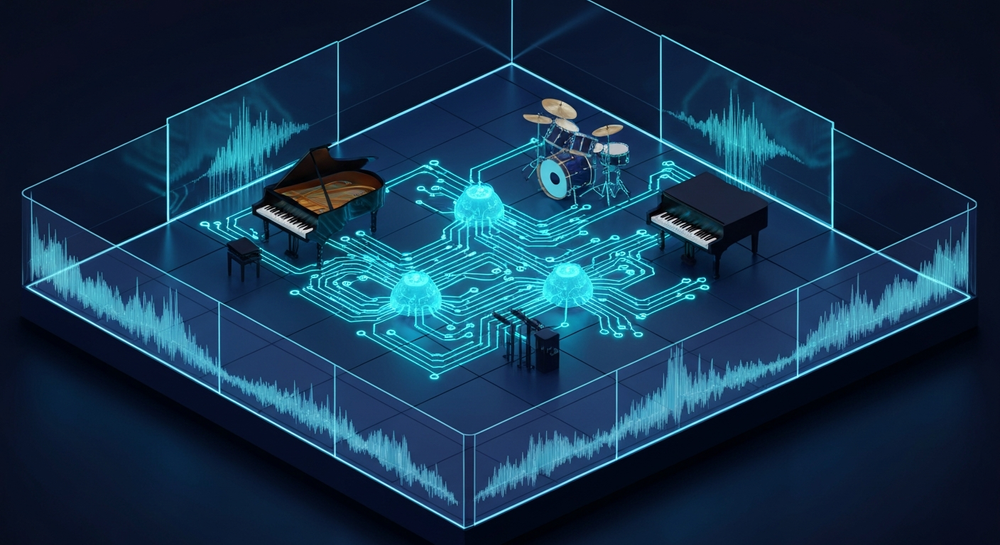
Machine learning jazz models analyze thousands of audio samples and notation patterns to learn harmonic structures, swing timing, and tonal balance. Modern artificial intelligence in music composition operates on deep learning frameworks that detect stylistic features such as chord progressions, instrument timbre, and melodic phrasing.
For example, an AI system might analyze recorded solos from great players to find statistical commonalities in their note choices and rhythmic inflections. These insights are then used to guide generation models to produce new improvisations that mimic the feeling of human musicians. However, achieving true authenticity—where emotional nuance and surprise feel organic—remains a challenge. Such limitations are explored by Why AI Will NEVER Improvise Jazz - bettersax.com.

What factors influence AI jazz quality?
The quality of AI-generated jazz depends on several technical and artistic factors:
- Training Data Diversity: The broader and more ethically sourced the dataset, the more nuanced the output. Systems trained only on generic loops or MIDI files tend to sound mechanical.
- Model Complexity: Deep generative models, like transformer-based architectures, can capture intricate rhythmic details and harmonic relationships crucial to jazz.
- Human Input: When musicians fine-tune the text prompts or guide the generative process, the output becomes closer to authentic human expression.
- Improvisational Logic: True jazz improvisation involves risk, silence, and emotional intent—elements that are hard to encode but essential for realism.
AI jazz quality analysis often involves comparing generated tracks with human performances using both objective audio metrics (pitch variance, swing ratio, harmonic density) and subjective listener feedback. For a learning demonstration, watch our guide on creating music from the Soundverse Tutorial Series.
Can AI truly improvise like a jazz musician?
AI jazz improvisation is achievable to an extent, but it often lacks the spontaneity rooted in human emotion. While machine learning jazz models can analyze millions of improvisations, they generate patterns based on probabilities. Human jazz musicians, however, make decisions based on intuition, mood, and audience response.
That doesn’t mean AI jazz is purely robotic. Research in 2026 shows that hybrid systems—where AI assists but humans steer the creative direction—produce results remarkably close to authentic performances. When artists use AI as a co-composer rather than a replacement, the output often includes organic phrasing and harmonic surprises reminiscent of human creativity.
For deeper insight into AI’s role across genres, explore related articles such as AI Music Generator and Human Composers: A Future Together or How AI Generated Music Is Transforming the Music Industry.
What are the key limitations of AI jazz generation?
While artificial intelligence in music composition has advanced significantly from 2024 and 2025 models, the technology still contends with limitations:
- Emotional Interpretation: AI cannot yet interpret emotional nuance beyond patterns encoded in data.
- Interactivity: Jazz thrives in live settings. AI systems operate asynchronously, generating compositions through input/output processes rather than simultaneous performance.
- Ethical Data Use: Many earlier algorithms lacked proper licensing, raising concerns about artist consent. Tools developed under frameworks like the Ethical AI Music Framework now resolve these issues.
- Creative Risk: True improvisation involves embracing mistakes, a trait AI tends to avoid by optimizing for mathematical smoothness.
Despite these challenges, the field of AI jazz quality continues to evolve, blending computational precision with artistic unpredictability.
How to make AI jazz with Soundverse AI Music Generator
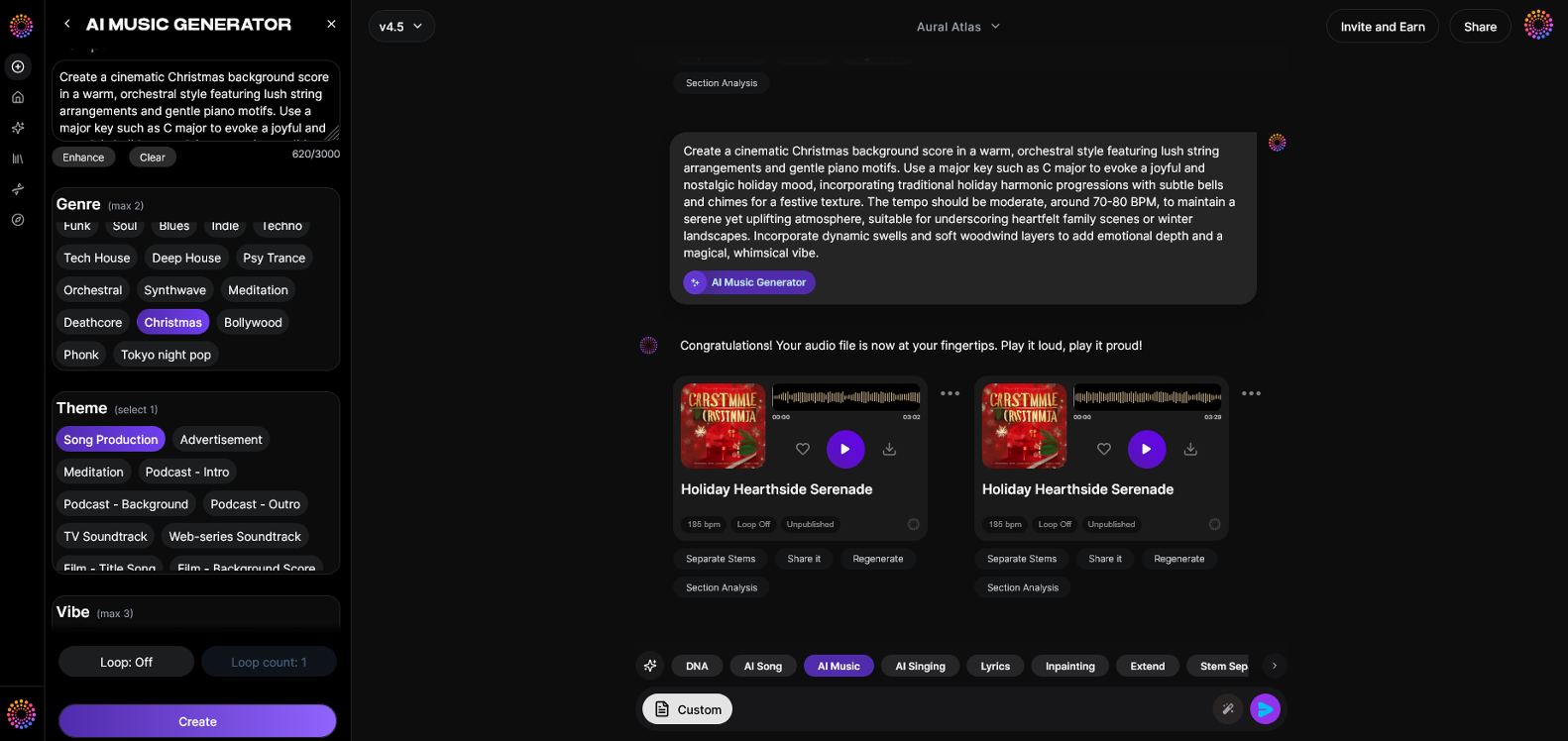
Soundverse’s AI Music Generator provides a foundation for creating high-quality instrumental music, including jazz-inspired tracks. It is not a vocal synthesis platform—it focuses purely on instrumental production. Users can create fully produced pieces by entering text prompts describing desired mood, genre, or instrumentation.
Core Capabilities:
- Text-to-Music Generation: Converts text prompts into complete instrumental compositions.
- Loop Mode: Enables seamless repetition for background or atmospheric jazz loops.
- Genre and Mood Control: Allows fine-tuning of acoustic elements such as piano, bass, drums, and brass.
- V4 and V5 Model Options: Offer varying fidelity and stylistic flexibility.
Primary Use Cases:
- Video background jazz scores.
- Game soundtracks and dynamic lounge loops.
- Meditation and wellness music featuring soft, jazz-inspired harmonies.
- Commercial and advertising tracks needing classy, ambient soundscapes.
Soundverse can’t simulate live jam interaction, but it captures the tonal richness, swing feel, and balance that define authentic jazz. The integration with Soundverse DNA enhances this further by enabling artists to generate custom outputs based on their licensed sonic identities, ensuring ethical and consistent AI jazz production.
Learn more about artistic integrations in Soundverse Revolutionizing Music Creation for New-Age Content Creators and How to Create Jazz Music with Soundverse AI.
How Soundverse supports ethical and authentic AI jazz
Soundverse doesn’t just replicate jazz—it uses transparent frameworks to preserve musical ethics. The Ethical AI Music Framework ensures consent and attribution, bridging innovation with artist integrity. Using the Section Analysis tool, Soundverse automatically detects song sections such as Intro, Verse, and Outro with time-coded precision, providing producers better remixing control.
Musicians working in 2026 find this particularly useful when blending AI-generated segments with live recordings, achieving hybrid tracks that fuse computational intelligence with human sensitivity. Whether you’re experimenting with modal jazz textures or looping smooth swing backgrounds, Soundverse offers a pathway for high-quality, copyright-safe jazz generation.
For producers exploring various soundscapes, check out helpful guides like Generate AI Music with Soundverse Text-to-Music and Now Generate Music with Filters Such as Genre, Theme, Instruments or Even Vibe.
Experience the Sound of AI-Generated Jazz Today
Discover how Soundverse lets you create authentic jazz compositions powered by AI, blending creativity and precision seamlessly. Explore endless possibilities and redefine your musical expression.
Related Articles
- How to Create Jazz Music with Soundverse AI — Learn how Soundverse helps you craft smooth, authentic jazz tracks with smart AI composition tools.
- AI Music Generator and Human Composers: A Future Together — Explore how AI and human artistry are blending to reshape modern music creation.
- The Role of AI Music in Film and Television — Discover how AI-generated music enhances storytelling and soundtracks in entertainment.
- How AI-Generated Music Is Transforming the Music Industry — Analyze how AI is changing production workflows and creative possibilities for musicians worldwide.
Here's how to make AI Music with Soundverse
Video Guide
Here’s another long walkthrough of how to use Soundverse AI.
Text Guide
- To know more about AI Magic Tools, check here.
- To know more about Soundverse Assistant, check here.
- To know more about Arrangement Studio, check here.
Soundverse is an AI Assistant that allows content creators and music makers to create original content in a flash using Generative AI. With the help of Soundverse Assistant and AI Magic Tools, our users get an unfair advantage over other creators to create audio and music content quickly, easily and cheaply. Soundverse Assistant is your ultimate music companion. You simply speak to the assistant to get your stuff done. The more you speak to it, the more it starts understanding you and your goals. AI Magic Tools help convert your creative dreams into tangible music and audio. Use AI Magic Tools such as text to music, stem separation, or lyrics generation to realise your content dreams faster. Soundverse is here to take music production to the next level. We're not just a digital audio workstation (DAW) competing with Ableton or Logic, we're building a completely new paradigm of easy and conversational content creation.
TikTok: https://www.tiktok.com/@soundverse.ai
Twitter: https://twitter.com/soundverse_ai
Instagram: https://www.instagram.com/soundverse.ai
LinkedIn: https://www.linkedin.com/company/soundverseai
Youtube: https://www.youtube.com/@SoundverseAI
Facebook: https://www.facebook.com/profile.php?id=100095674445607
Join Soundverse for Free and make Viral AI Music
We are constantly building more product experiences. Keep checking our Blog to stay updated about them!