AI Voice Database Opt-Out: How to Remove Your Voice from AI Systems in 2026
Learn how to remove your voice from AI databases using Soundverse Trace for privacy protection in 2026.
AI Voice Database Opt-Out: How to Remove Your Voice
In 2026, the role of voice data in artificial intelligence has expanded far beyond simple recognition. From content creation to digital assistance, AI systems use thousands of recorded voices for training purposes. However, alongside innovation comes a strong conversation around privacy, control, and consent. For individuals worried about their voice being part of an AI dataset without authorization, understanding the AI voice database opt-out process is crucial.
Consumers, creators, and privacy advocates are increasingly demanding transparency and mechanisms to ensure their personal data—including voice recordings—can be managed, deleted, or removed from training archives. This article serves as a comprehensive guide on how to remove your voice from AI datasets, safeguard your data rights, and implement effective privacy protection tools in 2026.
Why is AI Voice Data Privacy Critical in 2026?

Voice has become one of the most personal identifiers in the digital world. Unlike text or image, your unique vocal signature carries both biometric and emotional information. In the past two years (2024–2025), major AI platforms faced scrutiny for using publicly available voice clips from social media or podcasts in model training without explicit consent. The result was a new wave of regulations and privacy standards requiring companies to provide an opt-out mechanism.
As of 2026, global privacy frameworks—especially in regions like the EU and North America—require AI model operators to delete voice data upon request. AI voice database opt-out systems are now one of the most discussed privacy tools among creators and consumers alike.
What Does AI Voice Database Opt-Out Mean?
The term 'AI voice database opt-out' refers to the process where an individual requests that their voice recordings, samples, or related data be removed from any AI training or processing datasets. This ensures that the voice will no longer be used for model fine-tuning or generation purposes.
For creators, this process is an essential step in maintaining control over intellectual property and preventing unauthorized reproductions of vocal styles or tones. For individuals, it’s part of a larger move toward digital rights and privacy protection.
Opting out does not mean completely erasing your voice from the internet, but rather ensuring it is not part of ongoing or future AI training operations. Reputable AI audio platforms now offer transparent opt-out mechanisms, helping establish trust across users.
How to Make the AI Voice Database Opt-Out Process Efficient
Removing your voice from AI databases requires a structured approach. Here are the essential actions:
- Identify databases or platforms using your data. Look for AI systems or companies that have recorded or stored your vocal samples, such as text-to-speech services, music AI platforms, or content generation tools.
- Submit a formal database deletion request. Every compliant AI company should provide a data deletion or privacy request form under their Terms of Service or Privacy Policy.
- Provide proof of ownership or identity. Some services may require you to verify your identity by submitting short voice samples or account credentials to confirm the voice belongs to you.
- Track confirmation and enforcement. Once your voice removal request is approved, ensure the organization provides written confirmation of deletion.
For creators contributing to AI-based music generators, maintaining control of rights metadata and usage logs helps validate and track ownership, minimizing misuse scenarios.
How to Remove Your Voice from AI Databases in Practice
In 2026, AI training sets might involve millions of open-source or user-generated clips. Although you cannot directly view every dataset, transparent infrastructures like Soundverse make this process more manageable and effective.
How to Manage AI Voice Database Opt-Out with Soundverse Trace
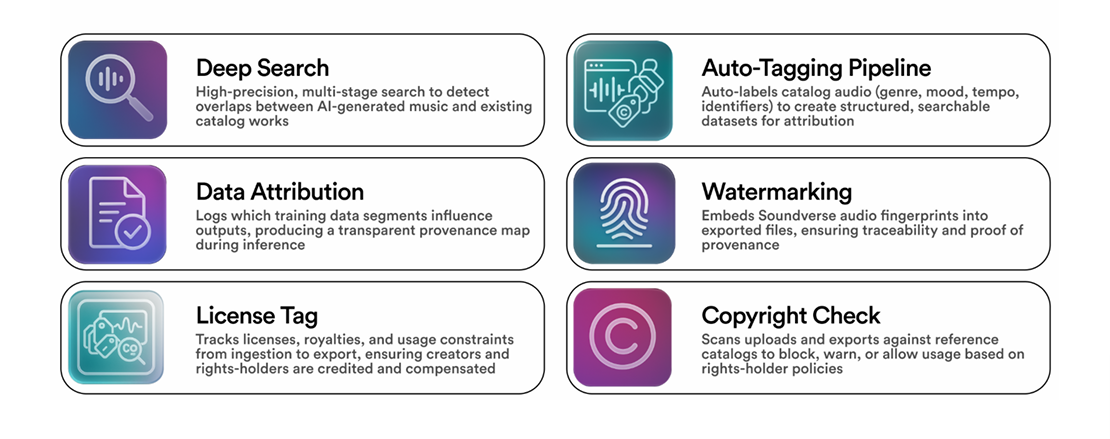
Soundverse Trace is a comprehensive trust layer for AI music that introduces transparency and rights verification across every stage—from dataset creation to export. When addressing AI voice database opt-out concerns, Trace acts as a foundation for authentic data management.
Key Capabilities of Soundverse Trace:
- Deep Search: With high-precision scanning (1:1 and 1:N), Soundverse Trace can detect voice overlaps or matches between AI-generated content and your original recordings.
- Data Attribution: It logs which training data influenced each generated output, helping confirm whether your voice data has been used or not.
- Audio Watermarking: Soundverse embeds inaudible but robust fingerprints into your recordings, enabling rights verification even after data distribution.
- License Tagging: The system preserves rights metadata from ingestion through export, ensuring your voice ownership tags remain intact across every AI processing stage.
When creators or individuals decide to opt out, Soundverse Trace facilitates detection and attribution, helping users identify if and where their voice appears within AI datasets. Subsequently, audio watermarking ensures future dataset scans can exclude those fingerprints, effectively implementing database deletion.
This alignment with ethical AI practices is part of Soundverse’s broader initiative, the Ethical AI Music Framework, which enforces transparent consent and attribution models. Combined, these features create a full-circle privacy protection system built for AI voice data governance.
For a deeper dive into Soundverse creative processes, watch the Soundverse Tutorial Series - 10. Make Deep House Music or Soundverse Tutorial Series - 9. How to Make Music, offering creators insights into managing datasets responsibly.
If you wish to learn more about AI-powered music and voice mechanisms, explore related articles such as How AI-generated music is transforming the music industry or Soundverse Assistant: Your AI Music Co-Producer.
Step-by-Step Guide: How to Remove Your Voice Using Soundverse Trace
Step 1: Upload or Record Your Voice Sample
To initiate the opt-out verification, upload a sample of your voice or a dataset you own. The system processes your upload asynchronously; there’s no live preview mechanism. This step ensures that Soundverse Trace can match your sample against its database.
Step 2: Run Deep Search for Detection
Once uploaded, activate Deep Search. Soundverse Trace scans across the database to find potential matches or overlaps with your voice. The high-precision engine can perform both exact (1:1) and pattern-based (1:N) detections, confirming any traces of your recordings.
Step 3: Review Attribution Logs
If matches appear, attribution logs list precisely which training entries or AI-generated results used your voice data. This transparency layer gives you insights into usage history before initiating removal.
Step 4: Request Voice Removal or Database Deletion
After reviewing matches, use the integrated deletion request option within Soundverse Trace. Your tagged voice fingerprints and associated metadata are automatically flagged, initiating the removal sequence. This ensures the AI dataset excludes your voice from future training.
Step 5: Track Confirmation of Voice Removal
Once the deletion is processed, you’ll receive asynchronous confirmation—verifying that your voice has been erased and is no longer associated with active training sets.
For creators participating in the Content Partner Program (an opt-in licensing framework within Soundverse), opting out works similarly. Partners may withdraw their consent and retain entitlement to no longer share or license their vocal data.
Pro Tips for Complete AI Voice Data Protection
- Keep Audio Watermarks Active: Always watermark your original recordings to maintain traceability. Even if data leaks occur, Soundverse Trace can re-identify your audio.
- Review Training Datasets Regularly: Engage with transparency reports released by AI platforms.
- Use Ethical Frameworks: Choose services under frameworks such as Soundverse’s Ethical AI Music Framework to ensure consent and recurring attribution.
- Stay Informed Through Industry Trends: New privacy standards evolve quickly; check updates like Music Industry Trends for the latest in ethical AI.
Take Control of Your Voice Data Today
Ensure your voice remains private. Soundverse offers transparent tools and guides to help you manage or opt out of AI voice databases with confidence and ease.
Related Articles
- Soundverse Introduces Stem Separation AI Magic Tool — Discover how Soundverse’s AI magic tool lets creators isolate and remix vocals and instruments effortlessly.
- Soundverse SAAR: AI Voice Assistant — Learn how Soundverse SAAR empowers users to generate, edit, and customize AI vocals intelligently.
- AI Music Generator and Human Composers: A Future Together — Explore how AI and human creativity can coexist and push the boundaries of music creation.
- How AI-Generated Music Is Transforming the Music Industry — Uncover the ways AI music generation is reshaping workflows, creativity, and ownership in the modern media space.
Here's how to make AI Music with Soundverse
Video Guide
Here’s another long walkthrough of how to use Soundverse AI.
Text Guide
- To know more about AI Magic Tools, check here.
- To know more about Soundverse Assistant, check here.
- To know more about Arrangement Studio, check here.
Soundverse is an AI Assistant that allows content creators and music makers to create original content in a flash using Generative AI.
With the help of Soundverse Assistant and AI Magic Tools, our users get an unfair advantage over other creators to create audio and music content quickly, easily and cheaply.
Soundverse Assistant is your ultimate music companion. You simply speak to the assistant to get your stuff done. The more you speak to it, the more it starts understanding you and your goals.
AI Magic Tools help convert your creative dreams into tangible music and audio. Use AI Magic Tools such as text to music, stem separation, or lyrics generation to realise your content dreams faster.
Soundverse is here to take music production to the next level. We're not just a digital audio workstation (DAW) competing with Ableton or Logic, we're building a completely new paradigm of easy and conversational content creation.
TikTok: https://www.tiktok.com/@soundverse.ai
Twitter: https://twitter.com/soundverse_ai
Instagram: https://www.instagram.com/soundverse.ai
LinkedIn: https://www.linkedin.com/company/soundverseai
Youtube: https://www.youtube.com/@SoundverseAI
Facebook: https://www.facebook.com/profile.php?id=100095674445607
Join Soundverse for Free and make Viral AI Music
We are constantly building more product experiences. Keep checking our Blog to stay updated about them!
Image Steps: []