AI Style Transfer for Music: How Artificial Intelligence is Redefining Sound Creation
Discover how AI style transfer for music is reshaping sound creation and artist collaboration in 2026.
AI Style Transfer for Music: How Artificial Intelligence is Redefining Sound Creation
Artificial intelligence has moved far beyond simple music generation. In 2026, AI style transfer for music represents a core technological shift that allows producers, engineers, and artists to remix creative DNA itself. This technique blends neural audio synthesis and advanced machine learning in music to translate one artist’s sonic fingerprint into new, original compositions. The result is not mimicry, but evolution—where the soul of a sound is ethically and intelligently reimagined.
What is AI Style Transfer for Music?
AI style transfer for music is the process where artificial intelligence models learn characteristic aspects of a musician's sound—tone, rhythm, arrangement, and timbre—and apply those stylistic features to generate new content. Similar to how AI visual tools can re-render an image in the style of a painter, music-focused models can reinterpret a composition or voice according to the stylistic DNA of an artist or era.
The concept grew from early developments in neural audio synthesis and deep learning frameworks from the mid-2020s. By 2026, tech pioneers have refined it to ethically reproduce musical 'styles' without infringing copyright. Instead of copying material, AI systems analyze waveform structures and emotional cues, reassembling them into new music that feels authentic but remains original.
How Does Machine Learning Enable Style Transfer in Music?
Machine learning in music has evolved through large-scale training of neural networks on audio datasets. The models learn correlations between harmonic structure, spectral features, and performance gestures. Once an AI understands these relationships, it can generate novel examples consistent with that style.

Key techniques include:
- Feature Extraction: Breaking down audio into measurable descriptors such as rhythm patterns, frequency envelopes, and tonal balance.
- Style Encoding: Representing an artist’s essence as a latent vector or 'DNA' embedding that models can reuse across new compositions.
- Generative Composition: The network outputs fresh music by combining a content source—like a melody sketch—with a style source—for example, an artist's tonal DNA.
- Ethical Licensing: Modern tools, like Soundverse DNA, address ownership by training only on authorized catalogs.
This technology shifts the creative process. Musicians and digital artists can explore entirely new sonic territories while respecting attribution and rights.
Why is AI Style Transfer Critical in 2026’s Music Industry?
The music industry in 2026 faces pressing questions about originality and authenticity. After the AI music explosion during 2024–2025, audiences and professionals demanded tools that maintain creative integrity while expanding production capabilities.
Style transfer answers this need by enabling legally compliant imitation. AI can imitate artist AI models or sonic aesthetics without duplicating their copyrighted tracks. It’s particularly transformative in film scoring, gaming soundtracks, and branded content creation—industries requiring consistent but adaptable sound identities.
Beyond that, it democratizes artistry. Independent musicians can license their AI-trained identities for collaboration, fans can generate tributes safely, and studios can localize music content for global markets. The blend of human creativity and algorithmic intelligence creates a more equitable music landscape.
What Technologies Power AI Style Transfer for Music?
Several core components underpin this revolution:
- Neural Audio Synthesis: Deep neural networks construct audio waveforms sample-by-sample, capturing minute nuances of tone and emotion.
- Transfer Learning: AI systems reuse knowledge from existing models to generate music with different stylistic constraints.
- Generative Adversarial Networks (GANs): Competing neural structures refine produced sounds to match human-like richness.
- Diffusion Models: Newer audio diffusion algorithms deliver smoother and more natural timbres, pushing sound realism to new heights.
- Sensitivity Controls: Advanced tools introduce sensitivity sliders to cluster styles by eras or production context.
Together, these improvements redefine musical creativity across genres—from experimental electronic to orchestral production. For a deeper dive into sound design techniques, watch our Soundverse Tutorial Series - 9. How to Make Music.
How Are Artists Using AI Style Transfer Creatively?
By 2026, the applications range widely:
- Remixing Legacy Sounds: Artists reinterpret their older works into modern arrangements without hiring remix engineers.
- Sonic Branding: Integrated style transfer functionalities allow brands to maintain consistent audio identities.
- Film and Game Scoring: Producers generate hypnotic cues matching a particular artist-inspired vibe instantly.
- Education & Research: Institutions analyze stylistic patterns to study musical evolution scientifically.
AI style transfer also allows for emotional and thematic reinterpretation. With fine-tuned controls, an artist can regenerate tracks in moods like serenity, intensity, or nostalgia. This capability has become central to the creative workflow of many digital sound designers.
For more industry insights, you can explore related discussions such as music industry trends and how AI-generated music is transforming the industry. You can also learn production skills through tutorials like Soundverse Tutorial Series - 10. Make Deep House Music.
The Ethical Side: Beyond Imitation
A critical aspect of this technology lies in the ethics of imitation. When producers use AI to imitate artist AI models, it must happen in a rights-respecting framework. Platforms now incorporate licensing systems and monetization schemes so artists benefit when others generate in their style.
This evolution reflects broader industry values toward fair digital creative exchange. The concept of ‘ethical AI sound design’ ensures transparency about training sources and creative ownership. As a result, style transfer is no longer a gray zone in copyright law—it’s a structured space for collaboration. These discussions connect with broader legal shifts described in AI Music and the Law in 2026: What Creators Can and Cannot Do.
How to make AI Style Transfer for Music with Soundverse DNA
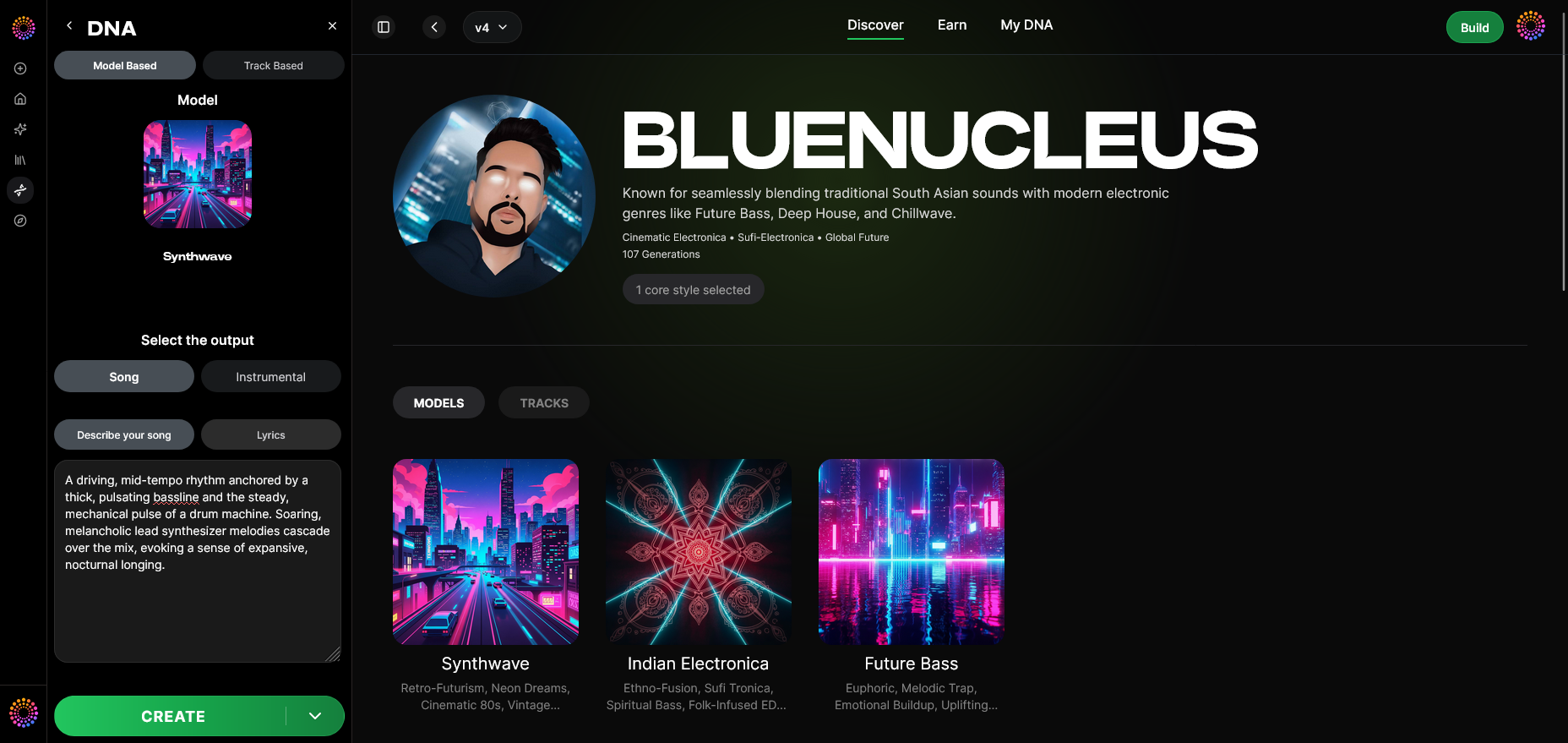
Now that you understand how AI style transfer for music works, here is how to create it instantly using Soundverse.
Soundverse DNA is the artist-trained AI ecosystem setting a gold standard for ethical and scalable AI music creation. It enables creators to generate new music infused with the sonic DNA of their favorite artists or their own distinct sound identities.
Key Components:
- Full DNA: Captures an artist’s complete musical fingerprint—songs, instrumentals, and performance tone.
- Voice DNA: Focuses solely on vocal timbre and style, useful for emulating singing or spoken expressions.
- DNA Marketplace: A decentralized community where creators license their DNA models to others for creative collaboration.
- Sensitivity Selector: Allows clustering catalogs into various stylistic eras for fine control.
- Private Mode: Protects models, ensuring secure co-creation and privacy.
Primary Use Cases:
- Artist Monetization: Earn when others use your licensed sound identity.
- Sonic Branding: Build consistent audio signatures across content.
- Film/Game Scoring: Legally produce style-matched cues.
- Personal Workflow: Speed up creative production using your own voice or sound blueprint.
Using Soundverse DNA means you can ethically apply style transfer to any track, voice, or composition. Whether you aim to generate AI music with Soundverse text-to-music, explore new genres like EDM creation with AI, or learn about AI revolutionizing sound creation for content creators, Soundverse provides an intuitive platform to do it legally and effectively.
By 2026, Soundverse DNA isn’t just a tool—it’s a transformation engine. It merges machine learning in music with cultural respect, giving artists control over their sonic likeness and giving audiences new worlds of sound to explore.
Create Music That Moves With AI Style Transfer
Experience a new era of sound creation by blending genres, moods, and textures effortlessly. Discover how Soundverse empowers you to craft tracks that resonate and innovate using AI-powered music tools.
Start Creating with Soundverse
Related Articles
- How AI-Generated Music Is Transforming the Music Industry: Explore how artificial intelligence is reshaping the creative process behind modern music production.
- The Role of AI Music in Film and Television: Learn how AI-driven composition is bringing cinematic soundscapes and emotional depth to the big screen.
- AI Music Generator and Human Composers: A Future Together: Discover how AI tools are complementing rather than replacing human creativity in music composition.
- How an AI Music Generator Inspires Creative Fusion: Understand how AI inspires genre-blending and experimental sound designs for producers worldwide.
Here's how to make AI Music with Soundverse
Video Guide
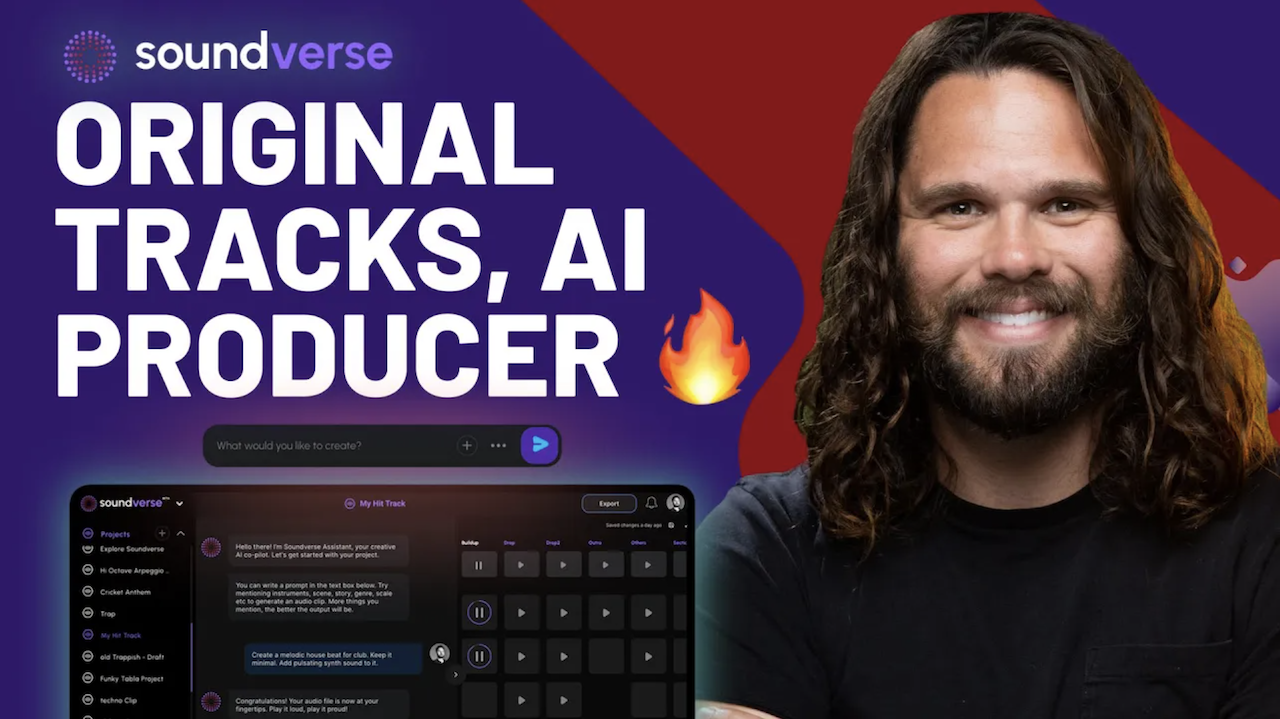
Here’s another long walkthrough of how to use Soundverse AI.
Text Guide
- To know more about AI Magic Tools, check here.
- To know more about Soundverse Assistant, check here.
- To know more about Arrangement Studio, check here.
Soundverse is an AI Assistant that allows content creators and music makers to create original content in a flash using Generative AI. With the help of Soundverse Assistant and AI Magic Tools, our users get an unfair advantage over other creators to create audio and music content quickly, easily and cheaply. Soundverse Assistant is your ultimate music companion. You simply speak to the assistant to get your stuff done. The more you speak to it, the more it starts understanding you and your goals. AI Magic Tools help convert your creative dreams into tangible music and audio. Use AI Magic Tools such as text to music, stem separation, or lyrics generation to realise your content dreams faster. Soundverse is here to take music production to the next level. We're not just a digital audio workstation (DAW) competing with Ableton or Logic, we're building a completely new paradigm of easy and conversational content creation.
TikTok: https://www.tiktok.com/@soundverse.ai
Twitter: https://twitter.com/soundverse_ai
Instagram: https://www.instagram.com/soundverse.ai
LinkedIn: https://www.linkedin.com/company/soundverseai
Youtube: https://www.youtube.com/@SoundverseAI
Facebook: https://www.facebook.com/profile.php?id=100095674445607
Join Soundverse for Free and make Viral AI Music

We are constantly building more product experiences. Keep checking our Blog to stay updated about them!