AI Practice Tools for Musicians: The Complete 2026 Guide
Explore top AI practice tools for musicians in 2026 helping with skill improvement, training, and practice efficiency.
AI Practice Tools for Musicians
In 2026, artificial intelligence has become a trusted companion for musicians at every skill level. From automatic feedback on your scales to instantly generating backing tracks that fit your playing style, AI practice tools for musicians have transformed how players approach rehearsal, songwriting, and technical improvement.
What are AI practice tools for musicians?
AI practice tools for musicians are applications that use artificial intelligence to help players refine technique, ear training, rhythm accuracy, and overall musical creativity. These tools can analyze performances, generate accompaniment, suggest exercises, and even simulate virtual ensemble settings.
They operate using machine learning models trained on large datasets of musical performances. When you play, record, or upload audio, the AI detects patterns in timing, pitch, and dynamics and offers personalized recommendations to help you grow faster.
Why are AI practice tools essential for musicians in 2026?
By 2026, the music training landscape has dramatically evolved. Traditional learning through teachers and printed scores remains important, but AI tools add instant feedback and guided progress tracking that accelerates development.
Here are key reasons AI tools for music training are now indispensable:
- Personalization: AI can tailor lessons specific to your playing style, much like a private tutor.
- Time Efficiency: Smart algorithms optimize your practice sessions, identifying weaknesses quickly.
- Accessibility: From mobile apps to browser-based systems, musicians can train anywhere.
- Variety: Modern AI programs generate infinite exercises, scales, and accompaniment styles.
- Cross-Instrument Support: Tools today support guitar, piano, drums, voice, and orchestral instruments.
What are the top AI-driven music practice trends of 2026?
Several key trends dominate the AI-driven music practice space this year:
- Adaptive Practice Sessions: Systems respond dynamically as you play, adjusting difficulty automatically.
- Integrated Composition and Training: Musicians practice by composing short tracks with automatic evaluation of timing and harmony.
- Immersive Feedback Environments: Audio feedback integrated with virtual reality for deeper engagement.
- Cross-Genre Learning: AI models analyze your playing in styles like jazz or EDM, suggesting genre-specific improvements.
- Voice and Instrument Integration: Tools combine vocal and instrumental analysis for singers who play live.
For further exploration of how AI is changing music, read about music industry trends in 2026. You can also check out insights from AI & Music Tech In 2026 which explores assistive AI evolution.
How do AI tools support music skill improvement?
The term music skill improvement AI refers to software that tracks progress, evaluates performance accuracy, and adjusts practice tasks automatically. Instead of repeating traditional drills, users engage in dynamic learning sessions.
Key functionalities include:
- Pitch detection and intonation scoring.
- Rhythm stability analysis.
- Expressive dynamics profiling.
- Practice session summaries.
For educators, these statistics can be exported, making student tracking simple and time-efficient. In higher education environments, AI tools also integrate with digital audio workstations to align practice goals with composition.
Who benefits most from artificial intelligence for musicians?
Artificial intelligence for musicians bridges skill levels:
- Beginners: Receive structured guidance without being overwhelmed by theory.
- Intermediate Players: Acquire instant feedback on subtle issues like timing drift.
- Advanced Musicians: Automate repetitive exercises and focus on creative refinement.
- Music Teachers: Monitor multiple students simultaneously using aggregated reports.
For more examples of how creators utilize AI, review 25 Best AI Music Generation Apps 2026 highlighting practice integrations and performance tips.
Popular AI tools for music training in 2026
Below are leading AI tools used globally for daily practice and training:
- Yousician (yousician.com) – An interactive learning app offering real-time pitch analysis and guided lessons.
- Tonara (tonara.com) – AI platform designed for music teachers to track and motivate students.
- Uberchord (uberchord.com) – Focused on guitar practice, offering automatic chord recognition.
- Melodrive (melodrive.com) – Creates adaptive musical backgrounds that respond to your playing.
- Soundverse Agent (soundverse.ai) – Advanced conversational AI assistant automating full music workflows.
To see how Soundverse competes among other AI-based music platforms, review its comparison in best AI music generator top picks and review. Complementary readings include Best AI Music Generators in 2026 discussing performance benchmarks and innovations.
How to make AI practice tools for musicians work for you
Maximize results through a structured approach:
- Define your goal – Are you improving finger speed, expression, or improvisation?
- Select compatible AI software for your instrument.
- Record your practice sessions – AI systems need accurate data.
- Evaluate feedback efficiently – Focus on consistent errors.
- Set milestone targets every week.
This approach aligns with 2026 standards for performance-based learning adopted across music academies.
How to make AI practice tools for musicians work seamlessly with music creation platforms
Modern platforms now merge practice and production. For example, after refining melodies through training apps, users create songs using AI-based generators like Soundverse.
You can explore related creative options such as:
- Generate AI music with Soundverse Text-to-Music
- Soundverse Assistant: Your AI Music Co-Producer
- Soundverse introduces Stem Separation AI Magic Tool
These integrations exemplify how AI-driven music practice naturally leads to advanced production workflows.
For a deeper dive into creative sessions, watch our tutorial on making music or Soundverse Deep House music guide.
How to make AI practice tools for musicians with Soundverse Agent
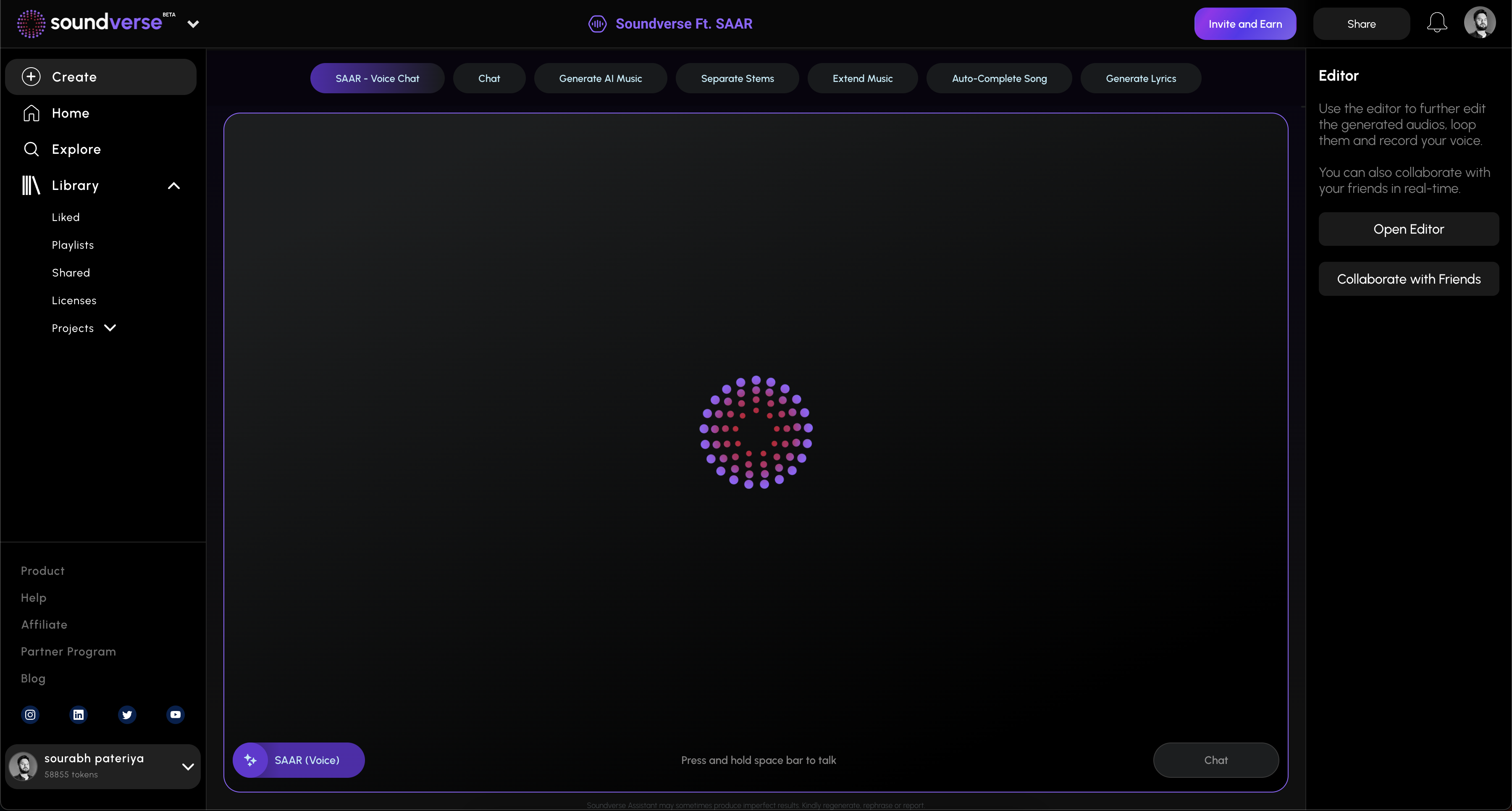
Now that you understand the importance of AI-powered training, let's see how Soundverse simplifies it through the Agent feature. Soundverse Agent is the platform’s conversational AI assistant, enabling musicians to control tools through natural language commands. When you tell it “create a pop song, then remove the drums,” Agent interprets your request using multi-step reasoning to execute complex operations automatically.
How it enhances music practice
- Contextual Memory: Agent remembers previous conversations, ideal for continuous skill sessions. You can reference earlier prompts like “repeat that jazz chord progression but slower.”
- Multi-Step Tool Orchestration: It connects various Soundverse tools seamlessly—from music generation to arrangement—so you can move from practice backing tracks to complete compositions.
- Cross-Tool Workflow Automation: If you wish to analyze song structure, Agent can coordinate with Section Analysis or open the output directly in Arrangement Studio.
- Voice Input Support: Musicians can issue voice commands without typing, making training hands-free.
Use Cases for Musicians
- Beginners: Generate simple accompaniment for practice without technical setup.
- Producers: Automate how they create and refine backing exercises.
- Educators: Run interactive theory lessons where students can request chord progressions or rhythm drills vocally.
- Rapid Prototyping: Explore multiple variations quickly when creating new exercises or demo tracks.
Connected Tools
Soundverse integrates AI-powered modules that complement Agent’s practice capabilities:
- Section Analysis – Labels parts like verse, chorus, and bridge. Ideal for understanding structure during training.
- Arrangement Studio – Lets users rearrange song segments for compositional learning.
- AI Music Generator – Provides infinite backing tracks for improvisation and rhythm practice.
Musicians in 2026 can now combine performance improvement and music creation without leaving the Soundverse ecosystem.
Start Practicing Smarter with Soundverse AI
Unlock your full musical potential using AI-powered tools that tailor exercises, create backing tracks, and enhance your performance. Elevate your practice sessions and experience music creation like never before.
Related Articles
- Soundverse Assistant: Your AI Music Co-Producer — Discover how Soundverse Assistant helps musicians collaborate with AI seamlessly, turning creative ideas into polished tracks effortlessly.
- Soundverse Introduces Stem Separation AI Magic Tool — Learn how Soundverse’s stem separation technology allows you to isolate and experiment with song parts for more effective practice sessions.
- The Benefits of Composing with AI Music Generator — Explore how AI composition tools accelerate learning, spark creativity, and simplify complex practice routines for musicians.
- AI Music Generator and Human Composers: A Future Together — Understand how human artistry and AI technology combine to redefine musical practice and performance in the modern era.
Here's how to make AI Music with Soundverse
Video Guide
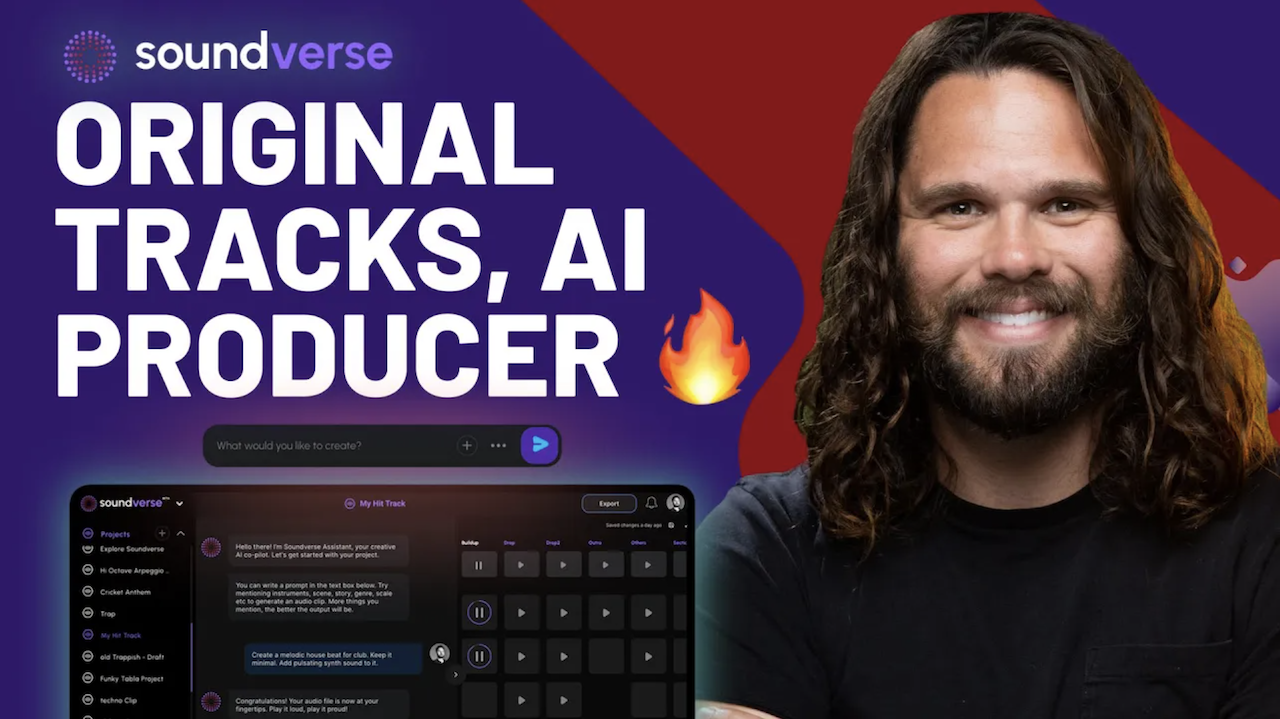 Here’s another long walkthrough of how to use Soundverse AI.
Text Guide
- To know more about AI Magic Tools, check here.
- To know more about Soundverse Assistant, check here.
- To know more about Arrangement Studio, check here.
Soundverse is an AI Assistant that allows content creators and music makers to create original content in a flash using Generative AI. With the help of Soundverse Assistant and AI Magic Tools, our users get an unfair advantage over other creators to create audio and music content quickly, easily and cheaply. Soundverse Assistant is your ultimate music companion. You simply speak to the assistant to get your stuff done. The more you speak to it, the more it starts understanding you and your goals. AI Magic Tools help convert your creative dreams into tangible music and audio. Use AI Magic Tools such as text to music, stem separation, or lyrics generation to realise your content dreams faster. Soundverse is here to take music production to the next level. We're not just a digital audio workstation (DAW) competing with Ableton or Logic, we're building a completely new paradigm of easy and conversational content creation.
TikTok: https://www.tiktok.com/@soundverse.ai
Twitter: https://twitter.com/soundverse_ai
Instagram: https://www.instagram.com/soundverse.ai
LinkedIn: https://www.linkedin.com/company/soundverseai
Youtube: https://www.youtube.com/@SoundverseAI
Facebook: https://www.facebook.com/profile.php?id=100095674445607
Join Soundverse for Free and make Viral AI Music
 We are constantly building more product experiences. Keep checking our Blog to stay updated about them!