AI Music Video vs Traditional Music Video: Key Differences Explained in 2026
Discover how AI music videos differ from traditional ones in 2026 and how creators are using Soundverse AI to revolutionize video production.
AI Music Video vs Traditional Music Video: Key Differences
Introduction
In 2026, the landscape of music video production is almost unrecognizable compared to a few years ago. The rapid evolution of artificial intelligence has transformed the way musicians, directors, and digital creators bring their visual and musical visions to life. Among these changes, the emergence of the AI music video stands out as a game changer, offering faster, more customizable, and cost-efficient production workflows than the traditional model.
This article explores the key differences between AI music videos and traditional music videos, analyzing their creative, technical, and economic implications. Whether you're a musician planning your next release, a video producer exploring new frontiers, or a digital creator curious about the convergence of AI video production and the music industry, this guide will help you navigate the evolving world of music video technology in 2026.
What defines an AI music video in 2026?
An AI music video is created or heavily enhanced using artificial intelligence-driven tools for both audio and visual content. Unlike conventional production where human teams handle direction, cinematography, editing, and effects, AI can autonomously generate visuals synchronized to the music’s rhythm, mood, and lyrics.
AI systems such as video diffusion models, neural rendering engines, and AI-assisted editing suites now allow creators to generate high-quality videos purely from text prompts or musical input. In many cases, the AI automatically interprets a track’s structure—detecting tempo changes, key signatures, and themes—to produce visuals that evolve dynamically. According to Music You Can See: AI Music Videos Become Essential by 2026, by the end of 2026, AI music video generators won’t feel new—they’ll feel necessary.
The result is an entirely new category of artistic output: algorithmically generated visual storytelling aligned perfectly with sound.

How does a traditional music video differ?
A traditional music video, in contrast, is produced through human-led collaboration. It involves a director, cinematographer, editors, and a production crew managing everything from concept design to shooting and post-production. The workflow is typically linear—ideation, pre-production, shoot, edit, and distribution—and heavily dependent on physical resources like locations, lighting setups, and actors.
While this method enables strong artistic control and emotional authenticity, it also comes with high costs, long timelines, and limited scalability. A single shoot might take weeks, whereas an AI-generated video could be rendered overnight. As explained by EurekAlert!, AI systems like AutoMV can already produce music videos that maintain narrative flow and visual identity from beginning to end.
What are the core differences between AI and traditional music videos?
To understand the real distinction between these approaches, we can analyze their components:
1. Creation Speed
- AI Music Video: Production can take hours or days since AI generates and edits visuals in one automated pipeline.
- Traditional Music Video: Involves multiple teams and stages—scriptwriting, casting, filming, post-production—often extending over several weeks.
2. Cost Efficiency
- AI: Lower operational costs. There’s no need for crews, sets, or expensive post-production tools.
- Traditional: High production expenses. Travel, equipment rental, set design, and labor drive up the budget. As discussed in AI Music vs Stock Music for Video Creators: Which is Better in 2026?, this speed and cost efficiency make AI music production increasingly attractive.
3. Creative Control
- AI: Offers near-limitless creative possibilities but relies heavily on the prompt engineer’s skill and iterative refinement.
- Traditional: Allows directors and artists to control exact emotions, camera movements, and physical performances.
4. Artistic Authenticity
- AI: Synthesized visuals may lack the subtle imperfection of human emotion but compensate through surreal artistic styles.
- Traditional: Delivers tangible realism and human-driven storytelling that audiences intuitively connect with.
5. Scalability and Accessibility
- AI: Democratizes production for independent artists. Anyone can produce visuals for their single without a major label.
- Traditional: Remains resource-intensive, limiting accessibility for smaller creators.
6. Integration with AI Audio Systems
AI music videos can be directly paired with AI-generated tracks, eliminating complicated post-syncing. For instance, artists can generate an instrumental with text-to-music systems like Soundverse’s AI Music Generator, then feed that audio into an AI video tool that visually maps the music’s structure. For creators working with AI music visualization, check out AI Music Video Creation in 2026: A Practical Guide to Modern Visual Production Tools.
Why have AI music videos become so popular in 2026?
Several technological and cultural factors have contributed to the rise of AI-driven production:
- The normalization of AI in creative industries: After the breakthroughs of 2025, musicians and filmmakers began using AI for everything from sound design to storytelling.
- Social media demand: Short-form video platforms like TikTok, Reels, and YouTube Shorts favor rapid content cycles—AI makes it possible to produce dozens of clips daily.
- Improved model accuracy: AI visual generators now interpret music in ways that feel genuinely emotional, imitating cinematographic nuance.
- Ethically sourced data: Platforms like Soundverse DNA introduced ethically trained AI systems that respect artists’ rights, encouraging widespread professional adoption.
In short, AI is not replacing creativity—it’s accelerating it.
What is the role of AI video production in modern music marketing?
In 2026, a music release is as much a visual event as an auditory one. AI video production has transformed music marketing strategies:
- Dynamic Visualizers: Artists release animated loops that react to beats in real time.
- Personalized Videos: Fans can input their names or preferences to generate customized music clips.
- 360° Experiences: Using AI-generated imagery, musicians produce immersive VR videos at a fraction of past costs.
For artists, these innovations provide endless engagement opportunities while maintaining independence from traditional label-led campaigns. You can also explore how creators use these tools with guides like What is the FUTURE of AI Music look like in 2026? - YouTube.
How Soundverse’s AI Music Generator empowers creators
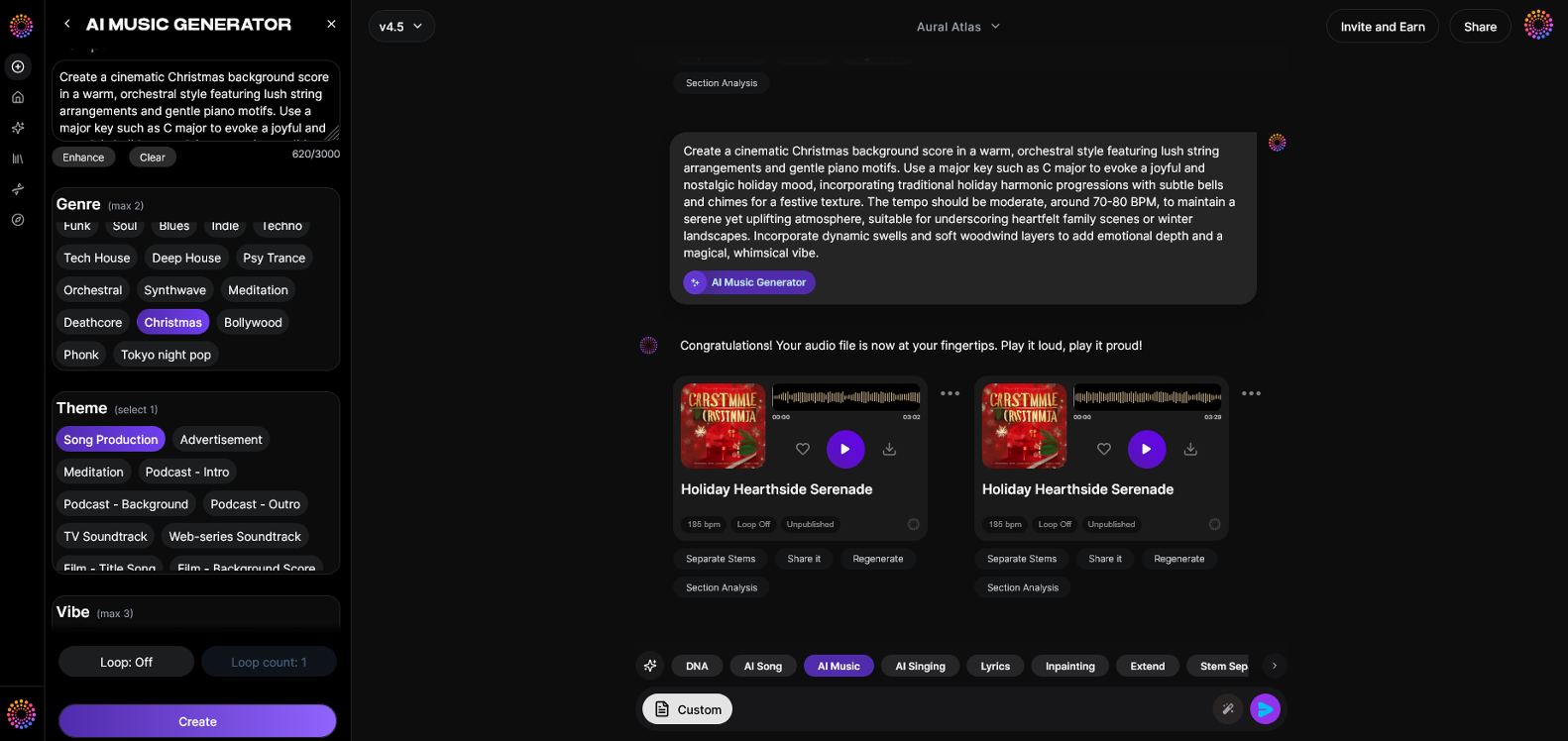
The Soundverse AI Music Generator revolutionizes how musicians integrate AI in the music industry by connecting text-to-music technology with modern video production.
Soundverse allows users to create fully produced instrumental tracks directly from text prompts—ideal for pairing with their AI visual projects. Whether you’re generating a cinematic score for a sci-fi-themed video or producing loopable background music for a promotional clip, Soundverse provides unmatched creative agility.
Key Features:
- Text-to-Music Creation: Input descriptive prompts such as “ethereal electronic ambiance for futuristic visuals.”
- Loop Mode: Automatically generates seamless looping sections perfect for social media and interactive video experiences.
- Genre and Mood Control: Fine-tune instruments, BPM, and texture to match lighting and pacing in your AI video.
- Version Options (V4, V5): Choose models that prioritize realism or stylization.
Primary Use Cases:
- Background tracks for music videos and promos
- Game soundtracks and looped ambiance
- Wellness and meditation visuals
- Commercials and ads powered by AI-driven visuals
You can explore how AI composition integrates into other workflows by reading our deep dives, such as How AI-generated music is transforming the music industry, or learn how to generate AI music with Soundverse’s text-to-music tools. For a hands-on view, watch our guide on creating Deep House music.
Are AI music videos replacing traditional ones?
Not quite. The relationship is more complementary than competitive. While AI excels at speed and experimentation, traditional methods remain vital for storytelling that relies on nuanced human performance.
The best results often come from hybrid workflows where directors use AI for previsualization, effects, or transitions but retain human-driven cinematography. Many prominent producers in 2026 are embracing this balance.
For creators who want inspiration on how to blend human artistry with AI tools, articles like The role of AI music in film and television and Soundverse AI revolutionizing music creation for new-age content creators offer practical insights.
Recommended Reading:
- Soundverse introduces STEM Separation AI Magic Tool
- How to create EDM with Soundverse AI
- Music Industry Trends
By understanding these evolutions, creators can make informed choices about their creative process—and harness both AI and tradition to push the boundaries of audiovisual storytelling.
Create Your First AI Music Video Today
Bring your creative vision to life with Soundverse’s AI-powered tools. Generate stunning visuals, music, and emotion-driven storytelling—all with just a few clicks.
Start Creating for Free
Related Articles
- The Role of AI Music in Film and Television: Discover how AI-generated soundtracks are revolutionizing visual storytelling across film and TV.
- How an AI Music Generator Inspires Creative Fusion: Learn how AI can enhance artistic collaboration and help creators blend genres like never before.
- Enhancing YouTube Content with Royalty-Free and Copyright-Free Music Using Soundverse AI: Find out how to legally enrich your videos with unique music crafted by Soundverse AI tools.
- Soundverse AI: Revolutionizing Music Creation for New-Age Content Creators: Explore how Soundverse empowers creators to produce professional-level audio and visuals effortlessly.
Here's how to make AI Music with Soundverse
Video Guide
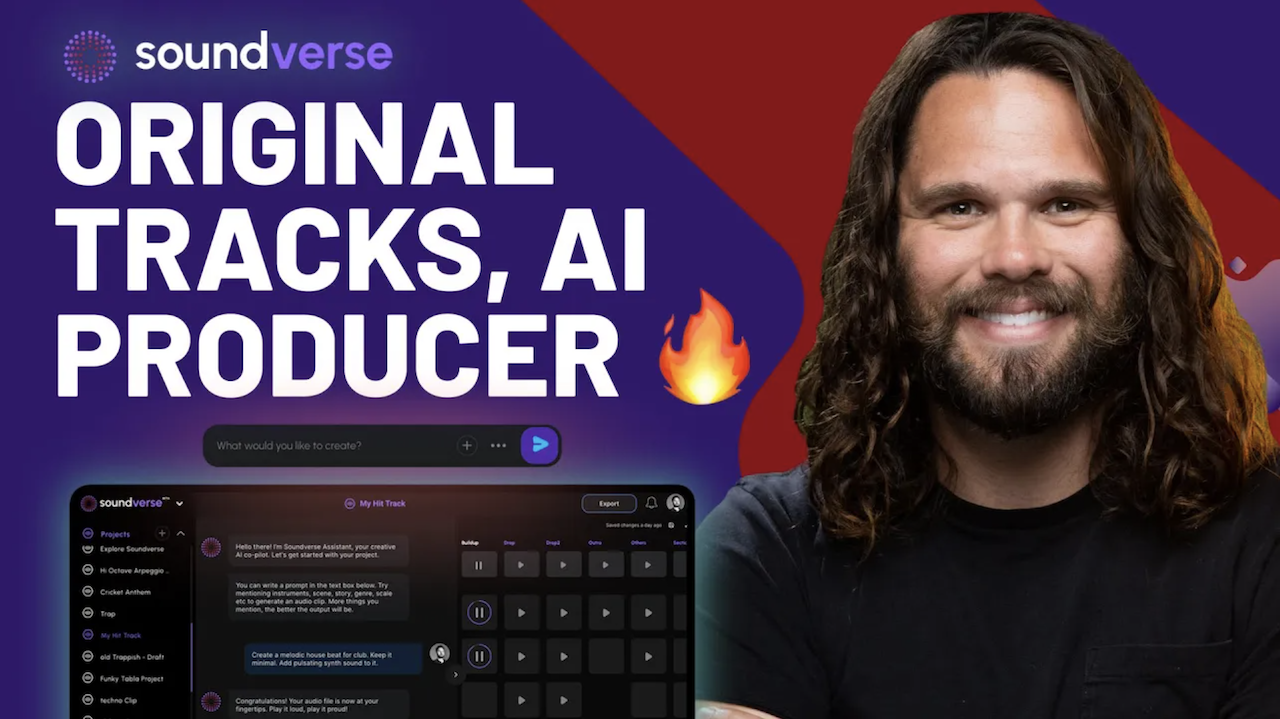
Here’s another long walkthrough of how to use Soundverse AI.
Text Guide
- To know more about AI Magic Tools, check here.
- To know more about Soundverse Assistant, check here.
- To know more about Arrangement Studio, check here.
Soundverse is an AI Assistant that allows content creators and music makers to create original content in a flash using Generative AI. With the help of Soundverse Assistant and AI Magic Tools, our users get an unfair advantage over other creators to create audio and music content quickly, easily and cheaply. Soundverse Assistant is your ultimate music companion. You simply speak to the assistant to get your stuff done. The more you speak to it, the more it starts understanding you and your goals. AI Magic Tools help convert your creative dreams into tangible music and audio. Use AI Magic Tools such as text to music, stem separation, or lyrics generation to realise your content dreams faster. Soundverse is here to take music production to the next level. We're not just a digital audio workstation (DAW) competing with Ableton or Logic, we're building a completely new paradigm of easy and conversational content creation.
TikTok: https://www.tiktok.com/@soundverse.ai
Twitter: https://twitter.com/soundverse_ai
Instagram: https://www.instagram.com/soundverse.ai
LinkedIn: https://www.linkedin.com/company/soundverseai
Youtube: https://www.youtube.com/@SoundverseAI
Facebook: https://www.facebook.com/profile.php?id=100095674445607
Join Soundverse for Free and make Viral AI Music

We are constantly building more product experiences. Keep checking our Blog to stay updated about them!