AI Music Copyright for NFT Sales Explained
Learn how AI music copyright applies to NFT licensing and blockchain rights in 2026.
AI Music Copyright for NFT Sales Explained
In 2026, the intersection of AI music copyright and NFT licensing is one of the most contested and exciting areas in digital creativity. As AI-generated music becomes increasingly sophisticated, creators are blending technology with artistry, tokenizing their compositions on blockchain networks, and selling them as NFTs. However, with innovation comes complexity—a web of copyright, ownership, and crypto music law that every digital artist, producer, and NFT creator must grasp.
What does AI music copyright mean in 2026?
AI music copyright refers to the legal and ethical framework governing the ownership and usage of music created using artificial intelligence. Unlike traditional compositions, AI-generated tracks raise new questions: Who owns the output? Can AI-generated works be copyrighted? What happens when training data includes existing copyrighted songs?
In 2026, international legal systems are still catching up. Some jurisdictions now recognize the creator—meaning the human who prompts or configures the AI—as the copyright owner. Others treat AI music as public domain unless human creativity can be clearly demonstrated. For NFT creators, this distinction is crucial. The rights embedded in your token depend on your ability to establish copyright provenance. For further context, see How Copyright Office Guidance Applies to Music That Includes AI Generated Material.

How does NFT licensing connect to AI-generated music?
NFT licensing defines how an NFT buyer can use or share the purchased AI music asset. In traditional music licensing, contracts specify reproduction, distribution, and performance rights. But NFTs revolutionize this by merging smart contracts with ownership metadata, allowing creators to program usage permissions directly on-chain.
For example, when an artist sells an AI-generated song as an NFT, they can attach licensing conditions—such as non-commercial use, remix privileges, or royalty splits—automatically executed by blockchain smart contracts. This redefines the creator-collector relationship, offering transparency and traceable rights in a way impossible before 2024.
Crypto music law, often referred to as blockchain rights management, ensures these licenses are verifiable and immutable. However, the validity of these rights depends on whether the underlying music holds legitimate copyright. This is where platforms such as Soundverse and tools like Soundverse Trace enter the conversation. You can learn more by reading Music and AI: 2025's developments that will shape 2026's disputes.
What are the risks of selling AI music NFTs without copyright clarity?
Selling AI music NFTs without verifying copyright sources exposes creators to potential infringement claims. If the AI system used for generation has trained on copyrighted material without consent, the resulting audio could be flagged for unauthorized derivative use. This not only compromises legal standing but may also lead to takedowns across marketplaces and blockchain platforms.
NFT marketplaces are tightening standards in 2026. Platforms now require proof of origin or attribution logs to validate that tokenized audio isn't violating third-party rights. Royalty automation depends on accurate copyright tagging. Without it, creators risk losing compensation or visibility within NFT ecosystems.
How to make AI music copyright and NFT licensing transparent with Soundverse Trace
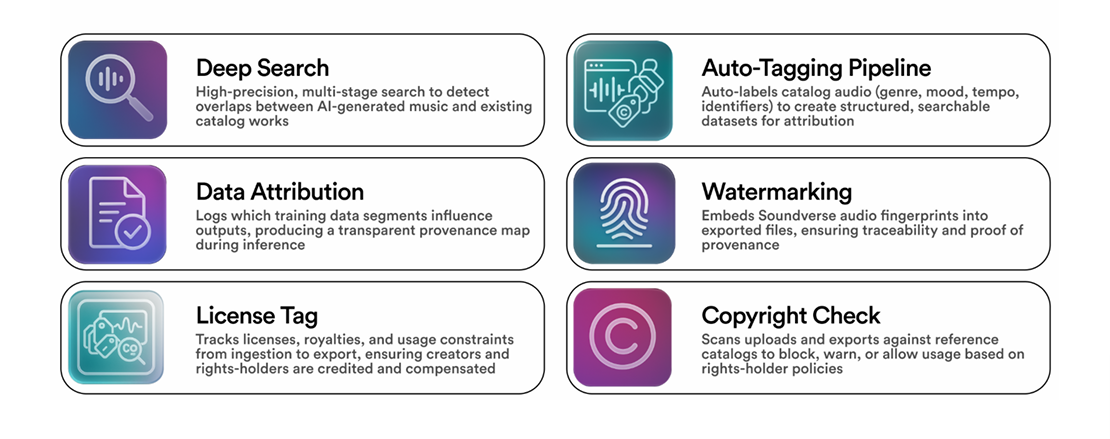
Soundverse Trace offers a pivotal solution for creators navigating these challenges. Designed as a comprehensive trust layer for AI music, Soundverse Trace embeds attribution, deep search, and rights protection throughout the full lifecycle—from dataset creation to final export.
This feature performs four core functions:
- Deep Search: A high-precision scanning system (both 1:1 and 1:N) detects overlaps between generated outputs and existing tracks. This helps identify whether your AI-generated song unintentionally echoes copyrighted content.
- Data Attribution: Logs which training datasets influenced your audio. Transparency here is vital for NFT licensing because it proves how your track was created and whether it references protected works.
- Audio Watermarking: Embeds inaudible fingerprints that link your file back to its creator and metadata trail. These watermarks ensure provenance even after distribution, making it ideal for NFT resales.
- License Tagging: Preserves rights metadata from ingestion to export, guaranteeing that ownership information remains intact when your track is minted as an NFT.
Together, these capabilities empower creators to prevent infringement, track catalog usage for royalties, verify the origin of AI-generated audio, and automate payouts or takedowns for rights-holders. To explore creating your own AI tracks, watch our Soundverse tutorial on making Deep House music.
Why blockchain rights matter for AI-generated music
Blockchain rights form the backbone of crypto music law in 2026. Every NFT sale or license must be traceable and enforceable through blockchain records. Smart contracts act as automated legal agreements, ensuring royalties are distributed fairly and usage follows predefined conditions.
For instance, when you sell an AI music NFT, Soundverse Trace’s license tagging can integrate with blockchain mechanisms to confirm royalty splits with collaborators or dataset contributors. This aligns perfectly with the Content Partner Program by Soundverse, which allows rights-holders to contribute audio for AI training and receive usage-based royalties. Combining attribution trails with blockchain transparency transforms music from static files into dynamic, revenue-generating assets.
What legal frameworks govern crypto music in 2026?
The legal framework known as crypto music law now operates across multiple layers:
- Intellectual Property (IP) verification: Ensuring AI music datasets comply with ethical use standards.
- Smart contract compliance: Codifying royalty and usage agreements within token metadata.
- Blockchain provenance: Maintaining a tamper-proof record of ownership transfers.
Governments and international agencies have also issued emerging guidelines that define how AI participation affects creative authorship. The European Union, for example, in its 2025 AI Regulation Draft, clarified that mere algorithmic output doesn't qualify for copyright unless driven by human creative decisions. The Transparency and Responsibility for Artificial Intelligence Networks (TRAIN) Act further expands authorship rights by giving copyright holders access to AI training records.
These developments make Soundverse Trace indispensable for artists and NFT entrepreneurs striving to align with 2026's evolving compliance standards.
How can creators build ethical NFT music collections using AI?
Ethical NFT music creation means combining technological innovation with artist integrity. To build ethical collections:
- Use AI tools that disclose training data origins.
- Embed license metadata before minting NFTs.
- Prefer transparent AI ecosystems—such as Soundverse—where attribution and royalty routes are clearly defined.
- Adopt frameworks like The Ethical AI Music Framework, which replaces opaque data processes with transparent six-stage pipelines ensuring consent, attribution, and recurring compensation.
By following these principles, creators ensure that every AI track tokenized on the blockchain promotes responsible ownership and equitable revenue sharing. Learn more at AI copyright and licensing in 2026 explained - Artlist Blog.
Related insights for creators in 2026
Digital artists exploring AI music copyright and NFTs often expand into related topics such as how AI-generated music transforms the industry, copyright-free vs royalty-free licensing, and AI music in the USA. These articles provide deeper context for understanding how AI shapes new business models and legal precedents.
Future of crypto music law and Soundverse innovation
By 2026, decentralization and creative provenance are the driving forces of AI music evolution. Platforms like Soundverse continue to advance toward full transparency ecosystems, merging attribution data with blockchain logic to ensure every AI-generated composition is trackable, auditable, and ownable.
Soundverse Trace therefore positions creators at the intersection of compliance and innovation—turning copyright verification into a streamlined, automated process. Whether you are minting an orchestral soundtrack, a lofi beat, or an experimental piece generated through text-to-music, Soundverse helps prove authorship while protecting both creator and collector.
Start Creating Legal, NFT-Ready AI Music Today
Generate unique tracks with Soundverse and ensure your AI music meets copyright standards for NFT sales. Protect your creativity while monetizing your artistry in the evolving Web3 music space.
Related Articles
- Navigating the World of Royalty-Free and Copyright-Free Music Using Soundverse AI: Learn how to choose and use royalty-free music legally for digital sales and creative projects.
- Enhancing YouTube Content with Royalty-Free and Copyright-Free Music Using Soundverse AI: Discover how creators use Soundverse AI to enhance YouTube videos with safe and original soundtracks.
- Copyright-Free vs. Royalty-Free Music—What Creators Should Know: Understand the difference between copyright-free and royalty-free tracks before publishing music NFTs.
- AI Music in the USA: Explore how AI-generated music is reshaping legal and copyright frameworks in the United States.
Here's how to make AI Music with Soundverse
Video Guide
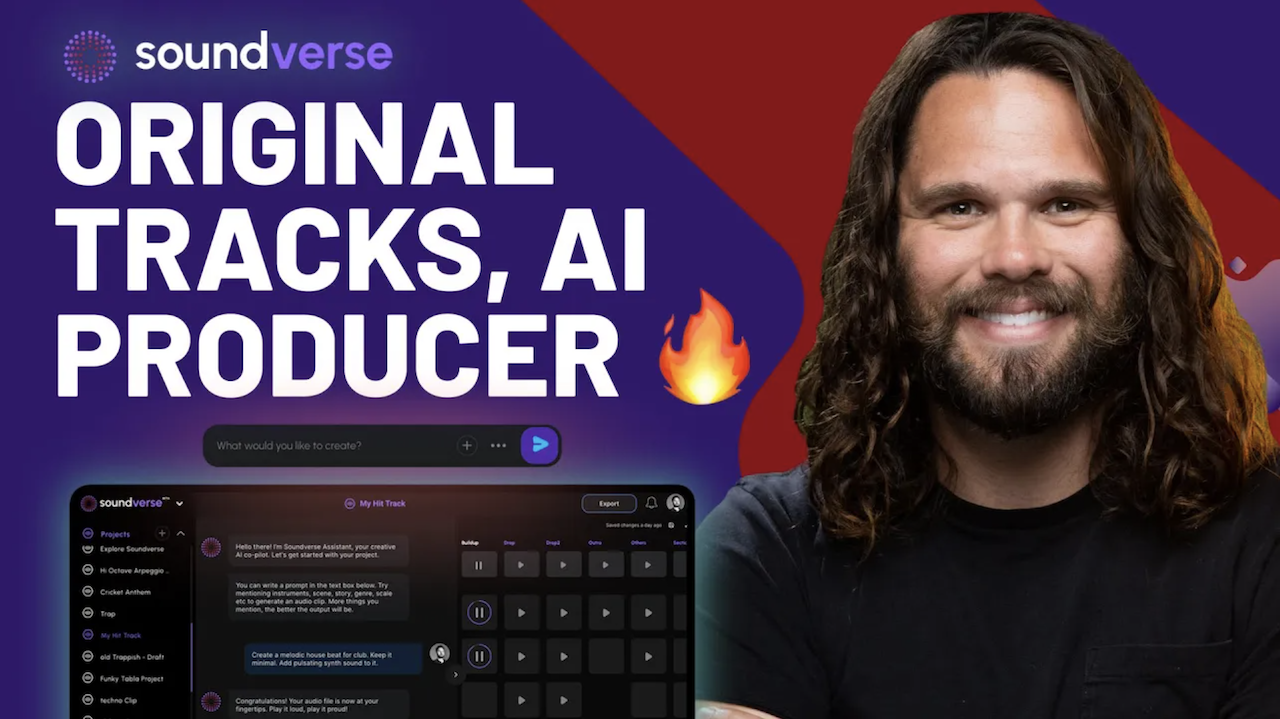
Here’s another long walkthrough of how to use Soundverse AI.
Text Guide
- To know more about AI Magic Tools, check here.
- To know more about Soundverse Assistant, check here.
- To know more about Arrangement Studio, check here.
Soundverse is an AI Assistant that allows content creators and music makers to create original content in a flash using Generative AI.
With the help of Soundverse Assistant and AI Magic Tools, our users get an unfair advantage over other creators to create audio and music content quickly, easily and cheaply.
Soundverse Assistant is your ultimate music companion. You simply speak to the assistant to get your stuff done. The more you speak to it, the more it starts understanding you and your goals.
AI Magic Tools help convert your creative dreams into tangible music and audio. Use AI Magic Tools such as text to music, stem separation, or lyrics generation to realise your content dreams faster.
Soundverse is here to take music production to the next level. We're not just a digital audio workstation (DAW) competing with Ableton or Logic, we're building a completely new paradigm of easy and conversational content creation.
TikTok: https://www.tiktok.com/@soundverse.ai
Twitter: https://twitter.com/soundverse_ai
Instagram: https://www.instagram.com/soundverse.ai
LinkedIn: https://www.linkedin.com/company/soundverseai
Youtube: https://www.youtube.com/@SoundverseAI
Facebook: https://www.facebook.com/profile.php?id=100095674445607
Join Soundverse for Free and make Viral AI Music
We are constantly building more product experiences. Keep checking our Blog to stay updated about them!