AI Music and the Rise of Virtual Artists in 2026
Explore how AI music and virtual artists redefine creativity and monetization in 2026.
AI Music and the Rise of Virtual Artists
Artificial intelligence has permanently transformed the music industry, and by 2026, the term "AI music" has become synonymous with innovation, artistry, and ethical technological progress. From chart-topping virtual artists to complex digital musicians capable of emulating specific emotional tones, AI-generated songs are no longer experimental novelties—they’re a mainstream creative force. For professionals, creators, and tech enthusiasts, understanding how this evolution happened and what’s next is essential.
What is AI music and how did it evolve?
AI music refers to compositions created or assisted by artificial intelligence systems that understand musical structure, style, and emotion. Earlier AI tools of 2024 and 2025 could generate loops or instrumentals based on prompts. But by 2026, models have become sophisticated sonic entities capable of analyzing entire catalogs, learning from artist-approved data, and creating compositions aligned with defined identities. The convergence of generative modelling, neural synthesis, and ethical licensing frameworks reshaped the ecosystem. Instead of generic output, AI musicians now possess character — digital souls built from artist ‘DNA’.
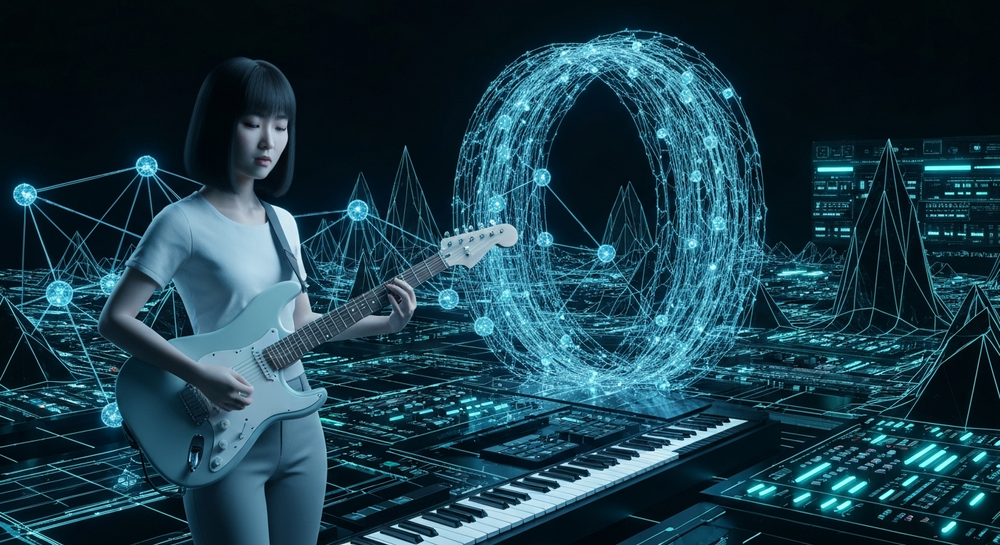
AI-driven creation once sparked controversy over authorship and artistic identity. The question "who owns AI music" dominated debates across major platforms. But this challenge gave birth to solutions that merge innovation with integrity. Platforms like Soundverse developed transparent frameworks to ensure creator consent, attribution, and royalties. Today, licensed AI sound generation represents a fair hybrid model where artists and machines collaborate rather than compete. Industry forecasts, such as AI & Music Tech In 2026 and Music Industry Predictions for 2026: Trends & Forecasts, highlight how automation with human oversight now dominates AI creation discussions instead of total replacement.
Why are virtual artists shaping music culture in 2026?
Virtual artists—digitally constructed performers powered by AI models—are redefining performance, brand identity, and fan interaction. These entities can sing, rap, compose, and even engage audiences on social platforms as influencer personas. Their rise coincides with the evolution of immersive content—virtual concerts, metaverse experiences, and synthetic collaborations that reach vast audiences.
Major record labels have adopted virtual talent strategies where synthetic voices trained on licensed voices fill the creative gap between accessibility and uniqueness. Fans aren’t only listening; they’re participating—purchasing model licenses, remixing AI-generated songs, or customizing performances through AI filters. The line between creator and consumer has blurred. As noted in AI Artists, Escalating Ticketing Battles, Opportunity and Humanity, the rise of AI performers is shaping new regulatory and creative landscapes.
How does AI music connect with digital musicians and professional workflows?
For digital musicians, AI music tools offer immense flexibility. Producers now use artist-specific AI engines to maintain signature sound while scaling content across platforms. Composers can craft cohesive soundtracks for films or games by feeding emotional direction prompts to model-based systems. The technology integrates seamlessly into professional workflows via generation panels and export options such as instrumentals or vocals. For example, descriptive models explored in AI Music Analysis 2026: Descriptive AI, Auto-Tagging & Benchmark show how AI categorizes and tags sound accurately.
Artists who once feared being overshadowed by automation are discovering new monetization avenues. The ability to license a sonic identity allows them to earn royalties when users generate music with their DNA. This fusion of technology and art supports both creative freedom and financial sustainability—a crucial leap after years of industry imbalance. For a deeper dive into creation workflows, watch our guide on creating Deep House music and how to make music using Soundverse tools.
What are the key music technology trends defining 2026?
The music landscape in 2026 revolves around five main trends:
- Ethical AI ecosystems: Transparent, license-driven training processes replace black-box datasets. Solutions such as the Ethical AI Music Framework ensure consent and recurring compensation.
- Creator-led AI models: Musicians design and publish AI representations of their sound—controlling style, emotion, and influence.
- Virtual-physical crossover: Hybrid concerts blending virtual artistry and human direction redefine live performance strategies.
- Emotion-driven generation: AI understands mood parameters such as nostalgia or intensity, generating contextually dynamic compositions for film and branding.
- Sound marketplaces: DNA marketplaces enable fans to purchase artist-specific sound identities for creative collaboration.
These trends collectively suggest a future where human creativity directs AI flow rather than competes against it. Articles like How AI-Generated Music Is Transforming the Music Industry illustrate this steady cultural integration.
How to make AI music with Soundverse DNA
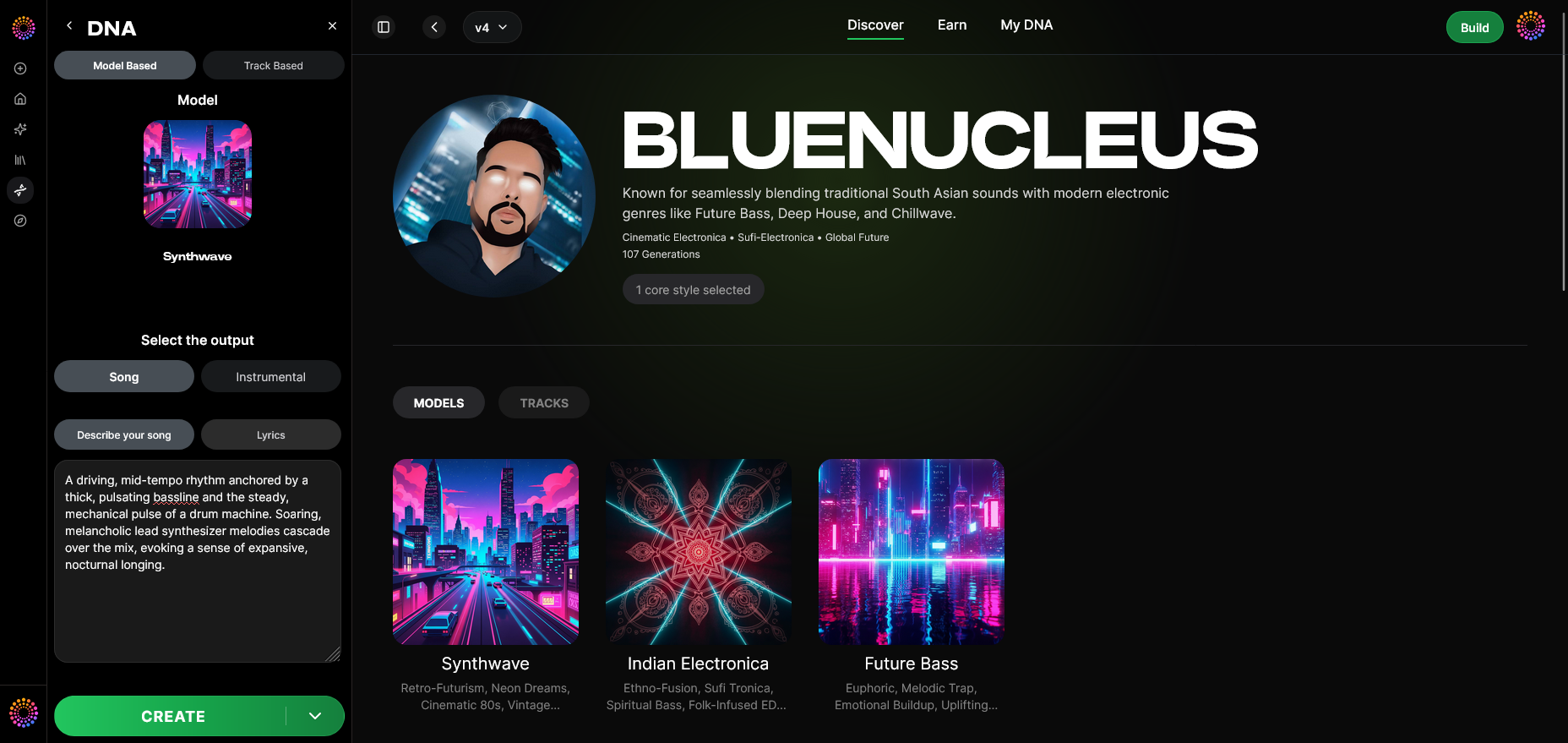
At the heart of this movement sits Soundverse DNA—an artist-trained AI music generation system that addresses the major ethical challenges of early-generation models. It creates original music based on specific sonic identities, ensuring the resulting content remains copyright-safe and traceable.
Soundverse DNA lets musicians and creators build an authentic sound foundation through features such as:
- Full DNA: Generate complete songs or instrumentals perfectly aligned with a trained artist style.
- Voice DNA: Capture vocal timbre and stylistic nuances for distinctive singing generation.
- DNA Marketplace: Publish and license your DNA style to fans or collaborators.
- Sensitivity Selector: Adjust generation fidelity by clustering catalog eras or tonal phases.
- Private Mode: Enables secure co-creation workflows for confidential projects.
These capabilities empower creators not just to produce AI music but to own and market their sound securely. Whether composing film cues or enhancing sonic branding, users can operate within a trusted innovative structure supported by Soundverse Trace for attribution and rights protection. For platform navigation, see our Explore Tab overview.
How Soundverse bridges innovation and artist integrity
The wider Soundverse ecosystem integrates several components that set a new ethical standard:
- The Ethical AI Music Framework: Provides end-to-end transparency from dataset creation to final export.
- The Content Partner Program: Enables licensed audio contribution with recurring royalty benefits.
- Soundverse Trace: Embeds attribution signatures throughout the content lifecycle.
Together, these tools preserve artistic integrity while amplifying innovation. They mark the transition from black-box experimentation to a structured AI-music economy.
How virtual artists and human creators collaborate today
The collaboration between humans and AI-generated artists now drives the most compelling creative campaigns. Brands use virtual singers modeled from real voices to deliver multilingual campaigns. Game developers employ AI-forged composers to produce immersive adaptive soundtracks. Independent creators produce AI-assisted albums faster and more economically than traditional studios.
Creators are also experimenting with AI filters and vibe selectors—features highlighted in Now Generate Music with Filters Such as Genre, Theme, Instruments, or Even Vibe. These innovations enable nuanced control over sound textures, moods, and genres.
What does the future hold for AI-generated songs?
As we progress through 2026, the distinction between real and virtual artistry will continue to fade. AI-generated songs will evolve toward collaborative authorship rather than mimicry. Labels and creators are developing hybrid credits for co-created pieces, reflecting AI as a legitimate artistic contributor. This opens new legal frameworks for copyright attribution—a crucial issue previously discussed in Navigating the World of Royalty-Free and Copyright-Free Music Using Soundverse AI.
AI music also fuels personalization. Music generated via text-to-music prompts can adapt to user identity, mood, or platform goals—enabling hyper-customized engagement. Personalized ambient tunes, marketing sound scores, and podcast intros are now dynamically produced by AI co-producers.
Create Your First AI-Generated Track with Soundverse
Experience the future of music creation with AI. Soundverse empowers artists and creators to compose, remix, and experiment effortlessly—no studio or prior experience required.
Related Articles
- How AI-Generated Music Is Transforming the Music Industry — Discover how artificial intelligence is reshaping the way music is composed, produced, and consumed worldwide.
- AI Music Generator and Human Composers: A Future Together — Explore the collaboration between AI and human creativity, and how the blend is shaping the next era of musical innovation.
- AI Ranks Soundverse’s AI Singer #1: The Ultimate AI Singing Platform Dominating 2025 — See how Soundverse’s AI singer is taking the lead in redefining vocals and performance in the AI music space.
- The Role of AI Music in Film and Television — Learn how AI-driven composition is revolutionizing scoring and sound design for entertainment media.
Here's how to make AI Music with Soundverse
Video Guide
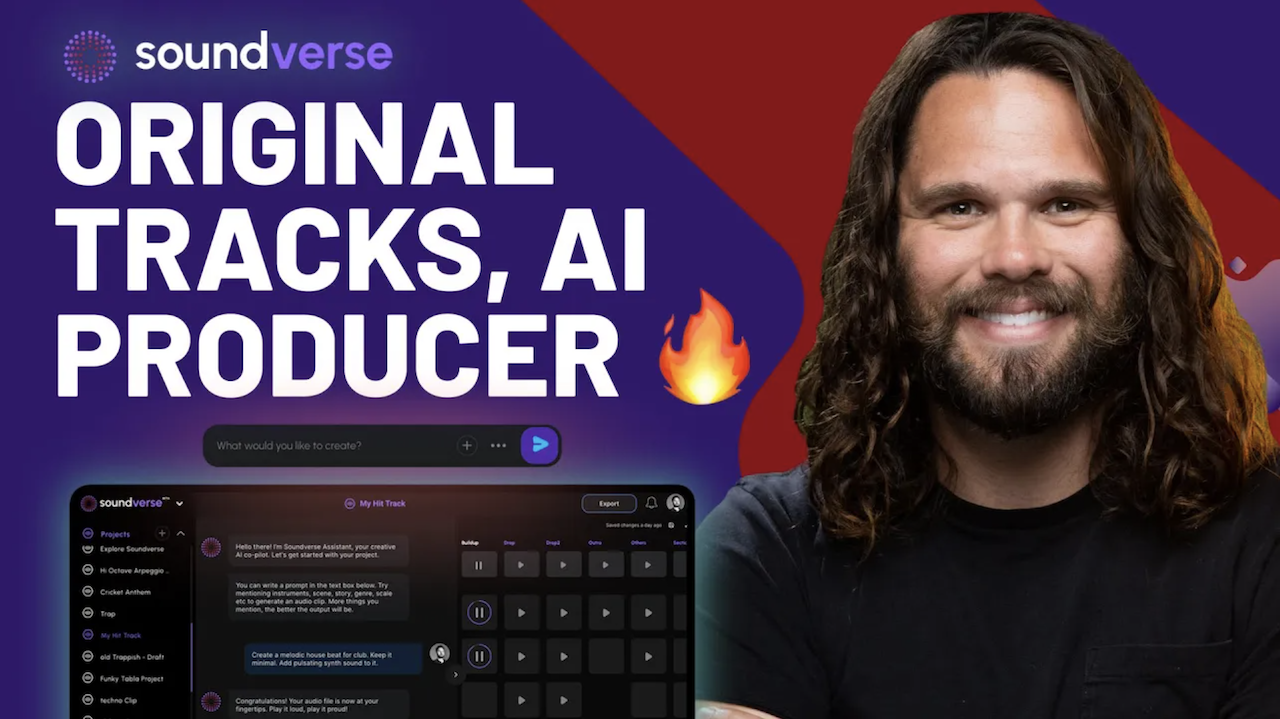
Here’s another long walkthrough of how to use Soundverse AI.
Text Guide
- To know more about AI Magic Tools, check here.
- To know more about Soundverse Assistant, check here.
- To know more about Arrangement Studio, check here.
Soundverse is an AI Assistant that allows content creators and music makers to create original content in a flash using Generative AI. With the help of Soundverse Assistant and AI Magic Tools, our users get an unfair advantage over other creators to create audio and music content quickly, easily and cheaply. Soundverse Assistant is your ultimate music companion. You simply speak to the assistant to get your stuff done. The more you speak to it, the more it starts understanding you and your goals. AI Magic Tools help convert your creative dreams into tangible music and audio. Use AI Magic Tools such as text to music, stem separation, or lyrics generation to realise your content dreams faster. Soundverse is here to take music production to the next level. We're not just a digital audio workstation (DAW) competing with Ableton or Logic, we're building a completely new paradigm of easy and conversational content creation.
TikTok: https://www.tiktok.com/@soundverse.ai
Twitter: https://twitter.com/soundverse_ai
Instagram: https://www.instagram.com/soundverse.ai
LinkedIn: https://www.linkedin.com/company/soundverseai
Youtube: https://www.youtube.com/@SoundverseAI
Facebook: https://www.facebook.com/profile.php?id=100095674445607
Join Soundverse for Free and make Viral AI Music

We are constantly building more product experiences. Keep checking our Blog to stay updated about them!