AI Audio Analysis Tools: How Machine Learning is Reshaping Music Production in 2026
Explore 2026’s best AI audio analysis tools, tempo detection AI, and algorithms transforming music creation and editing.
AI Audio Analysis Tools
What are AI audio analysis tools and why are they essential in 2026?
In 2026, AI audio analysis tools have become a cornerstone of modern music production, studio engineering, and data-driven sound research. These systems use advanced audio machine learning to interpret elements such as rhythm, timbre, pitch, and structural sections of a song. For music producers and audio engineers, this means faster workflows, detailed acoustic insights, and the ability to automate what previously required hours of manual auditory work.
Across the past few years, AI audio processing has evolved beyond simple waveform reading. Today’s innovations include tempo detection AI that automatically calculates beats per minute, beat tracking algorithms that map rhythmic intensity, and even AI sound recognition capable of distinguishing instruments, voices, or ambient tones within complex mixes. By 2026, these capabilities are helping creators edit, remix, and synchronize tracks more intelligently.
How does tempo detection AI improve rhythm precision in music?
Tempo detection AI determines the speed at which a musical piece progresses, expressed in beats per minute (BPM). In professional production, accurate tempo analysis is crucial for tasks like remixing, sampling alignment, or live performance syncing. Traditional manual tempo estimation often varied based on human perception, but with machine learning-driven tempo detection, producers get reliable results instantly.
Advanced models use neural networks trained on vast rhythmic datasets. These models recognize transient peaks, pattern consistency, and inter-onset intervals — all vital parameters in rhythm extraction. As a result, audio engineers can achieve perfect timing when merging multiple stems or applying beat-based effects. Tools using tempo detection AI also assist DJs with automated cue point calibration, enhancing performance accuracy.
If you’re exploring how creators integrate AI tempo tools into modern genres, check out Soundverse’s editorial on music industry trends for insights into how machine rhythm mapping has revolutionized electronic and pop production in 2026.

What are the most important features of modern music analysis software?
Music analysis software now encompasses multi-dimensional sound mapping rather than simple frequency visualization. The most sought-after features in 2026 include:
- Spectral Analysis — Breakdown of frequency components for equalization or mastering optimization.
- Chord Recognition — Identification of harmonic structures in real time using deep pattern matching.
- Section Detection — Splitting songs into compositional segments such as Intro, Verse, Chorus, and Bridge.
- Emotion and Energy Mapping — AI models evaluate sonic dynamics to determine the emotional arc of a track.
- Audio Fingerprinting — Useful for copyright protection and recognition applications.
These features enable in-depth study not only for producers but also for researchers working on AI models that emulate musical creativity. The technology’s accuracy is fueled by large-scale annotated datasets that continuously increase learning precision.
How are beat tracking algorithms redefining audio machine learning?
Beat tracking algorithms form the backbone of rhythmic AI processing. They detect patterns in amplitude changes across time, enabling systems to understand where beats start and end. In 2026, most advanced audio machine learning frameworks apply dynamic Bayesian networks and deep convolutional layers to achieve millisecond-level precision.
Beyond tempo identification, beat tracking assists in remix formation, synchronization between instruments, and adaptive metronome systems in DAWs (Digital Audio Workstations). These tools are now capable of handling genre diversity — from the polyrhythms of Afrobeat to the intricate timing variations in jazz.
Producers using Soundverse tools can read more about how AI-based rhythm division enhances production flexibility by exploring how AI-generated music is transforming the music industry.
For a deeper dive, watch our guide on creating Deep House music or explore the “Explore” Tab walkthrough from the Soundverse Tutorial Series.
What role does AI sound recognition play in mixing and mastering?
AI sound recognition allows software to identify specific sound sources, whether it’s a vocal line, drum hit, or instrument layer. This process utilizes spectrogram correlation, supervised learning, and probabilistic modeling to assign audio categories. In mixing, the ability to isolate and manipulate these sounds drastically reduces editing time.
By analyzing the spectral fingerprint of each source, AI can apply automated EQ suggestions, dynamic compression, or even recommend panning settings. Researchers have also applied similar technology to content identification and rights management platforms, improving attribution transparency.
This rise in AI sound recognition connects closely with Soundverse’s Soundverse Trace technology, which embeds attribution and rights protection across the AI music lifecycle.
How to make accurate section analysis with Soundverse Section Analysis
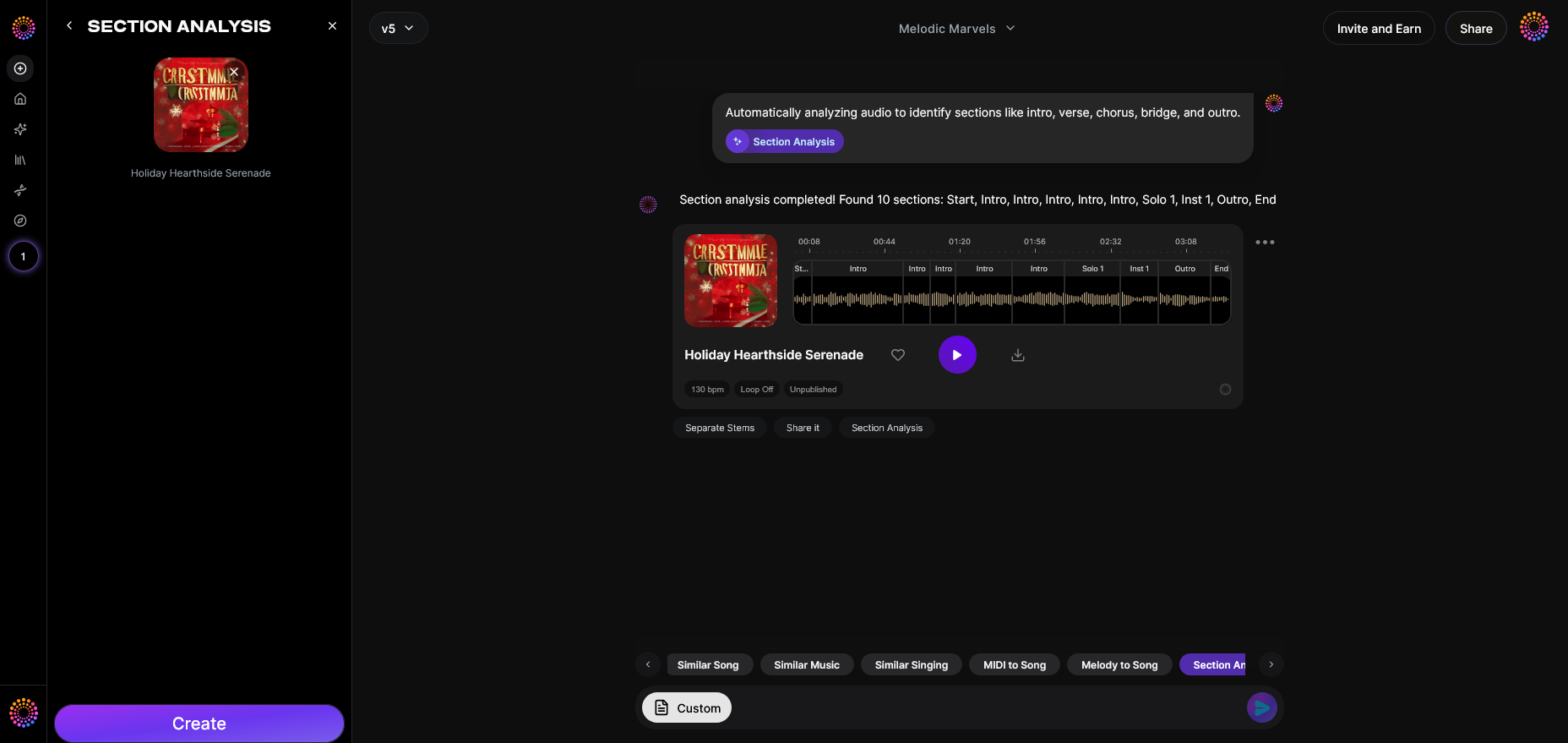
Now that you understand core functions of AI audio analysis tools, here is how to create structured track maps instantly using Soundverse.
Soundverse’s Section Analysis feature automates the detection and labeling of song sections — Intro, Verse, Chorus, Bridge, and Outro — along with exact timestamps. Once analysis completes, users receive a visual roadmap ideal for editing, remixing, or creating cover versions.
Step 1: Feature Overview
Access the Section Analysis tool within your Soundverse workspace. This feature focuses on mapping musical structure to prepare tracks for subsequent inpainting edits or sync licensing.
Step 2: Upload Audio
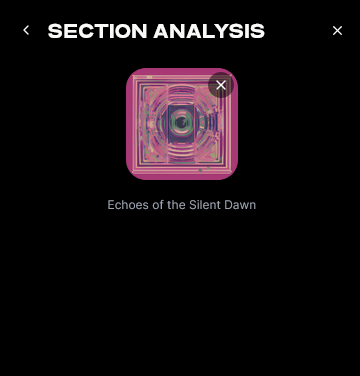
Upload your desired song or composition. Soundverse processes audio asynchronously — meaning you submit your file for analysis and wait for generated results rather than observing live playback.
Step 3: Analysis
The AI model begins analyzing the uploaded file, parsing its waveform and structural boundaries using machine learning segmentation techniques. It identifies repeating and transitional formations to define clear musical sections.
Step 4: Results Display
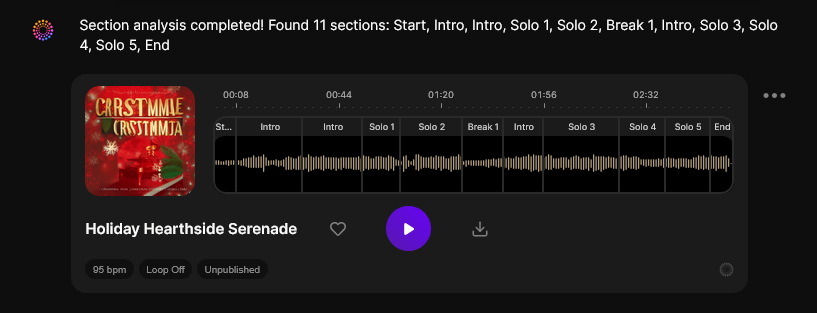
After processing, Soundverse presents visual markers for each section with precise timestamps. These can be exported for use in DAWs or remixing sessions. The tool essentially becomes a roadmap that guides editing pace and cue point setting.
Why audio engineers and researchers are adopting Soundverse in 2026
Professionals prefer Soundverse Section Analysis because it eliminates manual section labeling, accelerates remix workflow, and improves consistency for sync licensing evaluations. Combined with Soundverse’s Stem Separator, which divides audio into up to six editable stems (vocals, drums, bass, guitar, accompaniment, etc.), creators gain a full spectrum of editing control.
Meanwhile, Soundverse Trace enhances intellectual property protection through embedded metadata and deep search capabilities — a vital component for AI-generated content ethics in 2026.
The future of audio machine learning and creative collaboration
The fusion of machine learning and art will deepen further through multimodal audio models. Developers are exploring cross-domain learning, enabling systems to interpret how visual and text cues relate to sonic expressions. Integration with tools for automated composition, such as those discussed in generate AI music with Soundverse text-to-music, continues to evolve rapidly.
By 2026, AI audio analysis tools will serve not just production needs but also cognitive music research — understanding human emotional responses to sound. Whether you’re an engineer refining mixes or a scientist analyzing musical datasets, these technologies have become indispensable for perceiving and shaping sonic art.
Transform Your Audio Workflow with AI
Unlock precision and creativity in sound design using Soundverse’s AI audio analysis tools. Generate insights, separate stems, and enhance your tracks effortlessly with innovative technology built for modern creators.
Related Articles
- Soundverse Introduces Stem Separation AI Magic Tool — Discover how Soundverse’s AI-powered stem separation tool gives creators total control over their music mixes.
- Soundverse Assistant: Your AI Music Co-Producer — Learn how Soundverse Assistant helps you streamline production with automated intelligence in audio creation.
- What Are Song Stems and Why Do You Need Them — Understand the importance of song stems and how they empower precise editing and mixing with AI tools.
- The Role of AI Music in Film and Television — Explore how AI audio analysis is reshaping soundtrack creation and post-production across media industries.
Here's how to make AI Music with Soundverse
Video Guide
Here’s another long walkthrough of how to use Soundverse AI.
Text Guide
- To know more about AI Magic Tools, check here.
- To know more about Soundverse Assistant, check here.
- To know more about Arrangement Studio, check here.
Soundverse is an AI Assistant that allows content creators and music makers to create original content in a flash using Generative AI.
With the help of Soundverse Assistant and AI Magic Tools, our users get an unfair advantage over other creators to create audio and music content quickly, easily and cheaply.
Soundverse Assistant is your ultimate music companion. You simply speak to the assistant to get your stuff done. The more you speak to it, the more it starts understanding you and your goals.
AI Magic Tools help convert your creative dreams into tangible music and audio. Use AI Magic Tools such as text to music, stem separation, or lyrics generation to realise your content dreams faster.
Soundverse is here to take music production to the next level. We're not just a digital audio workstation (DAW) competing with Ableton or Logic, we're building a completely new paradigm of easy and conversational content creation. TikTok: https://www.tiktok.com/@soundverse.ai Twitter: https://twitter.com/soundverse_ai Instagram: https://www.instagram.com/soundverse.ai LinkedIn: https://www.linkedin.com/company/soundverseai Youtube: https://www.youtube.com/@SoundverseAI Facebook: https://www.facebook.com/profile.php?id=100095674445607
Join Soundverse for Free and make Viral AI Music

We are constantly building more product experiences. Keep checking our Blog to stay updated about them!